Coming Up
What's Happening
Coming Up
Ouvir
Listening Journey
Sound Journey
Discography
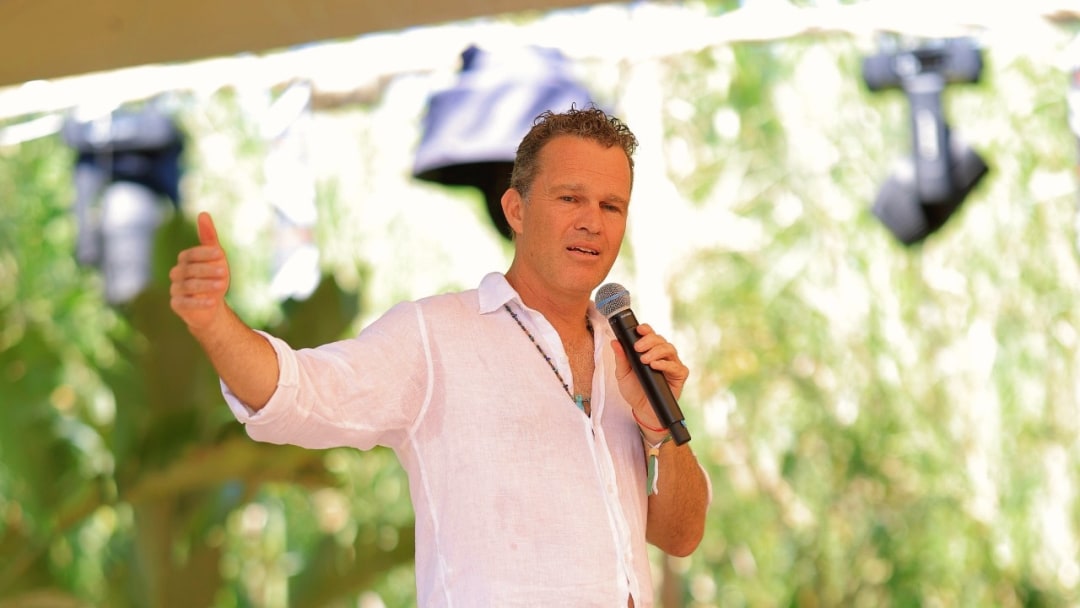

Physician
Zach Bush was born in the United States and raised in a family that valued health and wellness. His early life was marked by a deep curiosity about the human body and its connection to the environment. This curiosity led him to pursue a career in medicine, where he earned his medical degree and specialized in internal medicine and endocrinology. His experiences in the medical field, combined with his personal journey towards understanding the interconnectedness of life, shaped his holistic approach to health and spirituality.
Zach Bush was born in the United States and raised in a family that valued health and wellness. His early life was marked by a deep curiosity about the human body and its connection to the environment. This curiosity led him to pursue a career in medicine, where he earned his medical degree and specialized in internal medicine and endocrinology. His experiences in the medical field, combined with his personal journey towards understanding the interconnectedness of life, shaped his holistic approach to health and spirituality.
As a physician, Zach Bush has dedicated his work to exploring the intersections of health, environment, and spirituality. He is known for his innovative approaches to health, emphasizing the importance of gut health and its impact on overall well-being. Through his teachings, he integrates scientific knowledge with spiritual insights, encouraging individuals to reconnect with their bodies and the natural world. His work extends beyond traditional medicine, as he engages in public speaking, workshops, and online courses that inspire people to embrace a more holistic lifestyle.
Zach's influences are diverse, drawing from various traditions and philosophies. He has been inspired by the teachings of ancient wisdom, modern science, and the natural world. His approach reflects a synthesis of Eastern and Western philosophies, emphasizing the importance of balance and harmony in life. This unique blend of influences allows him to connect with a wide audience, bridging the gap between science and spirituality in a way that resonates with many.
Today, Zach Bush is recognized as a leading voice in the fields of health and spirituality. His emphasis on the interconnectedness of all life and the importance of nurturing our environment has made him a sought-after speaker and educator. In a time when many are seeking deeper meaning and connection in their lives, his teachings offer valuable insights into how we can cultivate health and well-being through a holistic lens. His work continues to inspire individuals to take charge of their health and to recognize the profound impact of their choices on the world around them.
What's Happening
Listening Journey
Discography
Worth Knowing
Zach Bush is a physician and holistic health educator who has positioned himself at the intersection of conventional medical practice and integrative wellness—a rare stance that carries real weight in a field often fragmented between science skeptics and reductionist MDs. Trained in internal medicine and endocrinology, he has stepped away from the standard clinical track to focus on public education around gut health, environmental wellness, and the mind-body connection, arguing that these domains are inseparable rather than siloed. His appeal lies in his refusal to choose between scientific rigor and spiritual insight; he draws on both ancient wisdom traditions and contemporary research to frame health as an ecological question—how the human microbiome, soil health, and planetary systems all mirror and reinforce one another. This synthesis resonates with a growing audience of people exhausted by pharmaceutical-only models but also skeptical of purely mystical approaches. His work extends through speaking engagements, online courses, and a small but devoted following on platforms like Spotify and YouTube, where his voice carries the credibility of someone who actually attended medical school while also taking seriously the role of consciousness and interconnectedness in healing.
Bush's lineage is deliberately syncretic—he synthesizes Eastern and Western philosophies rather than claiming allegiance to a single tradition. His formal training comes through conventional American medical education (internal medicine and endocrinology), but his intellectual inheritance also draws from ancient wisdom systems that emphasize balance, harmony, and the interconnectedness of all life. This is not a case of a Western physician dabbling in yoga philosophy on weekends; his teaching reflects a genuine integration of scientific methodology with contemplative and ecological thinking. What distinguishes his approach is that he does not position spirituality as metaphorical window dressing on medical facts, but rather as essential to understanding health at all—particularly when examining how the gut microbiome, environmental toxins, and consciousness itself are entangled. His work also reflects a commitment to environmental wellness as a spiritual and medical necessity, suggesting that personal health divorced from planetary health is ultimately illusory. This bridges traditions that Western medicine typically treats as separate: the scientific study of endocrinology and the holistic systems thinking that appears in Ayurveda, Traditional Chinese Medicine, and indigenous land-based knowledge.
Start with his Spotify catalog—specifically the album *Soma* (2020), which serves as a sonic introduction to his worldview and offers 11 tracks that listeners report help ground the conceptual material he discusses in lectures. *Soma* allows you to experience his approach to mind-body connection directly rather than hearing it theorized. After that, move to his YouTube channel (@ZachBushMD), where you'll find longer-form talks and interviews that unpack his core arguments around gut health, environmental toxicity, and spiritual ecology in language accessible to someone with no medical background. His website (zachbushmd.com) also hosts essays and resources that clarify his stance on integrative health without requiring you to have attended medical school. What's important for newcomers is resisting the temptation to jump straight into his more theoretical or dense material; his work is most compelling when you encounter both the sensory experience (the music) and the spoken argument (the lectures) together, as they reinforce each other. Most people report that watching a single 20-minute talk on the microbiome-mood axis or environmental wellness fundamentally reframes how they think about their own health choices.
Bush's teaching style is lecture-based and evidence-driven rather than ceremonial or group-process oriented; he is a speaker and educator, not a retreat facilitator or ritual guide. His strength lies in his ability to synthesize complex systems—how soil microbes connect to human gut bacteria, how agricultural practices shape immune function, how environmental toxins accumulate in tissues and disrupt hormonal signaling—and present these connections in language that feels urgent without becoming alarmist. Expect to encounter rigorous argument supported by research, but also a willingness to acknowledge the limits of reductionist science and point toward mysteries that consciousness and intuition must navigate. His online courses and video content tend to follow a consistent structure: naming a problem (gut dysbiosis, environmental illness, disconnection from natural cycles), tracing its roots in modern life, and then offering practical reorientation—dietary suggestions, detoxification protocols, practices that restore the mind-body connection. What distinguishes his teaching is that he never frames health as an individual optimization project; he consistently returns to the fact that personal microbiome health and planetary health are the same question viewed at different scales. This means his work appeals strongly to people seeking to understand how their own wellness choices connect to environmental responsibility and collective flourishing.
*Soma* (2020) is his foundational album, containing 11 tracks that function as a sonic companion to his teachings on embodiment and interconnectedness. The album offers listeners a non-verbal entry point into his worldview—it's the closest he has come to creating a cohesive artistic statement. He released a single, "White Noise" (2020), which appears to serve an exploratory or transitional function in his discography. Most recently, he released *Wave Medium* (2026), which arrived with 15 tracks and suggests an expansion of his sonic vocabulary compared to the more intimate scale of *Soma*. The progression from *Soma* to *Wave Medium* appears to track a deepening rather than a dramatic stylistic shift—both albums seem designed to support contemplative listening and mind-body work rather than to entertain or impress. For listeners new to his music, *Soma* remains the natural entry point; it's compact enough to absorb in one sitting and serves as a reference point for understanding how he translates his integrative health philosophy into sound. All three releases are available on Spotify, though his Spotify follower count remains modest, suggesting his audience engages with him primarily through lectures, courses, and educational content rather than streaming music consumption.
Bush's music is not performance-oriented or designed to showcase virtuosity; it functions as a tool for embodied learning and mind-body integration. *Soma* leans toward ambient, meditative soundscapes with minimal instrumentation—the aesthetic privileges space and silence over density, with production choices that feel deliberate and restrained rather than maximalist. The album appears calibrated for deep listening during meditation, contemplative practice, or as a sonic container while you engage with his educational content elsewhere. *Wave Medium* suggests he is exploring broader textural possibilities, but the fundamental intention seems consistent: creating sound environments that support the nervous system regulation and conscious awareness he discusses in his lectures. What's notable is that Bush does not position his music as entertainment or as separate from his teaching; the albums function as extensions of his integrative health philosophy, translating his arguments about mind-body connection into direct sensory experience. This is music designed for listeners who are already interested in contemplative practice, nervous system healing, or preparing their consciousness before engaging with dense educational material. If you come to his work expecting pop-influenced wellness music or uplifting sonic narratives, you will be disappointed; if you're seeking sound environments that support deep rest and internal attunement, *Soma* and *Wave Medium* deliver that function consistently.
Yes, but with the caveat that his work requires intellectual engagement and curiosity about systems thinking rather than offering quick answers or feel-good affirmations. Bush speaks in accessible language and deliberately avoids jargon overload, but he also assumes his listeners are willing to sit with complexity and hold multiple perspectives at once. His foundational argument—that gut health, environmental wellness, and spiritual development are inseparable—is comprehensible without medical training, though listeners unfamiliar with basic immunology or microbiology may want to have a dictionary or a few basic biology articles nearby during his longer talks. His work is also *not* for people seeking a single prescriptive protocol or a simple dietary fix; he emphasizes that individual health is embedded in ecological and cultural contexts, which means recommendations are often conditional and nuanced rather than universal. What surprises newcomers is that Bush does not require you to adopt any particular spiritual tradition or belief system; his teachings are grounded in observable phenomena (the microbiome, soil chemistry, nervous system dynamics) even when he gestures toward consciousness and mystery. If you're willing to question mainstream medical narratives without abandoning scientific rigor, and if you're genuinely curious about how your body connects to the world around it, his work will be provocative and clarifying. If you prefer linear self-help or reassurance that everything is fine, look elsewhere.
Bush's work is fundamentally not for people seeking quick pharmaceutical solutions, personalized biohacking protocols, or optimized performance metrics. If you want a doctor to prescribe you a medication and move on, or if you want a wellness coach to hand you a 12-week transformation plan, his approach will frustrate you—he insists on understanding root causes and systemic imbalances, which takes time and requires patience with uncertainty. His work is also not for those who view spirituality and science as irreconcilable, because he refuses to segregate them; if you believe health is a purely mechanical problem solved by drug interventions, or conversely, if you believe science is a fundamentally limited lens and only mystical knowledge matters, his integration will feel contradictory rather than compelling. Additionally, his emphasis on environmental and ecological justice as central to health (not peripheral to it) means his work is not for people content with individual wellness solutions divorced from collective responsibility. Those seeking permission to ignore agricultural toxins, microplastic exposure, or soil degradation in pursuit of personal optimization will find his teaching inconvenient. Finally, his work requires engagement with complexity and nuance—he does not offer moral certainty or spiritual absolutes—so it is not suited to people seeking a guru figure or a definitive doctrine. His core audience consists of intellectually curious, systems-thinking individuals who are uncomfortable with reductionism and ready to question both conventional medicine and conventional spirituality simultaneously.
His primary digital hub is zachbushmd.com, which houses essays, resources, courses, and information about his ongoing educational projects. His music is available on Spotify (artist profile: Zach Bush) with three releases—*Soma*, "White Noise," and *Wave Medium*—though his Spotify presence remains small and does not reflect the full scope of his work. His YouTube channel (@ZachBushMD) is substantial and offers a rich archive of lectures, talks, interviews, and educational content that can be watched for free; this is arguably the most comprehensive publicly available resource for understanding his teaching. His website also likely includes signup options for courses, newsletters, or upcoming educational offerings, though specific details would need to be verified directly on the site. Unlike many contemporary wellness figures, Bush does not maintain a large social media presence, which reflects his preference for depth over viral reach. This means accessing his work requires some intentional effort—there is no algorithm doing the work for you—but it also means the audience that finds him tends to be genuinely engaged rather than casually scrolling. For those interested in his music specifically, Spotify remains the primary platform, though the album pages themselves contain minimal contextual information about his intention or practice recommendations.
Interconnectedness functions as Bush's central organizing principle—the argument that human health, soil health, and planetary health are expressions of the same system viewed at different scales. This theme appears consistently across his lectures, courses, and albums; he returns repeatedly to the metaphor and reality of the microbiome as a window into how life organizes itself through relationship and symbiosis rather than competition. Environmental wellness is inseparable from this framework; he does not treat ecological degradation as a separate issue from personal disease, but rather as the same phenomenon manifesting at individual and collective levels. The gut-brain-immune axis emerges as a second central theme—his argument that the microbiome influences mood, cognition, and immune resilience in ways that blur the distinction between body and mind, physical and psychological. A third recurring emphasis is the role of consciousness and intention in health; Bush suggests that awareness itself is a healing force, not merely a byproduct of biochemistry. Across albums and talks, you will also encounter a consistent critique of reductionism—the tendency to isolate variables and treat health as a problem to be solved through external interventions alone, rather than as a state of integration that requires attention to relationship, meaning, and connection. Finally, there is an underlying theme of restoration and return; rather than framing health as a frontier to be conquered, Bush positions it as a restoration of natural balance that our modern lives have disrupted.
Discover More
É você? Reivindicar esta página ›
Continue your journey
BrightStar is the global directory of artists, teachers, and healers in the wellness and spiritual movement. Find your next experience — or add yourself.
Browse 14,000+ curated profiles across kirtan, yoga, meditation, and beyond.
Explore directory →Kirtan, retreats, sound baths, breathwork, ceremonies — happening this week.
Browse events →Are you an artist, teacher, or healer? Get listed — free, AI-assisted, live in minutes.
Get started →