

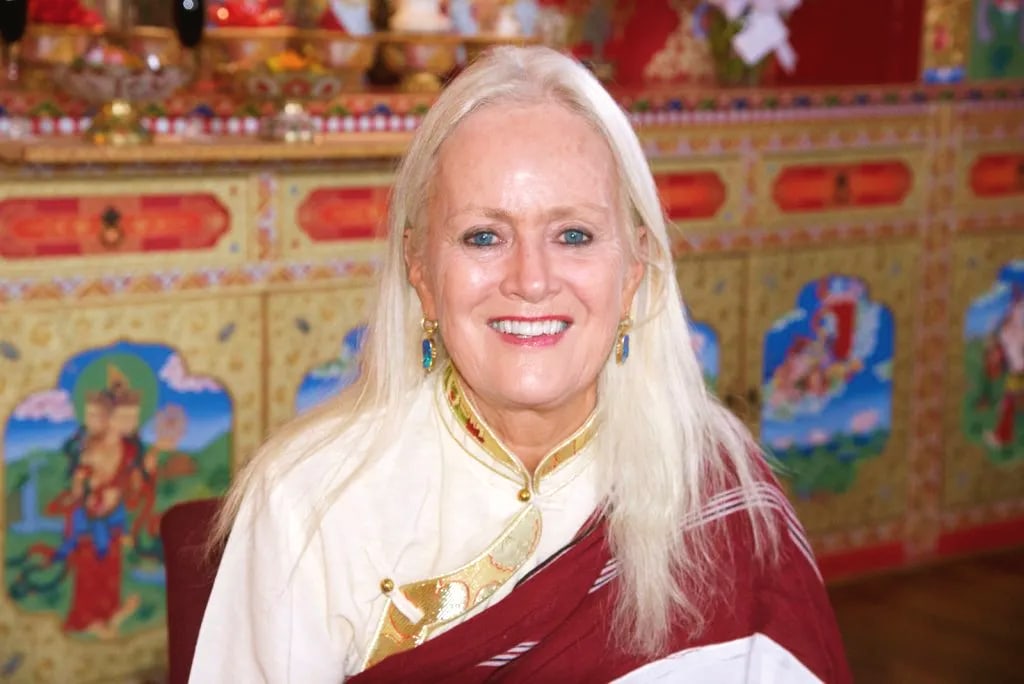
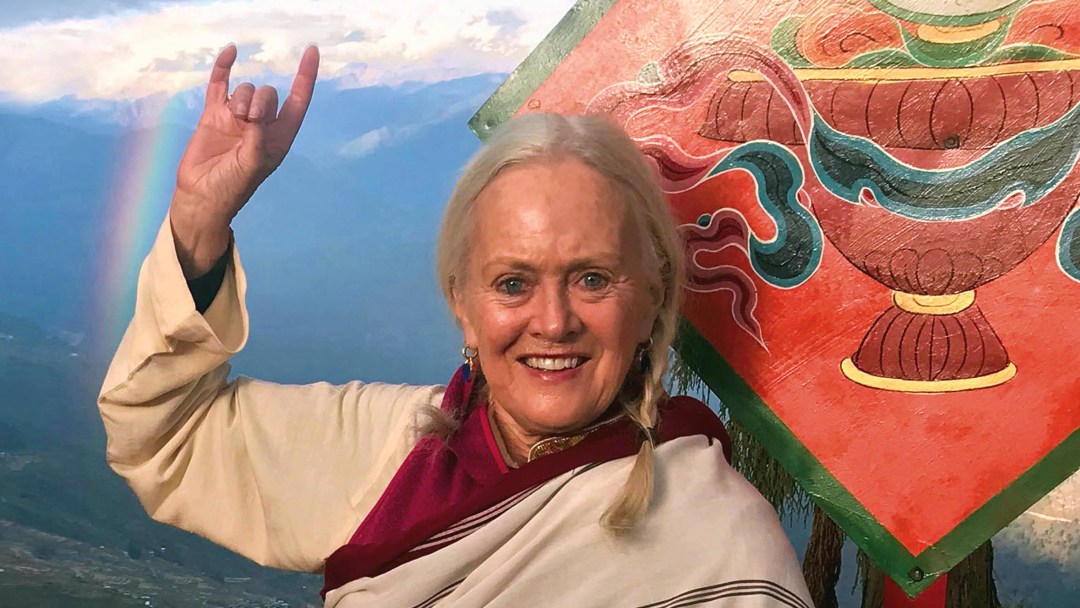




Tsultrim Allione
Spiritual Teacher · author · and founder of Tara Mandala retreat center
Sobre
Lama Tsultrim Allione is a Tibetan Buddhist teacher, author, and founder of Tara Mandala retreat center in Pagosa Springs, Colorado. She is known primarily for her work bringing dakini teachings and the sacred feminine into Western Buddhist practice, and for developing the Feeding Your Demons method, a psychological-spiritual practice based on the ancient Chöd tradition.
Lama Tsultrim Allione is a Tibetan Buddhist teacher, author, and founder of Tara Mandala retreat center in Pagosa Springs, Colorado. She is known primarily for her work bringing dakini teachings and the sacred feminine into Western Buddhist practice, and for developing the Feeding Your Demons method, a psychological-spiritual practice based on the ancient Chöd tradition.
Allione works within the Tibetan Buddhist lineage, specifically drawing from the Vajrayana and the teachings of the dakinis—female embodiments of wisdom in Tibetan Buddhism. In the 1970s she became one of the first American women ordained as a Tibetan Buddhist nun, a distinction that placed her at the forefront of Western women engaging with Tibetan monasticism. Her approach integrates traditional Tibetan ritual forms with accessible, practice-based methods designed for lay practitioners in the West, particularly focusing on the role of the feminine principle in spiritual development.
She is the author of three books: Women of Wisdom, which documents the lives and teachings of six Tibetan Buddhist women practitioners; Feeding Your Demons, which presents her adaptation of the 1,000-year-old Chöd practice into a five-step process for working with inner obstacles; and Wisdom Rising, which explores the role of the feminine in contemporary spirituality. She also hosts the Wisdom Rising podcast, where she offers teachings on Buddhist philosophy, meditation, and practical applications of dharma.
Allione trained with Tibetan lamas after her ordination in the 1970s, studying in India and Nepal. She later disrobed, married, and raised children before returning to formal teaching and establishing Tara Mandala in 1993. The center occupies 700 acres in the San Juan Mountains and serves as a base for retreats, empowerments, and training in Tibetan Buddhist practices, particularly those associated with the dakini lineages and the deity Tara.
Her work has been featured in publications including Tricycle, Buddhadharma, and Lion's Roar. Tara Mandala has hosted thousands of retreat participants over three decades, and her books have been translated into multiple languages. She received the title of Lama in recognition of her teaching authority within the Tibetan Buddhist tradition. Allione has trained a cohort of facilitators in the Feeding Your Demons practice, extending the method into therapeutic and spiritual care settings internationally.
Tara Mandala continues to operate year-round programming, including ngondro training, deity practice intensives, and teachings on Chöd and the dakini path. Allione leads selected retreats and offers periodic online teachings through the Tara Mandala platform. Her current focus includes refining the transmission of dakini practices to Western students and supporting the next generation of teachers trained in her methods.
For practitioners seeking an embodied, feminine-centered approach to Tibetan Buddhism or a concrete method for transforming psychological patterns through ritual and visualization, Allione's teaching offers a practical bridge between ancient Vajrayana methods and contemporary life.
Questions
Lama Tsultrim Allione is a Tibetan Buddhist teacher and author who pioneered the integration of sacred feminine wisdom and Dakini teachings into Western Buddhism over four decades of rigorous practice and instruction. In the 1970s, she became one of the first American women to be ordained as a Tibetan Buddhist nun—a distinction that placed her at the vanguard of a generation of Western practitioners seeking authentic lineage transmission while navigating the male-dominated structures of traditional Tibetan institutions. She founded Tara Mandala, a retreat center in Colorado that now serves as a sanctuary for serious practitioners studying Buddhist philosophy, transformation practices, and the reclamation of feminine spiritual authority. What draws people to her work is not abstract spirituality but concrete methodology: her signature Feeding Your Demons practice offers a somatic, psychologically-grounded approach to working with difficult emotions that resonates with secular and religious seekers alike. Through her three authored books—Women of Wisdom, Feeding Your Demons, and Wisdom Rising—and her Wisdom Rising podcast, she has articulated how Buddhist teachings on emptiness, compassion, and awakening apply to the particular challenges of contemporary life, especially for women claiming their power within spiritual practice.
Tsultrim Allione's work is rooted in Tibetan Buddhism, specifically in the Kagyu and related lineages that emphasize direct transmission from teacher to student and the integration of advanced tantric practices into everyday consciousness. Her particular contribution has been to resurrect and amplify the Dakini tradition—a lineage of enlightened feminine energy that exists within Tibetan Buddhism but was historically marginalized in Western presentations of the teaching. The Dakini wisdom tradition centers on the transformative, non-dual awareness that the Buddha Saraswati and other enlightened female deities embody, and Tsultrim Allione has spent decades making this teaching accessible to Western practitioners who felt alienated by male-centered theological frameworks. Her work with Feeding Your Demons, for instance, draws from the Chöd practice of Tibetan Buddhism—a method of offering oneself to transform fear and ego-clinging—but she reframes it through the lens of contemporary psychology and somatic awareness. This lineage bridge-building has made her an intellectual and spiritual ancestor to the broader movement of Buddhist feminist scholarship and practice that has transformed Western Buddhism since the 1990s.
The most accessible entry point is Tsultrim Allione's Wisdom Rising podcast, which presents her teachings in short, digestible episodes that cover everyday wisdom and spiritual transformation without requiring prior Buddhist background. If you want a book-length introduction to her methodology, Feeding Your Demons is the logical starting place—it offers both theoretical grounding in Buddhist psychology and step-by-step instruction for her signature practice of dialoguing with difficult emotions rather than suppressing or spiritually bypassing them. Women of Wisdom, her earlier work, provides valuable historical and biographical context about the sacred feminine lineage in Tibetan Buddhism, but it assumes slightly more familiarity with Buddhist terminology and history, making it better suited for a second read. Newcomers should also explore the Tara Mandala website and YouTube channel (@taramandala), where video teachings and retreat documentation offer a visceral sense of how her work translates into community and embodied practice. What surprises many first-time listeners is that Tsultrim Allione doesn't present Buddhism as a belief system requiring faith; instead, she frames it as a practical investigation into the nature of mind that secular practitioners can engage with immediately.
While many Western Buddhist teachers have brought Tibetan Buddhism into contemporary culture, Tsultrim Allione's defining move has been to center the sacred feminine and Dakini wisdom not as supplementary or compensatory themes but as essential to understanding enlightenment itself. Most mainstream Western Buddhism presentations—whether Zen, Vipassana, or even much of Tibetan Buddhism—inherited male-centered institutional structures and cosmologies; Tsultrim Allione instead argues that the feminine principle of wisdom (Prajna in Sanskrit) is not ornamental but central to liberation. Her Feeding Your Demons practice also stands apart methodologically: rather than the transcendence-focused approaches common in meditation teaching, she offers a relational, dialogical method that integrates shadow work and somatic awareness into Buddhist practice, making her work appealing to therapists, trauma-informed practitioners, and those skeptical of traditional meditation instruction. Over four decades of teaching, she has built Tara Mandala as a living laboratory for this vision—not merely a retreat venue but a community structured around the principle that awakening includes reclaiming and honoring all dimensions of human experience, especially those traditionally excluded from spiritual hierarchies. This integration of psychology, feminism, and authentic lineage transmission distinguishes her from both traditional conservative teachers and from pop spirituality teachers who invoke feminine mysticism without grounding it in rigorous practice.
Tsultrim Allione's teaching is not suited for practitioners seeking a purely transcendent, otherworldly spirituality or those who view meditation as a tool for achieving blissful dissociation from embodied life. If you're looking for a teacher who will affirm patriarchal religious structures or who treats feminine wisdom as secondary to masculine principle, her work will fundamentally contradict your orientation. Similarly, those committed to a strictly non-psychological Buddhism—where emotional and trauma work are seen as impediments rather than aids to awakening—may find her integration of Feeding Your Demons with Jungian and somatic psychology too modern or too therapeutic rather than sufficiently ascetic. The Tara Mandala retreat center and her teaching require serious commitment; this is not casual drop-in spirituality for people seeking light inspiration or weekend wellness retreats. Additionally, her books and teachings are demanding reads and listens—she does not simplify Buddhist philosophy into soundbites, and she assumes readers and students are willing to sit with complexity, ambiguity, and the discomfort that comes with genuinely examining one's conditioning. For these reasons, her audience has always been self-selected: people specifically seeking rigorous, feminist-informed, psychologically integrated Tibetan Buddhist teaching rather than generalists shopping for any spiritual teacher.
The primary hub for Tsultrim Allione's work is her website (direct.me/lama_tsultrim_allione), where you can find information about retreats, teachings, and current offerings at Tara Mandala retreat center in Colorado. Her Wisdom Rising podcast is available on all major podcast platforms, with new episodes providing ongoing teachings and conversations on Buddhist practice, transformation, and the integration of sacred feminine wisdom. The Tara Mandala YouTube channel (@taramandala) archives video teachings, guided practices, and recorded retreat sessions, making her work accessible between in-person events. For those interested in deepening their practice through immersion, Tara Mandala regularly offers multi-day and week-long retreats throughout the year, though these typically fill months in advance given the sustained demand from her student community. While she does not maintain an active social media presence in the conventional sense, her work circulates through the broader networks of Buddhist teachers, feminist spirituality communities, and trauma-informed practitioners, meaning that announcements about new books, podcast episodes, or major events often ripple through these communities before appearing on mainstream platforms. For the most reliable updates, subscribing to the Wisdom Rising podcast and bookmarking the Tara Mandala website are your best strategies.
Women of Wisdom is Tsultrim Allione's foundational text, a groundbreaking work that reclaims the biographies and teachings of enlightened women in the Tibetan Buddhist tradition—figures whose contributions were historically obscured or minimized in male-centered institutional narratives. This book is essential for understanding why her later work centers sacred feminine and Dakini wisdom; it provides both the historical argument and the spiritual precedent for her entire teaching corpus. Feeding Your Demons is her most widely-read and practically-oriented book, presenting her signature methodology for working with difficult emotions through dialogue rather than suppression, grounded in the Tibetan Buddhist Chöd practice but rendered accessible to contemporary practitioners without extensive Buddhist background. Wisdom Rising, her most recent authored work, brings together decades of teaching on how Buddhist principles apply to everyday challenges of awakening, healing, and empowerment, making it a natural capstone for readers already familiar with her earlier work. These three books form a coherent arc: Women of Wisdom establishes the lineage and philosophical foundation, Feeding Your Demons provides practical methodology, and Wisdom Rising integrates both into a holistic vision of spiritual transformation. Readers approaching her work for the first time should typically start with Feeding Your Demons for accessibility, then return to Women of Wisdom for deeper context and intellectual grounding.
Tsultrim Allione's teaching style is intellectually rigorous but emotionally warm, combining scholarly precision about Buddhist philosophy with a genuine responsiveness to the lived struggles of her students. She does not present herself as a distant authority figure dispensing wisdom from on high; instead, she models what she teaches—the integration of intellectual understanding, emotional honesty, and embodied practice into a coherent way of being. In retreat settings at Tara Mandala, students report that her sessions balance formal teachings on Buddhist philosophy and Tibetan Buddhist cosmology with guided practices, group process work, and ample space for questions and personal exploration. What distinguishes her pedagogy is her refusal to separate the intellectual from the emotional; she will teach the Tibetan Buddhist concepts of emptiness and dependent origination while simultaneously creating containers where students can feel and process their own conditioning, trauma, and resistance to these teachings. Her presence tends to evoke both deep respect and surprising accessibility—she is not coldly transcendent but remains visibly engaged with the particular struggles of Western practitioners trying to integrate awakening with family, work, sexuality, and identity. Participants often describe her sessions as psychologically sophisticated yet spiritually grounded, making space for the whole human being rather than asking students to compartmentalize their spiritual practice from their psychological reality.
The sacred feminine and Dakini wisdom—understood not as goddess veneration but as a way of knowing that is non-dual, relational, and transformative—threads through all of Tsultrim Allione's work as her central preoccupation. She consistently returns to the idea that enlightenment includes reclaiming all aspects of human experience that traditional spirituality marginalizes: emotion, embodiment, sexuality, anger, and the fierce wisdom of divine feminine energy. The practice of Feeding Your Demons is perhaps her most characteristic teaching, embodying her conviction that spiritual transformation requires dialogue with and integration of what we typically reject, rather than transcendence of or superiority over difficult states. Throughout her work, she emphasizes that awakening in Western Buddhism must address the particular ways patriarchy has shaped our institutions, our teachings, and our internalized relationship to authority and wisdom. She also consistently teaches the Buddhist principle of interdependence—the insight that all beings and phenomena arise in relation, never in isolation—which she connects to her vision of a spirituality that honors the feminine principle of wisdom as the ground of all knowing. These themes recur across her podcasts, books, and in-person teachings, creating a coherent philosophical and practical vision that refuses the split between transcendence and embodiment, between individual enlightenment and collective liberation.
The Wisdom Rising podcast is the primary resource for independent study of Tsultrim Allione's teachings, with hundreds of episodes spanning years of recorded teachings on Buddhist philosophy, Dakini wisdom, transformation practices, and the application of Buddhist insights to contemporary life challenges. Each episode is self-contained, making it possible for listeners to study at their own pace without prior exposure to her work, though returning listeners will notice deepening themes and cross-references that reward sustained engagement. Her three books—Women of Wisdom, Feeding Your Demons, and Wisdom Rising—are designed as standalone texts that include both theoretical teaching and guided practices, making them suitable for solo study without requiring access to a teacher or retreat community. The Tara Mandala YouTube channel archives video teachings and guided meditations, some of which provide direct instruction in her Feeding Your Demons methodology that you can practice independently with the book as a companion. For those seeking more structured study, she has produced guided audio recordings of practices that pair with her books, though these are typically available through Tara Mandala directly rather than on mainstream platforms. Unlike many contemporary teachers, Tsultrim Allione does not offer online courses or subscription-based learning platforms, so independent practitioners must work primarily with her published books, podcast, and archived video content.


É você? Reivindicar esta página ›
There's more where this came from.
BrightStar is the global directory of artists, teachers, and healers in the wellness and spiritual movement. Find your next experience — or add yourself.
Discover More Artists
Browse 14,000+ curated profiles across kirtan, yoga, meditation, and beyond.
Explore directory →Find an Event Near You
Kirtan, retreats, sound baths, breathwork, ceremonies — happening this week.
Browse events →Add Your Profile
Are you an artist, teacher, or healer? Get listed — free, AI-assisted, live in minutes.
Get started →