Ouvir
Listening Journey
Sound Journey
Discography

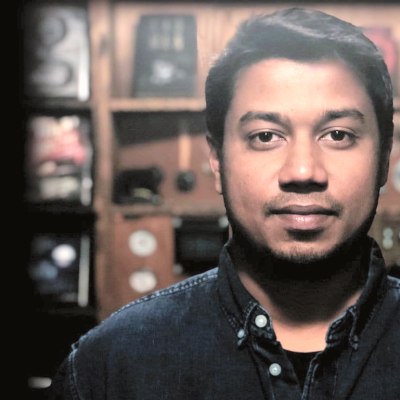
Singer · Tamil Nadu, India
Ramesh Kannan was born in a small village in Tamil Nadu, India, where he was immersed in the rich cultural heritage of his surroundings from a young age. Growing up in a family that valued spirituality and traditional arts, he was exposed to various forms of music and dance that celebrated the divine. His early life was marked by a deep connection to nature and the spiritual practices of his ancestors, which laid the foundation for his lifelong journey into the realms of spirituality and artistic expression. This nurturing environment fostered his innate talents and ignited a passion for exploring the deeper meanings of life through art.
Ramesh Kannan was born in a small village in Tamil Nadu, India, where he was immersed in the rich cultural heritage of his surroundings from a young age. Growing up in a family that valued spirituality and traditional arts, he was exposed to various forms of music and dance that celebrated the divine. His early life was marked by a deep connection to nature and the spiritual practices of his ancestors, which laid the foundation for his lifelong journey into the realms of spirituality and artistic expression. This nurturing environment fostered his innate talents and ignited a passion for exploring the deeper meanings of life through art.
As a teacher and artist, Ramesh Kannan has dedicated his life to sharing the transformative power of music and spirituality. He is known for his soulful renditions of traditional Indian music, which often incorporate elements of meditation and mindfulness. His workshops and performances are designed to create a space for participants to connect with their inner selves and the universe around them. Through his teachings, he emphasizes the importance of authenticity and emotional expression, encouraging individuals to explore their unique voices and experiences. His discography includes a variety of albums that blend classical Indian music with contemporary influences, making his work accessible to a diverse audience.
Ramesh's artistic journey has been profoundly influenced by his lineage and the teachings of his guru, who instilled in him the values of devotion and discipline. He draws inspiration from various spiritual traditions, including Bhakti and Sufism, which emphasize love, devotion, and the pursuit of truth. This rich tapestry of influences is evident in his music, which often transcends cultural boundaries and resonates with listeners on a universal level. Ramesh's commitment to preserving traditional forms while innovating within them reflects the teachings of his lineage, allowing him to bridge the past and the present in meaningful ways.
Today, Ramesh Kannan stands as a vital figure in the spiritual and artistic communities, embodying the essence of what it means to live a life of purpose and connection. His work not only entertains but also serves as a catalyst for personal and collective transformation. In a world that often feels fragmented, Ramesh's music and teachings remind us of the importance of unity, love, and self-discovery. His ability to touch hearts and inspire minds makes him an important voice in contemporary spirituality, inviting all to embark on their own journeys of exploration and awakening.
Listening Journey
Discography
Worth Knowing
Ramesh Kannan is a Tamil Nadu-born spiritual artist and music teacher whose practice sits at the intersection of traditional Indian classical music, meditation, and devotional spirituality. Born in a village steeped in the region's rich cultural heritage, he has dedicated his life to bridging the gap between ancient spiritual traditions and contemporary seekers who want to connect with their inner selves through music. What sets him apart is his refusal to treat these domains as separate: his performances and teachings treat music not as entertainment but as a direct vehicle for mindfulness and emotional authenticity. Listeners and students are drawn to Ramesh's work because he models what it means to preserve traditional Indian music—with all its technical rigor—while making it accessible to audiences across cultural boundaries. His approach emphasizes the transformative potential of devotion (bhakti) without requiring prior musical training or spiritual background from his audience.
Ramesh Kannan's practice is rooted in the Bhakti and Sufi traditions—spiritual lineages that emphasize love, devotion, and the pursuit of truth through artistic and contemplative means. His foundational training comes from a guru lineage that instilled in him the values of discipline and authentic spiritual expression, principles he carries forward in both his music and his teaching. The Bhakti tradition in particular, which has deep roots in South India and Tamil Nadu culture, privileges emotional sincerity and direct connection to the divine over intellectual abstraction. His work also draws from Sufism, the mystical dimension of Islam, which similarly uses music, poetry, and devotion as pathways to transcendence. This synthesis of traditions allows Ramesh to speak authentically to listeners from multiple spiritual backgrounds, whether they're drawn to Hindu devotional practice, Islamic mysticism, or secular meditation—each finds resonance because the underlying commitment to truth and love remains constant.
A newcomer should begin with his recent single *Intha Paavikaga* (2024), which offers a concentrated introduction to his vocal approach and the contemplative quality of his music without overwhelming with length or complexity. This track serves as an accessible entry point that demonstrates his core aesthetic: soulful singing grounded in traditional Indian vocal technique, but stripped of unnecessary ornamentation. For those wanting a broader survey of his recorded work, the 2015 compilation *Sacred Music for a Broken Heart* provides seven tracks that showcase the range of his devotional repertoire and the variety of spiritual moods he explores. Newcomers should approach these recordings with the understanding that Ramesh's work is designed for deep listening rather than background consumption—these are pieces meant to slow you down and create an internal space for reflection. Starting here also makes sense because it requires no prior knowledge of raga, Indian classical theory, or specific spiritual terminology; the emotional and meditative quality comes through immediately, and technical understanding can deepen through repeated listening.
Where many contemporary spiritual musicians lean toward ambient production, layered arrangements, or fusion with electronic elements, Ramesh maintains an aesthetic of restraint rooted in traditional Indian classical practice—his work prioritizes clarity of voice, authenticity of emotion, and the integrity of the musical lineage he inherited. His distinctiveness also lies in his dual commitment to both musicianship and teaching; he is not a guru who dabbles in music, nor is he a musician who occasionally offers spiritual commentary, but rather someone who sees music and spiritual instruction as inseparable practices. Unlike teachers who may reference Bhakti and Sufism in abstract terms, Ramesh's connection to these traditions comes through lived lineage and family inheritance—he was immersed in spirituality and traditional arts from childhood in Tamil Nadu, not as an adult convert to Eastern philosophy. His willingness to work across cultural and linguistic boundaries while maintaining deep fidelity to traditional forms sets him apart from both Western new-age spirituality and purist classical Indian musicians who resist contemporary accessibility. He bridges past and present not through compromise but through a kind of humble clarity: the ancient practices work because they are rooted in truth, and truth transcends era and geography.
Ramesh Kannan's music is not suited for listeners seeking high-energy, rhythmically propulsive spiritual sound—if you're drawn to kirtan's call-and-response intensity, electronic meditation tracks with driving beats, or the percussive exuberance of contemporary world music fusion, his restrained devotional approach will likely feel too spare. His teaching is not designed for students who want step-by-step instruction in raga theory or Indian classical technique in the traditional guru-kula sense; he emphasizes personal exploration and emotional authenticity over systematic technical pedagogy, which can frustrate those seeking structured curriculum. Those uncomfortable with explicitly spiritual or devotional language may find his work's rootedness in Bhakti and Sufism doctrine off-putting, even as he attempts to make these practices universal. His aesthetic of simplicity and emotional directness also won't appeal to listeners who prefer complexity, theoretical innovation, or the intellectual challenge of avant-garde music. Additionally, Ramesh's work requires active, contemplative engagement—it is fundamentally not background music for commuting, exercising, or casual social settings. If your spiritual practice is secular, medically focused on stress-reduction without metaphysical content, you may appreciate his mindfulness emphasis while remaining unmoved by the devotional dimension that sustains his music.
Based on his philosophy, Ramesh's teaching emphasizes authenticity and emotional expression over technical perfection—his workshops are designed to create safe spaces for participants to connect with their inner selves through music and contemplative practice, rather than drill students in mechanical skill acquisition. His approach is informed by both his guru lineage and the values of Bhakti and Sufi traditions, which prioritize devotion, sincerity, and direct personal experience over dogma. A session with Ramesh likely begins with an invitation to slow down and attune to the present moment, creating what he calls a space for connection with the inner self and the universe around it. His teaching refuses the separation between spirituality and musicianship—when you study with him, you're not taking a singing lesson in one room and a meditation class in another, but rather exploring how musical practice itself becomes a spiritual discipline. He encourages students to discover their unique voices and experiences rather than simply imitate his own, meaning a typical session might involve singing, listening, silence, and reflection in equal measure, with the ultimate goal of fostering self-discovery and authentic expression.
Ramesh Kannan's vocal timbre is the centerpiece of his music: a soulful, expressive voice trained in traditional Indian classical singing, delivered with a clarity that emphasizes emotional authenticity over virtuosic display. His arrangements are characterized by restraint—typically featuring traditional instruments like the harmonium or supporting string work rather than dense orchestration, which allows the listener to hear every nuance of his phrasing and the space between the notes. The aesthetic is fundamentally devotional and meditative: tempos are unhurried, syllables are often sung in Sanskrit or Tamil with careful attention to their spiritual meaning, and the overall effect is one of inward focus rather than outward energy or performance spectacle. Unlike contemporary spiritual music that may incorporate electronic elements or world-music fusion, Ramesh's sound is rooted in the sonic vocabulary of Indian classical tradition—ragas, rhythmic cycles, and the call-and-response patterns of bhakti music. What surprises many Western listeners on first encounter is how the apparent simplicity actually requires tremendous technical skill and emotional intelligence to execute; there's nowhere for a singer to hide when accompaniment is minimal and intention is everything. The overall impression is of someone who has internalized the discipline of his lineage so thoroughly that he can now serve the spiritual content rather than the musical ego.
*Sacred Music for a Broken Heart* (2015) remains his most substantial recorded statement, a seven-track compilation that demonstrates the emotional range of his devotional practice and the spiritual moods he explores across different compositional contexts. This collection serves as a window into how he approaches the marriage of traditional Indian musical forms with contemporary spiritual needs—specifically, how music can speak to vulnerability, longing, and the healing potential of sincere devotion. His more recent single *Intha Paavikaga* (2024) shows his continued evolution and commitment to releasing new work, suggesting an active artistic practice despite his modest streaming presence. While full album-length recordings do not appear in his major discography, these two releases together create a clear trajectory: from the richer, more developed pieces of *Sacred Music for a Broken Heart* to the concentrated intensity of the recent single. For listeners who want to understand Ramesh's voice, spiritual sensibility, and musical philosophy, beginning with *Sacred Music for a Broken Heart* and then exploring *Intha Paavikaga* provides both depth and a sense of where his practice is currently directed. His discography suggests quality over quantity, which is consistent with his emphasis on authenticity over commercial productivity.
Ramesh Kannan's music is available on Spotify, where you can access both his recent single *Intha Paavikaga* and the compilation *Sacred Music for a Broken Heart*, as well as follow his artist profile for notifications of future releases. His Spotify artist page (accessible via his profile on BrightStar) is the most direct digital path to stay informed as new recordings emerge, given that his recent 2024 single demonstrates ongoing creative work. At this time, there are no publicly listed upcoming tour dates or retreat schedules in major directory listings, which suggests his teaching and performance schedule may be communicated through personal networks, local spiritual communities in Tamil Nadu, or specialized meditation and devotional music platforms rather than mainstream concert promotion. Interested students and listeners should check back with BrightStar regularly for event updates, as touring information and teaching schedules can be added as they are confirmed. For now, engaging with his recorded work through Spotify and seeking recommendations within Bhakti, Sufi, and meditation music communities online may be the most reliable way to stay connected with his practice until more formal tour or retreat announcements are made public.
Ramesh navigates this tension by refusing to treat traditional Indian music and contemporary accessibility as contradictory goals—he preserves the technical and spiritual integrity of his lineage while stripping away unnecessary formality or gatekeeping that would exclude modern listeners. This balancing act is evident in his choice to record both devotional compilations and standalone singles, allowing him to work within the song-length and playlist structures that contemporary listeners encounter on Spotify while maintaining the devotional seriousness of classical ragas and bhakti forms. His philosophy of emotional authenticity and personal voice—encouraging students to discover their unique experiences—is itself a bridge between tradition and modernity; it honors the guru lineage's commitment to transmission while respecting each practitioner's individual spiritual journey. What distinguishes his approach from dilution or fusion-for-fusion's-sake is his commitment to *truth* as the organizing principle: the traditional forms work because they are rooted in truth, and that truth is eternally relevant, so innovation lies in finding new contexts for it rather than retrofitting it with contemporary production or genre markers. By maintaining the spare, emotionally direct aesthetic of traditional practice—minimal arrangements, focus on voice and meaning, devotional sincerity—he demonstrates that the past and present need not compromise with each other; they can be faithful partners if guided by authenticity rather than commercial calculation.
É você? Reivindicar esta página ›
Continue your journey
BrightStar is the global directory of artists, teachers, and healers in the wellness and spiritual movement. Find your next experience — or add yourself.
Browse 14,000+ curated profiles across kirtan, yoga, meditation, and beyond.
Explore directory →Kirtan, retreats, sound baths, breathwork, ceremonies — happening this week.
Browse events →Are you an artist, teacher, or healer? Get listed — free, AI-assisted, live in minutes.
Get started →