




RF

Rachel Fearnley
Somatic Coach
Sobre
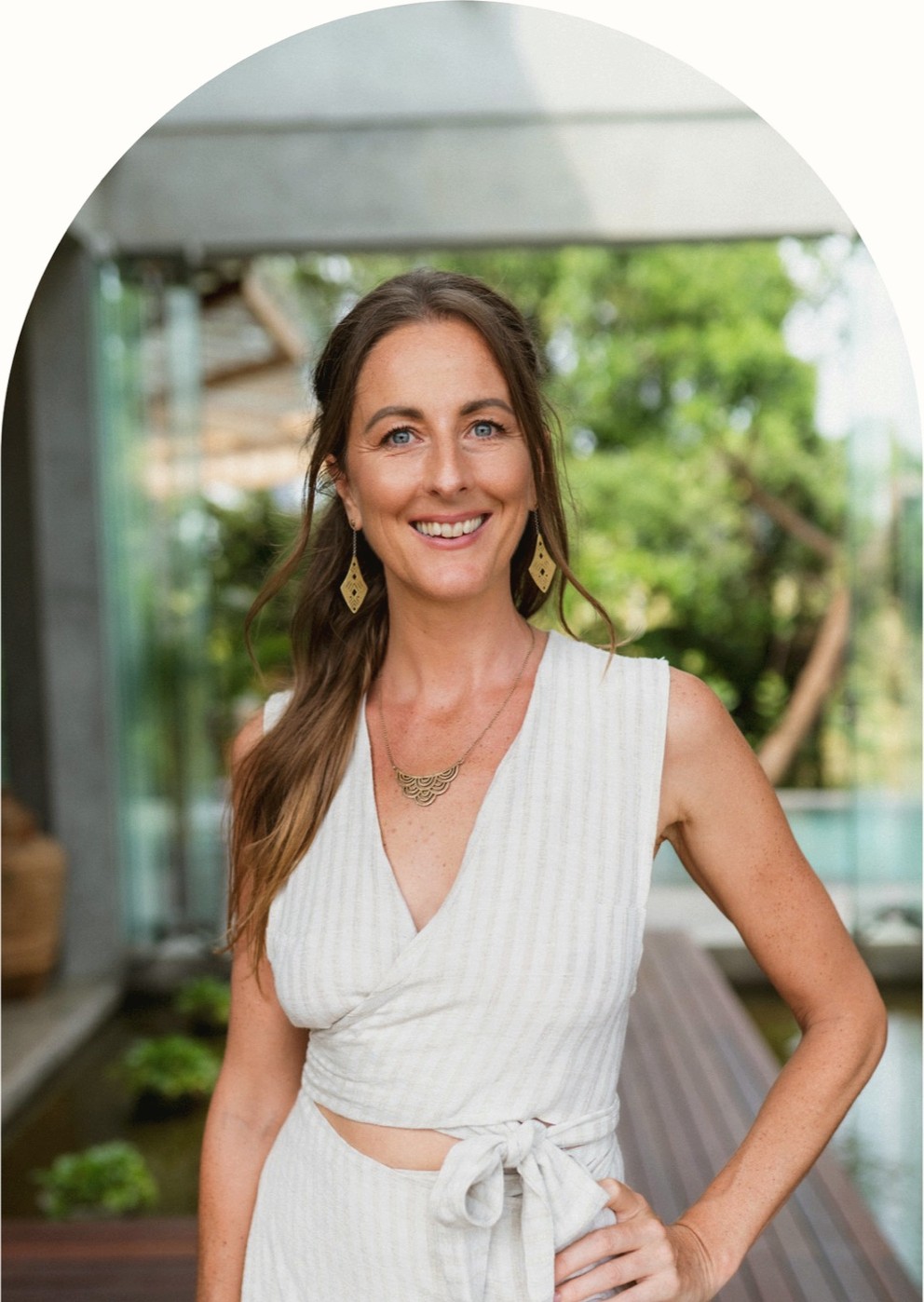
Rachel Fearnley is a somatic coach, breathwork facilitator, teacher trainer and speaker. She is also a solo mum and an entrepreneur. She supports her clients to feel more grounded in their bodies and less at the mercy of an over-analytical, judgemental mind.
Rachel Fearnley is a somatic coach, breathwork facilitator, teacher trainer and speaker. She is also a solo mum and an entrepreneur. She supports her clients to feel more grounded in their bodies and less at the mercy of an over-analytical, judgemental mind.
By her own account, she practised yoga, meditation and breathwork for years and still felt something deeper needed attention. Discovering somatics gave her tools for working with her body, her emotions and her experiences, and for shifting the blocks that kept her stuck. She has since used those tools with hundreds of clients.
Her work rests on the idea that the body holds wisdom and the ability to heal itself, provided we slow down enough to hear its signals and build a baseline of safety. She sees this as more than coming back to the body. It is also a quiet rebellion against a culture that prizes speed, productivity and stress over connection, rest and presence. She pictures a world where emotional regulation and embodiment are the norm.
She offers one-to-one somatic mentorship and online courses. Her themes include anger, nervous system regulation and shadow work. She also leads trauma-aware trainings in breath coaching, meditation, yin yoga and facilitation. Her writing includes the e-book Holy Rage: Reclaiming Anger As Sacred Power, and she shares meditations on Insight Timer.
Questions
Rachel Fearnley is a somatic coach, breathwork facilitator, meditation teacher, and trauma-aware trainer who works with clients to help them feel genuinely grounded in their bodies rather than trapped in cycles of anxiety, judgment, and disconnection. What distinguishes her in a crowded wellness space is her refusal to separate somatic work from the real conditions of people's lives—she's a solo mother and entrepreneur herself, so she understands that embodiment isn't a luxury for those with unlimited time to meditate. Her core insight is deceptively simple: your body holds both trauma and wisdom, and you need only slow down enough to listen to what it's telling you. What draws people to her work is that she frames nervous system regulation and emotional embodiment not as self-care trends but as a quiet rebellion against a culture that valorizes speed, productivity, and burnout. With over 16,000 Spotify followers and a growing presence on Insight Timer, she's building an audience of people who've tried traditional meditation or yoga for years and discovered that something deeper in their nervous system and relationship to their body needed attention.
Rachel Fearnley's lineage is rooted in somatics—a contemporary somatic psychology and embodiment practice that draws from body-centered psychotherapy, neurobiology, and trauma-informed approaches rather than classical meditation or yoga philosophy. She clearly has a foundation in yoga and meditation practice, which she studied for years, but her distinctive turn came when she recognized that those practices alone weren't shifting the deeper held patterns in her nervous system and body. Somatics as she practices it is different from traditional yoga lineages or meditation schools; it's a 20th-century emergence that treats the body as an intelligent information system rather than a vehicle for the mind. Her approach is explicitly trauma-aware, meaning she understands nervous system dysregulation through a lens informed by neuroscience and somatic psychology—how the body holds fight-flight-freeze responses, and how to build genuine safety and capacity for regulation. The tradition she belongs to values embodied presence, nervous system literacy, and what's sometimes called body wisdom—the principle that your nervous system and somatic experience contain knowledge that bypasses the over-analytical mind.
The most accessible entry point for newcomers is her Insight Timer meditations, which allow you to sample her teaching voice, pacing, and approach without any financial or time commitment beyond what you'd offer any meditation practice. Her website at rachelfearnley.com is the next natural step, where you can get a fuller sense of her modalities and offerings—the way she frames her work often explains more about her philosophy than a single meditation can. If you're curious about her perspectives on anger, embodiment, and what she calls the quiet rebellion against stress culture, her e-book Holy Rage: Reclaiming Anger As Sacred Power is worth purchasing; it's one of her most direct statements about how she understands emotional wisdom and the body's role in it. For those interested in ongoing work, her YouTube channel shows her teaching in longer form, which gives a clearer picture of her pacing and her actual nervous system regulation practices. None of these entry points require prior yoga or meditation experience—in fact, newcomers who are skeptical of traditional spiritual frameworks often connect most deeply with her work because she grounds everything in nervous system science and somatic physiology rather than mysticism.
Most somatic coaches position themselves within either the psychotherapy tradition or the wellness tradition; Rachel Fearnley straddles both and refuses to separate embodiment work from the political and cultural dimensions of burnout and speed. She's explicit that her work is a quiet rebellion against a culture that prizes speed, productivity, and stress over connection, rest, and presence, which means she's not offering optimization or self-improvement in the Silicon Valley sense—she's offering a genuine reorientation toward what feels safe in your body. Her specific focus on anger through the lens of sacred power (see her e-book Holy Rage) also distinguishes her from many somatic practitioners who treat anger as something to regulate away or transcend; she frames it as wisdom that's been shamed out of the body, particularly in women. She also uniquely holds her own lived experience as a solo mother and entrepreneur as part of her teaching authority rather than separating her personal life from her professional teaching—this authenticity resists the false persona that many wellness teachers maintain. Her trauma-aware trainings in breath coaching, meditation, yin yoga, and facilitation suggest a practitioner who's built community teaching as part of her somatic work, not just one-to-one coaching or online courses.
Rachel Fearnley's work is not for seekers who want a quick fix, a weekend transformation, or a technique that bypasses the slower, messier work of nervous system recalibration and embodied presence. If you're looking for high-energy breathwork that stimulates energy or produces altered states, you'll find her approach more subtle and regulatory than what you're seeking; her emphasis is on building a baseline of nervous system safety, not on chasing peak experiences. Similarly, if you prefer spiritual frameworks that operate at the level of metaphor and transcendence—chakras, cosmic unity, divine light—her grounding in somatic psychology and neuroscience may feel more clinical than you're comfortable with. Her work also assumes that emotional regulation and embodiment are prerequisites for wellbeing, which means if you're primarily looking for philosophical teachings or intellectual understanding of meditation traditions, you'll find her more body-focused and pragmatic than some traditions offer. Finally, if you value a teacher who maintains professional distance and sees their own life as entirely separate from their teaching, Rachel's integration of her identity as a solo mother and entrepreneur might feel less spiritually authoritative, depending on your expectations. Her work is designed for people who are ready to slow down, feel their bodies honestly, and do the patient work of nervous system literacy.
The primary source for Rachel's current offerings and schedule is her website at rachelfearnley.com, where she lists her one-to-one somatic mentorship availability, online courses, and any upcoming trainings or events. Her YouTube channel regularly features her teaching content and announcements, and it's a good secondary source for keeping updated on new meditations or longer-form teachings. Insight Timer, where she shares meditations, also serves as a platform where new meditation releases appear—many teachers announce upcoming work or events through that channel as well. Since she doesn't appear to maintain a public social media presence that's widely documented, the website remains your most reliable source for workshop schedules, retreat information, or new online course launches. If you're interested in her teacher trainings specifically—which cover breath coaching, meditation, yin yoga, and facilitation—those details and registration information would be listed on her main site. There are currently no upcoming tour dates documented in our system, but checking her website directly for the most current information is essential, as events may be scheduled without being indexed.
Rachel Fearnley's teaching style emphasizes patience, nervous system awareness, and what she calls building a baseline of safety—she's not pushing students toward breakthrough experiences but toward genuine felt sense of groundedness in the body. Based on her Insight Timer meditations and YouTube content, her pacing is notably slow and attentive; she speaks clearly, without rushing, and creates space for students to actually notice their own somatic experience rather than performing it. Her one-to-one somatic mentorship is described as working with clients to help them feel more grounded in their bodies and less at the mercy of an over-analytical, judgmental mind, which suggests she's listening not just to what you say but to the nervous system patterns underneath your words. In her trauma-aware trainings, she likely models the very principles she teaches—creating psychological and nervous system safety, allowing people to work at their own pace, and treating the body as intelligent rather than broken. Her teaching doesn't rely on inspirational rhetoric or spiritual platitudes; she grounds everything in somatic physiology and the actual felt experience of regulation, which can feel refreshingly unglamorous compared to more aspirational wellness teaching. The atmosphere of her work, both in meditation and training contexts, seems designed to help you slow down enough to actually hear what your body is telling you.
Her most explicit recurring theme is anger and emotional wisdom—particularly her assertion that anger has been pathologized, especially for women, and needs to be reclaimed as sacred power (the subject of her e-book Holy Rage: Reclaiming Anger As Sacred Power). Nervous system regulation appears throughout her work; she teaches people to recognize dysregulation patterns and build capacity for genuine calm and presence rather than forced transcendence. Embodiment and coming back to the body is central, though she's careful to frame this as something more than a trendy return to somatic awareness—for her, it's a political and cultural stance against speed and productivity obsession. Shadow work is another explicit theme she addresses in her courses and teaching; she's interested in the parts of ourselves that the culture or our conditioning has taught us to reject, and in how the body holds those disowned experiences and patterns. The idea of the body as a source of wisdom rather than a problem to be solved runs through everything—this is foundational to somatic practice but Rachel emphasizes it consistently as a direct antidote to the over-analytical, judgmental mind. Finally, safety and trust appear as prerequisites in her trauma-aware approach; she teaches that genuine regulation and healing can't happen without a baseline sense of psychological and nervous system safety.
Yes—her most significant written work is the e-book Holy Rage: Reclaiming Anger As Sacred Power, which is available through her website and represents her clearest statement on how she understands anger, embodiment, and emotional wisdom. She shares regular meditations on Insight Timer, which function as independent recorded teachings that people can return to, study, and integrate into their own practice without the structure of a formal course. Her YouTube channel contains longer-form recorded talks and teachings that function as standalone content; these range from guided meditations to more instructional videos on nervous system work and breathwork practice. While no traditional book has been published beyond the e-book, her online courses offer recorded modules that serve a similar function—structured, independent study of her core teachings on topics like anger, nervous system regulation, and shadow work. Her teacher trainings are also available as recorded content in some cases, though trainings often include live elements or interactive components that recorded versions wouldn't capture. For someone wanting to study her work asynchronously and independently, the combination of Insight Timer meditations, the Holy Rage e-book, and her YouTube content provides a solid foundation without requiring enrollment in a formal program.
No prior experience is required to engage with Rachel Fearnley's work, though some context about somatics or meditation might make certain framings feel less foreign. Her teaching is designed for people coming to somatic practice for the first time as well as for experienced practitioners who've practiced yoga and meditation for years and realized something deeper needed attention—this was her own journey. Understanding basic nervous system concepts like fight-flight-freeze responses or dysregulation can be helpful but isn't prerequisite; her teaching itself introduces these ideas in accessible language. If you're unfamiliar with body-centered psychology or somatic frameworks, her Insight Timer meditations serve as a gentle introduction—they're structured as guided practices rather than lectures, so you can simply experience what nervous system awareness and grounded presence feel like before needing to understand the theory. Her trauma-aware trainings assume participants may be coming from psychology, yoga, meditation, or coaching backgrounds, but the trainings also serve practitioners just entering the field. What matters more than prior knowledge is readiness to slow down, pay attention to your body, and question the cultural messages that have trained you to prioritize productivity and analysis over embodiment and rest. Age, spiritual background, or meditation experience are all less relevant than genuine curiosity about what your body is trying to tell you.


É você? Reivindicar esta página ›
There's more where this came from.
BrightStar is the global directory of artists, teachers, and healers in the wellness and spiritual movement. Find your next experience — or add yourself.
Discover More Artists
Browse 14,000+ curated profiles across kirtan, yoga, meditation, and beyond.
Explore directory →Find an Event Near You
Kirtan, retreats, sound baths, breathwork, ceremonies — happening this week.
Browse events →Add Your Profile
Are you an artist, teacher, or healer? Get listed — free, AI-assisted, live in minutes.
Get started →