Coming Up
What's Happening
Coming Up
Ouvir
Listening Journey
Sound Journey
Discography


Folk Soul Duo
MaMuse is the folk-soul duo of Sorah Nutting and Karisha Longaker, known for radiant vocal harmonies and uplifting, heart-centred music rooted in the folk and gospel traditions.
MaMuse is the folk-soul duo of Sorah Nutting and Karisha Longaker, known for radiant vocal harmonies and uplifting, heart-centred music rooted in the folk and gospel traditions.
The two describe their name simply: "Ma" as in Mamma, "Muse" as in the one who inspires. Wholeheartedly fed by folk and gospel, they play a family of varied acoustic instruments — upright bass, guitar, mandolins, and flutes — and have been weaving song into the heart of community for nearly two decades. Their songwriting draws on both the heartbreak and the beauty of living in an unraveling world, embracing a sound that honours their folk and Americana roots while reaching toward something richer and soul-infused.
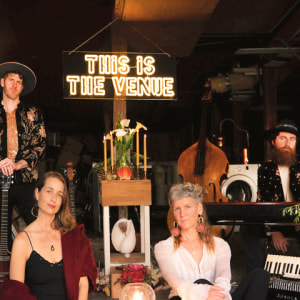
Their seventh full-length album, This Is the Venue, is their first studio recording made with their full band. Rooted in Sorah and Karisha's songwriting, the album features Nate Dittle on piano and organ, Scott Elliott Ferreter on guitar, and producer Nino Moschella on percussion, production, and vocals — his voice joining theirs in lush, choir-like harmonies. The record was made possible through a community crowdfunding campaign and marks a new chapter for the duo.
Beyond the stage, MaMuse brings their work into circles, workshops, and retreats across the country. Their Community Singing Workshops — typically two to three hours, customisable in length — offer songs that are easy to learn, rich with harmony, and require no prior musical experience. Weekend and multi-day retreats go deeper, weaving vocal empowerment, song-catching, harmony work, storytelling, and deep listening practices into extended immersive experiences. Past gatherings have taken place at Esalen Institute in Big Sur, Cedar Springs Retreat Center in Santa Cruz, Four Springs Retreat Center in Middletown, and River's Bend Retreat Center in Philo, California, as well as on the Green River in Utah. They have shared the circle with facilitators and singers including Lydia Violet, Melanie DeMore, Maggie Wheeler, and Kate Munger, among others.
These workshops, as MaMuse describes them, are not performances — they are participatory and immersive, grounded in the belief that singing is a birthright that grounds, heals, and reconnects people with themselves and one another. Whether participants are experienced vocalists or rediscovering their voices for the first time, MaMuse's invitation is the same: to join a circle of belonging, joy, and deep listening. Their gatherings draw people seeking personal restoration and lasting community connection through the shared act of singing together.
What's Happening
Listening Journey
Discography
Worth Knowing
MaMuse is the folk-soul duo of Sorah Nutting and Karisha Longaker, known for weaving brilliant vocal harmonies with emotionally intelligent lyrics rooted in folk and Americana traditions. Over nearly two decades, they've built a distinctive practice around what they call "a musical tune-up for the heart" — combining studio recordings with participatory singing workshops and retreats designed to help people reconnect with their voice and one another. What distinguishes them from typical folk performers is their explicit commitment to transformational experiences: they don't position themselves as entertainers on a stage, but as facilitators of healing and belonging through song. Their recent seventh full-length album, This Is the Venue, marked a significant evolution, introducing a full band sound — featuring pianist Nate Dittle, guitarist Scott Elliott Ferreter, and producer Nino Moschella — while maintaining the folk and Americana roots that have always defined their music. Listeners and workshop participants respond to MaMuse because they offer both artistic rigor and genuine accessibility: songs that are easy to learn yet rich with harmonic complexity, and a philosophy that positions singing not as a specialized skill but as a birthright available to all voices.
MaMuse draws from American folk and gospel traditions, channeling the harmonic and emotional depth of these lineages into contemporary conscious music practice. Their sound sits firmly in the folk-soul continuum — influenced by American Americana roots but oriented toward the transformational and healing dimensions that increasingly characterize yoga and conscious music spaces. The duo's approach to participatory singing workshops echoes community song-leading traditions, a practice with roots in liberation song circles, folk pedagogy, and the belief that collective singing is a tool for resilience and social connection. They've worked alongside established community song leaders including Melanie DeMore, Barbara McAfee, and Kate Munger, positioning themselves within a growing movement that treats singing as a somatic practice and a form of emotional and spiritual opening. This Is the Venue, their most recent album, was shaped through community crowdfunding — a model reflecting grassroots folk traditions — and contains songs explicitly born from both heartbreak and beauty, suggesting a lineage that honors folk music's capacity to witness difficult reality while sustaining hope. Their work belongs to a contemporary stream of conscious music that prioritizes folk instrumentation (upright bass, guitar, mandolins, flutes) over synthetic production, and emotional authenticity over polished arrangement.
The most direct entry point is This Is the Venue, their 2026 album and seventh full-length release, which represents the most mature and sonically rich version of their vision. This album benefits from professional collaboration with Nate Dittle on piano and organ, Scott Elliott Ferreter on guitar, and producer Nino Moschella, giving the songs a fuller, soul-infused production while preserving the acoustic folk foundation longtime listeners expect. It's also worth noting that if you're drawn to their conscious music practice and the transformational dimension of their work, a Community Singing Workshop or their participatory Song Village gatherings offer an immediate, embodied experience — these are designed explicitly for newcomers with no musical background, making them an ideal first encounter. For listeners exploring earlier work, Heart Nouveau (2015) and Prayers for Freedom (2018) are strong albums that showcase the duo's harmonic and lyrical depth before the full-band production. Since MaMuse's catalog spans more than a decade across seven albums, starting with the newest material ensures you're hearing their most refined artistic statement, then exploring backward if the work resonates. The duo's website at mamuse.org offers workshop information and likely additional context for understanding how their albums connect to their broader practice.
Where many yoga and conscious music artists lean toward world music aesthetics, ambient production, or devotional frameworks, MaMuse remains rooted in American folk and gospel traditions — their sound is built on acoustic instruments (upright bass, guitar, mandolins, flutes) and human vocal harmonies, not loops or electronic textures. The conscious music space often emphasizes transcendence or escape, whereas MaMuse's lyrics, particularly on This Is the Venue, are grounded in emotional intelligence and witness to "heartbreak and the beauty of living in an unraveling world" — they're not offering spiritual bypass, but integration. Their workshops operate from a fundamentally different premise than most music-based healing offerings: they're explicitly not performances, but immersive, participatory experiences built on the conviction that singing is a birthright and every voice matters, not just trained or resonant ones. While other conscious music practitioners may offer occasional workshops, MaMuse has spent nearly two decades building a robust retreat infrastructure — from Cedar Springs in Santa Cruz to Esalen Institute in Big Sur to the Green River in Utah — positioning singing circles as central to their artistic practice, not peripheral add-ons. The crowdfunded model for This Is the Venue also signals a different relationship to audience: community-supported rather than industry-mediated. Finally, their collaboration with established community song leaders like Melanie DeMore and Kate Munger positions them within a specific lineage of social-justice-informed singing practice, distinct from the generic wellness positioning common in yoga music spaces.
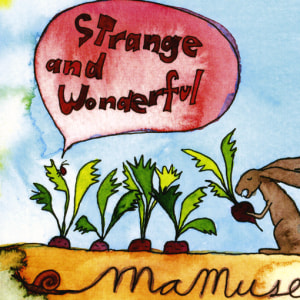
This Is the Venue (2026) is their definitive statement: their seventh full-length album and first with a full band, it represents nearly two decades of artistic refinement plus new collaborations with Nate Dittle, Scott Elliott Ferreter, and producer Nino Moschella. The album was shaped through community crowdfunding, contains nine tracks rooted in folk and Americana traditions, and embraces a richer, soul-infused sound while maintaining the lyrical and emotional depth the duo has long cultivated. Prayers for Freedom (2018) is essential for understanding their middle period — an eight-track album that demonstrates their capacity for spiritually and socially conscious songwriting. Heart Nouveau (2015) shows their harmonic and compositional sophistication during their pre-full-band era, with thirteen songs that reveal why they've built such a dedicated following among yoga and conscious music audiences. Strange & Wonderful (2010) and All The Way (2009) are strong entry points to their earlier catalogue, showcasing the stripped-down acoustic duo format that many longtime listeners hold dear. ReMuse (2024) offers eight tracks that bridge their earlier work and the fuller production of This Is the Venue, making it a useful listen for understanding their stylistic evolution. Rather than surveying all seven albums, most newcomers benefit from starting with This Is the Venue, then exploring Prayers for Freedom and Heart Nouveau based on whether you're drawn to the contemporary full-band aesthetic or the earlier, more minimal duo sound.
If you're seeking high-energy, rhythmically propulsive music — whether electronic dance, hip-hop, or even upbeat pop — MaMuse's pacing will feel deliberate and slow by contrast. Their work is not designed for background listening or passive consumption; these songs require attention and invite contemplation, so listeners seeking unobtrusive ambient music or sonic wallpaper may find it less suited to their needs. Those looking for exotic world music aesthetics, Sanskrit mantra traditions, or non-Western spiritual frameworks won't find that in MaMuse's explicitly American folk and gospel lineage — their spiritual dimension emerges through emotional authenticity and collective singing practice, not through devotional or yogic traditions. Their participatory workshops are not for people who prefer to remain passive audience members; the entire model assumes you'll be singing, listening deeply, and engaging in what they call "deep listening practices" and "harmony work," so those uncomfortable with group participation or their own voice will feel out of place. Listeners expecting polished, radio-ready production may find even This Is the Venue's aesthetic — which privileges acoustic transparency over commercial gloss — somewhat austere. Finally, their lyrical content is grounded in emotional truth and witness to difficulty ("heartbreak and the beauty of living in an unraveling world"), so audiences seeking exclusively uplifting, transcendent, or escapist spiritual content may experience their songs as more real and less comforting than expected. In short: MaMuse is for listeners ready to slow down, sing, feel, and be present — not for those seeking passive, exotic, or escapist engagement with conscious music.
The foundational MaMuse sound relies on a family of acoustic instruments: upright bass, acoustic guitar, mandolins, and flutes — all played by the duo or invited musicians across their recordings and live performances. On their earlier albums, this instrumentation was often kept minimal, creating a duo or small ensemble aesthetic; on This Is the Venue, they expanded to include Nate Dittle on piano and organ (adding harmonic depth and soul-music warmth), Scott Elliott Ferreter on guitar (broadening the textural palette), and Nino Moschella on percussion, production, and choir-like harmonies (creating a full-band sound). Their workshop and retreat faculty regularly includes established community song leaders such as Melanie DeMore, Barbara McAfee, Maggie Wheeler, Kate Munger, Lydia Violet, and Arnae Baston, suggesting they position themselves within a specific lineage of social-justice and healing-oriented singing practice. The community crowdfunding model for This Is the Venue also indicates that their collaborators extend beyond traditional session musicians to include the broader fan community that invested in the album's creation. Within their choir programme and private event offerings, they adapt instrumentation based on context, suggesting flexibility and responsiveness to what each setting requires. Overall, their collaborators tend to be people fluent in folk, chamber, and participatory music aesthetics — not pop producers or electronic specialists — which reinforces their commitment to acoustic authenticity and communal singing as the heart of their practice.
While MaMuse's entire catalogue is rooted in the conscious music and yoga festival spaces, and their streaming presence appears in yoga playlists, their work differs from music specifically composed for meditation or asana practice in important ways. Their songs are built for active listening and emotional engagement rather than as sonic backgrounds to physical practice — they reward attention to lyrics, harmonic detail, and the human voices, making them less suited to someone trying to quiet the mind or focus on breath and body sensation. That said, Prayers for Freedom (2018) and tracks from Heart Nouveau (2015) carry a contemplative, grounding quality that many listeners find supportive in meditation or ritual contexts, particularly in group or ceremonial settings where the lyrics' spiritual and freedom-oriented content matters. Their participatory singing workshops, which operate in retreat centers like Esalen Institute, Cedar Springs Retreat Center, and Four Springs Retreat Center, are explicitly positioned as transformational experiences that could function within larger wellness or ceremonial contexts — the practice itself (collective singing, deep listening, harmony work) is the medicine, not the music as isolated product. The album This Is the Venue, with its soul-infused arrangements and emotional depth, may be less suited to meditation-focused use cases than their earlier, sparser work. For ceremonial or healing circle contexts where emotional opening and collective presence matter, MaMuse's music is excellent; for solitary meditation or asana practice where you need non-intrusive, repetitive sonic support, their harmonic complexity and lyrical content may pull attention in ways that don't serve your practice.
Based on their album titles and public description of This Is the Venue — written from "both the heartbreak and the beauty of living in an unraveling world" — MaMuse's lyrical work engages with emotional honesty and witness rather than spiritual bypass or false comfort. Prayers for Freedom (2018) signals their concern with liberation and social consciousness, distinguishing them from artists whose spiritual work remains personal or apolitical. Titles like Integration of the Awkward (2012) suggest they're interested in making space for difficult emotions, complexity, and the messiness of human experience — not resolving it into neat spiritual platitudes. Their self-description as offering "a musical tune-up for the heart" indicates they're working in the register of emotional restoration and opening, which appears throughout their practice: whether in songs, workshops, or their Song Village gatherings, the recurring theme is reconnection — with voice, with one another, with joy and resilience in the face of difficulty. Strange & Wonderful and Heart Nouveau suggest appreciation for paradox, strangeness, and the full spectrum of human experience. Throughout nearly two decades of songwriting, MaMuse's consistent concern appears to be how singing and harmony can serve emotional truth, healing, and belonging — not transcendence or escape, but grounding and presence. This tonal and thematic consistency across albums explains why their work resonates in conscious music and yoga contexts without feeling like generic wellness content: they're genuinely grappling with heartbreak, beauty, freedom, and the human capacity to open and connect.
MaMuse's official website at mamuse.org is the primary source for tour dates, retreat schedules, workshop offerings, and release announcements — this is where they post Community Singing Workshops, weekend retreats, Song Village gatherings, and information about their choir programme. Their Spotify profile (artist ID: 2YyZrDoQn0alXttMnAFCMm) shows their complete discography and streaming history, though Spotify's release radar and follow features won't capture their retreat and workshop calendar, which exists outside streaming platforms. Apple Music (artist link for MaMuse, ID: 372964244) offers their recordings alongside similar conscious music artists, useful for algorithmic discovery if you're building a practice playlist. Given that MaMuse's practice centers significantly on in-person, participatory retreats and workshops rather than purely on recordings, their website is essential — this is where they announce venues like Esalen Institute, Cedar Springs Retreat Center, Four Springs Retreat Center, and River's Bend Retreat Center in California and Utah. They offer personalized songs and private events, which likely requires direct contact through their website. The crowdfunded model for This Is the Venue suggests they may periodically announce special projects or initiatives through direct community channels, so subscribing to their newsletter or following their website closely is worthwhile if you want to participate in future community-supported releases. Since no upcoming tour dates were visible in available data, visiting mamuse.org is your best immediate step for current retreat and workshop schedules.
É você? Reivindicar esta página ›
Continue your journey
BrightStar is the global directory of artists, teachers, and healers in the wellness and spiritual movement. Find your next experience — or add yourself.
Browse 14,000+ curated profiles across kirtan, yoga, meditation, and beyond.
Explore directory →Kirtan, retreats, sound baths, breathwork, ceremonies — happening this week.
Browse events →Are you an artist, teacher, or healer? Get listed — free, AI-assisted, live in minutes.
Get started →