Books
Bibliography coming soon.


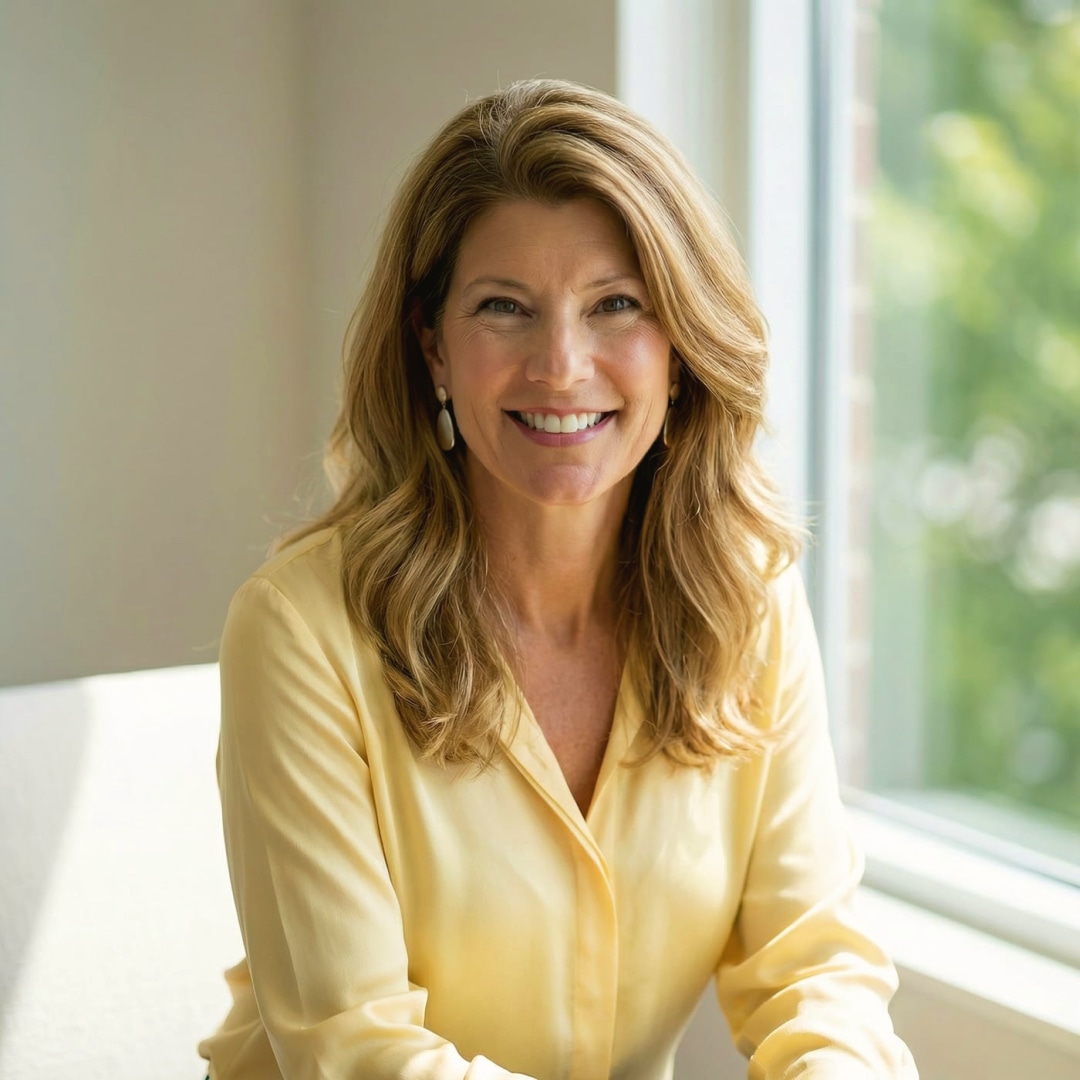






Author
Jenna Riemersma is a Certified IFS Therapist and IFS Clinical Consultant, as well as an author and speaker. By her own description, she has spent decades helping people make sense of what feels painful, confusing, and stuck.
Jenna Riemersma is a Certified IFS Therapist and IFS Clinical Consultant, as well as an author and speaker. By her own description, she has spent decades helping people make sense of what feels painful, confusing, and stuck.
Her work weaves together clinical insight, spiritual dimensionality, and lived experience, supporting meaningful change that unfolds over time, without pressure or performance. She brings Internal Family Systems (IFS) together with Christian spirituality, inviting people to welcome every part of themselves with compassion, including the parts that carry shame, anxiety, or overwhelm, and the protective behaviors that can keep people stuck, such as perfectionism, people-pleasing, and overworking.
Her Altogether You workshop is an on-demand course for individuals and groups such as book clubs, Bible studies, and small groups. It explores why inner parts end up at odds, the God-image at the core of a person, and practical tools like the U-Turn and Speaking For, Not From, for handling conflict and relationships. Her central message is that all parts of you are welcome, exactly as you are.
Jenna Riemersma is a Certified IFS Therapist, clinical consultant, author, and speaker who specializes in weaving Internal Family Systems therapy with Christian spirituality. Her work addresses a specific gap in the market: people who've been wounded by faith, feel distant from God, or are caught between secular psychology and religious tradition. Over decades, she's helped clients make sense of what feels painful and stuck by offering Internal Family Systems as a tool for understanding why our inner parts end up at war—why we default to perfectionism, people-pleasing, control, or dissociation. What distinguishes her isn't just clinical expertise; it's her insistence that healing doesn't require choosing between psychology and faith. She's developed shorthand tools like Move Toward and Speaking For, Not From that translate IFS concepts into language that resonates with spiritually-minded clients. Her approach treats every part of a person—protective, wounded, wise—as welcome and understandable, which appeals to people exhausted by shame-based spirituality.
Jenna Riemersma's work sits at the intersection of two distinct lineages: Internal Family Systems (IFS), a therapy model centered on self-compassion and understanding the multiplicity of our minds, and Christian spirituality. She's not a generic spirituality teacher; she's specifically integrating IFS methodology with Christian theology and practice in ways that most practitioners don't attempt. This hybrid approach is less common than secular IFS training or purely Christian counseling, making her work particularly relevant for clients who hold both traditions close but haven't found many practitioners fluent in both languages. The IFS lineage emphasizes understanding that our minds contain many parts, each with protective or adaptive roles, and treating these parts with curiosity rather than judgment. Her addition of Christian spirituality means she's exploring how concepts like grace, forgiveness, and a compassionate God-image intersect with IFS's framework of internal plurality. This isn't surface-level borrowing; she's investigating how welcoming every part of ourselves—the critical inner voice, the anxious protector, the shame-carrier—connects to Christian theology about wholeness and redemption.
The most accessible entry point is her on-demand course Altogether You, which is designed both for individuals and for groups like book clubs, Bible studies, and small groups. This workshop format makes it ideal if you've never encountered IFS before and want to understand how it applies to real life without committing to therapy or long-term study. Altogether You is especially geared toward people who feel wounded by faith traditions or who are curious about how IFS and Christianity intersect—so if either of those resonates, this is the natural starting place. The course structure means you can move at your own pace, which suits both therapeutic newcomers and people skeptical of high-intensity spiritual programs. Her website at learn.jennariemersma.com is where you'll find information about accessing Altogether You and other resources. She also offers speaking engagements and group sessions, but for someone completely new to her work, the on-demand format removes barriers and lets you experience her teaching style before deciding whether deeper work makes sense for you.
Most IFS practitioners operate within a secular, clinical framework—powerful and evidence-based, but often leaving spiritual questions to one side. Jenna Riemersma deliberately refuses that separation, building a bridge for clients who are simultaneously trained in psychological frameworks and rooted in Christian faith. Her signature shorthand tools—Move Toward and Speaking For, Not From—demonstrate her gift for making IFS concepts tangible and memorable without oversimplifying them into platitudes. Where some IFS work focuses narrowly on symptom reduction or behavioral change, her approach is explicitly interested in spiritual transformation: understanding the God-image at your core and how it relates to your internal system. She's also an IFS Clinical Consultant, meaning she trains other therapists in this integrated approach rather than just practicing individually. The specificity of her niche—Christian spirituality plus IFS plus explicit focus on those wounded by faith—means she's not competing in the crowded field of generic healing or spiritual psychology teachers. Her clients typically come because they've already tried secular therapy or secular spirituality separately and want something genuinely integrated.
Her work is not a fit for people seeking purely secular, clinical therapy without spiritual or theological dimensions. If you come to IFS looking for a value-neutral framework that leaves questions of faith, God, and redemption completely untouched, you'll want a traditional secular therapist instead. Similarly, for people uncomfortable with Christian theology or who practice different faith traditions, the Christian spirituality emphasis may feel exclusionary or irrelevant; her work assumes and centers Christian framings. Altogether You is designed specifically for Christian contexts and assumes baseline familiarity with Christian concepts, language, and community, which may be a barrier for those outside that tradition. Her work also isn't ideal for crisis intervention or acute symptom management—IFS itself is a longer-term approach, and weaving spiritual dimensions means change unfolds over time without pressure or performance. People skeptical of the psychological-spiritual hybrid model might find her work too clinical on one hand or too spiritual on the other, never fully satisfying either impulse. And for folks looking for eclectic spiritual teaching incorporating many traditions (Buddhism, Sufism, indigenous practice), her specific focus on Christianity may feel narrow.
Her teaching style emphasizes invitation over prescription, and her guiding statement—all parts of you are welcome, exactly as you are—sets the tone from the beginning. In a session or workshop, expect her to explain why protective parts (the perfectionist, the people-pleaser, the controller) make sense and serve us, even when they cause suffering. She uses practical tools like the U-Turn (a shorthand for shifting internal perspective) and Speaking For, Not From (distinguishing between a protective part's voice and the wise, Self-connected voice). Her approach draws on decades of clinical experience helping people make sense of what feels painful, confusing, and stuck, so there's grounded expertise behind every metaphor and tool. Group settings with her likely feel collaborative rather than guru-like; she's not positioning herself as having all the answers but as a guide fluent in both psychological and spiritual language. Because her work weaves clinical insight with spiritual dimensionality, the experience tends to feel both intellectually rigorous and emotionally safe, with meaningful change unfolding without performance or pressure.
Self-compassion is foundational to everything she teaches—rather than fixing or ejecting the parts of ourselves that cause problems, she invites people to understand them, recognizing that the inner critic isn't the enemy but a part trying to protect you from shame or failure. Another central theme is the integration of faith and psychology: how does a Christian understanding of grace, forgiveness, and God's nature actually heal the internal fragmentation that IFS describes? She repeatedly explores why protective behaviors like perfectionism, people-pleasing, control, and dissociation make sense as survival strategies, and how recognizing their wisdom is the first step toward change. A third theme is the God-image: she's interested in how the internal representations of God we carry affect our ability to access the Self—the calm, compassionate, clear part of us that IFS emphasizes. Her work also emphasizes that healing is meaningful change unfolding over time, not a sudden breakthrough or performance of transformation. Throughout, she returns to the idea that all parts of us—even the ones that embarrass us or that we've been taught to reject—have something to teach us about our own resilience.
Jenna Riemersma's primary independent study offering is her Altogether You on-demand course, which is explicitly structured for individuals and groups (book clubs, Bible studies, small groups) to access her teaching at their own pace. As a published, best-selling author, she's written work beyond the course that people can study independently, though specific titles aren't detailed in readily available resources. Her role as an active speaker suggests she has delivered talks on Internal Family Systems and Christian spirituality integration, and these may be recorded and available through her website or partner organizations, though you'd need to check learn.jennariemersma.com for current availability. As an IFS Clinical Consultant, she contributes to training frameworks and concepts used by other therapists, which means her thinking is embedded in various teaching materials within the professional IFS community. Her Spotify presence (7,710 followers) suggests there may be audio content or podcast appearances available on that platform, though her primary medium isn't music or audio the way it is for other spiritual teachers. For comprehensive information on all available independent study resources, her website is your best source, and signing up for her mailing list keeps you informed as new materials become available.
You don't need prior therapy experience or familiarity with IFS terminology—Altogether You is explicitly designed as an on-demand course for people encountering these ideas for the first time. It works in individual contexts or group settings like book clubs, which tells you it's meant to be accessible to general audiences, not just therapists or psychology students. That said, familiarity with Christian theology, practice, or even just Christian language and concepts will help you engage more deeply with the spiritual dimensions of her work; if you have no background in Christianity, her framework may feel culturally or linguistically unfamiliar. You also don't need to be in crisis or experiencing major symptoms to benefit; her work is framed around self-compassion and understanding your inner system, which appeals to people in various life situations. Basic openness to the idea that your mind contains multiple parts—not in a pathological sense, but in the normal human experience of having different voices and impulses—is the main psychological prerequisite. If you're comfortable with or curious about both psychological concepts and Christian spirituality, you have everything you need to start with her work.
Specific tour dates and venue information aren't currently available in her profile, which suggests your best path is to check her website directly at learn.jennariemersma.com for the most current speaking calendar. She's active as a speaker, which means she accepts invitations to conferences, church events, training workshops, and other group settings where IFS and Christian spirituality are relevant. She also offers group sessions and potentially leads retreats or intensives, though details on frequency, location, and how to access them are maintained on her official site. Because her work is particularly relevant for Christian communities—Bible studies, church groups, spiritual direction networks, and Christian counseling associations—you might also look for her in faith-based conference announcements or specialized IFS training events. If you're affiliated with a book club, small group, or faith community interested in hosting her or facilitating Altogether You in your context, her website likely has information about how to arrange speaking engagements or facilitate group access. For regular updates on speaking dates and live events, subscribing through her website is probably your most reliable channel to stay informed.
É você? Reivindicar esta página ›
BrightStar is the global directory of artists, teachers, and healers in the wellness and spiritual movement. Find your next experience — or add yourself.
Browse 14,000+ curated profiles across kirtan, yoga, meditation, and beyond.
Explore directory →Kirtan, retreats, sound baths, breathwork, ceremonies — happening this week.
Browse events →Are you an artist, teacher, or healer? Get listed — free, AI-assisted, live in minutes.
Get started →


