Ouvir
Listening Journey
Sound Journey
Discography


Kirtan Artist · Herndon, Virginia, United States
GuruGanesha Singh is a kirtan artist and guitarist based in Herndon, Virginia, whose work sits at the intersection of devotional practice and contemporary songwriting. Known for his command of call-and-response kirtan structures and his skill on acoustic guitar, Singh has built a distinctive presence in the American Kundalini yoga and spiritual music landscape.
GuruGanesha Singh is a kirtan artist and guitarist based in Herndon, Virginia, whose work sits at the intersection of devotional practice and contemporary songwriting. Known for his command of call-and-response kirtan structures and his skill on acoustic guitar, Singh has built a distinctive presence in the American Kundalini yoga and spiritual music landscape.
His approach draws from multiple traditions simultaneously: classical Indian raga, Latin percussion and rhythm, blues phrasing, and folk song form all appear within the framework of traditional kirtan chanting. This eclecticism distinguishes his work from much yoga-adjacent music, which typically remains confined to ambient production or minimalist acoustic settings. The result is devotional music that feels at home in both temple and concert hall, grounded in call-and-response but unafraid of rhythmic complexity or electric instrumentation.
Singh's recorded catalog includes original compositions and traditional mantra recordings released through his own label, Spirit Voyage Records, which he founded to create dedicated release space for Kundalini yoga music and kirtan in North America. This entrepreneurial move—building infrastructure rather than simply recording within existing systems—marks him as an unusual figure among musician-practitioners in the devotional space, who more commonly work within larger spiritual organizations or entirely independent channels.
His audience has grown to over 18,000 monthly listeners on Spotify, indicating sustained engagement beyond the core yoga community. Singh performs and records as both a guitarist and vocalist-songwriter, maintaining an active practice schedule that includes studio work, live performance, and record label operations.
The specific lineages and teachers that shaped Singh's early training remain less documented in publicly available sources, though he describes his involvement in Kundalini yoga and kirtan as lifelong practice. His work continues to circulate primarily through yoga studios, kirtan gatherings, and spiritual music platforms rather than mainstream music distribution.
For listeners unfamiliar with kirtan, Singh's music offers an entry point that respects traditional mantra practice while making room for contemporary instrumental and rhythmic language.
Listening Journey
Discography
Lineage & Inspiration
The teachers, lineages, and practices that shape GuruGanesha Singh's path.
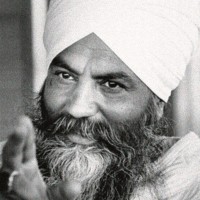
Kundalini Yoga Master
Met in 1972; GuruGanesha's direct spiritual teacher who guided him to embrace Kundalini Yoga and Sikhism
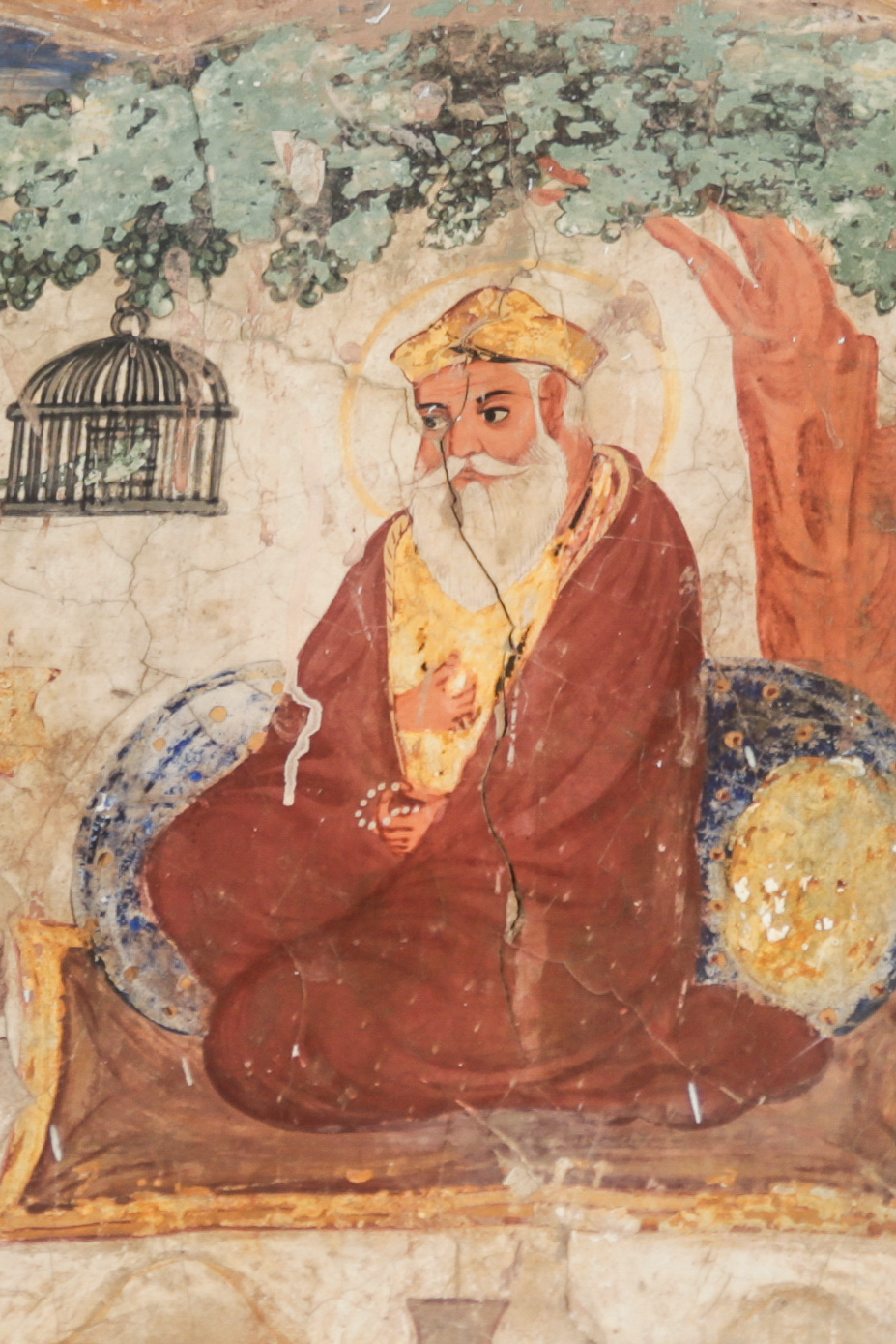
Founder of Sikhism
First Sikh Guru (1469-1539); foundational teacher whose hymns and philosophy root GuruGanesha's Sikh-inspired music

Fourth Sikh Guru
Fourth Sikh Guru (1534-1581); Yogi Bhajan said Guru Ram Das gave him his Gur Mantra

Grateful Dead guitarist
Early musical influence before spiritual path; shaped GuruGanesha's rock-infused devotional sound and improvisational approach
Worth Knowing
GuruGanesha Singh is a kirtan artist, singer-songwriter, and the founder of Spirit Voyage Records—a rare independent label dedicated to devotional music and Kundalini yoga music in the United States. What sets him apart is not just his voice and guitar work, but his role as an entrepreneur who recognized a gap in the market and built infrastructure to support other sacred world music artists; Spirit Voyage has launched or amplified the careers of singers including Snatam Kaur, Jai-Jagdeesh, Mirabai Ceiba, and Nirinjan Kaur. His own discography spans nearly two decades of releases—from intimate devotional albums like *People of Love* (2017) and *Kundalini Bhakti Mantra* (2018) to more genre-crossing work that pulls in rock, blues, folk, and Latin influences alongside traditional call-and-response kirtan structures. With over 18,000 Spotify followers, his audience is engaged and real, suggesting that listeners respond to both his artistic vision and his commitment to building community infrastructure in devotional music. Based in Herndon, Virginia, GuruGanesha has maintained consistent output and live presence, most recently releasing the album *Bhakti Spirit* in early 2026.
GuruGanesha Singh's practice sits within the kirtan tradition—call-and-response devotional chanting rooted in Bhakti Hinduism and Sikhism—and he has explicitly aligned his work with Kundalini yoga music, particularly through his label's catalog and albums like *Kundalini Bhakti Mantra*. While detailed lineage information isn't publicly documented in available sources, his body of work and the artists he has championed through Spirit Voyage Records suggest grounding in contemporary American Kundalini and bhakti communities rather than a single guru-disciple lineage. His sonic approach—blending mantra-based devotion with rock, blues, folk, and raga elements—reflects the 21st-century American kirtan aesthetic that emerged from teachers and musicians who bridged Eastern spiritual practices with Western popular music forms. The fact that he founded his own label rather than distributing through larger spiritual organizations suggests a degree of creative and spiritual independence, though the data does not reveal his own teachers or specific initiation lineage.
Start with *People of Love* (2017), a seven-track album that sits at the accessible middle ground of his catalog—devotional without being austere, inventive without being abrasive. The album demonstrates his guitar work, his willingness to blend traditional call-and-response structures with contemporary songwriting, and the warmth of his vocal approach. After that, listen to *Kundalini Bhakti Mantra* (2018) if you want to hear him work more explicitly within mantra and Kundalini yoga frameworks—eight tracks that are more spare and meditative than *People of Love*, ideal for understanding his roots in devotional practice. For those drawn to his more experimental side, *A Thousand Suns* (2013) shows him pushing the boundaries of genre; this album pairs traditional mantric content with broader sonic textures that some listeners will find refreshing and others might find less traditionally devotional. His most recent full-length, *Bhakti Spirit* (2026), comprises 24 tracks and represents his most expansive work to date, though it's better approached after hearing earlier albums to appreciate how his vision has deepened. Avoid starting with compilations like *Mantras for Prosperity* (2014)—begin with complete albums to understand his narrative arc and musical choices.
Most kirtan artists in the American yoga and wellness space either stay within traditional acoustic-devotional boundaries or collaborate with established spiritual organizations; GuruGanesha Singh did something rarer—he built his own record label, Spirit Voyage Records, which allowed him to shape not just his own output but the entire ecosystem around devotional music release and distribution. His sonic palette is distinctly wider than typical kirtan: while peers often stick to harmonium, tabla, and Sanskrit vocals, GuruGanesha consistently incorporates blues guitar, folk song structures, Latin percussion, and raga improvisation alongside the call-and-response mantric core. Albums like *Bhangra Remix: Kundalini Mantra Fusion Mix* (2013) and the genre-blending *A Thousand Suns* demonstrate a willingness to push kirtan toward fusion rather than preservation, which appeals to listeners seeking spiritual content that doesn't require aesthetic sacrifice. His track record spans nearly two decades with consistent quality output, suggesting a professionalism and artistic discipline that separates him from the many one-off devotional artists who release sporadically. Finally, his success in building and sustaining Spirit Voyage Records—cultivating artists like Snatam Kaur and Mirabai Ceiba—proves he understands both the business and the practice side of sacred music, not just the performance side.
GuruGanesha Singh's primary instruments are guitar and voice, supported by traditional devotional accompaniment including harmonium and tabla, though the instrumental palette shifts depending on the album and theme. His voice is warm, conversational, and pitch-centered rather than operatic—it sits comfortably in the human range and invites call-and-response participation rather than commanding solitary attention, which is authentic to kirtan tradition. His albums range from sparse and meditative (stretches of *Kundalini Bhakti Mantra*) to rhythmically driving and almost rock-adjacent, particularly in tracks from *A Thousand Suns* and *Bhangra Remix: Kundalini Mantra Fusion Mix*, where percussion and guitar take on blues or fusion coloring. The pacing is rarely ambient or purely hypnotic; instead, songs tend to build energy through repetition and call-and-response, moving listeners toward participatory engagement rather than passive listening. What surprises newcomers is how much his guitar work anchors the tracks—rather than serving as texture, the guitar often drives the melodic and harmonic narrative, pulling from folk and blues vocabularies that Western listeners recognize immediately. His more recent singles like *Rise Up*, *The Violet Flame*, and *Thank You* (all 2024) continue this pattern of blending devotional content with accessible, song-based arrangements rather than abstract mantra immersion.
*A Thousand Suns* (2013) remains his most adventurous and genre-experimental work, where he pushes kirtan toward rock and blues fusion without abandoning devotional integrity. *People of Love* (2017) is his most cohesive and accessible full-length album, balancing traditional call-and-response structure with contemporary songwriting—a reliable entry point that rewards repeated listening. *Kundalini Bhakti Mantra* (2018) is essential if you want to understand his relationship to Kundalini yoga practice specifically; it's his most explicitly mantra-centered album and demonstrates his depth within that particular lineage and modality. *Born to Be Loved* (2022) shows a mature artist consolidating his sound into six carefully crafted tracks that blend his various influences without overreaching. *Bhakti Spirit* (2026), his most recent album at 24 tracks, represents his most expansive vision and suggests a retrospective confidence—it's best approached after hearing the earlier albums to appreciate how his aesthetic has matured. *Live in Concert* (2014) is the only documented live recording and offers a raw, participatory feel that differs from studio work; it's valuable for those wanting to understand his energy in real-time performance contexts. Skip compilations and remix albums unless you're already engaged with his core work.
Listeners seeking pure ambient or purely meditative music will find GuruGanesha Singh's work too rhythmically engaged and participatory—his music is designed for active listening and often expects vocal or physical participation, particularly in the call-and-response structures that are fundamental to kirtan. Fans of high-energy electronic dance music, EDM-adjacent spirituality, or bass-heavy sonic immersion will find his work too rooted in acoustic and traditional instrumentation, even when he incorporates fusion elements. Kirtan purists who believe devotional music should remain close to traditional Sikh or Hindu vocal practices may find his rock, blues, and folk influences dilutive or inauthentic, though this is a minority position among contemporary practitioners. Those with strong genre preferences—listeners who want either *purely* folk or *purely* mantric music, but not both simultaneously—may experience his hybrid approach as unfocused rather than innovative. Additionally, people approaching spiritual music through purely intellectual or secular frameworks, rather than with some openness to devotional practice itself, may find the material alienating or feel it's asking for engagement they're not prepared to offer. His work requires some familiarity with or openness to Sanskrit, Kundalini concepts, and call-and-response singing; it won't appeal to those seeking background music for yoga studios where detachment and silence are valued.
GuruGanesha Singh's core instrumental palette centers on acoustic guitar (his signature voice instrument) paired with harmonium, tabla, and traditional percussion that ground the devotional structure. The discography shows flexibility in arrangement depending on album theme and intention: *Kundalini Bhakti Mantra* leans toward minimalist instrumentation with emphasis on mantra clarity, while *A Thousand Suns* and albums with fusion or bhangra elements bring in fuller band arrangements including drums, bass, and additional string instruments. Specific collaborators or producer names are not documented in available sources, which is notable given his role as label founder; this suggests either intentional creative autonomy or a preference for session musicians and studio professionals rather than high-profile artistic partnerships. The consistency across his 20+ year catalog suggests he has developed stable working relationships with skilled devotional musicians, even if they remain less publicly visible than the artists Spirit Voyage Records promotes (Snatam Kaur, Mirabai Ceiba, etc.). His live album, *Live in Concert* (2014), hints at the flexibility of his ensemble—suggesting adaptability to performance context while maintaining musical integrity. The evolution from stripped-down work like portions of *Kundalini Bhakti Mantra* to the fuller sound of *Bhakti Spirit* (2026) indicates growing resources and confidence, though detailed credits would clarify his current collaborators.
*Kundalini Bhakti Mantra* as a whole album functions as a yoga-practice resource, with its eight tracks designed to support meditation and kundalini-specific breathing and energy work—this is the most explicitly practice-oriented body of work in his catalog. Within that album and across others, mantra-based tracks like those on *Let It Be So* (2014) and the compilation *Mantras for Prosperity* (2014) offer repetitive, call-and-response structures that support sustained meditation and mudra practice. His longer tracks tend to work better for meditation than singles; full-length albums create rhythmic and energetic arcs that allow practitioners to settle into practice rather than being jarred by song endings or format shifts. For active yoga classes, particularly Kundalini yoga, *People of Love* and *A Thousand Suns* offer the energy and rhythmic drive that instructors need to time flows and transitions—these albums have enough momentum to complement physical practice without overwhelming it. The 2024 singles *Rise Up*, *The Violet Flame*, and *Thank You* suggest a move toward more intentional, standalone tracks that may function as focal points for specific practices, though they haven't been packaged with explicit practice guidance. Listeners using his music for ceremony will find *Kundalini Bhakti Mantra* and *People of Love* most serviceable; avoid the fusion and rock-inflected albums unless the ceremony explicitly calls for contemporary devotional music rather than traditional sound.
GuruGanesha Singh's full discography is available on Spotify (artist ID: 3VwzoUBU9WZGKzEFSVXiK6), where he maintains over 18,000 followers and a steady stream of listener engagement; this is the most convenient platform for exploring his catalog without purchase. His work is also available on Apple Music (artist profile: 160330680) and YouTube (channel: UCgrnIiCOqeV6GK5vv8qnSdQ), with the YouTube channel offering both official uploads and sometimes extended or live performances. His official website, Spirit Voyage Records (spiritvoyage.com/artist/guruganesha-singh), serves as the primary direct-to-artist resource and likely offers purchase options for digital downloads and physical media, supporting the label infrastructure he built. Individual albums and singles are purchasable through standard digital music retailers including iTunes and Bandcamp, though specific links vary by release date and label arrangements. For physical CDs or merchandise, Spirit Voyage Records' website is the most reliable source, particularly for older releases like *A Thousand Suns*, *People of Love*, and *Live in Concert* that may not remain in print elsewhere. Spotify and Apple Music offer the fastest route to discovery, but purchasing directly through Spirit Voyage or his official channels ensures artist compensation and supports the label's ongoing work with emerging devotional musicians.
É você? Reivindicar esta página ›
Continue your journey
BrightStar is the global directory of artists, teachers, and healers in the wellness and spiritual movement. Find your next experience — or add yourself.
Browse 14,000+ curated profiles across kirtan, yoga, meditation, and beyond.
Explore directory →Kirtan, retreats, sound baths, breathwork, ceremonies — happening this week.
Browse events →Are you an artist, teacher, or healer? Get listed — free, AI-assisted, live in minutes.
Get started →


