Ouvir
Listening Journey
Sound Journey
Discography


New Age Musician · Falkenhagen, Germany
Chaitanya Georg Deuter, known professionally as Deuter, is a German composer and multi-instrumentalist whose work stands at the intersection of krautrock experimentation, Eastern devotional music, and the modern therapeutic sound movement. Born Georg Deuter on February 1, 1945, in Falkenhagen, Germany, he taught himself flute and guitar and became one of the earliest European artists to build an entire catalog around the integration of electronic synthesis, acoustic folk traditions, and field recordings of natural sound.
Chaitanya Georg Deuter, known professionally as Deuter, is a German composer and multi-instrumentalist whose work stands at the intersection of krautrock experimentation, Eastern devotional music, and the modern therapeutic sound movement. Born Georg Deuter on February 1, 1945, in Falkenhagen, Germany, he taught himself flute and guitar and became one of the earliest European artists to build an entire catalog around the integration of electronic synthesis, acoustic folk traditions, and field recordings of natural sound.
Deuter's 1971 debut album, D, was released by Kuckuck Schallplatten and set the template for his career. The album layered electronic processing over acoustic instruments, tabla, and environmental recordings, placing Deuter alongside his krautrock contemporaries while pointing toward the emerging New Age genre. Kuckuck Schallplatten released nearly 20 albums by Deuter over the next two decades, establishing him as a signature voice in German experimental and ambient music during the 1970s and 1980s.
In the years following his early recordings, Deuter traveled to Pune, India, where he became a disciple of the spiritual teacher Rajneesh (later known as Osho). He adopted the name Chaitanya Hari and immersed himself in meditation practice and the devotional music traditions of India. This period reshaped his compositional approach, steering him away from the improvisational edge of krautrock and toward music explicitly designed to support meditation, relaxation, and healing contexts. His flute and guitar work began to incorporate ragas, drones, and the cyclical structures of Indian classical and devotional music.
In the 1990s, Deuter relocated to Santa Fe, New Mexico, and began a long partnership with New Earth Records, a label focused on wellness and meditation music. This collaboration brought his music to a wider audience in the United States and positioned him as a foundational artist in the therapeutic and spa music markets. Albums from this era frequently featured shakuhachi, bamboo flute, keyboard textures, and chimes, recorded with a clarity and spaciousness that made them standard selections in yoga studios, massage therapy practices, and contemplative retreat centers.
Deuter has released more than 60 albums over the course of his career, making him one of the most prolific recording artists in the meditation music field. His catalog spans solo flute improvisations, collaborations with vocalists and percussionists, and soundscapes built around nature recordings. His music has been used in guided meditation programs, bodywork sessions, and mindfulness courses across North America, Europe, and Asia. While he has avoided the visibility of touring musicians, his recordings have circulated widely in wellness communities and via streaming platforms, where his monthly listener count on Spotify regularly exceeds half a million.
Deuter continues to record and release music from his home in New Mexico, maintaining the balance between electronic and acoustic textures that has defined his work since the early 1970s. His recent albums remain consistent with his longstanding focus on creating space for stillness and introspection.
For listeners new to Deuter's work, his music offers an entry point into a practice-based listening experience, one that prioritizes atmosphere and repetition over narrative or virtuosity, and that draws equally from the German experimental tradition and the contemplative disciplines of the East.
Listening Journey
Discography
Worth Knowing
Chaitanya Georg Deuter (born February 1, 1945) is a German new-age musician and composer whose meditative sound has accumulated 130,000+ Spotify followers and sustained a prolific recording career spanning five decades. What distinguishes Deuter from ambient background music is his deliberate fusion of krautrock's electronic precision with Eastern spiritual aesthetics—a combination that emerged organically from both his self-taught mastery of flute and guitar and his spiritual pilgrimage to study with Rajneesh in Pune, India, where he adopted the name Chaitanya Hari. Listeners and meditation practitioners value his work because it avoids sentimentality; his compositions sit in sparse, architecturally clean spaces, using acoustic and electronic elements alongside field recordings of natural environments. Since his debut *D* in 1971 on the Kuckuck label, he has released over 60 albums, many explicitly designed for meditation, healing, and relaxation—yet they function equally well as contemplative listening without requiring any spiritual framework. His sustained output from the 1970s Kuckuck years through recent albums like *Mångata* (2025) and *Komorebi sunlight through trees* (2024) reflects an artist who has remained consistent in aesthetic philosophy while absorbing new production tools.
Deuter's music emerges from the intersection of German electronic experimentalism and Hindu-Buddhist meditation traditions, specifically shaped by his encounter with Rajneesh (Osho) in Pune. In the early 1970s, while releasing krautrock-inflected work through Kuckuck Schallplatten—the label that also supported experimental German rock and electronic music during that era—Deuter made the spiritual turn that would define his mature practice: traveling to India to study under Rajneesh, adopting the spiritual name Chaitanya Hari, and fundamentally reorienting his compositional goals toward meditative and healing modalities. This dual lineage explains his aesthetic signature: unlike Western New Age music that often softens or romanticizes Eastern concepts, Deuter's work carries the structural rigor of his electronic and krautrock background, combined with genuine engagement with Eastern spiritual philosophy. Albums like *Osho Whirling Meditation* (2020) and references to Osho-inspired practice work reflect this continuity. His approach aligns with the broader 1970s-80s New Earth Records roster (where he later recorded after relocating to Santa Fe) rather than ambient music purely derived from Brian Eno or Harold Budd; Deuter's roots sit deeper in spiritual intention and Eastern and Western fusion aesthetics.
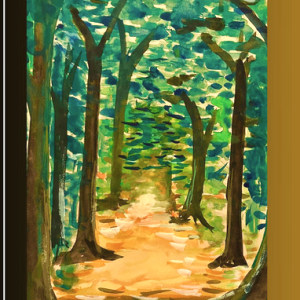
Start with *Komorebi sunlight through trees* (2024) or *Bamboo Forest* (2017), both of which showcase Deuter's core toolkit—layered acoustic and electronic textures, natural environmental sounds, and compositional restraint—without requiring prior familiarity with his catalogue or spiritual background. *Komorebi* (the Japanese term for sunlight filtering through leaves) is the most recent full album and represents his current aesthetic maturity: seven tracks of unhurried flute and guitar work, spacious enough to sit beneath meditation or focused work, yet melodically coherent enough to sustain attention as standalone listening. For those seeking explicitly healing or meditation-oriented material, *Reiki Hands of Love* (2015) or *Dream Time* (2013) offer similarly accessible entry points, though they carry more overt therapeutic framing. What newcomers should understand: Deuter's music does not follow pop song structure or narrative arc—each track unfolds as a sustained sonic environment. If you're accustomed to emotionally dramatic compositions or high-energy instrumentation, his aesthetic may initially read as minimal or slow. The first listen often feels underdeveloped until the ear adjusts to his principle of compositional economy, at which point the clarity and intention become evident.
Where many New Age composers lean toward lush orchestration, synthetic warmth, or overt spiritual messaging, Deuter maintains a deliberate austerity—his signature sound centers on solo flute or guitar, sparse electronic textures, and field recordings of water, wind, and forest environments, allowing space rather than filling it. His krautrock heritage distinguishes him technically: his electronic work carries the precise, almost mathematical sensibility of 1970s German experimental music rather than the more diffuse ambient approach of artists working purely from the Eno or Tangerine Dream lineages. Deuter's compositions rarely feature the glossy production or dense layering common in contemporary healing music; instead, they privilege negative space and the integrity of individual instrument tones. Unlike New Age peers who often adopt spiritual aesthetics as imagery or marketing language, Deuter's engagement with Eastern philosophy—rooted in his direct study with Rajneesh—informs actual compositional intention: *Osho Whirling Meditation* reflects a specific meditative practice rather than generic spiritual content. Additionally, his 50-year consistency across Kuckuck, New Earth Records, and independent releases suggests an artist indifferent to commercial New Age trends, content to develop his aesthetic language incrementally rather than chase broader market appeal. His Spotify popularity score of 56 (moderate, not dominant) reflects this: he has built an audience of serious listeners rather than the casual wellness-playlist demographic.
Deuter's instrumental palette centers on self-taught flute and guitar—both played with restraint and tonal purity rather than virtuosic display—layered with subtle electronic elements, synthesizer textures, and field recordings of natural soundscapes (water, wind, ambient forest or garden environments). His compositions move at deliberately slow tempos, typically in the range suited for meditation or deep focus: sustained single tones, minimal rhythmic complexity, and generous silence between phrases. Unlike vocalists in devotional or chant-based meditation music, Deuter rarely sings; his voice, when present, functions as another textural element rather than as a narrative or emotional vehicle. The production aesthetic favors clarity and separation between instrumental voices over lush reverb or dense layering—you can trace each flute line, each guitar phrase, even isolated synth pads without them dissolving into ambient soup. His krautrock foundation occasionally surfaces through subtly mechanized rhythmic elements or synth tones that carry that era's color without dominating the mix. Across albums like *Bamboo Forest* or *Mångata*, listeners encounter pieces that breathe—extended passages of single instruments floating over minimal accompaniment, creating the acoustic analog of negative space in visual art. The pacing never rushes; even shorter tracks maintain an unhurried unfolding that rewards focused, contemplative listening rather than passive background play.
*D* (1971), his debut on Kuckuck Schallplatten, established the foundational blend of krautrock experimentation and meditative intention that would sustain his entire career—it remains a landmark fusion of electronic and ethnic musical elements that predates the codification of New Age as a commercial category. For those approaching his mature, healing-focused work, *Bamboo Forest* (2017) and *Komorebi sunlight through trees* (2024) represent the apotheosis of his acoustic-centered aesthetic: spare, architecturally precise, and free of any dated production choices. *Osho Whirling Meditation* (2020) stands as his explicit engagement with Rajneesh-inspired spiritual practice and remains the clearest statement of his devotional lineage. *Song of the Last Tree* (2021) and *Illumination of the Heart* (2015) offer accessible entry points into his more recently recorded material with strong thematic coherence. The compilation *Der Klang der frühen Jahre, Das Beste von Kuckuck Schallplatten: 1970-1973* (2011) provides essential context for understanding Deuter's role within early-1970s German experimental music, capturing the krautrock moment before his spiritual reorientation. Listeners new to meditation music should avoid starting with the purely instrumental catalogue of 60+ albums; instead, the five albums named above represent the strongest distillation of his aesthetic across different eras and intentions.
Deuter's work is fundamentally unsuited for listeners seeking rhythmically driven, energetic, or emotionally dramatic music—his compositions operate in a register of repose and negative space that can feel static or underdeveloped to ears trained on pop, rock, or even most electronic dance music. If you approach New Age music expecting lush orchestral arrangements, soaring melodic hooks, or emotional catharsis, Deuter's austere aesthetic may read as cold or unfinished rather than meditative. Additionally, listeners seeking explicit spiritual guidance or vocal teaching will find his instrumental-dominated catalogue frustrating; while he has recorded guided meditation and chant-adjacent work, the bulk of his discography assumes the listener brings their own meditative intention to the listening experience rather than receiving direction. Those uncomfortable with silence, with compositional restraint, or with the deliberate gaps that characterize his arrangements should look elsewhere. His krautrock DNA also means his work occasionally employs synth tones and production choices that, while subtle, may not appeal to purists of acoustic-only healing music. Lastly, listeners seeking constant novelty or high production variation across albums will find his thematic and sonic consistency—while his strength—potentially monotonous; Deuter refines within a narrow aesthetic bandwidth rather than exploring radically new territory with each release. He is music for the already-committed contemplative listener, not an introduction to meditation music itself.
Deuter's core instrumental vocabulary remains remarkably consistent: flute (his signature lead voice), acoustic and electric guitar, synthesizer, and field recordings of natural environments—water, wind, birds, forest ambiance—that function as textural foundations or transitional elements. He rarely employs drums, bass, or rhythmic percussion; instead, his compositions build temporal structure through sustained tones, harmonic layering, and the subtle pulse of synthesizer pads. His production approach favors clarity and isolation of instrumental voices over the compressed, dense mixing common in contemporary ambient music; each instrument occupies distinct sonic space, allowing listeners to track individual melodic or textural threads. The synth work, particularly evident in early Kuckuck releases and maintained through later albums, reflects early-1970s and contemporary digital synthesis—precise, often cool in tone, avoiding the warmer analog warmth that became dominant in New Age production. He employs field recordings not as atmospheric dressing but as compositional material: the sound of water in *Song of the Last Tree* or the forest environment implicit in *Bamboo Forest* serve structural roles, marking transitions or establishing sonic geography within each piece. His engineering prioritizes tonal purity and individual instrument definition—you can hear the breath between flute phrases, the finger movement on guitar strings, the precise attack of synth tones—which explains why his music rewards headphone listening and intimate attention rather than functioning as background ambience.
*Osho Whirling Meditation* (2020) is explicitly designed for the Osho Whirling meditative practice—a spinning movement form rooted in Sufi and Rajneesh traditions—and its four tracks function as direct sonic accompaniment to that specific ceremonial work rather than generic meditation music. For seated meditation or contemplative practice more broadly, *Empty Sky* (2011) and *Dream Time* (2013) offer sustained, uninterrupted tonal environments that support sustained attention without intrusive melodic demands. *Reiki Hands of Love* (2015) and *Illumination of the Heart* (2015) carry explicit healing and energetic work framing; listeners and practitioners report these albums as effective sonic companions for bodywork, energy work, or therapeutic sessions. For yoga asana practice, *Bamboo Forest* (2017) provides sufficient forward motion (through its longer compositions and subtle harmonic progression) without rhythm or percussive elements that might interfere with balance or focus. *Song of the Last Tree* (2021) functions well for transition moments in yoga or breathwork—grounding yet open, neither hurried nor stagnant. What distinguishes Deuter's healing music from generic ambient: his albums explicitly titled for meditation or healing maintain compositional intention throughout rather than devolving into atmospheric texture; listeners report actual shifts in nervous system state rather than merely pleasant background sound. His website (deuterusa.com) and Spotify discography indicate original album intent; albums with titles like *Mystery of Light* or *Celebration of Light* carry clear meditative purposing beyond sonic aesthetics alone.
Deuter maintains an official website at deuterusa.com where new releases, tour dates, and archival information are typically posted—this is the primary resource for staying current with his output and any live appearances. His Spotify artist page (spotify.com/artist/3AGvwnXbUo9LoAU2P5qYHB) displays new releases immediately upon availability and includes follower feeds if you enable artist notifications; this is the most reliable channel for learning about new albums like *Mångata* (released January 2025) without delay. His YouTube channel (youtube.com/channel/UCbF3yiLdKZS7cZ24l1n5iUw) archives music videos, meditative compositions, and occasional behind-the-scenes content. However, Deuter operates as a relatively independent artist with no major label promotion infrastructure; unlike mainstream musicians with extensive touring schedules, his live appearances and events are not systematically broadcast across standard concert platforms. The most direct method remains checking deuterusa.com periodically or subscribing to his Spotify artist page for immediate notification of new albums. Given his age (born 1945) and Santa Fe-based residence, his performance footprint appears limited compared to his prolific studio output; the bulk of listener engagement occurs through recorded albums and streaming rather than live ceremonial settings. No active social media presence (Instagram, Twitter) is evident in available data, which reflects his long-standing aesthetic independence from commercial promotion trends.
É você? Reivindicar esta página ›
Continue your journey
BrightStar is the global directory of artists, teachers, and healers in the wellness and spiritual movement. Find your next experience — or add yourself.
Browse 14,000+ curated profiles across kirtan, yoga, meditation, and beyond.
Explore directory →Kirtan, retreats, sound baths, breathwork, ceremonies — happening this week.
Browse events →Are you an artist, teacher, or healer? Get listed — free, AI-assisted, live in minutes.
Get started →