Books
Bibliography coming soon.

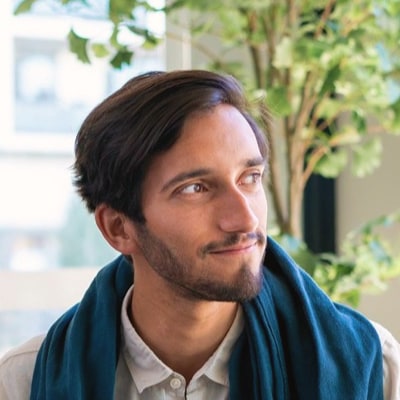
Meditation Teacher · Melbourne
Al Jeffery is a psychotherapist, meditation guide, group facilitator, writer and leadership trainer, working in what he calls a hyperconnected-yet-deeply-fragmented world. As a regenerative practitioner, he takes a systems-based approach to regeneration at the level of self, society and systems.
Al Jeffery is a psychotherapist, meditation guide, group facilitator, writer and leadership trainer, working in what he calls a hyperconnected-yet-deeply-fragmented world. As a regenerative practitioner, he takes a systems-based approach to regeneration at the level of self, society and systems.
Curious from childhood and inclined to question what was called 'normal', Al began his entrepreneurial career at 12. Early projects included sustainable clothing, online fundraising for charity, and support for young social innovators building self-awareness and emotional capacity. By 19 he had been listed twice in Anthill Magazine's Top 30 Under 30 Entrepreneurs in Australia and nominated for Young Australian of the Year. A period of depression and burnout followed. It led him to ask where his expertise could best serve the times.
His work now centres on the causes of cultural loneliness and on how to create spaces where people reconnect with themselves, meaningful community, personal purpose and the living world. As Co-Founder and Director of Turning Ground, he designs and facilitates such spaces for communities, leaders and individuals. He sits on the Advisory Council for Meditation Australia and Synthesis Institute, and was the 2022 IKON Institute National Award Winner for Clinical and Academic Excellence.
Al also speaks, writes and teaches online. He leads in-person immersions that combine contemplative, wilderness-based, somatic and movement practices with group process. He writes the blog and newsletter Spaces Between.
Al Jeffery is a psychotherapist, meditation teacher, and group facilitator working at the intersection of contemplative practice, systems thinking, and regenerative culture. He's the co-founder and director of Turning Ground, an organization that designs immersive spaces for communities, leaders, and individuals seeking reconnection—to themselves, to meaningful relationships, to purpose, and to the living world. His approach is rooted in recognizing what he identifies as a core wound of contemporary life: cultural loneliness in an era of unprecedented digital connectivity. Rather than offering quick fixes or generic mindfulness packaging, Jeffery's work takes seriously the psychological, somatic, and relational dimensions of meditation practice, weaving together contemplative traditions, wilderness-based learning, and body-centered practices into coherent retreats and programs. People are drawn to his work because he doesn't separate meditation from the messier questions of how we live together, how we lead, and how we regenerate collective systems. He was named the 2022 IKON Institute National Award Winner for Clinical and Academic Excellence, and serves on the Advisory Council for both Meditation Australia and the Synthesis Institute—credentials that reflect his standing within the professional contemplative and therapeutic communities.
The data doesn't specify a single named lineage, but Jeffery's approach is clearly situated within contemporary Western Buddhist-influenced contemplative practice, integrated with modern psychotherapy, somatic experiencing, and systems theory. His advisory role with Meditation Australia suggests he's part of the organized Australian meditation and mindfulness community, while his connection to Synthesis Institute points toward work on psychedelics and consciousness studies. The signature of his lineage is integrative: rather than adhering to a single tradition, he draws on multiple contemplative schools while grounding the work in relational psychology, group dynamics, and environmental awareness. This reflects a broader movement within meditation teaching—particularly among psychotherapists and facilitators trained in the last two decades—toward what might be called secular Buddhism with relational depth, where meditation sits alongside trauma-informed practice, authentic relating, and systems-level change work. Jeffery's early burnout and subsequent redirection toward where his expertise could best serve the times suggests he's oriented toward applied, real-world contemplative work rather than traditional monastic or lineage-specific transmission. His emphasis on wilderness-based practices and group process adds an earth-centered, ecological dimension often missing from purely Buddhist frameworks.
Start with his online presence—subscribe to his "Spaces Between" newsletter and blog, which offer accessible writing on meditation, relating, and cultural loneliness without requiring prior experience. Then explore his YouTube channel (@aljeffery748) to get a sense of his teaching voice and the kinds of guided meditations and short talks he offers. If you're interested in trying a longer-form experience, look into whether Turning Ground has any upcoming public immersions or retreats that feel aligned with your interests; his model combines multiple modalities (contemplative, somatic, movement, wilderness), so the right entry point depends on whether you're drawn more to pure meditation, group process, leadership training, or embodied practice. If you prefer self-directed learning, his online courses and recordings are accessible from his website (aljeffery.com). A complete newcomer doesn't need any background in meditation, psychology, or systems theory to engage with his work—he's explicit in welcoming people at all stages. What matters is curiosity about why you feel isolated or disconnected, and willingness to explore that through practice rather than just thinking about it.
Most contemporary meditation teachers come from one of two streams: the traditional Buddhism-to-the-West pipeline or the mindfulness-for-wellness pipeline where meditation gets packaged as stress reduction and cognitive enhancement. Jeffery's distinctiveness lies in his explicit grounding in three domains most teachers treat separately: clinical psychotherapy, wilderness and somatic practice, and systems-level regeneration. He's trained as a therapist, meaning his teaching takes seriously psychological maturity, shadow work, and attachment patterns—not just breath awareness. He incorporates movement, nature immersion, and body-based learning, acknowledging that trauma and fragmentation live in the nervous system and the land we inhabit, not only the mind. And critically, he frames meditation not as a personal optimization tool but as preparation for collective regeneration—his work always asks how your practice changes how you relate, lead, and contribute to healing. For seekers tired of shallow wellness meditation or traditional instruction that doesn't address contemporary fragmentation, his combination of psychological literacy, embodied practice, and regenerative framing stands apart.
His work is not suited for people seeking quick symptom relief or a purely secular, emotion-regulation approach to meditation. If you want a ten-minute guided body scan to help you sleep better, or basic mindfulness training for workplace stress, you'll find that elsewhere more efficiently. Jeffery's teaching requires patience, self-honesty, and a willingness to sit with discomfort—it's not designed for the meditation-lite market. His wilderness-based and in-person immersion model also won't work for people who need flexibility with scheduling or have mobility limitations; while he offers online content, the core Turning Ground experience is built around retreats and specific gatherings that require time commitment and often travel. Additionally, those uncomfortable with group process and relational work may find his emphasis on authentic relating and collective learning challenging—he's explicitly focused on how meditation transforms not just individual consciousness but how people show up together. Finally, if you're looking for meditation divorced from psychological depth or systems critique, his integration of therapy and activism may feel like it's adding too much when you just want to meditate.
Visit aljeffery.com as your primary hub for announcements about upcoming retreats, immersions, workshops, and online offerings. Subscribe to his "Spaces Between" newsletter and blog (available through the website), which will notify you of new writing, teaching releases, and event information. Follow his YouTube channel (@aljeffery748) for regular recorded talks, meditations, and content. You can also check his Spotify profile for any recorded guided meditations or audio teachings he may release. However, Jeffery's public presence appears more focused on deep, longer-form work (retreats and immersions) than frequent short-form releases or a packed touring schedule; this is intentional—his model prioritizes quality of space and group process over maximizing content output. For real-time updates on where he'll be teaching, your best bet is the email newsletter; the contemplative teacher community tends to move through word-of-mouth and direct subscriber communication rather than algorithm-driven social media.
Jeffery's teaching is slow, inquiry-based, and unapologetically relational rather than instructional or performance-driven. His sessions and retreats combine multiple modalities—contemplative practice (sitting meditation), somatic work (attending to the body), wilderness immersion (learning from the land and from sitting outside), and group process (practicing authentic relating with other participants). What distinguishes his teaching is the absence of performance or charisma; he's not the guru dispensing wisdom, but rather a facilitator tending to the field, offering structure and reflection that helps people meet themselves and each other more honestly. Participants typically report that his retreats feel held and psychologically safe, despite or because of their depth—his background in psychotherapy means he knows how to work with resistance, emotion, and the discomfort that arises when people slow down. The aesthetic is grounded and unpretentious; there's no transcendence-speak or spiritual bypassing, instead direct questions about your loneliness, your patterns, and your role in larger systems. His leadership training work and group facilitation mean that even in larger groups, he creates conditions for real connection rather than passive reception. Come expecting to be seen and to do internal work; don't come expecting to feel immediately peaceful or uplifted.
Several themes weave through Jeffery's work consistently—the first is cultural loneliness, the paradox of being hyperconnected digitally while profoundly fragmented from self, community, meaningful purpose, and the living world. The second is systems thinking: he explicitly operates from a view that individual transformation without relational and systemic regeneration is incomplete, and vice versa. This means his teaching often moves between the personal and the collective—how your meditation practice, relational patterns, and role as a leader or community member are inseparable. A third theme is authentic relating and honest communication; his work takes seriously how we've been conditioned to hide, perform, and disconnect from ourselves and others, and explores what becomes possible when those patterns soften. Somatic awareness and embodiment are recurring—the idea that intelligence, wisdom, and healing live in the body and the land, not only in the thinking mind. And finally, regeneration: the explicit orientation that contemplative practice isn't about escape or transcendence, but about becoming more capable of healing ourselves, our relationships, and our systems.
Yes, Jeffery maintains an active "Spaces Between" blog and newsletter through his website (aljeffery.com), which serves as an ongoing written teaching and reflection on meditation, relating, systems, and contemporary life. This is likely your best resource for extended written work he's willing to share publicly. He also has a YouTube channel (@aljeffery748) where recorded talks, guided meditations, and teaching content are available to study at your own pace. The exact catalogue of recorded teachings isn't exhaustively detailed, but given his online presence and the fact that he teaches both in-person and virtually, there are likely guided meditations, Q&A sessions, and teaching talks available through his website and YouTube. However, unlike some teachers with published books or formal recorded course series, Jeffery doesn't appear to have released major published texts or comprehensive recorded programs. His primary teaching method remains the live immersion and retreat model through Turning Ground, where the relational and group-process elements are central to the work. That said, his online content provides a genuine window into his thinking and teaching voice.
No formal background in meditation, psychology, or spiritual practice is necessary—Jeffery explicitly welcomes newcomers and has worked with populations from teenagers to senior leaders, so his teaching is accessible regardless of prior experience. That said, you do need a certain kind of readiness: willingness to be honest with yourself about loneliness, disconnection, or a sense that something is fundamentally fragmented in how you're living. You need some capacity to sit with discomfort without immediately reaching for distraction or reassurance, as his work requires patience and tolerance for silence, not constant stimulation. You'll get more from his work if you're genuinely curious about how you show up in relationships and systems, not just interested in personal peace or stress reduction. If you're intellectually sophisticated, that's welcome, but it's not required; some of the deepest participants in contemplative work have minimal formal education. What matters is sincerity and openness. His background as a psychotherapist means he's skilled at meeting people where they are developmentally and psychologically.
É você? Reivindicar esta página ›
BrightStar is the global directory of artists, teachers, and healers in the wellness and spiritual movement. Find your next experience — or add yourself.
Browse 14,000+ curated profiles across kirtan, yoga, meditation, and beyond.
Explore directory →Kirtan, retreats, sound baths, breathwork, ceremonies — happening this week.
Browse events →Are you an artist, teacher, or healer? Get listed — free, AI-assisted, live in minutes.
Get started →


