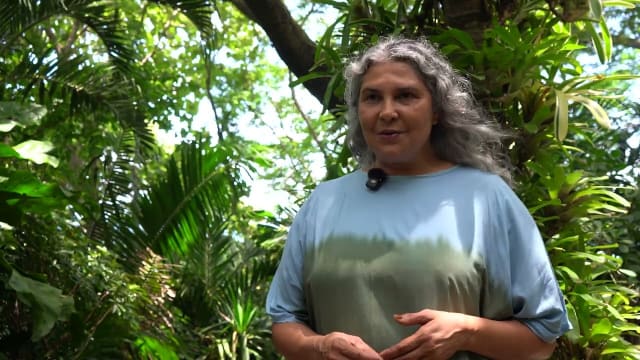
A man stands on a city street. He has lost his job, then his home, and when a friend asks what he is doing there, he answers that he has no watch, so he has lost everything. The friend tells him the watch is right there. He does not believe it at first. Then, slowly, the friend teaches him how to read it, and the watch begins to tell him the time again. This is the scene Yongey Mingyur Rinpoche builds in a two-minute teaching video, and it carries the whole argument. Using a watch as his image, he takes on one of the most puzzling claims in Buddhist thought: that samsara, the cycle of suffering driven by ignorance, craving and aversion, is itself nirvana, the liberation also called awakening or enlightenment. His answer is that the difference between the two is not what happens to us. It is whether we recognize what we already have.
The video opens with a question that sounds almost too simple to be a teaching. "If I ask you, what is the most important quality of the watch?" Mingyur Rinpoche asks at the start (0:00). Everyone answers the way you would expect: it tells time. He then sets up a contrast. Imagine a watch of great value, he says, a Rolex and a golden diamond combination. If you do not know how to read your own watch, it cannot tell you the time. The luxury object is useless to the person who cannot see what it does.
The analogy works because it separates two things we usually run together. One is the object: the watch, its craftsmanship, its capacity to do its job. The other is the relationship between the person and that object. In everyday life we tend to assume that the quality of our lives depends on the quality of our circumstances, on the job, the house, the status. The parable asks us to notice that the watch's power to tell time does not depend on the wealth of its owner, and it does not disappear when the owner loses everything.
This is the hinge of the teaching. Mingyur Rinpoche asks the listener to compare two lives. In one, the watch-holder is homeless and disconnected. In the other, he has found work, arrived on time, been promoted and bought a house, and "now your life looks so wonderful." Which one is better? The answer he gives is the one that cuts against intuition: "Actually same. The quality of watch is same" (1:23).
"Actually same. The quality of watch is same. But what makes difference is the recognition." (Yongey Mingyur Rinpoche, in a teaching video published on YouTube, November 2026, at 1:23–1:27)
The point is not that the man's external conditions don't matter in ordinary terms. The video is careful about what it claims: the difference between the two lives lies in recognition, not in the watch. The watch in both cases tells time. What changes is whether its owner can read it. Applied to the mind, the parable suggests that the qualities we seek are not missing. They are present in both the lost state and the found one. We simply fail to see them, or we see them and cannot use them.
The companion description of the video gives the framework. Samsara is "the cycle of suffering, going round and round, driven by ignorance, craving, and aversion." The obvious question is how a cycle like that could be freedom. The description answers by locating the cause. Samsara "does not arise from external circumstances, but rather from how the mind habitually clings to its misperceptions of reality."
That sentence reframes the whole watch story. If suffering came from the outside, the solution would be to change the outside: find the job, buy the house, secure the luxury. But the parable already tested that route. The man with the house and promotion is not automatically free, and the man on the street is not automatically lost in the sense that counts. What binds us, according to the teaching, is a habit of mind that keeps misreading reality and then clinging to that misreading. The cycle is not a place we are sent to. It is the way we keep returning to a distorted view of things.
That is why the video can say, without contradiction, that samsara is nirvana. The same mind that produces confusion is the mind that can produce clarity. The description puts it directly: "we recognize our own mind as both the source of confusion and the source of clarity and contentment." Samsara and nirvana are not two worlds. They are one mind seen in two conditions, lost or recognized.
The parable gives a clue in its most human moment. The man does not recognize the watch on his own. He is told, "This is watch," and at first he does not believe it. The friend then does the patient work of teaching him how to read it. "Slowly you can read the watch and then watch can tell you time," the teaching says (0:53 onward). Recognition is not a single flash. It is learned, gradually, through guidance and repetition, until the watch becomes useful again.
The description frames the process in similar terms. "As we see through samsara, we begin to free ourselves from the traps the mind sets for itself: misconceptions, negative habits and neuroses." The language is one of seeing through rather than escaping. The traps are self-made, and the way out is a growing clarity about how they work. Freedom is not imposed from outside; it comes from learning to see what the mind has been doing.
The description also defines nirvana in a way that keeps it grounded in daily life: "Knowing this freedom thoroughly, and allowing it to pervade our life, is the very definition of nirvana." This is the part of the teaching that asks the most. It is not enough to glimpse the watch once on the street. The recognition has to saturate the way we live, the way the man in the luxury house would use his watch every morning, not merely admire it.
The video closes on the line that gives the parable its meaning: "So we all have nirvana in our true nature. That freedom. But we need to recognize" (1:50). The message is both generous and demanding. It says the freedom Buddhist practice points toward is not a reward for good behavior or a prize for escaping the world. It is already our nature. But a nature that is present and unrecognized is, in practical terms, a watch we cannot read.
For a reader meeting this idea for the first time, the parable offers a useful test. Ask where your sense of being "lost" actually lives. Is it in the circumstances, or in the habit of misreading them? The video does not claim that the answer is always the second, and it does not ask anyone to pretend that hardship is illusory. It asks a narrower question: whether the qualities you need are already in your hands, and whether anyone has taught you how to read them.
The video is short, and its strength is its compression. The best way to deepen it is to hear the teacher's fuller guidance. The Tergar organization offers several doorways, all linked from the video's description. The Joy of Living Meditation Program, described as learning meditation "under the skillful guidance of Yongey Mingyur Rinpoche at your own pace," is at joy.tergar.org. Vajrayana Online offers study and practice of Tibetan Buddhism with Mingyur Rinpoche at vajrayana.tergar.org. Online events and retreats are listed at events.tergar.org, and program information is at tergar.org/programs.
Whichever path you take, the parable leaves one question to carry into the day: when you feel that you have lost everything, is the watch still on your wrist?