BrightStar

Sfoglia tutti i Events

Scopri incontri consapevoli

events

Yoga
Meditation
Breathwork
Qigong
Tai Chi
Sacred Music
World Music
Medicine Music
Sound Healing
Ecstatic Dance
Destinazioni popolari
BaliSedonaLos AngelesCosta RicaNew YorkSan FranciscoAustinMiamiJoshua TreeTulum
Vedi tutte le categorieVedi tutte le destinazioni

Esplora tutte le funzionalità

Strumenti potenti per far crescere i tuoi eventi

Funzionalità della piattaforma

Prezzi dinamici intelligenti
Categorie di biglietti
Posti assegnati
Recupero carrelli abbandonati
Recupero visitatori
Donazioni e prezzi variabili
Sistema affiliati
Scanner biglietti
Codici sconto
Domande personalizzate
Condivisione biglietti
Upsell e componenti aggiuntivi
Analisi e report
Sequenze email
Lista d'attesa / Notifica / Promemoria
Persone e Luoghi
Artists & TeachersEvent OrganizersVenues & StudiosKnowledge BaseGlossaryInspiration
Vedi tutte le funzionalitàChi siamo
PrezziBlog
Language
Saved events
Sfoglia tutti gli eventi

events

YogaMeditationBreathworkQigongTai ChiSacred MusicWorld MusicMedicine Music

Destinazioni popolari

BaliSedonaLos AngelesCosta RicaNew YorkSan Francisco

Persone e Luoghi

Artists & TeachersEvent OrganizersVenues & StudiosKnowledge BaseGlossaryInspiration

Funzionalità della piattaforma

Prezzi dinamici intelligentiCategorie di bigliettiPosti assegnatiRecupero carrelli abbandonatiRecupero visitatoriDonazioni e prezzi variabiliSistema affiliatiScanner bigliettiCodici scontoDomande personalizzateCondivisione bigliettiUpsell e componenti aggiuntiviAnalisi e reportSequenze emailLista d'attesa / Notifica / Promemoria
Vedi tutte le funzionalitàChi siamo
PrezziBlog
AccediRicercatoriCreatori
  • Sfoglia tutti i Eventi
  • Per i ricercatori
  • Yoga
  • Meditazione
  • Breathwork
  • Qigong
  • Tai chi
  • Musica sacra
  • World music
  • Musica medicina
  • Sound healing
  • Danza estatica
  • Ritiri
  • Workshop
  • Tutte le categorie →
  • Bali
  • Sedona
  • Los Angeles
  • Costa Rica
  • Tulum
  • Byron Bay
  • San Francisco
  • Austin
  • New York
  • San Diego
  • Denver
  • Seattle
  • Portland
  • Miami
  • Tutte le città →
  • Join the Movement
  • Why we list
  • Sell Globally
  • Per i creatori
  • Per team
  • Per gli scrittori
  • Per gli insegnanti
  • Per gli artisti kirtan
  • Per gli studi
  • Per i festival
  • Per i centri ritiro
  • Per le no-profit
  • Ambasciatore del brand
  • Biglietteria gratuita
  • Elevate
  • Amplify
  • Rete di 500K+ acquirenti
  • Recupero carrelli abbandonati
  • Prezzi dinamici intelligenti
  • Categorie di biglietti
  • Eventi ricorrenti
  • Posti assegnati
  • Sistema affiliati
  • Lista d'attesa / Notifica
  • Scanner biglietti
  • Widget incorporabile
  • Distribuzione eventi
  • Centro messaggi
  • Integrazioni
  • Report
  • Tutte le funzionalità →
  • Chi siamo
  • L’ecosistema
  • Blog
  • Glossario
  • Ispirazione
  • Centro assistenza
  • Contatti
  • Documentazione API
  • Risorse del brand
  • Carriere
  • Stampa
  • Termini di servizio
  • Informativa sulla privacy

Eventi

  • Sfoglia tutti i Eventi
  • Per i ricercatori
  • Yoga
  • Meditazione
  • Breathwork
  • Qigong
  • Tai chi
  • Musica sacra
  • World music
  • Musica medicina
  • Sound healing
  • Danza estatica
  • Ritiri
  • Workshop
  • Tutte le categorie →

Destinazioni

  • Bali
  • Sedona
  • Los Angeles
  • Costa Rica
  • Tulum
  • Byron Bay
  • San Francisco
  • Austin
  • New York
  • San Diego
  • Denver
  • Seattle
  • Portland
  • Miami
  • Tutte le città →

Per i creatori

  • Join the Movement
  • Why we list
  • Sell Globally
  • Per i creatori
  • Per team
  • Per gli scrittori
  • Per gli insegnanti
  • Per gli artisti kirtan
  • Per gli studi
  • Per i festival
  • Per i centri ritiro
  • Per le no-profit
  • Ambasciatore del brand
  • Biglietteria gratuita
  • Elevate
  • Amplify

Funzionalità

  • Rete di 500K+ acquirenti
  • Recupero carrelli abbandonati
  • Prezzi dinamici intelligenti
  • Categorie di biglietti
  • Eventi ricorrenti
  • Posti assegnati
  • Sistema affiliati
  • Lista d'attesa / Notifica
  • Scanner biglietti
  • Widget incorporabile
  • Distribuzione eventi
  • Centro messaggi
  • Integrazioni
  • Report
  • Tutte le funzionalità →

Azienda

  • Chi siamo
  • L’ecosistema
  • Blog
  • Glossario
  • Ispirazione
  • Centro assistenza
  • Contatti
  • Documentazione API
  • Risorse del brand
  • Carriere
  • Stampa
  • Termini di servizio
  • Informativa sulla privacy
BrightStar
Scarica l'app
Scarica suApp StoreDisponibile suGoogle Play
© 2026 BrightStar. Tutti i diritti riservati.
Inspiration

Realistic Hope When Depression Hits: Buddhist Mental Factors

SA
Sravasti Abbey
Nov 9, 2026
9 min di lettura

Da Sravasti Abbey

Guarda · 8

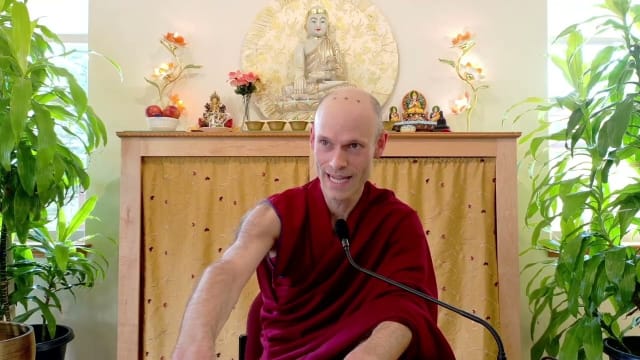
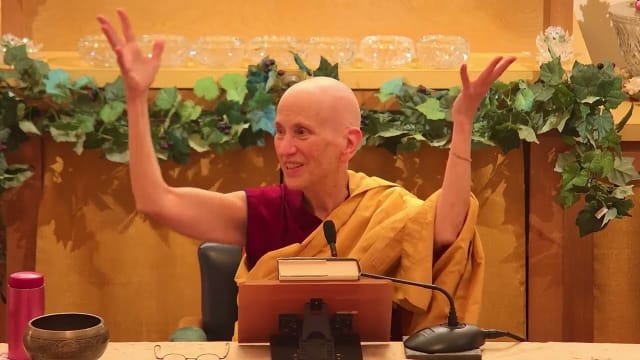
Hope, Venerable Thubten Pema suggests, is one of those words we use loosely until a dark stretch forces us to check what we mean by it. In a talk posted to the Sravasti Abbey YouTube channel, she opens not with doctrine but with a run of stories: people describing depression so deep they could not get out of bed for months, a man diagnosed in adulthood with the manic depression he had carried most of his life, a prisoner denied parole who took his own life, a young man with twenty years left on his sentence who wanted only to know how to get out. Then she asks a harder question than "how do we cheer people up?" What if the answer is not to give up on hope, and not to settle for optimism, but to hope in a way that is grounded in seeing reality clearly? Drawing on traditional Buddhist psychology, she proposes that this kind of hope can be built deliberately, by training five "object-ascertaining mental factors": aspiration, conviction, mindfulness, concentration, and wisdom.

Lettura · 6 sezioni

Why would anyone argue that hope is the problem?

The talk begins with a question that had come up in several settings over a couple of weeks. A participant in one group asked about a line from a Buddhist book that seemed to speak against hope, and what that could possibly mean. Outside the group, people made a case that sounds reasonable on its face: wouldn't it be better not to have hope? Then you won't be disappointed. Better to calm the mind, live in the moment, stop revisiting the past or worrying about the future.

Venerable Thubten Pema does not dismiss this. She calls those practices "a very good temporary solution." Her objection is narrower. The problem is what the word hope is being asked to carry. In English, she notes, hope is "quite wide" and its meaning is "quite vague." Buddhist language has several terms that carry a similar flavor, and most of them are positive. The kind of hope she is describing is not an unrealistic one.

That distinction matters for anyone who has ever been told to "just stay positive" while their life felt like it was caving in. Hope that depends on things turning out a certain way is fragile. Hope that is not clear about the situation is fragile too. The talk's central move is to ask whether there is a third kind: a hope that is steady because it is accurate.

What makes hope realistic rather than wishful?

Her answer is specific. Realistic hope, in her framing, is "grounded on being clearer and clearer about seeing reality." It is not a mood you summon by repeating affirmations. It rests on an understanding of how the mind works and what the path actually involves. As she puts it in the talk:

"It's not kind of unrealistic hope. It's not just being optimistic, wishful thinking that it is grounded on being clearer and clearer about seeing reality."

— Venerable Thubten Pema, Sravasti Abbey YouTube talk, approx. 5:02

Her working theory follows from that. If we get clearer and clearer about the mental factors, and understand how they operate in our own minds, we can cultivate them on purpose. The hope that results, she says, is "very stable and very realistic." The shift here is from hope as something that happens to us to hope as a set of qualities we can train, the way a musician trains technique rather than waiting for inspiration to arrive.

What are the five object-ascertaining mental factors?

In Abhidharma-based Buddhist psychology, mental factors are the qualities that accompany each moment of consciousness and shape how the mind engages with what it perceives. The talk focuses on five of them. She acknowledges that some traditions treat them as universal and others do not, and she sets that debate aside because her interest is practical. For her, these five are the foundation of why hope can be cultivated at all.

1. Aspiration (intention). This is taking real interest in something you want to move toward. For Venerable Thubten Pema, the aim is Buddhahood, which she presents as genuinely possible. Aspiration sets the direction. Without it, the other factors have nowhere to point.

2. Conviction. She notes that this factor is sometimes translated as belief or admiration, but that one of her teachers renders it as conviction: you have examined something and are quite clear about it. Here she links it to a point Geshe Yeshe Topgye made in a talk she recalls, that our confidence in the path rests on a conviction that the afflictions, and everything unsatisfying about samsara, can be abandoned, and that liberation is possible. The path is a blueprint. The task is to build your own Buddhahood "from inside out."

3. Mindfulness. In the talk, mindfulness is "really having that steady mind and not being distracted." Two distractions are named: the eight worldly concerns, and "something else that looks more interesting." This is the factor that keeps you from being pulled off course by every shift in praise, blame, gain, or loss.

4. Concentration. Here the mind fixes itself on the path and grows clear about it. She adds an important qualifier: the concentration should be on something you actually delight in. As practice deepens, she says, the mind starts to become more joyful, and that joy is itself a sign the training is working.

5. Wisdom. She says the Tibetan word for this factor is the same word as wisdom. She describes it in terms of having a broad view and seeing subtly, and she connects it to the Buddhist aim of realizing emptiness. The excerpt moves through this factor quickly, but the logic is clear: the more we cultivate wisdom, the more fully we see situations as they are, and the less we are driven by distorted pictures of them.

Read together, the five form a sequence. Aspiration gives direction. Conviction establishes that the direction is reachable. Mindfulness holds the mind steady, concentration keeps it fixed on what matters, and wisdom makes the picture accurate. Realistic hope is what you have when all five are working together.

Why does it matter where we get our happiness?

One of the more practical points in the talk concerns where our pleasure comes from. Venerable Thubten Pema speaks of being "very careful" about the sources of what she calls our happy hormones, the dopamine-driven good feelings we chase. There are many places to get them, and not all of them serve us. Where we find our satisfaction, she argues, shapes our intention, and our intention determines where our actions go.

This connects back to the idea that anything we do can be part of the path. Her teaching is not that every activity must be formally religious. It is that a mind trained in aspiration and concentration can bring its intention to ordinary work, and ordinary work then becomes part of the training.

What does a story about a prisoner in a cement factory teach?

The most striking passage in the opening section is a story she recounts from a talk by Geshe Yeshe Topgye, about the teacher's friend and fellow student, a monk known for debating through the night and never seeming to sleep. After the Chinese takeover of Tibet, this friend was imprisoned and put to work in a cement factory. He did the labor exceptionally well, and his captors came to appreciate him. Other prisoners asked him why he worked so well when the work was benefiting the Chinese. His answer, as Venerable Thubten Pema tells it:

"No, I'm benefiting sentient beings. What I'm doing is benefiting sentient beings and that's why I'm putting my best into it."

— Venerable Thubten Pema, recounting Geshe Yeshe Topgye's talk, approx. 9:36

Her reflection on this is what makes the story land. Geshe Yeshe Topgye, she says, asked why we study arts and sciences that have no direct connection to Dharma. The answer is that they benefit sentient beings, and we need many kinds of skill to do that. She relates this to her own enthusiasm for baking, which she describes as a project that grew from wanting to make a Dharma wheel together with her colleague Lisa, still a work in progress. The point is not that the cement factory was a good place to be. It is that the motivation behind an action can transform an ordinary or even hostile circumstance into one that is meaningful.

This is where the talk's idea of hope becomes concrete. The young man who asked how to get out, and who could not say how he kept happy while waiting, was focused on a single outcome, parole, that was not his to control. The imprisoned monk was also in a situation he could not choose, but his aspiration pointed somewhere else. Realistic hope, on this reading, does not require your circumstances to change first. It requires a clear sense of what you are working toward and a mind steady enough to keep doing the work.

Where to go from here

The opening of this talk does not resolve every question it raises, and it does not claim to. It offers a reframing: hope is not the opposite of realism, and it is not a feeling that depends on luck. It is a set of qualities you can train. If you are struggling with depression or hopelessness now, the talk is not a substitute for care from a doctor, counselor, or someone you trust, and it is worth reaching out to them.

For those who want to go further, the full recording is available through the teachers' sites at SravastiAbbey.org and ThubtenChodron.org. The practical starting point the talk suggests is simple to state and harder to do: ask what you are aiming at, whether you are convinced it is reachable, where your mind keeps wandering, what your joy is made of, and whether you are seeing your situation as it is. Those questions, Venerable Thubten Pema suggests, are where realistic hope begins.
Comments

Loading the conversation…

Transcript

[0:00] So, today I want to talk about hope.

[0:05] Not what you think it is.

[0:08] And why I I want to talk about hope was

[0:11] it came up recently

[0:14] actually multiple times over the last

[0:15] couple of weeks.

[0:16] Um and there was a question that was

[0:19] asked in one of uh

[0:20] the groups about not having hope.

[0:24] Um as in the they quoted a Buddhist two

[0:27] Buddhist book and the author talking

[0:30] about not having hope. And what does

[0:32] that mean?

[0:33] Um and then also

[0:37] talking to

[0:40] different people who shared

[0:43] the the um depression that they have

[0:46] how deep that depression was

[0:49] and some from their youth.

[0:52] The um I think the one of them was

[0:54] talking about the this

[0:58] the his

[1:00] therapist, psychologist, I don't know

[1:02] who said was he was recently

[1:05] not recently but uh

[1:07] in his adult years diagnosed as having

[1:11] had this manic depression for most of

[1:14] his life.

[1:15] Um

[1:17] and then also people sharing about how

[1:21] so depression was so deep they could not

[1:23] get out of bed

[1:24] for months and just

[1:27] hopelessness.

[1:29] And also one person was sharing

[1:33] um about

[1:36] how how do you work with

[1:38] as a child seeing your father

[1:42] who was a policeman

[1:44] in a time of the Nazis and he rounded up

[1:50] Jews and sent them to the concentration

[1:52] camp. And you grew up with that kind of

[1:54] knowledge.

[1:55] Uh how do you

[1:58] deal with that and uh

[2:01] sense of depression that

[2:03] subsequently he experienced.

[2:06] And then also the

[2:09] another incident that I heard was

[2:13] uh

[2:14] one of the inmates

[2:16] was trying to convert I don't know the

[2:18] US law but you know from his

[2:21] uh his um term

[2:24] his prison sentence having no

[2:27] possibility of parole

[2:29] uh

[2:30] and to convert it to a possibility of

[2:32] parole.

[2:33] And that was denied.

[2:35] And he killed himself.

[2:38] Um and

[2:40] how how do you work with that?

[2:43] Uh and then one young man came up to me

[2:45] the age of Well, he looks like Minter's

[2:47] age.

[2:49] 20 late 20s maybe maximum early 30s and

[2:54] he's been in the prison for more than 10

[2:55] years and he has 20 more to go. And all

[2:58] he wants is how do I get out?

[3:01] How do I

[3:02] what do I do now such that I will be

[3:05] eligible for parole and that's all he's

[3:09] he is focused on.

[3:11] Um my question to him was how do you how

[3:15] do you keep happy

[3:16] in the meantime?

[3:18] And he said, "I don't know."

[3:22] So

[3:23] so what what to me

[3:26] I would always been thinking about this

[3:28] call for a while now cuz

[3:30] this this thing about depression kept

[3:32] coming up.

[3:33] And

[3:35] the also I mean not just in the prison

[3:38] outside the prison people outside the

[3:40] prison also talking about it. Uh

[3:43] and

[3:44] like somebody was

[3:47] saying in

[3:49] something about wouldn't it be better

[3:50] not to have hope?

[3:52] Then you will not be disappointed.

[3:55] Um and won't it

[3:58] uh

[3:59] be better if we just focus on calming

[4:03] our minds, living in the moment,

[4:05] you know, not thinking about the future,

[4:07] not thinking about the past, and just

[4:09] focus on the moment.

[4:11] And I think all those are a very good um

[4:16] temporary solution.

[4:19] And as I was thinking about it, um I I

[4:23] think more and more I recognize that

[4:26] hope as a word in the English word is

[4:29] quite wide. The meaning is

[4:31] quite vague. But in Buddhist um context,

[4:35] hope is

[4:36] uh has also many words that bears that

[4:41] flavor of hope, and usually is very

[4:43] positive.

[4:45] It's not

[4:46] kind of unrealistic hope. It's not just

[4:49] being optimistic, wishful thinking

[4:52] that it is grounded on

[4:54] being clearer and clearer about seeing

[4:57] reality.

[4:59] Uh

[5:00] And then

[5:02] my my current theory

[5:04] is

[5:05] that

[5:07] I think if if every if if I get um

[5:11] clearer and clearer about the mental

[5:13] factors, Loric.

[5:16] If I understand how all these mental

[5:18] factors work in my mind,

[5:21] I can deliberately cultivate them,

[5:23] uh and the hope that comes is very

[5:26] stable

[5:28] and very um

[5:31] realistic.

[5:33] And particularly I was uh looking at the

[5:36] five object ascertaining mental factors.

[5:40] So, some says it's omnipresent, some

[5:42] says it's not. We're not going to go

[5:43] into that Abhidharma thing, but that

[5:45] these to me these five is the basis of

[5:50] why I feel that hope is something that's

[5:53] wonderful.

[5:55] So, the first one is it talks about

[5:57] aspiration.

[5:59] Some it it's There's also translation of

[6:02] intention.

[6:04] Um

[6:07] Taking interest in

[6:10] something that you aspire towards.

[6:14] And that I think is very important. And

[6:16] in our context, that's Buddhahood.

[6:19] This

[6:20] big aim of Buddhahood that is possible.

[6:25] And then the second one comes with um

[6:28] it's translated sometimes as belief,

[6:30] admiration, but um

[6:32] one of my teachers says it's actually

[6:33] conviction.

[6:35] It's more of you have examined it

[6:39] and that

[6:40] you are quite clear about it.

[6:43] And this relates to what Geshe Geshe

[6:45] Yeshe Topgye was talking about, you

[6:48] know, about about our confidence in that

[6:51] the afflictions or everything that's,

[6:53] you know, sucks about samsara can be

[6:55] abandoned.

[6:57] And that liberation is possible.

[6:59] And that that that we have a this path

[7:02] that we have a blueprint.

[7:04] Uh

[7:05] now we just need to take that blueprint

[7:08] and build our own Buddhahood

[7:12] from inside out.

[7:14] So for me that that is what this uh this

[7:17] second mental factor of, you know,

[7:20] belief, admiration, conviction is. And

[7:23] And the point is I think that

[7:25] whether I

[7:26] So whether I like something or not,

[7:29] whether I like someone or not, doesn't

[7:31] matter

[7:32] because the bigger picture is

[7:33] Buddhahood.

[7:34] So all these then becomes

[7:36] kind of um not a distraction.

[7:39] Doesn't pull me away.

[7:43] And then the third one is mindfulness.

[7:46] And this is really having that steady

[7:47] mind and not being distracted. Not being

[7:51] distracted by the eight worldly

[7:52] concerns. Not being distracted by

[7:54] something else that looks more

[7:55] interesting.

[7:57] Um

[7:59] And then the fourth one is concentration

[8:02] where you are now fixing your mind on

[8:04] this path.

[8:06] Being clear and clear about it. Uh and

[8:08] then building confidence in the

[8:10] meantime, their concentration is on

[8:13] something that you actually delight in.

[8:16] Because as we we practice, I think we

[8:19] see that the mind starts to get more

[8:22] joyful.

[8:25] Uh and then to be very careful as well

[8:27] about where we get our I don't know what

[8:30] you call those dopamine, you know, our

[8:33] happy hormones.

[8:35] Because there is many things that you

[8:37] can get your happy hormones from. And

[8:40] that's what's going to inform our

[8:41] intention.

[8:43] Where our actions going to go. So, if we

[8:47] uh

[8:48] practicing and

[8:51] being um deliberate

[8:54] about what we're doing, any anything

[8:57] that we do can be part of the path. And

[9:00] this morning, you know, uh

[9:02] we

[9:04] we were sharing this um the Tibetan

[9:07] speaking people because we found there

[9:09] was a talk given by Geshe Yeshe Topkay

[9:12] about his friend.

[9:14] Uh and Venerable Damchoe identified that

[9:16] he had shared this story with us during

[9:19] one of his teaching many long time ago

[9:22] because in the in the recording uh Geshe

[9:24] Dawa was there.

[9:26] And this was related to his friend

[9:29] Mingyur Min

[9:31] where

[9:32] uh I think after during the

[9:35] after the cultural

[9:36] after the Chinese came and then

[9:40] uh for long time and somebody came to

[9:42] Dharamshala and was sharing and Geshela

[9:44] was asking like, "How how's my friend

[9:46] Mingyur Min?" And this is a guy This is

[9:48] not guy. This is the the his uh fellow

[9:52] classmate whom he debated through the

[9:54] night and you know, that the one that

[9:56] never sleeps and is always looking at

[9:59] the sutra. And so, he was in the prison

[10:02] and made to work

[10:04] uh and uh do I think cement factory.

[10:09] Uh and that the person was sharing that

[10:11] the person this uh this particular monk

[10:16] or person Myanmar man

[10:18] did so well.

[10:20] He he was the super worker and the

[10:22] Chinese loved him.

[10:25] Like he he did his work so well.

[10:28] And then he was criticized for doing

[10:30] like, "Why are you doing this so well?

[10:33] This is benefiting the Chinese." And his

[10:35] reply is, "No, I'm I'm benefiting

[10:38] sentient beings. What I'm doing is

[10:40] benefiting sentient beings and that's

[10:42] why I'm putting

[10:43] my best into it."

[10:45] And

[10:46] and then

[10:48] Geshe in that context talk about, you

[10:50] know, why do we learn arts and science

[10:52] and there are many things that we do

[10:53] here that is not directly Dharma

[10:55] related, but why are we learning this?

[10:57] Because it benefits sentient beings. And

[10:59] we need all the different arts and

[11:01] science to benefit sentient beings.

[11:04] And to me that's equivalent of how, you

[11:08] know, the in

[11:10] uh

[11:12] like um

[11:14] like the baking, you know,

[11:16] baking the bread and um

[11:20] if I bake with Well, my obsession with

[11:23] baking I mean it's how it started and

[11:26] Lisa can attest to that was when I told

[11:28] her, "Lisa, let's make a Dharma wheel."

[11:31] It was it's still a work in progress.

[11:32] We're still trying to find a way to do

[11:34] that. But that was the whole overarching

[11:37] of why I wanted to do that.

[11:39] You know, then it progressed along. So

[11:41] in the meantime if I get distracted and

[11:44] just focus on just the baking, then I've

[11:47] lost the plot. So I've lost the mental

[11:49] factor of uh you know,

[11:53] being distracted I'm being distracted

[11:55] and the concentration is also gone.

[11:59] Whereas if, you know, the whole

[12:03] if my mind can keep on like this

[12:05] benefits people.

[12:06] Like what uh Myanmar man does,

[12:10] then they can become virtuous. Anything

[12:12] that we do can become virtuous.

[12:16] And then the last mental factor is

[12:19] sometimes often translated, although

[12:21] it's is the same word as wisdom, but my

[12:24] teacher says is actually an intelligence

[12:26] because it's not necessarily virtuous.

[12:30] And this wisdom so if I forget to tell,

[12:34] this is all in the second volume.

[12:41] So this is being able to distinguish,

[12:44] you know, having a broad view, being

[12:46] able to pick up whatever you are

[12:48] practicing

[12:50] because whatever we are learning there's

[12:53] anything that we learn always has the

[12:55] potential to be more expensive or more

[12:58] subtle.

[12:59] Uh

[13:00] so with this mental factor, we can get

[13:03] clearer and clearer about what is our

[13:06] path.

[13:08] And all these five in my understanding

[13:11] is the more the the more we cultivate

[13:14] them,

[13:15] the more it becomes

[13:17] it will lead to valid cognition.

[13:20] And that's

[13:22] the closer we'll get to reality and to

[13:25] see the wisdom realizing emptiness.

[13:31] So I think for

[13:33] in terms of hope, if if the hope is

[13:37] based on these five mental factors,

[13:40] seeing the path in this way,

[13:43] this this to me is a hope that is worth

[13:45] having.

[13:48] And also when we talk about I mean with

[13:51] Geshe La's teaching, you know, we we

[13:54] talk he talked about the pure land.

[13:57] Uh and if our mind if that's our

[13:59] inclination

[14:00] and we put our mind in that direction of

[14:03] really seeing the land,

[14:05] seeing how it is seeing what it is, it

[14:08] actually really delights the mind.

[14:13] And and that's how

[14:15] we choose what are the hap- when do we

[14:17] trigger our own happy hormones.

[14:20] And that's going to keep us going

[14:21] because

[14:23] my guess what depression does is it

[14:26] looks at the situation

[14:28] and it picks up specific aspects of it

[14:32] and does not see the rest. And then

[14:34] those aspects are the ones that's

[14:36] causing distress and you know, so so

[14:39] that's so then we use these five in a

[14:42] way that is not very helpful.

[14:45] And not that we'd we kind of pretend

[14:47] these things doesn't exist, but at what

[14:50] what are we focusing on?

[14:52] And then and I my I will believe that

[14:55] these negative aspects that we focus on

[14:57] is held on tightly with that is

[15:00] inherent, it's permanent, it's so

[15:03] everything that's not realistic about it

[15:05] is put on it.

[15:07] And that's why the depression becomes

[15:09] deep and difficult to get out of and

[15:12] that you are going at it again and again

[15:15] and again. And probably at the start

[15:17] there could be happy hormones thinking

[15:19] about it that way.

[15:21] And that's why you keep going.

[15:23] You keep thinking about it. And the more

[15:26] you think about it, you know, the

[15:28] it grows something that

[15:30] is like a downward spiral.

[15:34] So I I think for me the hope is is

[15:38] something that's realistic in the

[15:39] Buddhist worldview.

[15:41] And that

[15:43] if we take the time, I think that I I

[15:45] love the first two books because it

[15:47] talks about

[15:49] the foundation and that foundation is so

[15:52] helpful for me. Um I wanted to also talk

[15:55] about the five omnipresent mental

[15:56] factors, but I'm not going to talk about

[15:58] it now.

[16:01] So I think that's

[16:03] uh hopefully that

[16:06] our friends who currently experience

[16:08] these things will will have some

[16:11] will will be able to through the

[16:13] Buddhist teaching see that the hope is

[16:18] realistic, That's um it's something

[16:20] that's they can cultivate.

[16:23] Yeah.

SA
Artist
Sravasti Abbey

Watch more from Sravasti Abbey on YouTube.

Sito web
Esplora i temi
Realistic-hopeObject-ascertaining-mental-factorsBuddhist-psychologyDepression-and-hopeAspiration-and-conviction

Hai domande?

Domande frequenti

In this talk, Venerable Thubten Pema describes realistic hope as hope grounded in becoming clearer and clearer about seeing reality, not in optimism or wishful thinking. She argues it is stable because it rests on an accurate understanding of how the mind works and what the path involves.
The talk identifies aspiration (intention), conviction, mindfulness, concentration, and wisdom as the five object-ascertaining mental factors. Venerable Thubten Pema presents them as practical tools that can be deliberately cultivated to build realistic hope.
Some people suggest dropping hope to avoid disappointment and simply living in the moment. Venerable Thubten Pema calls calming the mind and living in the moment a very good temporary solution, but argues that the aim is a hope that is accurate and grounded rather than abandoning hope altogether.
According to the talk, you start by clarifying what you aspire toward and becoming convinced it is reachable, then train mindfulness and concentration on something you genuinely delight in. Paying attention to where your happiness comes from also shapes your intention and actions.
She notes conviction is sometimes translated as belief or admiration, but one of her teachers renders it as conviction, meaning you have examined something and are quite clear about it. In her framing, it is confidence that afflictions can be abandoned and liberation is possible, with the Buddhist path serving as a blueprint.
Venerable Thubten Pema recounts a talk by Geshe Yeshe Topgye about a friend imprisoned after the Chinese takeover of Tibet, who worked exceptionally well in a cement factory. When criticized, he said he was benefiting sentient beings, illustrating how motivation can give meaning to ordinary or hostile circumstances.

Continua a leggere

More from Sravasti Abbey

Vedi Tutto
Full Ordination in Singapore: Expectations vs. Reality
Inspire

Full Ordination in Singapore: Expectations vs. Reality

Venerable Thubten Ngawang on his triple platform ordination in Singapore: why the dread beforehand gave way to a temple, its guides, and a l…

9 min read
Why Buddhist Practice Must Match Your Level: Doubt and the Five Aggregates
Inspire

Why Buddhist Practice Must Match Your Level: Doubt and the Five Aggregates

Venerable Thubten Chodron's teaching on deluded doubt and the five aggregates, from Following in the Buddha's Footsteps, explains why practi…

7 min read
Why Arguing Feeds the Pain Body and How to Stop It
Inspire

Why Arguing Feeds the Pain Body and How to Stop It

Eckhart Tolle explains why insults hook the ego and how the pain body feeds on every argument. Presence, not a comeback, is the way out of t…

9 min read
Light in Shining Armour: A Goddess Myth Set to Mantra Pop
Inspire

Light in Shining Armour: A Goddess Myth Set to Mantra Pop

A four-and-a-half-minute video turns an ancient goddess story into a sung prayer about slowing down, guarding your energy, and remembering y…

10 min read

Continua a esplorare

Continua il tuo viaggio

Altra saggezza e altri incontri da tutta la directory BrightStar.

Altri articoli

Sfoglia l’intera raccolta di insegnamenti, interviste e guide.

Torna a tutti gli articoli →

Insegnanti e artisti

Esplora i lignaggi, i musicisti e le guide del mondo consapevole.

Esplora gli artisti →

Trova un evento

Kirtan, ritiri, sound bath, breathwork, festival: in arrivo presto.

Sfoglia gli eventi →