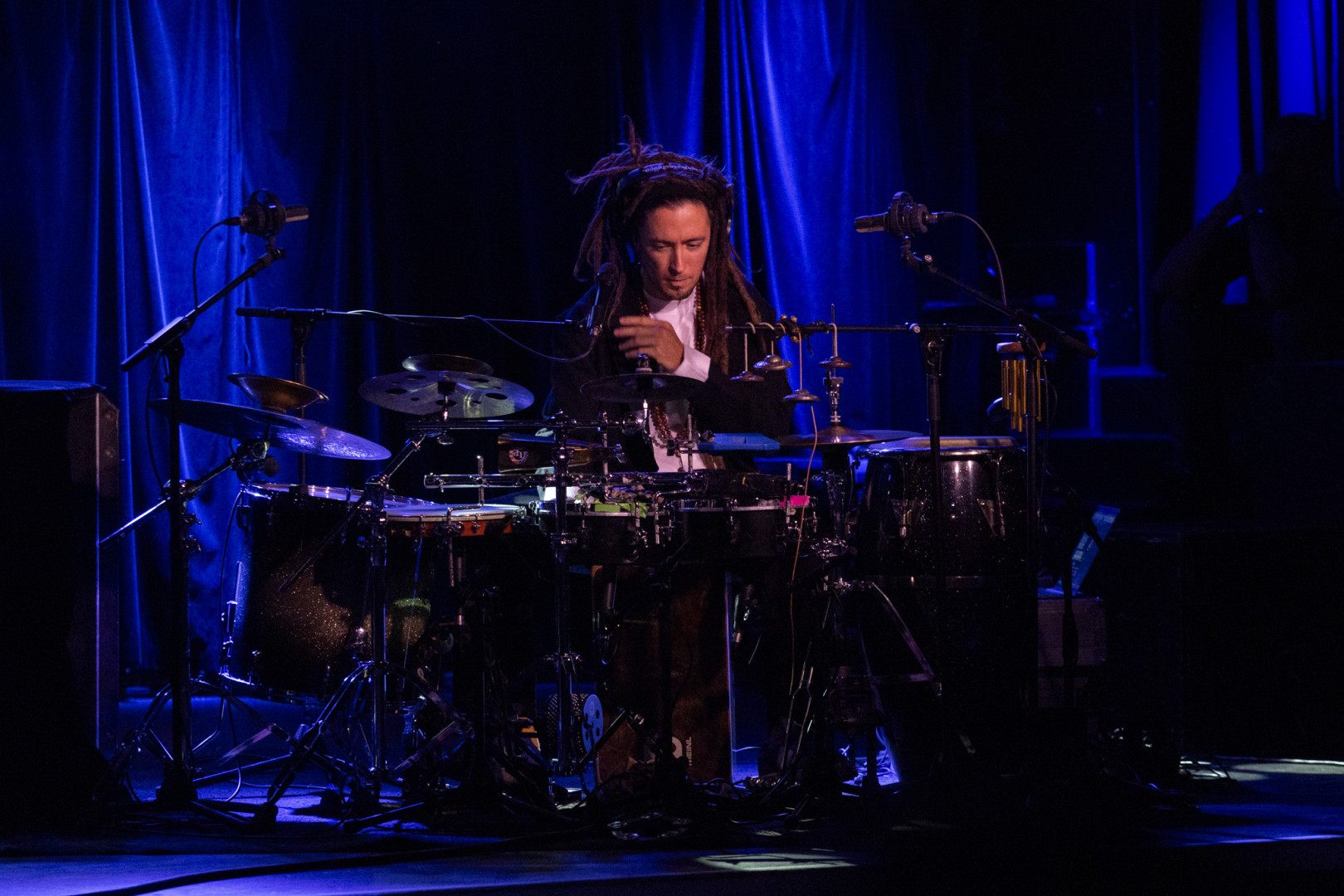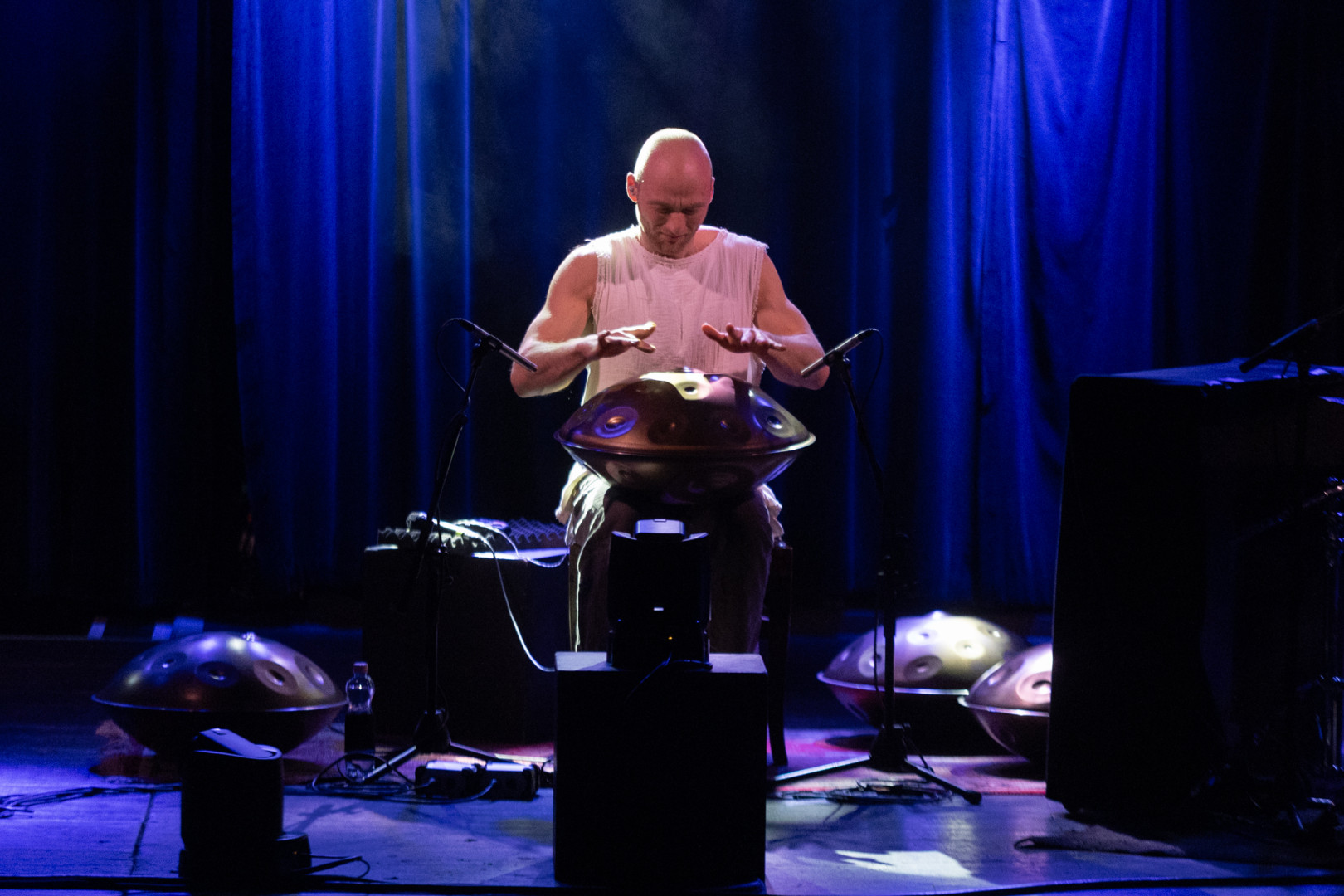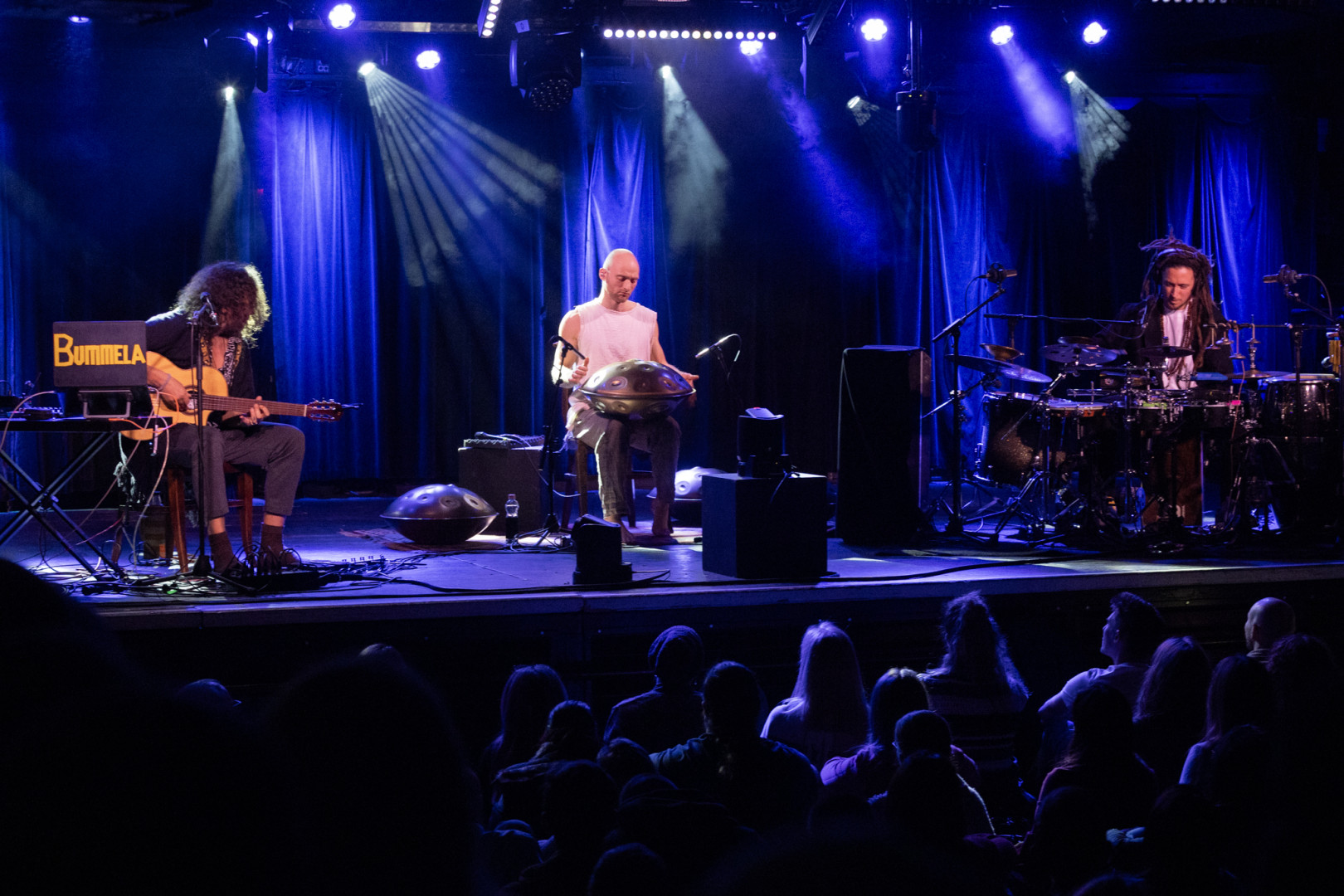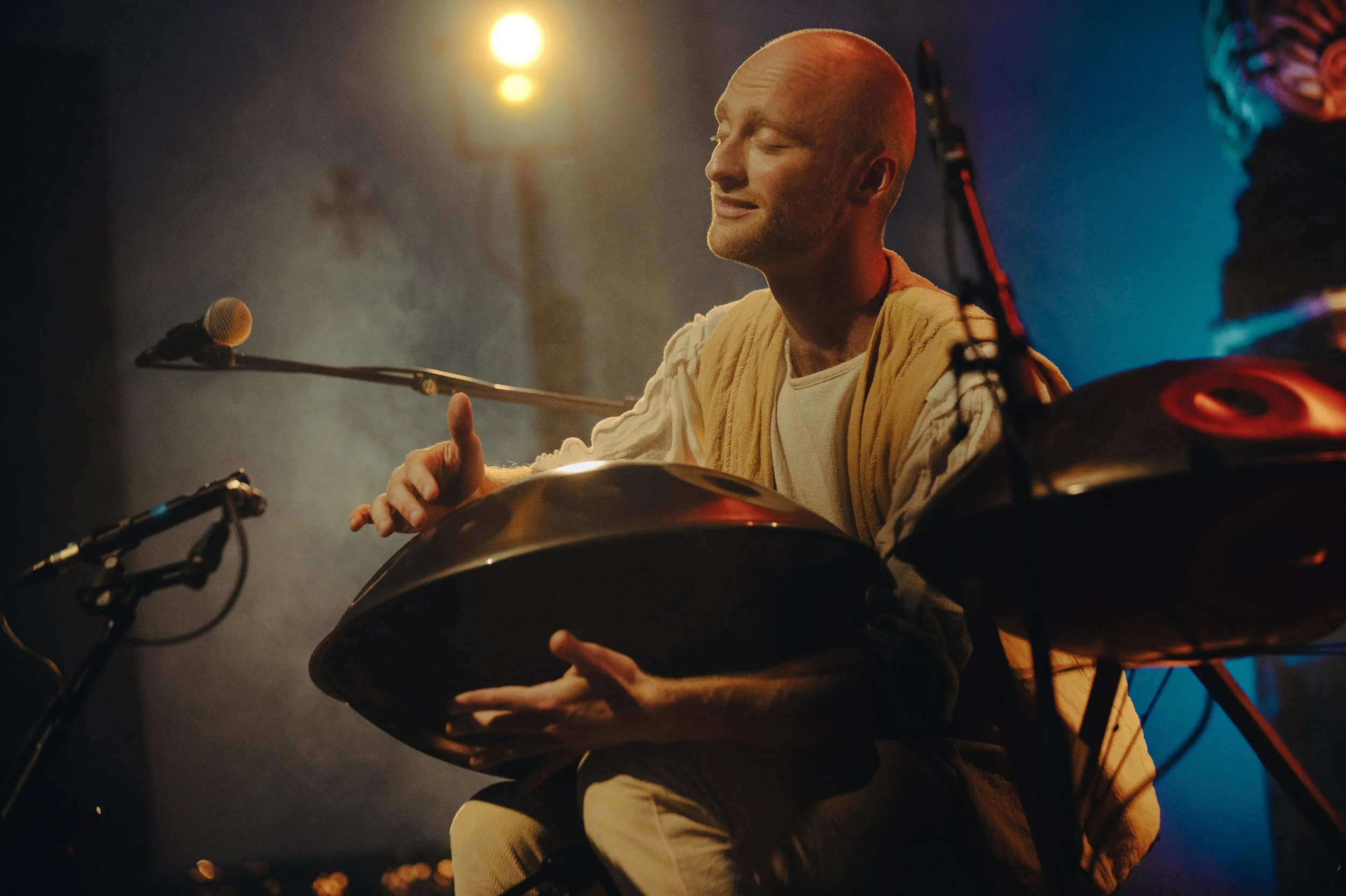

Malte Marten describes himself as a handpan player at his core, and also as a musician, teacher and visionary. He grew up in a small town in Germany, though the available record offers little more about his childhood or family, and it would be a mistake to fill that silence with invention. What is documented begins in 2014, when he was working as a beatmaker and DJ and came across a video of the duo Hang Massive.
That video changed the direction of his life. He sold all the music equipment he owned and used the money to buy his first handpan. It was a considerable gamble: he traded a full production setup for a single acoustic instrument. He then took the handpan to the streets of Berlin and played there, learning the instrument in public.
That origin helps explain the character of his later work. His releases have a rhythmic patience that feels built rather than improvised, which fits a musician who came to the handpan from beats and arrangement rather than from a classical background.
From 2015 to 2020 Malte toured with his former duo, Yatao. Over those years, teaching became a passion alongside performing. The duo began giving workshops and retreats, and they co-founded the YataoShop, a place for people to take their first steps with the instrument.
That detail matters. Many handpan players are either performers or teachers, but Malte has been both from early on. The shop, the workshops and the retreats grew from the same impulse as the concerts: to put the instrument in people's hands and help them find something in it.
In 2021 the duo's musical project ended, and Malte began his solo project. He funded his first solo studio album through crowdfunding, which tied the beginning of this chapter directly to the people who already listened. That album is not identified in the available data, so it cannot be named here.
His central contribution is the Malte Marten Method, which he says has helped more than 5,000 students. It is about accessing deep feelings and expressing them musically, not only playing notes. In his own words, "I teach from experience, not from rules." He describes his approach as hands-on, heart-open and free of pressure.
This sets the method apart from technique-first handpan courses. A student who arrives wanting drills and theory may find the feeling-first orientation a shift, which is both the point of the approach and its main tradeoff. Teaching happens through online courses and retreats. No prerequisite is listed, and the lineage of the YataoShop suggests that beginners are the intended audience.
His site also mentions the world's first handpan teacher training and plans for Handpan Houses. The teacher training claim comes from his own site and has not been independently verified, so it is best read as his account. The Handpan Houses suggest that community and shared practice are becoming more central to his work.
No formal tradition or lineage is named in the materials. The most accurate frame is the modern handpan lineage that begins with the Hang, the instrument in the video that set his path in motion. Within it, he works as a player-teacher whose authority is personal and practice-based rather than doctrinal.
The music is handpan-centred. Its round, resonant tones carry almost every release, and the pacing is slow and deliberate, with long tones and gradual shifts rather than hooks or verse-chorus structures. His YouTube channel describes the music as music to relax and release. The available materials list no other instruments or vocalists on his releases.
Five albums anchor the catalogue:
- Yellow (December 5, 2024, ten tracks), the earliest album in the list.
- Path to Inner Peace (June 6, 2025, eight tracks), a compact entry point.
- Roots of Hope (June 27, 2025, twelve tracks).
- Healing Frequencies 2 (November 11, 2025, thirty tracks), the most ambitious release, suited to long listening.
- Venturis (November 25, 2025, twelve tracks), the most recent album.
He has also released many singles, fourteen in 2025 alone, often tagged with frequencies such as 777 Hz, 999 Hz and 1111 Hz. Examples include Healing Frequency (999 Hz), Higher Calling (1111 Hz) and Calm Whispers (999 Hz), released May 23, 2025. The naming convention is the clearest signature in his output and the feature most likely to divide listeners. The titles are a stylistic choice, and anyone expecting them to function as scientific claims may find the framing overstated.
Today Malte's work moves across several channels at once: streaming, video, online courses, retreats, and now a substantial live calendar. His Spotify audience stands at roughly 816,500 followers, and his Instagram and YouTube videos have reached listeners around the world.
The upcoming dates begin with a Swiss run: Stadtcasino Basel on November 10, 2026, Volkshaus Zürich on November 11, Alhambra Genève on November 12, and Teatro di Locarno on November 14. Schloss Elmau in Krün, Germany, follows on December 6, and RAI Auditorium in Amsterdam on December 19. In 2027 the schedule includes Kastel in Istanbul (January 24 and 25), Neue Flora in Hamburg (March 8), Circus Building in Copenhagen (March 9), Troxy in London (March 10), Kulturkirken Jakob in Oslo (March 12) and, on March 15, Admiralspalast in Berlin, the city where he once played on the streets. One January 2027 listing has no venue recorded, so it should be confirmed on his official site, maltemarten.com, before anyone plans travel around it.
The available data lists no awards, press coverage or published articles about him, so his standing rests on audience and practice rather than institutional recognition. Listeners follow him for recordings built around stillness rather than display, and for a teaching practice that treats the handpan as a vehicle for feeling.
He reaches people in two distinct ways. For listeners, the music offers rest and release. For aspiring players, often with no musical background, the courses and retreats offer an unintimidating way in. What moves him most, he says, is hearing that his music has helped people through personal challenges and brought them clarity.
He is not for everyone. Those who want driving grooves or dance-floor energy will find the music too slow and open-ended, and the large catalogue can feel repetitive to anyone who prefers varied song structures. A rule-based, technique-drilling teacher is not what he claims to be, and listeners seeking lecture-heavy spiritual instruction will find an emphasis on playing and feeling instead.
Still, the arc is distinctive: a beatmaker who sold his equipment for one instrument, played it on the streets of Berlin, toured and taught for years in a duo, and then rebuilt his work as a solo artist with the support of his listeners. His significance lies in how consistently he has kept the instrument, the teaching and the quiet intention together.