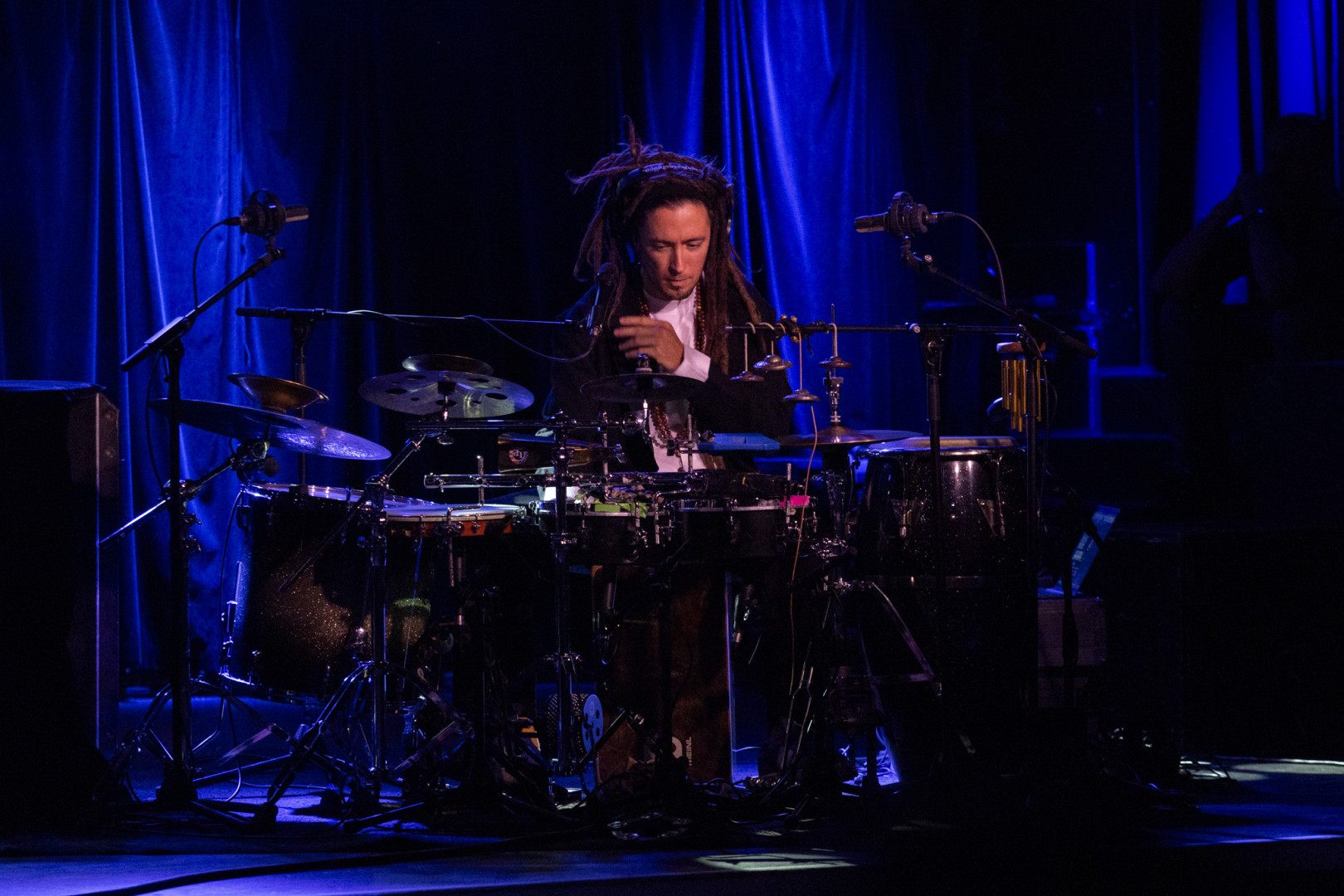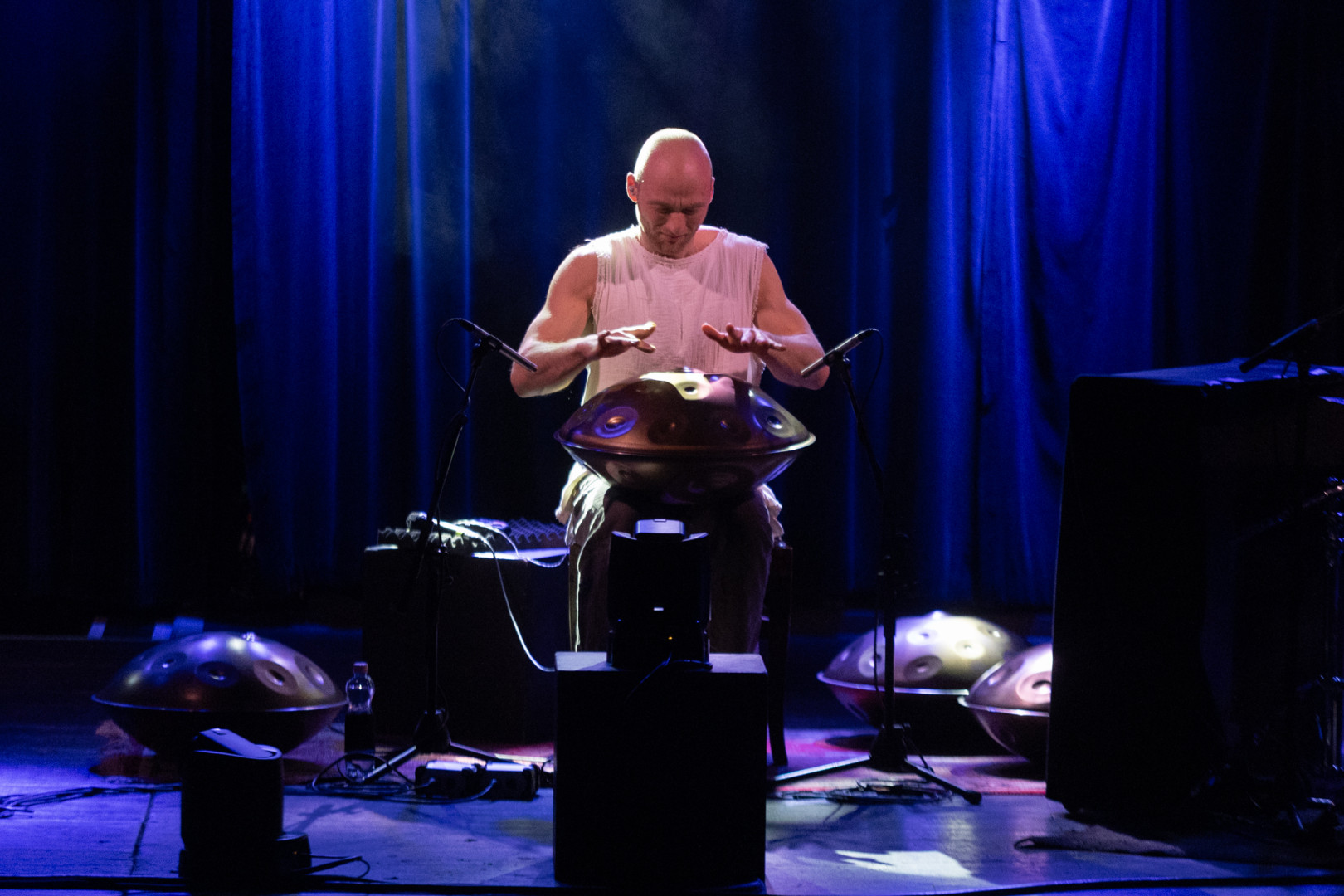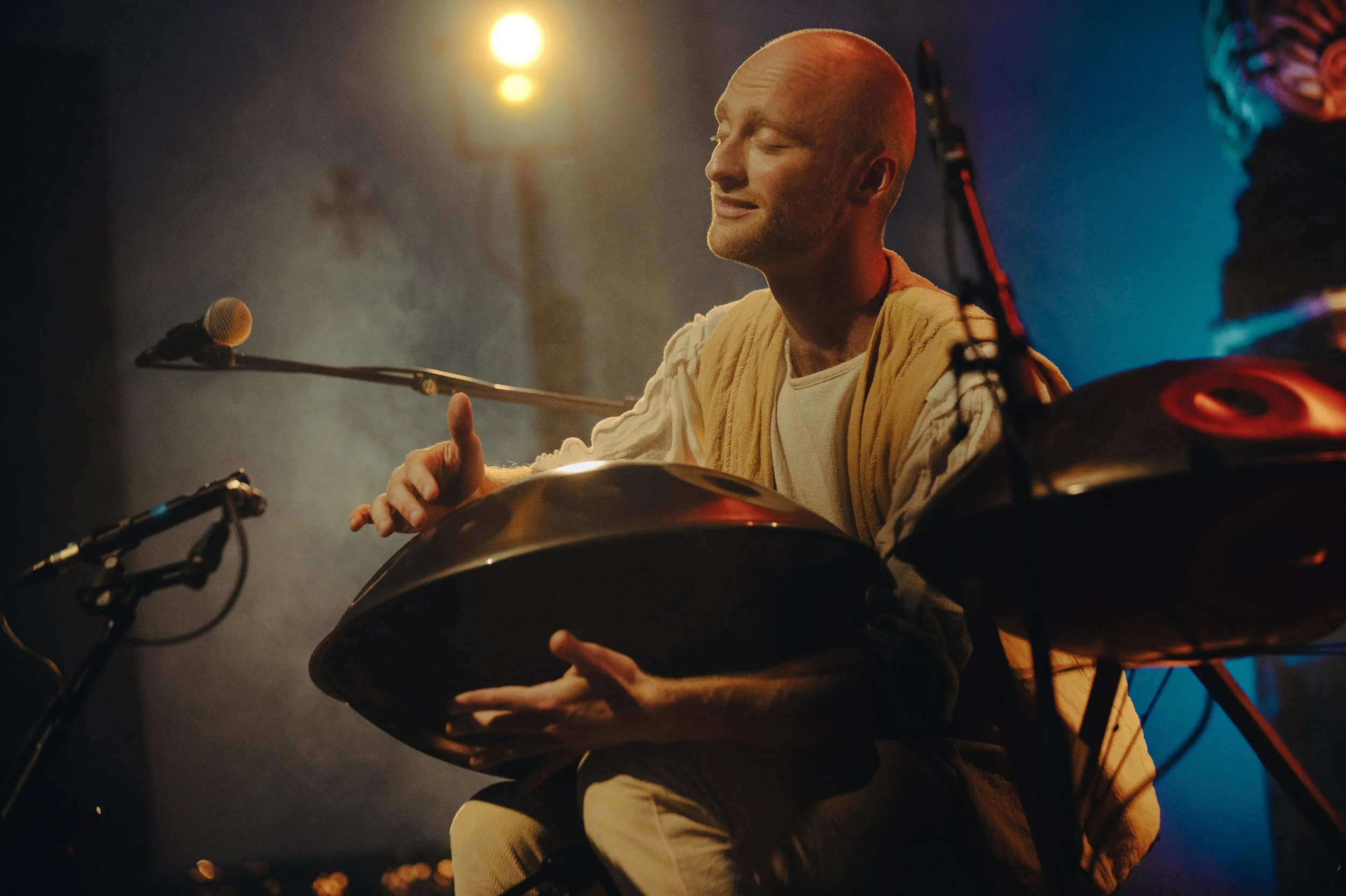

Malte Marten calls himself a handpan player at his core. The path to that description began in 2014, when a video of the duo Hang Massive led him to sell his beatmaking and DJ equipment and buy his first handpan. Street performance in Berlin followed, then the years from 2015 to 2020 touring with his former duo, Yatao. When that project ended in 2021, he began a solo career, funding his first solo studio album through crowdfunding.
Venturis arrived on November 25, 2025, and is the most recent album in his catalogue. It has twelve tracks. It follows a busy 2025 that included Path to Inner Peace (June 6), Roots of Hope (June 27) and the thirty-track Healing Frequencies 2 (November 11), plus a run of frequency-tagged singles. Where Healing Frequencies 2 is built for long sessions, Venturis is a more contained statement, and it reflects his most current direction.
The handpan carries this music. Its round, resonant tones are the center of almost every Malte Marten release, and the available materials list no other instruments or vocalists on his records. Treat Venturis as a handpan-centred album, not a band or ensemble recording.
Pacing is slow and deliberate. Expect long tones and gradual shifts rather than melodic hooks or verse-chorus structures. His recordings are built around stillness rather than display, and the mood is contemplative, not virtuosic. One quality worth listening for is rhythmic patience. His background as a beatmaker and DJ is a plausible reason his music feels built rather than improvised: the patterns have a sense of architecture even when the surface is calm.
His YouTube channel describes the music as music to relax and release, and that phrase fits. The emotional register is open and unhurried, without tension that needs resolving.
I can't responsibly name individual tracks from Venturis, because the materials available don't list the track titles. Rather than guess, here is how to find your own signature moments across twelve tracks.
Listen for the opening piece, which tends to set an album's breathing rate. Notice where a pattern repeats long enough that you stop counting and start drifting. Then watch for the moments when a shift in tone or register arrives, because in music this patient, a small change lands like a large one. Those are the places where this album will do its work, and a first pass through all twelve will show you which ones are yours.
The materials name no formal tradition for Malte Marten, and it would be wrong to place Venturis in bhakti or kirtan lineage. The most accurate frame is the modern handpan lineage that begins with the Hang, the instrument in the video that set his path in motion. Within it he works as a player-teacher, and his approach comes from experience rather than fixed rules.
That practice-based outlook shapes the music. The Malte Marten Method, which he describes as a way of accessing deep feelings and expressing them musically, treats the handpan as a vehicle for feeling, not a set of notes to master. Venturis can be heard as that idea in recorded form. It sits comfortably beside ambient and relaxation music in effect, though that is a description of how it sounds and not a claim about lineage.
His catalogue leans on frequency-based titles such as 777 Hz, 999 Hz and 1111 Hz. Venturis is an album rather than a tagged single, but the same contemplative intent runs through it. Those labels are a stylistic choice, and they are best taken that way, not as scientific claims.
This album suits listeners who are tired and want to put something down. Marten has said that what moves him most is hearing that his music has helped people through personal challenges and brought them clarity, and that points to its best audience: people in a period of transition, stress or quiet reflection who want sound that asks nothing of them.
It also suits anyone curious about the handpan who prefers hearing the instrument in sustained, unhurried form. Newcomers to his work may still prefer Path to Inner Peace as a first step, since it is the more compact introduction.
It is not for everyone. Listeners wanting high-BPM energy, driving grooves or varied song structures will find it too slow and open-ended. If you want dance-floor momentum, look elsewhere.
Give Venturis one uninterrupted sitting. At twelve tracks it is long enough to settle into without becoming a marathon, and it rewards being heard in order.
Evening works best, with the lights low and your phone out of reach. Headphones help, because the handpan's resonance and decay are the substance of the music, and small speakers flatten them. Listen alone the first time. Let the first few tracks do nothing but slow you down, then pay attention to how the later pieces feel once your pace has changed.
If you want to use it for meditation or rest, that fits how he describes his music. For ritual or ceremony, the materials offer no official pairing, so treat any such use as your own reading and check his guidance at maltemarten.com first.