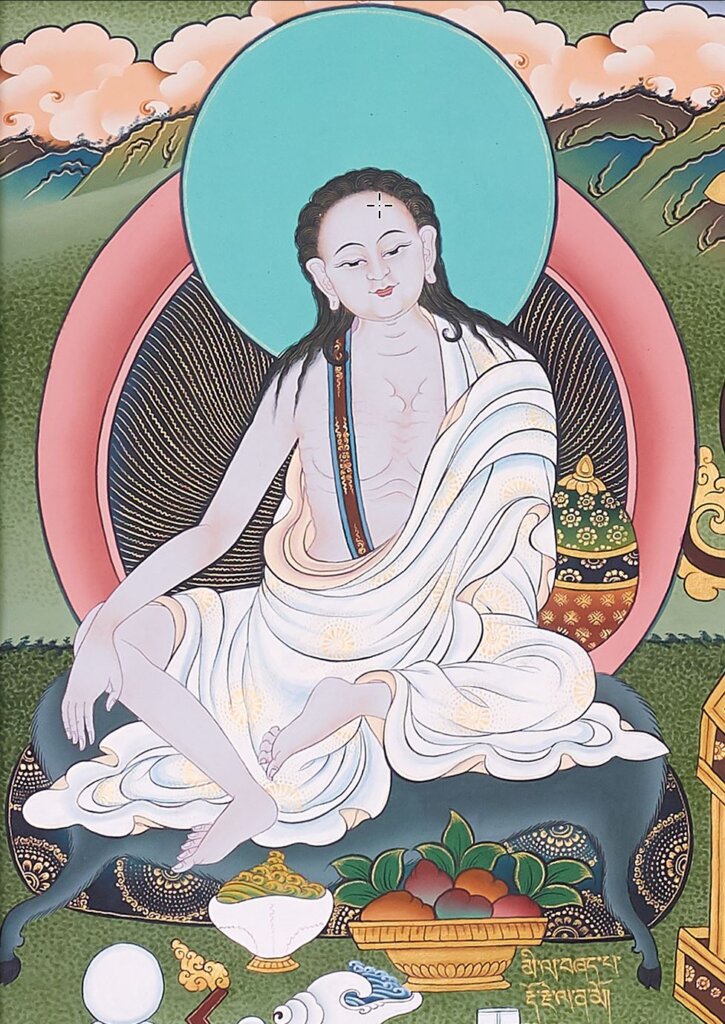
Milarepa's poignant assertion, "Like the lake's reflection, never the lake," invites us to contemplate the distinction between appearance and reality. This metaphor serves as a reminder that what we perceive is often a mere reflection of deeper truths, urging us to look beyond the surface of our experiences. In a world saturated with distractions and illusions, understanding this teaching becomes essential for cultivating genuine insight and wisdom.
As we delve into this quote, we are beckoned to explore the nature of our perceptions and the often deceptive quality of our thoughts and emotions. The lake's reflection, while beautiful and captivating, is not the lake itself; it is a transient image that can shift with the wind or the light. This teaching resonates deeply in our lives, where we frequently mistake our fleeting thoughts and feelings for the essence of who we are. Milarepa's wisdom challenges us to seek the underlying reality, encouraging a journey toward self-discovery and enlightenment.
The image / the metaphor
At first glance, the imagery of a lake and its reflection evokes a serene and tranquil scene, yet it also encapsulates a profound philosophical insight. The lake represents the essence of reality, while the reflection symbolizes our perceptions, thoughts, and emotions—elements that can distort or obscure the truth. The verbs "like" and "never" in Milarepa's quote emphasize the distinction between the two, suggesting that while we may experience reflections, they are not the ultimate reality. This subtle yet powerful choice of language invites us to engage with our experiences more critically.
Diving deeper into the metaphor, we recognize that the lake's reflection is not inherently negative; it serves a purpose in our understanding of the world. However, the danger lies in becoming overly attached to these reflections, mistaking them for the lake itself. In this way, Milarepa's teaching encourages us to cultivate discernment, to recognize the transient nature of our thoughts and emotions, and to seek the deeper truths that lie beneath the surface. This journey toward understanding is not merely intellectual; it is a transformative process that can lead to profound spiritual awakening.
In the speaker's tradition
Milarepa's wisdom is deeply rooted in the Buddhist tradition, particularly in the context of concepts such as sunyata (emptiness) and prajna (wisdom). The notion of sunyata teaches us that all phenomena are devoid of inherent existence; they are contingent upon causes and conditions. This aligns with the metaphor of the lake and its reflection, as both are interdependent and subject to change. By recognizing the emptiness of our perceptions, we can cultivate a deeper understanding of the nature of reality, moving beyond the illusions that often ensnare us.
In the context of Milarepa's life and teachings, we can draw parallels to the Tibetan Buddhist text, "The Heart Sutra," which emphasizes the importance of understanding emptiness to attain liberation. The sutra states, "Form is emptiness, emptiness is form," echoing the sentiment of Milarepa's quote. By engaging with these teachings, we are invited to explore the interplay between appearance and reality, ultimately leading us toward a more profound experience of existence and a deeper connection to our true selves.
Living the teaching
Consider a modern scenario where this teaching resonates: a person scrolling through social media, captivated by the curated images of others' lives. Each post reflects a moment, a carefully crafted image that may not represent the complexities and struggles behind the scenes. In this context, Milarepa's wisdom serves as a gentle reminder to look beyond the surface, to recognize that these reflections do not encapsulate the entirety of a person's experience. By acknowledging this distinction, we can cultivate compassion for ourselves and others, understanding that what we see is often just a glimpse of a much larger reality.
In relationships, this teaching can manifest during moments of conflict or misunderstanding. When we react to a partner's words or actions, we may be responding to our reflections—our interpretations and assumptions—rather than the essence of their intentions. By pausing to reflect on Milarepa's insight, we can create space for deeper communication and understanding. This practice encourages us to engage with our loved ones more authentically, fostering connections that transcend mere appearances and delve into the heart of our shared humanity.
A reflection
As we contemplate Milarepa's profound teaching, we are left with a contemplative question: In what areas of your life are you mistaking reflections for reality? This inquiry invites us to examine our perceptions, encouraging a deeper exploration of the truths that lie beneath the surface. By engaging with this question, we can embark on a journey of self-discovery, seeking to understand the essence of our experiences and the interconnectedness of all beings.
