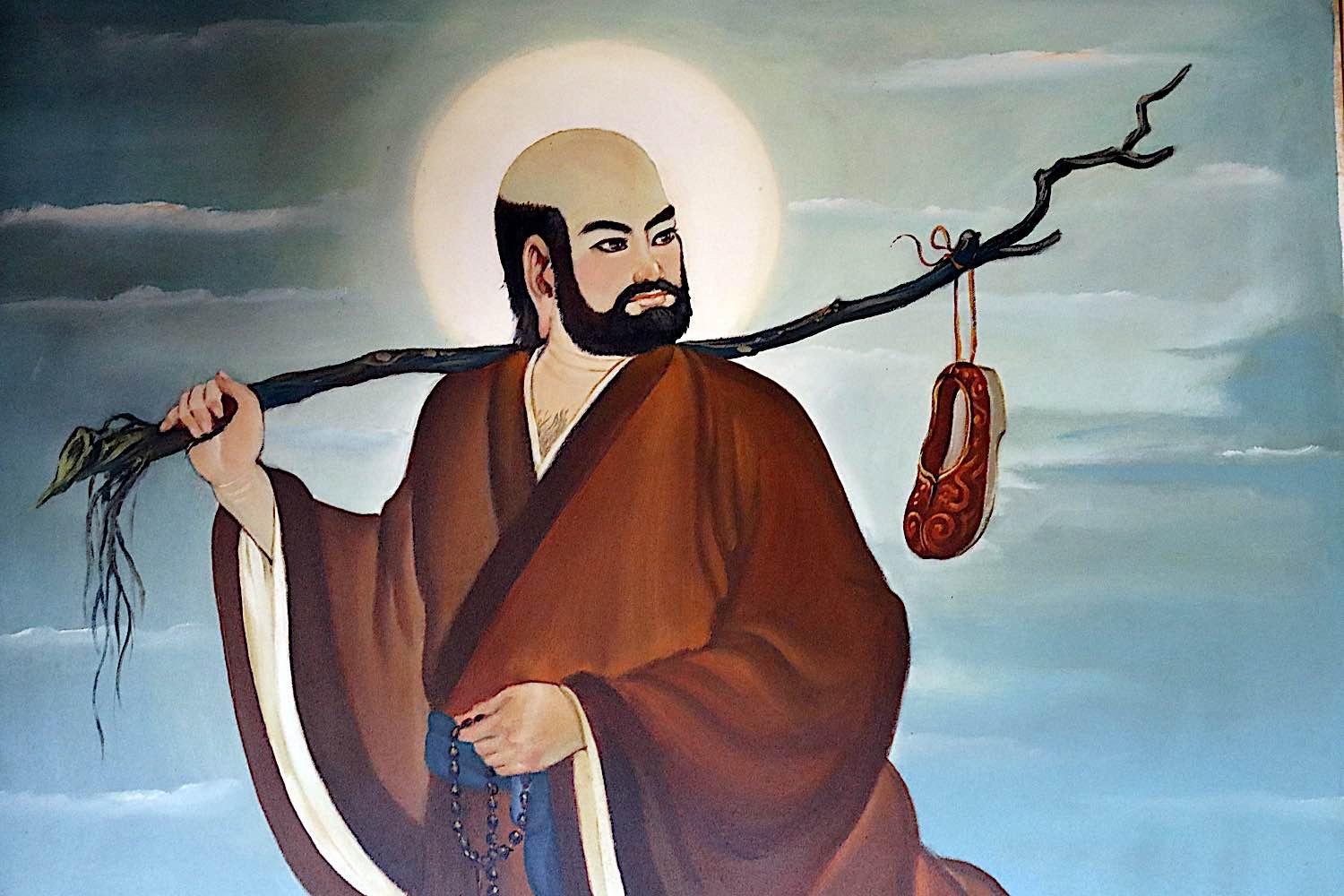
Bodhidharma's assertion, "He who is silent and still is closest," invites us to explore the transformative power of silence and stillness in our lives. In a world that often prioritizes noise and constant activity, this quote serves as a gentle reminder of the profound connection that can be found in moments of quietude. It suggests that true closeness—whether to ourselves, others, or the universe—emerges not from the clamor of words or actions, but from the serene depths of our inner being.
This teaching resonates deeply within the Zen tradition, where silence is not merely the absence of sound but a state of being that fosters awareness and presence. In stillness, we can cultivate a deeper understanding of our thoughts, emotions, and the world around us. Bodhidharma's words challenge us to reconsider our relationship with silence, urging us to embrace it as a pathway to intimacy and insight rather than a void to be filled.
The image / the metaphor
The imagery in Bodhidharma's quote evokes a sense of tranquility and depth. The verbs "silent" and "still" conjure a vivid picture of a serene landscape, where the chaos of life fades away, allowing for a profound connection to emerge. Silence here is not passive; it is an active engagement with the present moment, a space where thoughts can settle like leaves on a still pond. The stillness invites us to pause, breathe, and listen—not just to the external world, but to the whispers of our own hearts.
In the speaker's tradition
Within the Zen tradition, Bodhidharma's teaching resonates with key concepts such as dharma, the natural law that governs the universe, and prajna, the wisdom that arises from direct experience. Silence and stillness are seen as essential practices for realizing one's true nature and understanding the interconnectedness of all beings. This aligns with the notion of sunyata, or emptiness, which teaches that in the absence of clinging and distraction, we can experience the fullness of existence.
Moreover, Bodhidharma's emphasis on silence can be likened to the practice of zazen, or seated meditation, where practitioners cultivate a state of stillness to awaken to their true selves. In the *Bloodstream Sermon*, he articulates the importance of direct experience over intellectual understanding, suggesting that it is in the quiet moments of contemplation that we can truly grasp the essence of our being and the nature of reality.
Living the teaching
Consider a modern scenario where this teaching can be applied: a busy workplace filled with constant chatter and distractions. In such an environment, taking a moment to step away, breathe deeply, and embrace silence can be transformative. This simple act of stillness allows one to reconnect with their purpose, clarify their thoughts, and approach challenges with a renewed sense of clarity and focus. It is in these moments of retreat that we can find the strength to engage more meaningfully with our tasks and colleagues.
In the realm of relationships, Bodhidharma's teaching offers profound insights as well. During a conflict with a loved one, the instinct may be to fill the space with words—arguments, justifications, or emotional outbursts. However, choosing to remain silent and still can create an opportunity for deeper understanding. In that quiet space, both parties can reflect on their feelings and perspectives, fostering a connection that transcends the immediate conflict and allows for healing and reconciliation.
A reflection
As we contemplate Bodhidharma's words, we are invited to explore the nature of our own silence and stillness. How often do we allow ourselves the gift of quietude in our daily lives? In what ways can we cultivate a deeper sense of closeness to ourselves and others through the practice of being silent and still? These questions encourage us to engage with the essence of Bodhidharma's teaching, inviting us to reflect on the transformative power of silence in our own journeys.
