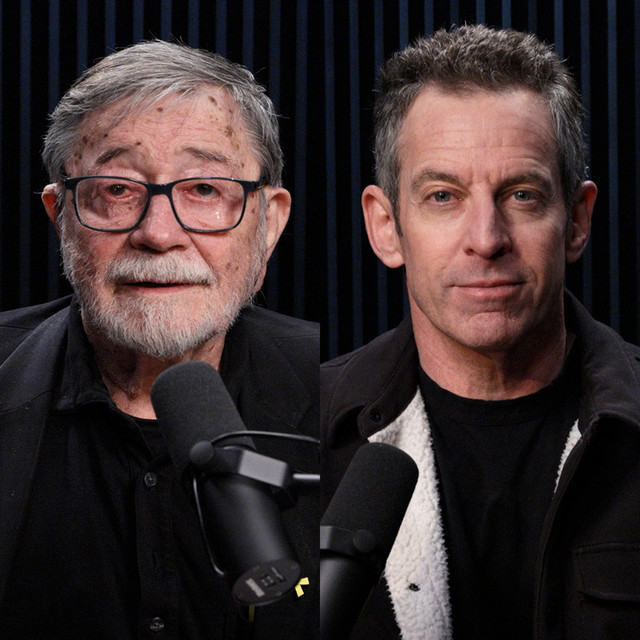
In his provocative assertion, "You are not the author of the thoughts that arise in your mind," Sam Harris invites us to reconsider the very nature of our thoughts and the sense of self that accompanies them. This statement challenges the deeply ingrained belief that we are the architects of our mental landscape, suggesting instead that thoughts emerge spontaneously, independent of our conscious will. Understanding this distinction is crucial, as it opens the door to a more profound awareness of our mental processes and the potential for liberation from the tyranny of unexamined thoughts.
By recognizing that we do not author our thoughts, we can begin to disentangle our identities from the incessant chatter of the mind. This realization is not merely an intellectual exercise; it has significant implications for how we navigate our emotional lives and relationships. When we see thoughts as transient phenomena rather than fixed truths, we cultivate a sense of detachment that allows us to respond to life with greater clarity and compassion. This shift in perspective is at the heart of many contemplative practices, where the goal is to observe thoughts without judgment or attachment.
The image / the metaphor
The imagery in Harris's quote evokes a sense of thoughts as clouds drifting across the sky of our consciousness. The verbs "arise" and "author" create a dynamic interplay between emergence and ownership, suggesting that thoughts come into being without our direct control. This metaphor invites us to visualize our minds as vast, open spaces where thoughts can appear and dissipate, much like the weather. In this light, we are not the creators of these mental phenomena; rather, we are the observers of their fleeting nature.
In the speaker's tradition
Sam Harris's perspective is deeply rooted in the principles of secular Buddhism, which emphasizes mindfulness and the understanding of the self as an illusion. Central to this tradition is the concept of sunyata, or emptiness, which posits that all phenomena, including thoughts, lack inherent existence. This aligns with Harris's assertion that we are not the authors of our thoughts; instead, they arise from a complex interplay of conditioning, environment, and biology. By acknowledging this, we can begin to dismantle the rigid boundaries of the self and experience a more fluid sense of being.
In his book "Free Will," Harris draws upon contemporary neuroscience to support his claims, illustrating how thoughts can emerge from unconscious processes before they reach our conscious awareness. This aligns with the Buddhist practice of prajna, or wisdom, which encourages us to see through the illusions of the self and recognize the interconnectedness of all experiences. By understanding the origins of our thoughts, we can cultivate a deeper awareness of our mental habits and their impact on our lives.
Living the teaching
Consider a modern scenario where this teaching can be applied: you find yourself in a heated argument with a friend. As emotions escalate, thoughts of anger and frustration arise, seemingly out of nowhere. By recognizing that these thoughts are not authored by you but rather are transient reactions to the situation, you can step back and observe them without becoming entangled. This awareness allows you to respond with greater clarity, perhaps choosing to express your feelings calmly rather than reacting impulsively.
In a different context, imagine facing a challenging moment at work where self-doubt creeps in. Instead of identifying with the thoughts that suggest you are inadequate or unworthy, you can practice observing these thoughts as they arise. By doing so, you create space between your sense of self and the thoughts that pass through your mind, allowing you to approach the situation with a sense of equanimity. This practice not only enhances your resilience but also fosters a more compassionate relationship with yourself and others.
A reflection
As we contemplate Harris's assertion, we are invited to explore the nature of our thoughts and the extent to which we identify with them. What would it mean for you to recognize that your thoughts are not the definitive expression of who you are? In moments of self-doubt or emotional turmoil, how might this understanding shift your response? Reflecting on these questions can deepen your practice of mindfulness and enhance your capacity for self-awareness, ultimately leading to a more liberated and compassionate way of being.