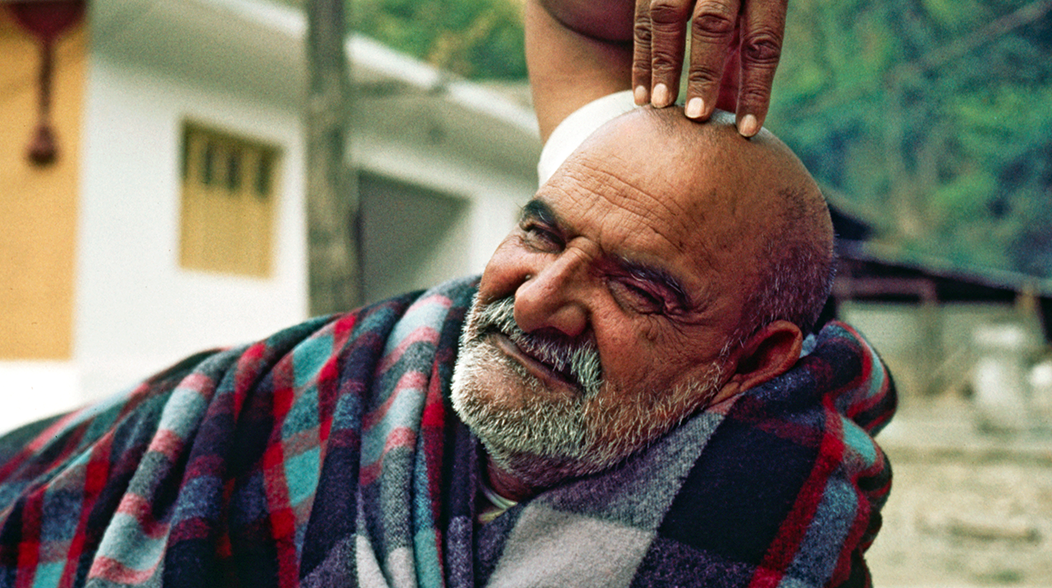
Neem Karoli Baba's profound assertion, "Don't seek miracles. Be a miracle," invites us to shift our focus from the external to the internal, urging us to embody the very essence of miraculous living. This call to action resonates deeply within the human experience, as it challenges us to recognize that the extraordinary is not something to be sought after but rather something to be cultivated within ourselves. In a world often preoccupied with the pursuit of external validation and miraculous events, this teaching serves as a gentle reminder of the power of presence and authenticity.
At its core, this quote speaks to the transformative potential inherent in each individual. It suggests that the act of being—truly being—can itself be a miracle. In a society that often glorifies achievement and spectacle, Neem Karoli Baba's words encourage us to embrace the quiet yet profound miracles of everyday existence. This perspective invites us to reconsider our relationship with the divine, not as something distant or separate, but as an integral part of our being, waiting to be expressed through our actions and interactions.
The image / the metaphor
The imagery within the quote is striking in its simplicity yet profound in its implications. The verb "seek" implies a quest, a longing for something outside of oneself, while "be" suggests a state of existence that is rooted in the present moment. This juxtaposition highlights a fundamental truth: that the search for miracles often leads us away from the very source of miraculous potential that resides within us. The felt sense of this teaching is one of empowerment, inviting us to recognize that we are not passive observers of life but active participants capable of creating change through our very presence.
Diving deeper into the metaphor, we can see that being a miracle is not about grand gestures or extraordinary feats; rather, it is about embodying qualities such as love, compassion, and authenticity in our daily lives. It is an invitation to live with intention and awareness, to recognize that our actions, no matter how small, can have a profound impact on the world around us. In this light, the miracle becomes a way of being that transforms the mundane into the extraordinary, illuminating the path for others as we navigate our own journeys.
In the speaker's tradition
Neem Karoli Baba's teachings are deeply rooted in the tradition of bhakti, which emphasizes devotion and love as pathways to the divine. Within this framework, the concept of "kenosis," or self-emptying, resonates strongly with the idea of being a miracle. To embody a miracle is to let go of the ego and allow the divine essence to flow through us, manifesting in acts of kindness, compassion, and service. This aligns with the bhakti principle of surrendering to a higher power, recognizing that our true nature is intertwined with the divine.
In the context of bhakti literature, we can draw parallels to the teachings found in the Bhagavad Gita, where Krishna encourages Arjuna to act without attachment to the fruits of his actions. This notion of selfless action reflects the essence of being a miracle—engaging fully in life while remaining unattached to outcomes. By embodying this principle, we not only transform ourselves but also inspire others to recognize their own potential for miraculous living.
Living the teaching
Consider a modern scenario where this teaching can take root: a workplace filled with stress and competition. In such an environment, one might feel compelled to seek recognition or validation through achievements. However, by choosing to embody the qualities of collaboration, support, and genuine care for colleagues, one can create a ripple effect that transforms the atmosphere. This act of being a miracle—showing up authentically and with compassion—can inspire others to do the same, fostering a culture of mutual respect and understanding.
Another application of this teaching can be found in personal relationships, particularly during challenging moments. Imagine a disagreement with a loved one, where the instinct might be to defend oneself or seek to be right. Instead, by embodying the miracle of empathy and active listening, one can create space for healing and connection. This shift from seeking to be understood to genuinely understanding the other person can turn a potentially divisive moment into an opportunity for deeper intimacy and growth.
A reflection
As we contemplate Neem Karoli Baba's invitation to "be a miracle," we are called to reflect on our own lives and the ways in which we can embody this teaching. What small acts of kindness or authenticity can we cultivate in our daily interactions? In what ways can we shift our focus from seeking external validation to recognizing the miraculous potential within ourselves? These questions invite us to explore the depths of our being and to embrace the transformative power of living fully in the present moment.