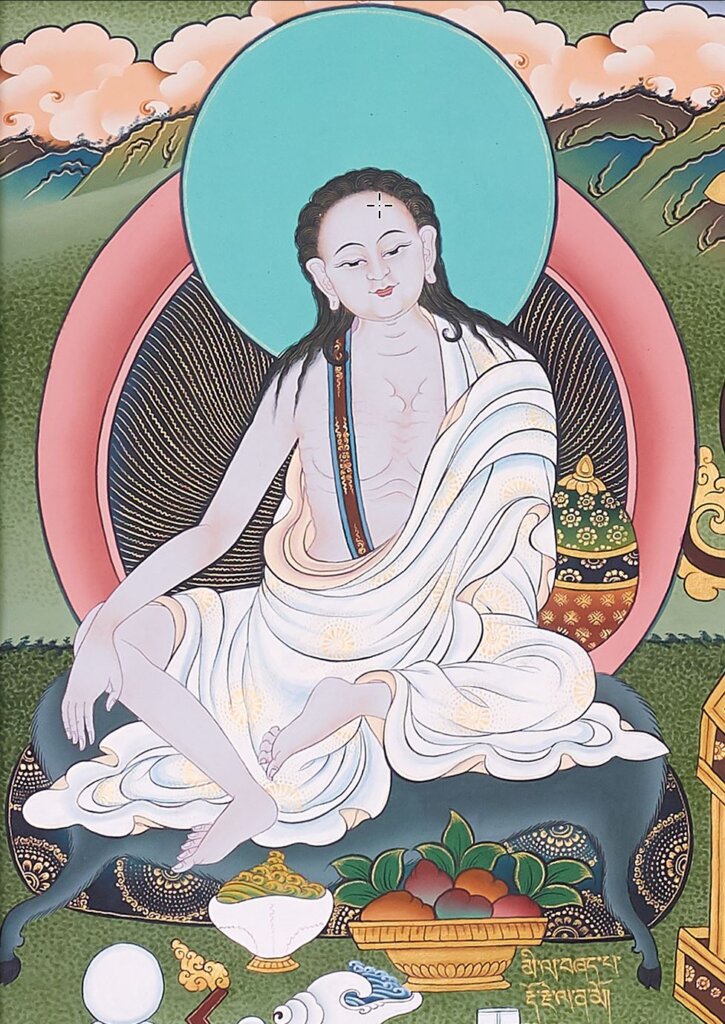
Milarepa's poignant assertion, "What is born will die," serves as a profound reminder of the transient nature of all existence. This statement encapsulates the essence of impermanence, a central tenet in Buddhist philosophy, urging us to confront the inevitability of change and loss. Understanding this truth is not merely an intellectual exercise; it is a call to engage deeply with our lives, to appreciate the fleeting moments that shape our experiences, and to cultivate a sense of acceptance in the face of life's impermanence.
As we delve into this quote, we are invited to reflect on the profound implications of birth and death, not just in the literal sense but also in the myriad forms they take in our daily lives. Each moment, each relationship, and each experience is born anew, only to fade away in time. This cyclical nature of existence challenges us to embrace the present fully, to find beauty in the ephemeral, and to recognize that our attachments can often lead to suffering when we resist the natural flow of life.
The image / the metaphor
At its core, Milarepa's quote evokes a stark yet beautiful imagery of life’s cycle. The verbs "born" and "die" are laden with weight; they encapsulate the duality of existence, where every beginning is inherently tied to an end. This imagery resonates deeply within us, as we can all relate to the experiences of joy and sorrow, creation and dissolution. The simplicity of the statement belies its depth, inviting us to ponder the nature of our own lives and the inevitability of change.
Diving deeper into the metaphor, we can see that birth and death are not merely endpoints but rather transitions that signify transformation. Each moment of birth—be it the dawn of a new day, the blossoming of a relationship, or the emergence of a new idea—carries within it the seed of its eventual demise. This cyclical understanding encourages us to view life not as a linear progression but as a series of interconnected experiences, each one contributing to the tapestry of our existence. In this light, we can begin to appreciate the transient beauty of life, recognizing that every ending is also a beginning.
In the speaker's tradition
Milarepa, a revered figure in Tibetan Buddhism, embodies the principles of dharma and the quest for enlightenment through the acceptance of impermanence. His life story reflects the transformative power of suffering and the path to liberation, where understanding the nature of existence is paramount. Concepts such as sunyata (emptiness) and prajna (wisdom) are integral to this teaching, emphasizing that recognizing the impermanent nature of all things leads to a deeper understanding of reality and ultimately to liberation from suffering.
In the context of Buddhist texts, the Heart Sutra offers a poignant reflection on emptiness, stating, "Form is emptiness, emptiness is form." This echoes Milarepa's assertion, as it invites us to see that what we perceive as solid and permanent is, in fact, fluid and transient. By embracing this wisdom, we can cultivate a sense of detachment that allows us to navigate the complexities of life with grace and acceptance, understanding that all phenomena are subject to change.
Living the teaching
Consider a modern scenario where this teaching resonates: a cherished relationship that has recently ended. The pain of loss can feel overwhelming, yet within this experience lies an opportunity for growth and self-discovery. By acknowledging that the relationship, like all things, was born and has now died, we can begin to process our emotions and find closure. This acceptance allows us to honor the beauty of what was while also making space for new beginnings, reminding us that life continues to unfold in unexpected ways.
Another application of this teaching can be found in the daily practice of mindfulness. As we engage in activities such as meditation or simply being present in the moment, we can cultivate an awareness of the impermanence of our thoughts and feelings. When we experience discomfort or joy, we can remind ourselves that these states are temporary, allowing us to navigate life's ups and downs with greater equanimity. This practice of recognizing the transient nature of our experiences fosters resilience and a deeper appreciation for the present moment.
A reflection
As we contemplate Milarepa's profound statement, we are left with a contemplative question: How can embracing the impermanence of life transform the way we engage with our experiences and relationships? This inquiry invites us to reflect on our attachments and the ways we resist change, encouraging us to cultivate a mindset that honors the beauty of each moment while recognizing its fleeting nature. In doing so, we open ourselves to a richer, more meaningful existence, grounded in the acceptance of life’s inevitable cycles.
