BrightStar

Parcourir tous les Events

Découvre des rassemblements conscients

events

Yoga
Meditation
Breathwork
Qigong
Tai Chi
Sacred Music
World Music
Medicine Music
Sound Healing
Ecstatic Dance
Destinations populaires
BaliSedonaLos AngelesCosta RicaNew YorkSan FranciscoAustinMiamiJoshua TreeTulum
Voir toutes les catégoriesVoir toutes les destinations

Explorer toutes les fonctionnalités

Des outils puissants pour développer tes événements

Fonctionnalités de la plateforme

Tarification dynamique intelligente
Catégories de billets
Places assignées
Récupération des paniers abandonnés
Récupération des visiteurs
Dons & Prix variables
Système d'affiliation
Scanner de billets
Codes promo
Questions personnalisées
Partage de billets
Ventes additionnelles & Options
Analyses & Rapports
Séquences d'emails
Liste d'attente / Notifier / Rappeler
Personnes & Lieux
Artists & TeachersEvent OrganizersVenues & StudiosKnowledge BaseGlossaryInspiration
Voir toutes les fonctionnalitésÀ propos
TarifsBlog
Saved events
Parcourir tous les événements

events

YogaMeditationBreathworkQigongTai ChiSacred MusicWorld MusicMedicine Music

Destinations populaires

BaliSedonaLos AngelesCosta RicaNew YorkSan Francisco

Personnes & Lieux

Artists & TeachersEvent OrganizersVenues & StudiosKnowledge BaseGlossaryInspiration

Fonctionnalités de la plateforme

Tarification dynamique intelligenteCatégories de billetsPlaces assignéesRécupération des paniers abandonnésRécupération des visiteursDons & Prix variablesSystème d'affiliationScanner de billetsCodes promoQuestions personnaliséesPartage de billetsVentes additionnelles & OptionsAnalyses & RapportsSéquences d'emailsListe d'attente / Notifier / Rappeler
Voir toutes les fonctionnalitésÀ propos
TarifsBlog
ConnexionChercheursCréateurs
Tibetan BuddhistOm Mani Padme Hum · Om Mani Padme Hum · Om Mani Padme Hum · Om Mani Padme Hum ·
  • Parcourir tous les Événements
  • Pour les chercheurs
  • Yoga
  • Méditation
  • Breathwork
  • Qi gong et tai-chi
  • Tai-chi
  • Musique sacrée
  • Retraites
  • Ateliers
  • Toutes les catégories →
  • Bali
  • Sedona
  • Los Angeles
  • Costa Rica
  • Tulum
  • Byron Bay
  • San Francisco
  • Austin
  • Toutes les villes →
  • Pour les créateurs
  • Pour les équipes
  • Pour les écrivains
  • Pour les enseignants
  • Pour les artistes de kirtan
  • Pour les studios
  • Pour les festivals
  • Pour les centres de retraite
  • Pour les associations
  • Ambassadeur de marque
  • Études de cas
  • Billetterie gratuite
  • Elevate
  • Amplify
  • Réseau de 350K+ acheteurs
  • Récupération des paniers abandonnés
  • Tarification dynamique intelligente
  • Catégories de billets
  • Événements récurrents
  • Places assignées
  • Système d'affiliation
  • Liste d'attente / Notifier
  • Scanner de billets
  • Widget intégrable
  • Diffusion d'événements
  • Messagerie
  • Intégrations
  • Rapports
  • Toutes les fonctionnalités →
  • À propos
  • L'écosystème
  • Blog
  • Glossaire
  • Inspiration
  • Centre d'aide
  • Contact
  • Documentation API
  • Ressources de marque
  • Carrières
  • Presse
  • Conditions d'utilisation
  • Politique de confidentialité

Événements

  • Parcourir tous les Événements
  • Pour les chercheurs
  • Yoga
  • Méditation
  • Breathwork
  • Qi gong et tai-chi
  • Tai-chi
  • Musique sacrée
  • Retraites
  • Ateliers
  • Toutes les catégories →

Destinations

  • Bali
  • Sedona
  • Los Angeles
  • Costa Rica
  • Tulum
  • Byron Bay
  • San Francisco
  • Austin
  • Toutes les villes →

Pour les créateurs

  • Pour les créateurs
  • Pour les équipes
  • Pour les écrivains
  • Pour les enseignants
  • Pour les artistes de kirtan
  • Pour les studios
  • Pour les festivals
  • Pour les centres de retraite
  • Pour les associations
  • Ambassadeur de marque
  • Études de cas
  • Billetterie gratuite
  • Elevate
  • Amplify

Fonctionnalités

  • Réseau de 350K+ acheteurs
  • Récupération des paniers abandonnés
  • Tarification dynamique intelligente
  • Catégories de billets
  • Événements récurrents
  • Places assignées
  • Système d'affiliation
  • Liste d'attente / Notifier
  • Scanner de billets
  • Widget intégrable
  • Diffusion d'événements
  • Messagerie
  • Intégrations
  • Rapports
  • Toutes les fonctionnalités →

Entreprise

  • À propos
  • L'écosystème
  • Blog
  • Glossaire
  • Inspiration
  • Centre d'aide
  • Contact
  • Documentation API
  • Ressources de marque
  • Carrières
  • Presse
  • Conditions d'utilisation
  • Politique de confidentialité
BrightStar
© 2026 BrightStar. Tous droits réservés.
Inspire

So Hum Mantra & BreathAwareness in Modern Kirtan

Donna De Lory
Donna De Lory
Aug 12, 2022
6 min de lecture

Donna De Lory's "So Hum/Breathing In (Atom Smith Remix)" presents a modern musical interpretation of one of yoga's most foundational mantras—So Hum, meaning "I am that." The track pairs the ancient Sanskrit phrase with conscious breathing practices, creating a contemporary kirtan piece designed to anchor attention in the present moment and the natural rhythm of breath. Rather than treating the mantra as abstract concept, the piece uses melody and community participation to make the practice accessible and embodied.

Lecture · 6 sections

What is the So Hum mantra and why does it matter?

So Hum is a core mantra in yoga and Vedantic philosophy that translates to "I am that"—a statement of non-duality asserting the unity between individual consciousness and universal consciousness. The mantra functions not merely as words to repeat, but as a tool for shifting awareness from the small self (ego) toward identification with the infinite. In traditional practice, "So" aligns with the inhale and "Hum" with the exhale, creating a natural synchronization between the mantra and the body's autonomic breath cycle.

The simplicity of So Hum makes it exceptionally portable. Unlike longer mantras that require sustained focus or complex visualization, So Hum can be practiced during daily activities—walking, working, or resting. Its two syllables map cleanly onto respiration, which makes the practice self-reinforcing: once the rhythm is established, the breath itself becomes the teacher, reminding practitioners to return to the mantra without effortful concentration.

How does breath awareness deepen meditation practice?

The breath occupies a unique position in contemplative work: it is both automatic and trainable. Unlike thought (which resists direct command) or emotion (which can feel overwhelming to confront), the breath remains accessible to conscious attention and gentle adjustment. When practitioners synchronize a mantra with the breath, they create a feedback loop—the mantra trains attention to follow the breath, and the breath's natural rhythm stabilizes the mantra.

Donna De Lory's remix emphasizes this synchronization by setting the mantra to a clear melodic pattern that mirrors breathing cycles. The musical structure supports the practitioner in maintaining the breath-mantra link without strain. This is a key distinction: the song does not impose breathing instruction from outside but rather invites the listener to discover their own natural breathing rhythm while the mantra echoes alongside it.

Breath awareness also anchors consciousness in the present moment—the one place where change, healing, and genuine insight actually occur. By repeating So Hum with each breath cycle, a meditator continuously returns attention to now, shedding preoccupation with past or future. Over time, this practice can soften the constant mental commentary that ordinarily obscures direct experience.

Why remix a traditional mantra for contemporary listeners?

Mantra practice in Western contexts often faces a barrier: unfamiliarity with Sanskrit pronunciation and the philosophical frameworks that originally hosted these practices. A remix that pairs the traditional mantra with modern production (as Atom Smith's remix does) serves several functions simultaneously. It honors the lineage while making the practice inviting to listeners who may not have grown up in a yogic or devotional tradition.

The musical arrangement matters deeply. Kirtan—the practice of call-and-response chanting—traditionally thrives on communal participation and emotional resonance. By bringing the So Hum practice into a recorded, professionally produced format with multiple vocalist participants (the video credits show approximately twenty contributors), De Lory extends the communal experience beyond the room where recording occurred. A listener at home can join a virtual sangha (spiritual community) of voices.

Remixing also acknowledges that mantra practice need not be confined to temple, ashram, or meditation cushion. Contemporary listeners encounter sacred practices through streaming platforms, music apps, and social media. A high-quality, engaging production can seed the practice into daily listening habits—someone might play this track while commuting, exercising, or working, making meditation practice less a separate activity and more an integrated dimension of ordinary life.

What does the official video add to the listening experience?

Director Nick Spanos shaped the visual experience to amplify the mantra's core message: unity and interconnection. The video credits reveal that approximately twenty individuals contributed to the project—a roster spanning diverse names and backgrounds. This visual democracy reflects the So Hum philosophy directly: the video's visual structure asserts that all participants embody the same essential consciousness, expressed through different forms and faces.

Video adds layers that audio alone cannot convey. The breath becomes visible—facial expressions, posture, the quality of presence in each contributor's participation—creating a powerful suggestion that this is not a distant, abstract practice but something that lives in bodies and shows up in real time. For many viewers, seeing others engage the practice sincerely can dissolve skepticism or self-consciousness about mantra work itself.

How can listeners integrate So Hum into their own practice?

The immediate entry point is simple: listen to the track while sitting in a comfortable position and allow your breath to follow the mantra's rhythm. You need not force the breath or overthink the coordination. Many listeners find that after a few minutes of listening, the synchronization happens naturally—the body's own wisdom aligns breath and sound without deliberate instruction.

For those new to mantra, understanding the meaning deepens engagement. Pause occasionally to reflect on what "I am that" might mean to you: What is the "that" you are recognizing? Is it nature, consciousness, the energy animating all beings, or something less conceptual and more felt? This contemplative inquiry prevents the mantra from becoming mechanical repetition and instead makes it a vehicle for direct investigation.

Repeated listening can transform the track from "music to enjoy" into an anchor for practice. Rather than playing it once, many practitioners return to the same recording daily or weekly, allowing familiarity to deepen. The voice becomes trusted; the rhythm becomes reliable; the practice settles into the nervous system.

Some practitioners use the track as an entry point to longer formal meditation. You might listen to the three-minute piece and then sit in silence, noticing whether the So Hum rhythm continues internally, whether the breath remains steady, and what quality of awareness lingers once the outer sound has ceased.

Where to go from here

Explore the broader context of So Hum by studying its origins in Vedantic philosophy and Tantra, where the mantra appears as a central practice. Research how other contemporary artists and teachers have adapted traditional mantras for modern contexts—you may find that remixes and modern productions are part of a longer lineage of adaptation.

Deepen your breath awareness through dedicated pranayama (breath work) practices, which can strengthen your capacity to sustain attention on breathing even outside of mantra practice. Consider finding a local kirtan group or meditation community where you can practice collectively, combining the recorded medium with the living experience of group chanting.

Visit Donna De Lory's website at www.donnadelory.com to explore additional music and resources for contemporary spiritual practice through sound.

Donna De Lory
AuteurDonna De Lory

A multi-talented vocalist and producer who rose to prominence as Madonna's longtime backup singer, now creating spiritually-infused world music that blends pop sensibility with dev…

Voir le profilSite web
Explorer les thèmes
So-hum-mantraBreath-awarenessKirtanMeditationSanskrit-mantra

Des questions ?

Questions fréquemment posées

So Hum translates to "I am that" in Sanskrit and is a foundational yoga mantra expressing non-duality. In practice, you synchronize "So" with the inhale and "Hum" with the exhale, using your natural breath rhythm as the guide. No special effort is required—the practice works by repetition and returning attention to the coordination between mantra and breathing.
Listen to the track while sitting comfortably, allowing your breath to naturally align with the mantra's rhythm. You can use it as a standalone practice or as an entry point to longer meditation. Many practitioners benefit from regular listening, as familiarity allows the practice to settle into the nervous system and deepen over time.
The breath is both automatic and accessible to conscious attention, making it an ideal anchor for meditation. Synchronizing a mantra with breathing creates a feedback loop that stabilizes focus while grounding awareness in the present moment—where actual change and insight occur.
Understanding the meaning enhances the practice, but it is not required to begin. The vibration and rhythm of the mantra work independent of intellectual understanding. However, knowing that So Hum affirms unity and non-duality can deepen your contemplative engagement and prevent the practice from becoming rote repetition.
Mantra uses repeated words or sounds as an anchor for attention and transformation, while music meditation may emphasize listening and emotional resonance. Donna De Lory's remix blends both: the mantra provides a traditional meditative structure, while the musical arrangement makes the practice emotionally engaging and accessible to contemporary listeners.
Yes. So Hum is portable and can be practiced while walking, exercising, or working. The mantra's simplicity—just two syllables synchronized to breath—makes it adaptable to daily life rather than requiring isolated meditation time.

Continuer la lecture

More from Donna

Voir tout
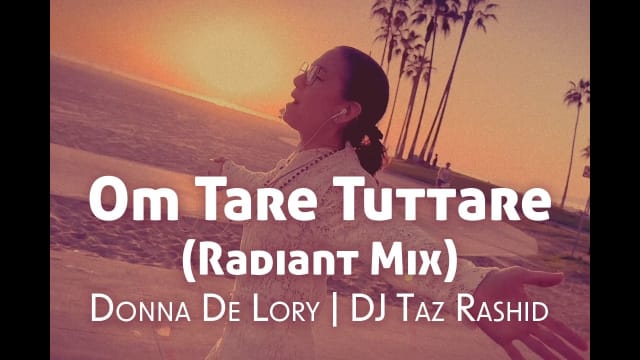
Om Tare Tuttare Mantra: DJ Taz Rashid's Radiant Remix
Inspire

Om Tare Tuttare Mantra: DJ Taz Rashid's Radiant Remix

DJ Taz Rashid remixes the sacred "Om Tare Tuttare" mantra into a contemporary groove that centers spiritual practice within everyday urban l…

1 min read
Om Namah Shivaya & Thy Will Be Done: Sacred Mantra Meditation
Inspire

Om Namah Shivaya & Thy Will Be Done: Sacred Mantra Meditation

A meditation mix blending the Sanskrit mantra Om Namah Shivaya with the Christian invocation Thy Will Be Done, featuring kirtan artist Donna…

1 min read
Ocean Goddess Rising: Two Voices Reimagine Yemaya
Inspire

Ocean Goddess Rising: Two Voices Reimagine Yemaya

Deva Premal and Ajeet unite in a devotional collaboration honoring Yemaya, the Yoruba ocean goddess, recorded in Costa Rica with arbutar acc…

1 min read
Chanting Together: The Sacred Practice of Kirtan
Inspire

Chanting Together: The Sacred Practice of Kirtan

A Thursday night satsang showcases the transformative power of collective chanting, weaving Sanskrit invocations with musical ensemble and d…

1 min read

Continue d’explorer

Poursuis ton chemin

Plus de sagesse et de rassemblements dans tout l’annuaire BrightStar.

Plus d’articles

Parcours toute la bibliothèque d’enseignements, d’entretiens et de guides.

Retour à tous les articles →

Enseignants et artistes

Découvre les lignées, les musiciens et les guides du monde conscient.

Explorer les artistes →

Trouver un événement

Kirtan, retraites, bains sonores, breathwork, festivals — bientôt près de chez toi.

Parcourir les événements →