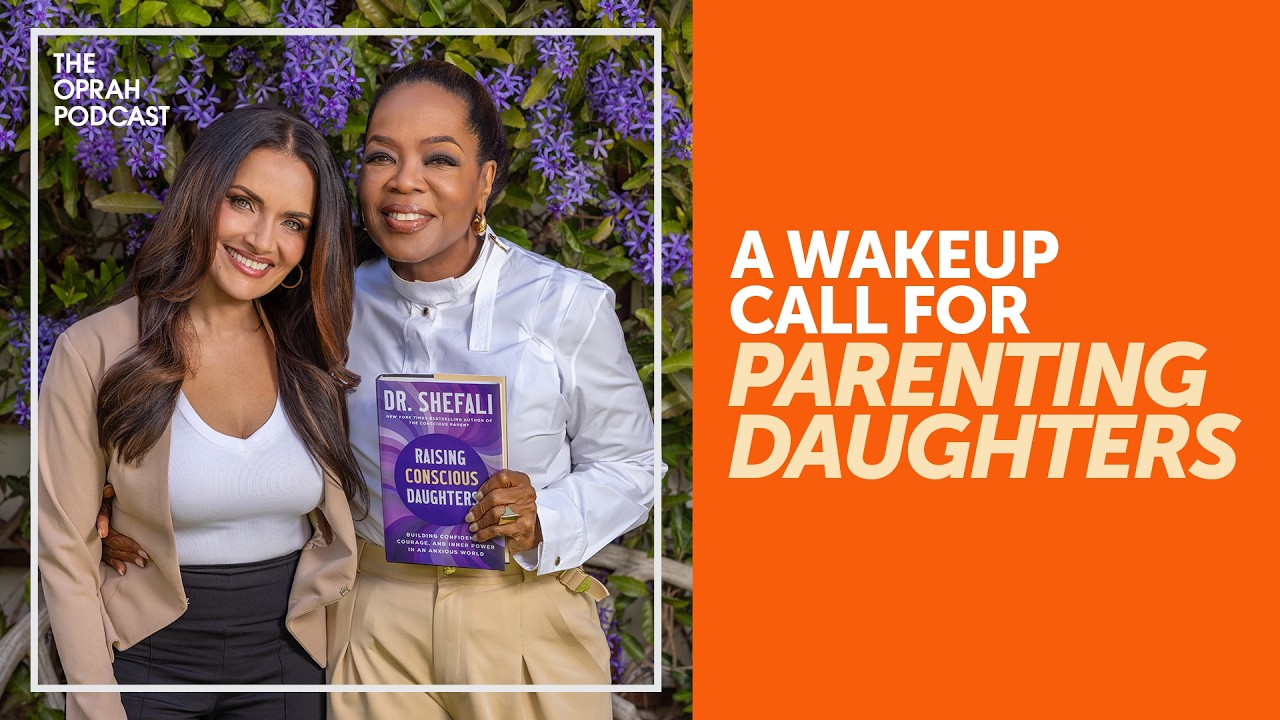
The most insidious gift a parent can give a child is their own unlived life. It arrives wrapped not in malice but in love—a dream, a legacy, a second chance at something the parent never had. But when that gift becomes a prescription, when the child's path is overwritten with a parent's fantasy, something quietly breaks. This is the core tension Oprah Winfrey explores when she unpacks one of her most painful teaching moments: the night she talked a girl from South Africa into attending Wellesley College, not because the girl wanted to go, but because Oprah had always wanted to.
"We constantly project onto our children our unmet needs, our unfulfilled expectations, our fantasies," Oprah explains in the conversation. "And we cast our children into our movie as if they were our object because they are ours." This is not parental negligence or cruelty. It is the inherited reflex of people doing what they believe they are supposed to do, armed with the only blueprint they have.
The Toxicity Embedded in Traditional Models
Oprah frames conscious parenting as an answer to what she calls the toxicity of the traditional parenting model—a system that treats children as objects, extensions of parental will rather than sovereign beings with their own inner compass. The distinction matters because it reframes the problem. Parents who hear this critique often bristle: "I'm doing this out of love." And they are. Love is precisely what makes the unconscious projection so powerful and so damaging.
The Wellesley story carries the weight of lived consequence. The girl who was talked into Oprah's dream felt isolated, disconnected, never belonging. She was thriving in the life she wanted; she was drowning in the life someone else had chosen for her. For Oprah, the realization landed hard: "That was a huge turning point lesson for me in projecting what I wanted onto her."
What Changes When You Release Control?
The turning point became action. Oprah moved from guilt to practice—she has since put over 800 girls through college, but with a fundamentally different approach. She provides opportunity and opens doors, but she does not script the journey. "I have literally released it. I have surrendered," she says. "Whatever anyone becomes, I try to provide an opportunity, an open door." This is not indifference. It is the hardest form of love: the love that says your life belongs to you.
This shift reveals what conscious parenting actually asks of adults. It is not a technique or a set of rules. It is a reckoning with one's own history. The fear that keeps parents gripping control is not mysterious. Parents who "get so afraid to release trust and autonomy onto their children because they were not raised with autonomy, trust, and sovereignty," the conversation explains, have inherited a different inheritance. They were raised with control. "Most of us are," the speaker notes. "Our love language is control. Is possession."
The Language We Never Learned
Here is where the conversation deepens from critique to compassion. Parents are not villains. They are people who have no other language because no one ever spoke it to them. They have never been "tuned in to listen to our own sovereign spirit," which means they have no map for how to gift that to their children. Control is not chosen; it is the default, the only way they know.
Conscious parenting, then, is simultaneously a child-centered philosophy and an invitation for parents to grow. To release control, a parent must first reckon with the control that shaped them. They must learn autonomy in themselves before they can offer it to another. This is not punishment for past generations. This is the point where the cycle becomes an opportunity: the moment a parent sees themselves in the description and instead of defending, asks what else is possible?
Oprah's own journey—learning to let go of her Wellesley dream, learning that her role with hundreds of girls was to open doors, not to walk through them—is the evidence that this shift is real and achievable. It does not require perfect childhoods or unblemished histories. It requires only the willingness to notice the movie we are casting our children into and, with courage, to let the projector go dark.
Where to go from here
If you recognize yourself in the projection—and most parents do—the invitation is not shame but awareness. Notice where you are steering instead of supporting. Ask which of your unfulfilled dreams are sitting in your child's backpack. And consider what becomes possible when you give your child the rarest gift: permission to have a life that looks nothing like the one you imagined, and your steady presence in it anyway.