BrightStar

Parcourir tous les Events

Découvre des rassemblements conscients

events

Yoga
Meditation
Breathwork
Qigong
Tai Chi
Sacred Music
World Music
Medicine Music
Sound Healing
Ecstatic Dance
Destinations populaires
BaliSedonaLos AngelesCosta RicaNew YorkSan FranciscoAustinMiamiJoshua TreeTulum
Voir toutes les catégoriesVoir toutes les destinations

Explorer toutes les fonctionnalités

Des outils puissants pour développer tes événements

Fonctionnalités de la plateforme

Tarification dynamique intelligente
Catégories de billets
Places assignées
Récupération des paniers abandonnés
Récupération des visiteurs
Dons & Prix variables
Système d'affiliation
Scanner de billets
Codes promo
Questions personnalisées
Partage de billets
Ventes additionnelles & Options
Analyses & Rapports
Séquences d'emails
Liste d'attente / Notifier / Rappeler
Personnes & Lieux
Artists & TeachersEvent OrganizersVenues & StudiosKnowledge BaseGlossaryInspiration
Voir toutes les fonctionnalitésÀ propos
TarifsBlog
Language
Saved events
Parcourir tous les événements

events

YogaMeditationBreathworkQigongTai ChiSacred MusicWorld MusicMedicine Music

Destinations populaires

BaliSedonaLos AngelesCosta RicaNew YorkSan Francisco

Personnes & Lieux

Artists & TeachersEvent OrganizersVenues & StudiosKnowledge BaseGlossaryInspiration

Fonctionnalités de la plateforme

Tarification dynamique intelligenteCatégories de billetsPlaces assignéesRécupération des paniers abandonnésRécupération des visiteursDons & Prix variablesSystème d'affiliationScanner de billetsCodes promoQuestions personnaliséesPartage de billetsVentes additionnelles & OptionsAnalyses & RapportsSéquences d'emailsListe d'attente / Notifier / Rappeler
Voir toutes les fonctionnalitésÀ propos
TarifsBlog
ConnexionChercheursCréateurs
  • Parcourir tous les Événements
  • Pour les chercheurs
  • Yoga
  • Méditation
  • Breathwork
  • Qi gong
  • Tai-chi
  • Musique sacrée
  • Musiques du monde
  • Musique médecine
  • Soins sonores
  • Danse extatique
  • Retraites
  • Ateliers
  • Toutes les catégories →
  • Bali
  • Sedona
  • Los Angeles
  • Costa Rica
  • Tulum
  • Byron Bay
  • San Francisco
  • Austin
  • New York
  • San Diego
  • Denver
  • Seattle
  • Portland
  • Miami
  • Toutes les villes →
  • Be Found
  • Sell Globally
  • Pour les créateurs
  • Pour les équipes
  • Pour les écrivains
  • Pour les enseignants
  • Pour les artistes de kirtan
  • Pour les studios
  • Pour les festivals
  • Pour les centres de retraite
  • Pour les associations
  • Ambassadeur de marque
  • Études de cas
  • Billetterie gratuite
  • Elevate
  • Amplify
  • Réseau de 500K+ acheteurs
  • Récupération des paniers abandonnés
  • Tarification dynamique intelligente
  • Catégories de billets
  • Événements récurrents
  • Places assignées
  • Système d'affiliation
  • Liste d'attente / Notifier
  • Scanner de billets
  • Widget intégrable
  • Diffusion d'événements
  • Messagerie
  • Intégrations
  • Rapports
  • Toutes les fonctionnalités →
  • À propos
  • L'écosystème
  • Blog
  • Glossaire
  • Inspiration
  • Centre d'aide
  • Contact
  • Documentation API
  • Ressources de marque
  • Carrières
  • Presse
  • Conditions d'utilisation
  • Politique de confidentialité

Événements

  • Parcourir tous les Événements
  • Pour les chercheurs
  • Yoga
  • Méditation
  • Breathwork
  • Qi gong
  • Tai-chi
  • Musique sacrée
  • Musiques du monde
  • Musique médecine
  • Soins sonores
  • Danse extatique
  • Retraites
  • Ateliers
  • Toutes les catégories →

Destinations

  • Bali
  • Sedona
  • Los Angeles
  • Costa Rica
  • Tulum
  • Byron Bay
  • San Francisco
  • Austin
  • New York
  • San Diego
  • Denver
  • Seattle
  • Portland
  • Miami
  • Toutes les villes →

Pour les créateurs

  • Be Found
  • Sell Globally
  • Pour les créateurs
  • Pour les équipes
  • Pour les écrivains
  • Pour les enseignants
  • Pour les artistes de kirtan
  • Pour les studios
  • Pour les festivals
  • Pour les centres de retraite
  • Pour les associations
  • Ambassadeur de marque
  • Études de cas
  • Billetterie gratuite
  • Elevate
  • Amplify

Fonctionnalités

  • Réseau de 500K+ acheteurs
  • Récupération des paniers abandonnés
  • Tarification dynamique intelligente
  • Catégories de billets
  • Événements récurrents
  • Places assignées
  • Système d'affiliation
  • Liste d'attente / Notifier
  • Scanner de billets
  • Widget intégrable
  • Diffusion d'événements
  • Messagerie
  • Intégrations
  • Rapports
  • Toutes les fonctionnalités →

Entreprise

  • À propos
  • L'écosystème
  • Blog
  • Glossaire
  • Inspiration
  • Centre d'aide
  • Contact
  • Documentation API
  • Ressources de marque
  • Carrières
  • Presse
  • Conditions d'utilisation
  • Politique de confidentialité
BrightStar
© 2026 BrightStar. Tous droits réservés.
Inspire

Digital Hive Mind: When PhonesAmplify Our Compulsive Thinking

Eckhart Tolle
Eckhart Tolle
Sep 20, 2026
5 min de lecture
À regarder · 5

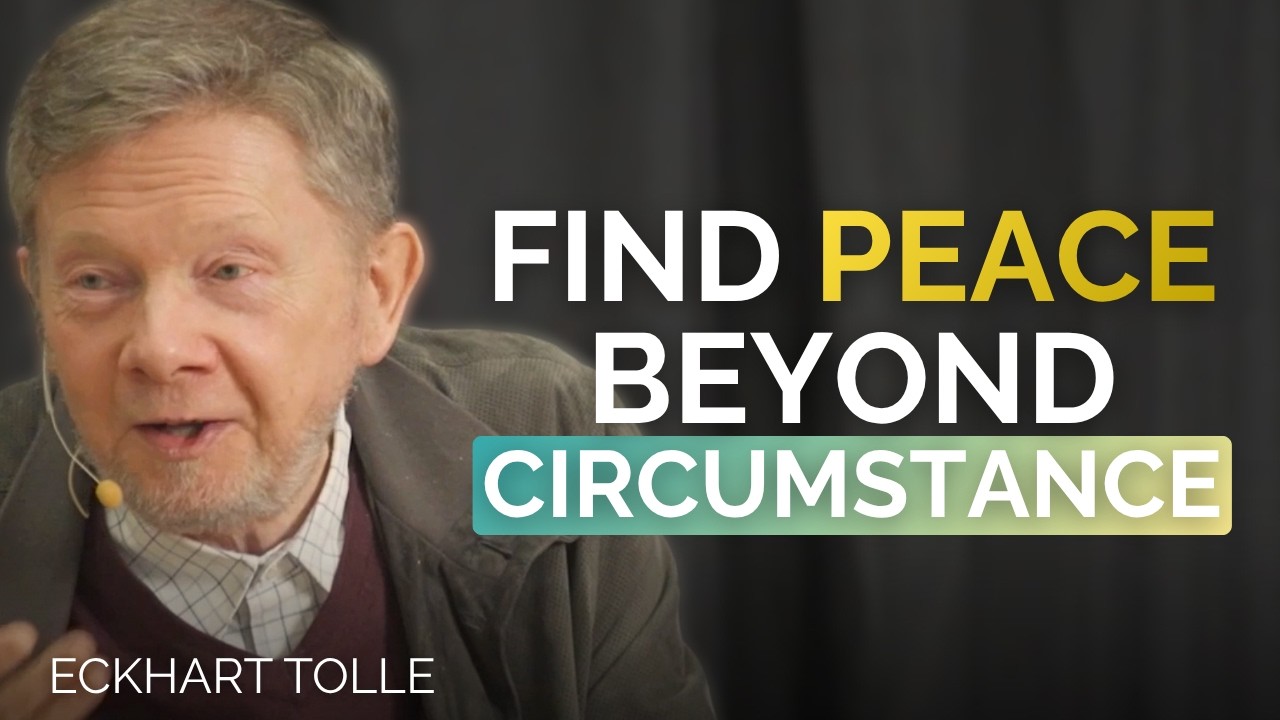
The device in your pocket is not the villain of your scattered attention. It is, rather, an amplifier—one that broadcasts a signal your mind was transmitting long before touchscreens existed. This is the foundation of what Eckhart Tolle lays out in a conversation about presence, addiction, and the architecture of modern consciousness: the phone takes over your life because your mind already had the habit of abandoning the present moment. Technology simply gave that habit better equipment.

Lecture · 5 sections

What Addiction Really Means

Before examining the phone, Tolle poses a definition of addiction that cuts beneath the surface: it is the point at which you can no longer distinguish between I cannot let go of this and I do not want to. The difference collapses. You stop knowing whether the thing has you, or you have the thing.

This ambiguity matters because it shows that addiction is not simply about external objects. It is about the relationship between you and the thing—and that relationship becomes invisible from the inside. The smoker, the drinker, the person who cannot set down their phone: each experiences their compulsion as personal choice, even as that "choice" repeats beyond their will. "I often say thinking is the greatest addiction," Tolle observes. Incessant, compulsive thinking has the same quality: it loops, it pulls you away from what is happening now, and it is nearly impossible to switch off.

Phones as Extensions of Mind, Not Causes

Here is where the argument becomes subtle. Tolle does not argue that phones are malevolent technology or that awakening requires throwing them away. Instead, he argues that phones are extensions of the mind, in much the same way that a hammer is an extension of the hand. The hammer does not create the impulse to build; it amplifies it. Similarly, the phone does not create the impulse to leave the present moment. Your mind was already pulling you out of the now—through worry, memory, fantasy, rumination—long before there was a glowing screen to facilitate the escape.

"Your mind was already taking you out," he says. "But now that these devices are here, they are an extension of the mind, and they have an addictive quality in the same way that incessant compulsive thinking is addictive."

The technology amplifies what was already there. It gives the mind a tool that never sleeps, that rewards distraction with novelty every microsecond, that makes the compulsion feel less like compulsion and more like connection. When the phone takes over your life, it means the mind has taken over your life again—with upgraded machinery.

The Hive Mind and Collective Momentum

But Tolle introduces a dimension that did not exist for earlier generations, and it is perhaps the most disorienting aspect of modern consciousness: on top of your personal mind, there is now a collective one. He calls it the hive mind, and it has its own momentum.

Millions of people react to a single event within minutes. They use the same words. They experience their reaction as personal, unique, theirs—and yet it is moving in lockstep with millions of others. The tweets, the Facebook posts, the retweets and shares: they are the hive mind made visible. You are thinking with a crowd and experiencing it as individual thought.

"This hive mind has its own momentum," he says. "This hive mind is in the tweets, the Facebook postings, the reactions of millions of people reacting to one event, and you're doing the same."

This is not a metaphor. It is a real phenomenon: the distribution of consciousness across networks so dense that the line between your thought and a shared thought dissolves. The algorithm knows this. It learns which thought-patterns will propagate, which outrage will spread, which opinion will achieve viral velocity. The hive mind is not a thinking entity—it is a pattern, a force field of momentum that individual minds both join and reinforce.

Discipline as the Only Counter

Tolle's remedy is not romantic. He does not suggest meditation retreats or a return to pre-digital life. He suggests discipline. Small, practical discipline with the device itself, so that the mind does not get completely overtaken by it.

This is because the problem is not the phone. The problem is the mind running the show through a device that never sleeps. Without a little discipline, you become the hive mind's instrument. Your thoughts and reactions amplify the collective pattern, which in turn shapes what thoughts are available to you next. It is a feedback loop that feels like freedom—infinite choices, infinite content, infinite connection—but functions as a cage.

The hive mind exists whether you acknowledge it or not. "You need to know that," Tolle says, "so that you can at least have a little bit of discipline, so that your mind doesn't get completely taken over by the devices."

Knowing the pattern is the first step toward stepping outside it. Not away from technology—but outside the compulsion that technology has amplified and made visible.

Where to Go from Here

If you recognize yourself in this description—if you have felt the pull of notifications, the difficulty of setting the phone down even when you want to, the strange experience of thinking thoughts that feel personal but sound like a thousand other voices—the work is not to reject the device. It is to bring presence back into everyday life, the place where most of your actual living happens. Notice when the mind pulls you out of the now. Notice when you are thinking alone, and when you are thinking with the hive. Then, with a little discipline, make a choice: not whether to pick up the phone, but whether your mind—personal or collective—gets to run the whole show.
Transcript

[0:00] They are an extension of the mind.

[0:04] So when your your phone

[0:08] you takes over your life, it means your

[0:11] mind is taking over your life again.

[0:14] It's an addition an additional

[0:18] um yes it's a miraculous thing.

[0:23] [bell]

[0:28] So listening to music,

[0:32] giving it attention, playing an

[0:34] instrument

[0:35] can temporarily free you from yourself.

[0:38] It's temporarily, it can be a help. It's

[0:42] not a permanent thing, but it can be an

[0:45] additional help.

[0:47] Uh and this is people who even who are

[0:50] not awakening yet can experience

[0:53] these brief moments occasionally when

[0:55] they listen to music or they make music.

[0:59] or dance

[1:02] or sport activity can be very helpful

[1:05] too. They uh

[1:08] but so these are all things that can be

[1:11] helpful but what is um the the most

[1:16] difficult thing to deal with is

[1:19] the stuff of this world that the stuff

[1:22] that you need to deal with no matter

[1:24] what your profession is.

[1:27] Um there's an enormous amount of things

[1:30] that you continuously need to deal with.

[1:36] And this is how many people lose. They

[1:38] say I can be present in certain

[1:41] situations and environments.

[1:45] But for the rest, I cannot be present. I

[1:48] lose it all the time. When I go back

[1:50] into normal everyday life, I lose it all

[1:53] the time

[1:55] because there's so many demands placed

[1:57] upon me. I just I just cannot sustain

[2:00] presence.

[2:05] And so of course it's vital

[2:08] that you

[2:11] bring presence into your everyday life

[2:15] because that's where most of your life

[2:18] happens.

[2:22] First of all, we need to mention

[2:26] the

[2:28] on a purely practical level,

[2:32] you need to have some discipline

[2:34] with your

[2:37] electronic devices that the devices that

[2:40] everybody lives with nowadays,

[2:44] smartphones,

[2:47] computers

[2:49] and so on.

[2:52] uh so that they don't take over your

[2:54] life.

[2:56] They are an extension of the mind.

[3:00] So when your your phone

[3:04] you takes over your life, it means your

[3:07] mind is taking over your life again.

[3:10] It's an addition an additional

[3:14] um yes it's a miraculous thing

[3:18] but from the point of view of awakening

[3:22] it is

[3:24] uh it amplifies what your mind was

[3:27] already doing even before there were

[3:29] these these devices. your mind was

[3:31] already

[3:33] taking you out. But now that they are

[3:35] these devices, they are uh an extension

[3:39] of the of the of the mind and they have

[3:44] an addictive quality in the same way

[3:46] that incessant compulsive thinking is

[3:49] addictive.

[3:52] People don't want to let go. What is an

[3:54] addiction? in addiction is uh um you you

[3:59] either you cannot or you don't you can't

[4:01] don't even know the difference anymore

[4:02] between I cannot let go of it or I don't

[4:06] want to let go of it. You don't even

[4:07] know the difference anymore.

[4:11] But you may find that it's almost

[4:13] impossible to let go first. I often say

[4:16] thinking is the greatest addiction.

[4:21] uh you have been taken over by the mind

[4:25] and now the mind has invented these

[4:28] devices that are an extension of the

[4:30] mind and they have taken over your life.

[4:32] So it's a secondary mind.

[4:37] It becomes a collective hive mind that

[4:41] becomes more pronounced now and this

[4:44] hive mind has its own momentum. this

[4:47] hive mind is in the the the the tweets,

[4:51] the Facebook postings, the reactions of

[4:55] millions of people reacting to one event

[4:58] and you're doing the same. The hive mind

[5:01] is and so you the

[5:04] you have you have an additional thing to

[5:07] cope with nowadays

[5:10] with the technological advances is not

[5:13] just your your so-called personal mind.

[5:16] You have the the hive mind of the the

[5:20] digital world and the matrix

[5:24] the matrix is all around you.

[5:28] So

[5:31] you need to know that so that you can at

[5:33] least have the little bit of discipline

[5:36] so that your mind doesn't get completely

[5:38] get taken over by the the devices.

Eckhart Tolle
ArtistEckhart Tolle

German-born spiritual teacher whose 1997 book The Power of Now became one of the most widely read spiritual works of the 21st century. After a profound transformation at 29 — movin…

Voir le profilSite web
Explorer les thèmes
Digital-addictionHive-mindPresenceConsciousnessTechnology-mindfulness

Des questions ?

Questions fréquemment posées

Yes, according to Tolle's teaching. Phones are extensions of the mind, not separate problems. Your mind was already pulling you out of the present through compulsive thinking long before smartphones existed. The device amplifies what was already happening—it doesn't create the addiction, it gives your existing mental habits a tool that never sleeps.
The hive mind is the collective momentum created when millions of people react to events in the same way, using the same words, within minutes. It exists in tweets, posts, and reactions across digital networks. You participate in it and experience your thoughts as personal, even when you're thinking with the crowd, shaped by algorithmic momentum.
The key is noticing pattern and momentum. Hive mind thoughts spread rapidly, use identical language across millions of people, and feel urgent or reactive. Real personal thought has more stillness and originality. Bringing presence and attention to your thinking—observing it rather than being consumed by it—helps you recognize which is which.
No. Tolle's teaching is not that phones are evil or that you should abandon them. The work is to bring discipline to how you use the device, so your mind doesn't get completely taken over by it. The phone is a tool; the issue is the undisciplined mind using it.
Because compulsive thinking has all the hallmarks of addiction: it loops automatically, pulls you away from the present moment, and is nearly impossible to stop once it starts. Like any addiction, you may not know the difference between 'I cannot stop thinking' and 'I don't want to stop'—the line blurs until you can't tell them apart.
Temporarily, yes. These activities can free you briefly from your compulsive mind by directing attention fully into the present—but Tolle emphasizes they are not permanent solutions. The real work is bringing presence and discipline into everyday life, where most of your actual living happens and where the addiction most often pulls you away.

Continuer la lecture

More from Eckhart

Voir tout
How Suffering Becomes the Path to Real Peace
Inspire

How Suffering Becomes the Path to Real Peace

Hardship isn't only an obstacle—it's often where genuine awareness begins. The deepest peace comes not from ease, but from facing challenges…

1 min read
Music as a Gateway: How Sound Liberates You From Yourself
Inspire

Music as a Gateway: How Sound Liberates You From Yourself

Music, nature, and motion can temporarily free you from the conceptual self—but the real practice lives in ordinary life, where presence is …

1 min read
Interfaith Prayer and Sacred Sound Unity
Inspire

Interfaith Prayer and Sacred Sound Unity

Snatam Kaur explores the universal language of prayer across spiritual traditions, weaving together voices and instruments in a devotional c…

1 min read
Snatam Kaur's "Ray Man Eh Bhid Jog Kamao": Sacred Sound and Inner Transformation
Inspire

Snatam Kaur's "Ray Man Eh Bhid Jog Kamao": Sacred Sound and Inner Transformation

Snatam Kaur's bhajan bridges devotional Sikh kirtan and contemporary meditation music, using sacred mantra to guide listeners toward release…

1 min read

Continue d’explorer

Poursuis ton chemin

Plus de sagesse et de rassemblements dans tout l’annuaire BrightStar.

Plus d’articles

Parcours toute la bibliothèque d’enseignements, d’entretiens et de guides.

Retour à tous les articles →

Enseignants et artistes

Découvre les lignées, les musiciens et les guides du monde conscient.

Explorer les artistes →

Trouver un événement

Kirtan, retraites, bains sonores, breathwork, festivals — bientôt près de chez toi.

Parcourir les événements →