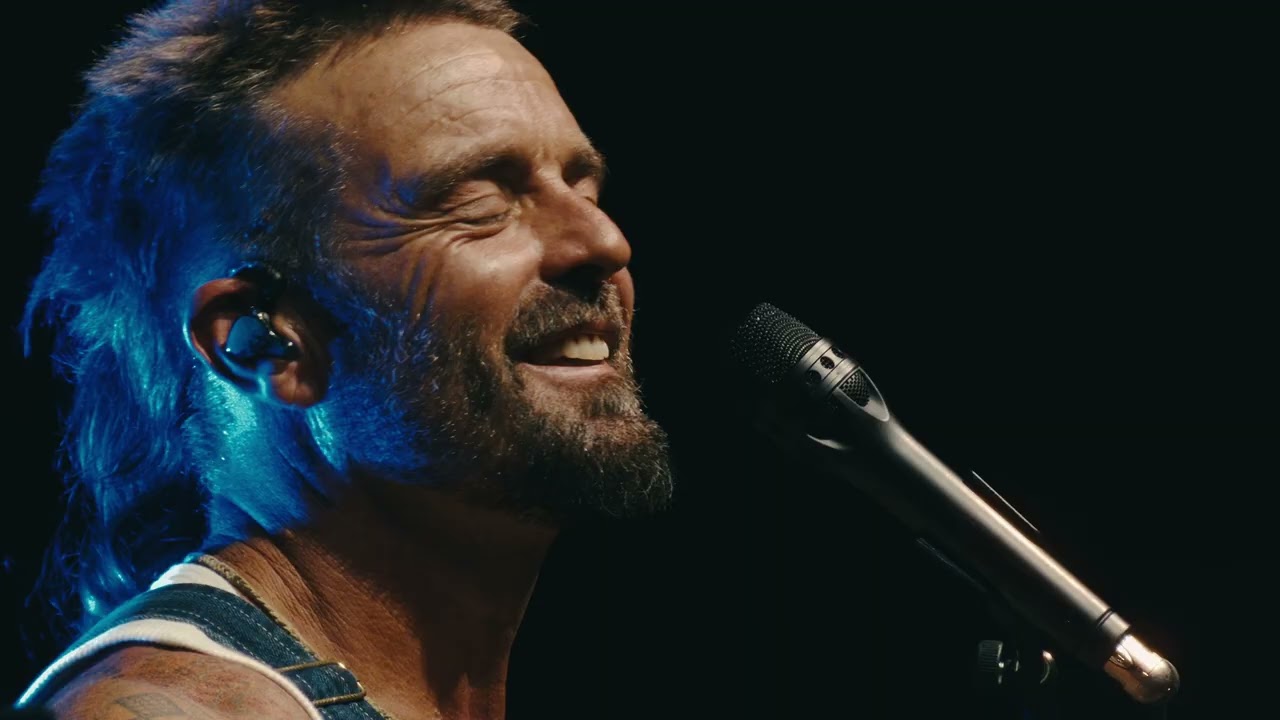
Xavier Rudd performs "Yirra Kurl," a piece from his album Solace, in this live setting. The performance demonstrates Rudd's approach to music as a vehicle for indigenous connection and spiritual resonance, combining instrumental and vocal elements to create a meditative listening experience rooted in earth-based consciousness.
Who Is Xavier Rudd and What Does He Do?
Xavier Rudd is an Australian musician and songwriter known for integrating indigenous Australian spiritual themes, environmental consciousness, and acoustic instrumentation into his work. His music often draws from didgeridoo, hand percussion, and acoustic guitar to create soundscapes that honor aboriginal traditions and explore humanity's relationship with the earth. "Yirra Kurl," from his album Solace, exemplifies this approach—combining instrumental storytelling with an accessible, meditative quality that invites deep listening.
What Is "Yirra Kurl" About?
The title "Yirra Kurl" carries indigenous language roots, reflecting Rudd's commitment to centering aboriginal voices and vocabulary in his artistic work. The piece functions less as a conventional narrative song and more as a sonic journey, where instrumental texture and vocal presence guide the listener through a reflective space. In the live performance captured here, Rudd uses minimal lyrical content—focusing instead on the musicality and emotional tone of the composition. This approach allows listeners to bring their own meaning and connection to the work, rather than imposing a fixed interpretation.
How Does Music Serve as a Spiritual Practice?
For artists like Rudd, music functions as a form of prayer or meditation rather than entertainment alone. The performance demonstrates this through sustained instrumental passages, allowing space for the audience to settle into a receptive state. This is consistent with contemplative traditions across cultures, where sound and vibration are understood as carriers of intention and healing. The live context—with its acoustic simplicity and direct human presence—reinforces this function; the musician and listener are meeting in real time, creating a shared energetic field rather than consuming a product.
What Is the Role of Indigenous Language and Land Connection in Modern Music?
By naming the song with indigenous terminology and drawing on aboriginal musical traditions (such as didgeridoo), Rudd positions himself as a cultural bridge-builder rather than an appropriator. This distinction matters: he is amplifying indigenous perspectives and honoring the land's original custodians, not extracting their traditions for commercial gain. In Solace and performances like this one, the music becomes an act of remembrance and respect, inviting listeners—regardless of background—to consider their own relationship to place, ancestry, and the living earth.
What Is the Difference Between Listening and Hearing?
This performance invites the former. Hearing is passive reception of sound; listening requires attention, openness, and a willingness to be moved. The sparse lyrical content in "Yirra Kurl" actually serves this purpose—without words to parse intellectually, the listener's mind settles, and the body begins to respond to rhythm, tone, and resonance. Indigenous cultures have long understood music as a language that bypasses the thinking mind and speaks directly to the spirit. Rudd's performance respects this tradition, creating space for listeners to access states of awareness that rational thought alone cannot reach.
How Does Live Performance Differ from Studio Recording?
The energy of a live audience—their collective presence and attention—creates a unique alchemical context that studio recordings, no matter how well-produced, cannot fully replicate. In this 2010 performance, you hear real applause, real acoustic resonance in the room, and the subtle variations that come from a musician responding to the moment rather than playing to a fixed track. This is especially important in spiritual or meditative music, where authenticity of presence matters as much as technical precision. The gratitude Rudd expresses at the end ("thank you very") acknowledges this reciprocal exchange between performer and audience.
Where to Go from Here
If this performance resonates with you, explore Rudd's full album Solace to understand the broader sonic and thematic arc of his work. Listen with the intention to receive rather than to analyze—allow yourself to sit with the music without needing to understand it intellectually. Consider also investigating the indigenous Australian traditions that inform his work; artists like Rudd often credit elders and custodians whose wisdom precedes and undergirds the music. Finally, reflect on your own relationship to sound, place, and spiritual practice: what draws you to music, and what might shift if you approached listening as a deliberate act of presence rather than background accompaniment?