BrightStar

Parcourir tous les Events

Découvre des rassemblements conscients

events

Yoga
Meditation
Breathwork
Qigong
Tai Chi
Sacred Music
World Music
Medicine Music
Sound Healing
Ecstatic Dance
Destinations populaires
BaliSedonaLos AngelesCosta RicaNew YorkSan FranciscoAustinMiamiJoshua TreeTulum
Voir toutes les catégoriesVoir toutes les destinations

Explorer toutes les fonctionnalités

Des outils puissants pour développer tes événements

Fonctionnalités de la plateforme

Tarification dynamique intelligente
Catégories de billets
Places assignées
Récupération des paniers abandonnés
Récupération des visiteurs
Dons & Prix variables
Système d'affiliation
Scanner de billets
Codes promo
Questions personnalisées
Partage de billets
Ventes additionnelles & Options
Analyses & Rapports
Séquences d'emails
Liste d'attente / Notifier / Rappeler
Personnes & Lieux
Artists & TeachersEvent OrganizersVenues & StudiosKnowledge BaseGlossaryInspiration
Voir toutes les fonctionnalitésÀ propos
TarifsBlog
Language
Saved events
Parcourir tous les événements

events

YogaMeditationBreathworkQigongTai ChiSacred MusicWorld MusicMedicine Music

Destinations populaires

BaliSedonaLos AngelesCosta RicaNew YorkSan Francisco

Personnes & Lieux

Artists & TeachersEvent OrganizersVenues & StudiosKnowledge BaseGlossaryInspiration

Fonctionnalités de la plateforme

Tarification dynamique intelligenteCatégories de billetsPlaces assignéesRécupération des paniers abandonnésRécupération des visiteursDons & Prix variablesSystème d'affiliationScanner de billetsCodes promoQuestions personnaliséesPartage de billetsVentes additionnelles & OptionsAnalyses & RapportsSéquences d'emailsListe d'attente / Notifier / Rappeler
Voir toutes les fonctionnalitésÀ propos
TarifsBlog
ConnexionChercheursCréateurs
  • Parcourir tous les Événements
  • Pour les chercheurs
  • Yoga
  • Méditation
  • Breathwork
  • Qi gong
  • Tai-chi
  • Musique sacrée
  • Musiques du monde
  • Musique médecine
  • Soins sonores
  • Danse extatique
  • Retraites
  • Ateliers
  • Toutes les catégories →
  • Bali
  • Sedona
  • Los Angeles
  • Costa Rica
  • Tulum
  • Byron Bay
  • San Francisco
  • Austin
  • New York
  • San Diego
  • Denver
  • Seattle
  • Portland
  • Miami
  • Toutes les villes →
  • Join the Movement
  • Why we list
  • Sell Globally
  • Pour les créateurs
  • Pour les équipes
  • Pour les écrivains
  • Pour les enseignants
  • Pour les artistes de kirtan
  • Pour les studios
  • Pour les festivals
  • Pour les centres de retraite
  • Pour les associations
  • Ambassadeur de marque
  • Billetterie gratuite
  • Elevate
  • Amplify
  • Réseau de 500K+ acheteurs
  • Récupération des paniers abandonnés
  • Tarification dynamique intelligente
  • Catégories de billets
  • Événements récurrents
  • Places assignées
  • Système d'affiliation
  • Liste d'attente / Notifier
  • Scanner de billets
  • Widget intégrable
  • Diffusion d'événements
  • Messagerie
  • Intégrations
  • Rapports
  • Toutes les fonctionnalités →
  • À propos
  • L'écosystème
  • Blog
  • Glossaire
  • Inspiration
  • Centre d'aide
  • Contact
  • Documentation API
  • Ressources de marque
  • Carrières
  • Presse
  • Conditions d'utilisation
  • Politique de confidentialité

Événements

  • Parcourir tous les Événements
  • Pour les chercheurs
  • Yoga
  • Méditation
  • Breathwork
  • Qi gong
  • Tai-chi
  • Musique sacrée
  • Musiques du monde
  • Musique médecine
  • Soins sonores
  • Danse extatique
  • Retraites
  • Ateliers
  • Toutes les catégories →

Destinations

  • Bali
  • Sedona
  • Los Angeles
  • Costa Rica
  • Tulum
  • Byron Bay
  • San Francisco
  • Austin
  • New York
  • San Diego
  • Denver
  • Seattle
  • Portland
  • Miami
  • Toutes les villes →

Pour les créateurs

  • Join the Movement
  • Why we list
  • Sell Globally
  • Pour les créateurs
  • Pour les équipes
  • Pour les écrivains
  • Pour les enseignants
  • Pour les artistes de kirtan
  • Pour les studios
  • Pour les festivals
  • Pour les centres de retraite
  • Pour les associations
  • Ambassadeur de marque
  • Billetterie gratuite
  • Elevate
  • Amplify

Fonctionnalités

  • Réseau de 500K+ acheteurs
  • Récupération des paniers abandonnés
  • Tarification dynamique intelligente
  • Catégories de billets
  • Événements récurrents
  • Places assignées
  • Système d'affiliation
  • Liste d'attente / Notifier
  • Scanner de billets
  • Widget intégrable
  • Diffusion d'événements
  • Messagerie
  • Intégrations
  • Rapports
  • Toutes les fonctionnalités →

Entreprise

  • À propos
  • L'écosystème
  • Blog
  • Glossaire
  • Inspiration
  • Centre d'aide
  • Contact
  • Documentation API
  • Ressources de marque
  • Carrières
  • Presse
  • Conditions d'utilisation
  • Politique de confidentialité
BrightStar
Téléchargez l'app
Télécharger dans l'App StoreDisponible surGoogle Play
© 2026 BrightStar. Tous droits réservés.
Inspiration

Why Children Copy Parents: A Buddhist View of Teen Rebellion

BB
BDG: Buddhistdoor Global
Oct 30, 2026
8 min de lecture

Source : BDG: Buddhistdoor Global

À regarder · 8

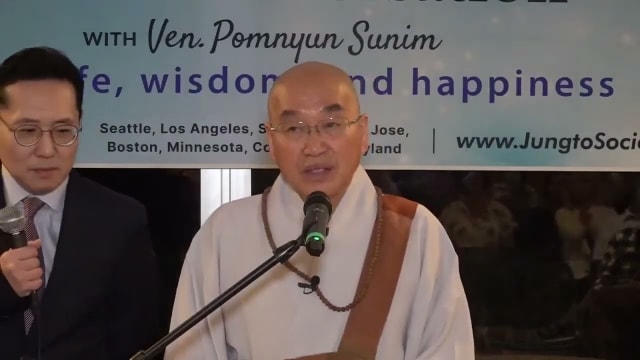
A parent stands up at a microphone in front of a live audience and reads a question that has been run through Google Translator first, apologizing in advance for the awkward English. The problem is not complicated, and it is painfully familiar: they know what good parenting looks like, they have read the tips, and still they do not do the things they know they should. In this Dharma Q&A, published by Buddhistdoor Global, Ven. Pomnyun Sunim, the Korean Buddhist monk and Seon master who founded Jungto Society, answers with a reframing that is more demanding than any checklist. Children, he argues, are mirrors and imitators before they are anything else. A parent's disappointment is usually a measure of the parent's own contradictions. And a teenager's rebellion is not a defect to be crushed but a rational, if painful, attempt to rebalance a relationship in which the child has no other tools.

Lecture · 7 sections

What does a parent's confession about hypocrisy actually reveal?

The questioner's diagnosis is precise. Their words and actions do not match, and they suspect that this gap is the root of their anxiety. "I know what I should do," they say, "but I don't do due to laziness." It is a confession many parents would recognize, and Sunim's first move is to lower the temperature. "Most parents are like that," he says, and then, more gently, "you don't have to feel so guilty about it." The audience laughs at his next line, a wry observation that children "never turn out the way you want them to."

The laughter matters because it signals what Sunim is doing. He is not excusing the laziness. He is refusing to let guilt become the engine of change. Guilt tends to produce either paralysis or a brittle, over-performed virtue that collapses under stress. What he proposes instead is an honest look at where the gap actually sits. The laziness is real, but the question the parent asked, "how do I stop being inconsistent," can only be answered by changing the parent's own behavior, not by collecting more advice about the child.

Why does disappointment in a child point back at the parent?

Sunim makes a move here that is easy to pass over. When a parent feels disappointed by a child, he says, "it's actually your own contradiction." The child has not failed a standard the parent set. The parent has set an expectation the child was never going to meet exactly, and then experienced the distance as a failure of the child.

His remedy is blunt. Accept that children will not turn out the way you want them to, and do not blame them when that happens. Then, he suggests, look at the outcome from a positive angle: your child, "at least, turned out better than you." It is a line that will make some readers wince and others laugh in recognition, but its logic is clear. Expectation is an inheritance and a projection. Letting go of it does not mean lowering the bar for the child. It means noticing that the bar was always partly about the parent's own unfinished business.

Why do children imitate their parents so closely?

This is the center of the talk. "Children imitate like monkeys," Sunim says, and he means it as a description of how the child's mind works rather than an insult. "Children are beings that follow and imitate whatever you do." His examples are deliberately concrete. If you want children to live modestly, live modestly. If you want them to be humble, be humble. If you want them to be studious, "you have to constantly study."

"If you tell children to do something that you yourself don't do, you're not speaking or catering to the nature of children." — Ven. Pomnyun Sunim, Buddhistdoor Global Dharma Q&A (published October 2026)

The implication is that instruction without example is not really teaching. Sunim names the child's inner response directly: they will always think, "How come you don't do this, but you're telling me to do it?" Children are unusually sensitive to the gap between what adults say and what adults do, and they have no reason to trust the words over the behavior. The practical consequence is significant. If you want to change how your child behaves, the most effective method available to you is to change how you behave. Parenting, in this framing, is a form of practice that happens in full view of the people you are trying to influence.

What happens to the emotions a child is not allowed to show?

Sunim's next claim draws on the same logic. A child who is told to do what the parent does not do, and who complies anyway, is "being forced to do it." Their emotions, he says, "become suppressed." The feelings are not gone. They wait. "All those emotions come out when they hit teenage years."

This is where the talk makes its most original turn. Most parenting advice treats adolescent rebellion as a problem to be managed, a phase to be survived or a behavior to be corrected. Sunim asks the parent to see it differently. When a child rebels in their teens, "do not see that as the problem of your children," he says, "but see that as a natural outburst of emotions that have been pent up." The rebellion is information about years of accumulated pressure, not evidence that the child is broken.

He is also explicit about the escalation loop. If a parent responds to that outburst with more control, the child resists harder. The resistance can take the form of running away, quitting school, or withdrawing into friendships the parent does not approve of. "They, in turn, hurt their parents," Sunim says, and the cycle tightens.

Is teenage rebellion really a power move?

Sunim reads rebellion as a strategy, and an intelligent one. Children, he argues, "know you the best," because they came from the parent's womb and have spent their lives watching the parent. They understand what matters most to the parent: "the safety and well being of their child." A teenager who wants to push back has very little power to do it openly. So they go after the parent's known weak point. "They go up against the weaknesses of the parents," he says. The refusal to eat when angry, the decision to stop studying, the withdrawal, all of these are ways of making the parent's own fears do the work of protest.

That is why, in his account, the child is not a problem child. "They are taking the optimal strategy to show their displeasure through protests," Sunim says. "They don't have the power to do it any other way." The behavior is a form of negotiation, a "compromise to rebalance the power dynamics" inside a relationship where the adult holds nearly all the cards. Read this way, the teenager is not trying to ruin their future. They are trying to be heard by someone who has not been listening.

It is worth being clear about what Sunim is and is not claiming. He is not offering a clinical account of adolescent development, and he is not describing every family's situation. He is giving a Dharma teacher's view of how control and resistance feed each other, and he is grounding that view in the everyday observation that children watch and respond to power.

What should a parent actually do differently?

The practical instructions are short, and they follow from everything before them. The first is to watch for the ways you suppress your child's emotions without meaning to. Sunim's phrase is "inadvertently," which suggests that most of this happens by default, through tone, through pressure, through the habit of treating a feeling as a disruption. The second is to "show through actions." The parent's conduct is the teaching, and the parent who wants a calmer, more honest child has to become calmer and more honest in front of that child. The third is a kind of humility. Your child may not follow everything you do, he acknowledges, but "you have to understand them."

Taken together, the answer to the questioner's original problem is clear. The gap between words and actions cannot be closed by reading more tips. It closes when the parent begins with their own practice, accepts that disappointment is a signal about themselves, and reads a child's resistance as a message rather than an attack. It is an answer that asks more of the adult and less of the child, which may be exactly why it works.

Where to go from here

The video runs under seven minutes, and its brevity is part of its force. Watch it once for the exchange itself, including the audience laughter and the questioner's careful translation, and then again with a notebook, listening for the moments where Sunim shifts the blame from the child to the parent. If you want to go further into his teaching, his own site is pomnyun.com. Jungto Society, the organization he founded to promote sharing and simple, sustainable living informed by Buddhist teaching, is at jungtosociety.org, and its international branch is at jungtointernational.org. The video itself was published with permission from Jungto Society and is hosted by Buddhistdoor Global.

A final caution, in the spirit of the talk: this is a short answer given in a live setting, not a complete parenting program. Use it as a mirror, not a rulebook. The most useful question it leaves you with is not what your child should do differently, but which of your own habits your child is already copying.
Comments

Loading the conversation…

Transcript

[0:10] (Questioner) I translated my question into English using Google Translator.

[0:17] So, please understand that it may be a bit awkward for other audience members.

[0:25] My question is... first, thank you for your valuable time.

[0:30] I know that this opportunity to ask questions is rare, like today.

[0:39] I thought carefully about what questions I would ask.

[0:43] I have many concerns and questions.

[0:46] When I thought about why I have these thoughts

[0:49] and why I'm worried about them,

[0:52] I think it is because my words and actions do not match.

[0:57] As I raise my children, I hear all the tips people give about

[1:02] how it is good to do this or how to do that is helpful.

[1:08] But there are many things that I do not put into practice.

[1:13] How can I improve my current situation of not putting them into practice?

[1:20] I know what I should do, but I don't do due to laziness.

[1:31] (Sunim) Most parents are like that.

[1:35] So, you don't have to feel so guilty about it.

[1:39] That's why your children never turn out the way you want them to.

[1:46] (Audience Laughter)

[1:47] Then, you feel disappointed by your children,

[1:54] but it's actually your own contradiction.

[1:56] As long as you know that your children are not going to turn out

[2:05] the way you want them to, it's okay.

[2:08] When that happens, do not blame your children,

[2:12] and know that your children, at least, turned out better than you.

[2:16] Look at it from that positive way.

[2:20] Then there's no real big problem here.

[2:24] If you want to improve yourself, you have to know the nature of children.

[2:34] Children imitate like monkeys.

[2:42] If you want children to live modestly, you have to live in a modest way.

[2:50] If you want your children to be humble, you have to be humble.

[2:57] If you want children to be studious, you have to constantly study.

[3:03] Children are beings that follow and imitate whatever you do.

[3:10] If you tell children to do something that you yourself don't do,

[3:17] you're not speaking or catering to the nature of children.

[3:21] It's difficult for children to accept that.

[3:26] They will always think to themselves,

[3:31] "How come you don't do this, but you're telling me to do it?"

[3:34] But children do what you tell them to do because they are being forced to do it.

[3:44] In other words, children's emotions become suppressed.

[3:49] All those emotions come out when they hit teenage years.

[3:54] So, when children rebel during their teenage years,

[4:04] do not see that as the problem of your children,

[4:06] but see that as a natural outburst of emotions that have been pent up.

[4:12] If you continue to be oppressive, they are going to resist even more,

[4:21] and that may lead to rebellious behaviors.

[4:27] They may run away, stop studying, or only hang out with their friends.

[4:37] They, in turn, hurt their parents.

[4:45] That's how children stand up to control to balance the power in the relationship.

[4:54] Your children came from your womb, so they know you the best.

[5:03] Because children know that the biggest concern for parents is

[5:14] the safety and well being of their child. In order to resist and push back and

[5:19] protest against their parents, they harm themselves.

[5:22] They go up against the weaknesses of the parents.

[5:25] That's why they say, "I'm not going to eat!" when they are angry.

[5:32] They also know that their parents want them to study.

[5:38] They know that not studying is going to bring about sufferings to the parents.

[5:44] So, as a strategy of resistance and protests, they stop studying.

[5:51] This doesn't mean that they're a problem child.

[5:55] They are taking the optimal strategy to show their displeasure through protests.

[6:00] They don't have the power to do it any other way.

[6:03] They are driving towards a compromise to rebalance the power dynamics.

[6:11] So, make sure that you don't oppress your children's emotions inadvertently.

[6:17] Show through actions.

[6:22] Although your children might not be able to follow everything you do,

[6:30] you have to understand them.

[6:33] (Questioner) Thank you for your advice.

[6:36] (Audience Applause)

BB
Artist
BDG: Buddhistdoor Global

Watch more from BDG: Buddhistdoor Global on YouTube.

Site web
Explorer les thèmes
Buddhist-parentingPomnyun-sunimTeen-rebellionDharma-qaMindful-parenting

Des questions ?

Questions fréquemment posées

Sunim says children imitate whatever their parents do, describing it as a natural tendency he compares to monkeys. Because of this, telling a child to be humble or studious while the parent does not practice those things creates a gap the child sees clearly. He argues the most effective teaching is the parent's own conduct.
In this Dharma Q&A, Sunim suggests that when a parent feels disappointed, the cause often lies in the parent's own expectations and inconsistencies rather than in the child. He advises not to blame the child and to notice that the child may have turned out better than the parent. The shift moves attention from the child's failure to the parent's expectation.
Sunim says no, and advises parents not to see rebellion as the child's problem. He describes it as a natural outburst of emotions that were suppressed earlier, and as a strategy a child uses to rebalance power when they have little other means to protest. Responding with more control, he warns, tends to make resistance grow.
Sunim reads these behaviors as protests that target the parent's known concerns, such as the child's safety and wellbeing, because the child has no other way to push back. He suggests the parent avoid oppressing the child's emotions, show the values through their own actions, and try to understand the child. He does not offer a clinical protocol for these situations.
Sunim's core advice is to change your own behavior first, since children follow what adults do rather than what they say. He suggests being honest about the gap between words and actions instead of feeling endless guilt about it. He also says to accept that children will not fully turn out as parents hope.
Ven. Pomnyun Sunim is a Korean Buddhist monk and Seon master, described as an author, Dharma teacher and humanitarian. He is the founder and leader of Jungto Society, an organization focused on sharing and simple, sustainable living informed by Buddhist teaching. He also has led social movements including ecological awareness and human rights campaigns.

Continuer la lecture

More from BDG: Buddhistdoor Global

Voir tout
Desire, Greed and Self-Discipline: A Buddhist Reading of Love
Inspire

Desire, Greed and Self-Discipline: A Buddhist Reading of Love

A four-minute Dharma answer on whether love requires desire, and why Buddhism separates survival needs, comparative craving and greed. A clo…

9 min read
21-Day Tara Puja in Himachal Pradesh Marks 25 Years of Practice
Inspire

21-Day Tara Puja in Himachal Pradesh Marks 25 Years of Practice

A 21-day puja of the 21 Taras drew about 2,000 people to Himachal Pradesh in autumn 2026. Here is what the practice is, why Tara was chosen,…

8 min read
Radical Acceptance: Stop the War With Your Imperfect Self
Inspire

Radical Acceptance: Stop the War With Your Imperfect Self

Tara Brach explores how accepting—rather than fighting—our flaws paradoxically unleashes the deepest change and freedom.…

9 min read
Cacao Prayer: The Chant That Travels From Circle to Circle
Inspire

Cacao Prayer: The Chant That Travels From Circle to Circle

A close listen to Cacao Prayer, the chant that has moved from circle to circle with Bruna Bortolato and Mose. Here is how its few lines repe…

5 min read

Continue d’explorer

Poursuis ton chemin

Plus de sagesse et de rassemblements dans tout l’annuaire BrightStar.

Plus d’articles

Parcours toute la bibliothèque d’enseignements, d’entretiens et de guides.

Retour à tous les articles →

Enseignants et artistes

Découvre les lignées, les musiciens et les guides du monde conscient.

Explorer les artistes →

Trouver un événement

Kirtan, retraites, bains sonores, breathwork, festivals — bientôt près de chez toi.

Parcourir les événements →