BrightStar

Parcourir tous les Events

Découvre des rassemblements conscients

events

Yoga
Meditation
Breathwork
Qigong
Tai Chi
Sacred Music
World Music
Medicine Music
Sound Healing
Ecstatic Dance
Destinations populaires
BaliSedonaLos AngelesCosta RicaNew YorkSan FranciscoAustinMiamiJoshua TreeTulum
Voir toutes les catégoriesVoir toutes les destinations

Explorer toutes les fonctionnalités

Des outils puissants pour développer tes événements

Fonctionnalités de la plateforme

Tarification dynamique intelligente
Catégories de billets
Places assignées
Récupération des paniers abandonnés
Récupération des visiteurs
Dons & Prix variables
Système d'affiliation
Scanner de billets
Codes promo
Questions personnalisées
Partage de billets
Ventes additionnelles & Options
Analyses & Rapports
Séquences d'emails
Liste d'attente / Notifier / Rappeler
Personnes & Lieux
Artists & TeachersEvent OrganizersVenues & StudiosKnowledge BaseGlossaryInspiration
Voir toutes les fonctionnalitésÀ propos
TarifsBlog
Language
Saved events
Parcourir tous les événements

events

YogaMeditationBreathworkQigongTai ChiSacred MusicWorld MusicMedicine Music

Destinations populaires

BaliSedonaLos AngelesCosta RicaNew YorkSan Francisco

Personnes & Lieux

Artists & TeachersEvent OrganizersVenues & StudiosKnowledge BaseGlossaryInspiration

Fonctionnalités de la plateforme

Tarification dynamique intelligenteCatégories de billetsPlaces assignéesRécupération des paniers abandonnésRécupération des visiteursDons & Prix variablesSystème d'affiliationScanner de billetsCodes promoQuestions personnaliséesPartage de billetsVentes additionnelles & OptionsAnalyses & RapportsSéquences d'emailsListe d'attente / Notifier / Rappeler
Voir toutes les fonctionnalitésÀ propos
TarifsBlog
ConnexionChercheursCréateurs
  • Parcourir tous les Événements
  • Pour les chercheurs
  • Yoga
  • Méditation
  • Breathwork
  • Qi gong
  • Tai-chi
  • Musique sacrée
  • Musiques du monde
  • Musique médecine
  • Soins sonores
  • Danse extatique
  • Retraites
  • Ateliers
  • Toutes les catégories →
  • Bali
  • Sedona
  • Los Angeles
  • Costa Rica
  • Tulum
  • Byron Bay
  • San Francisco
  • Austin
  • New York
  • San Diego
  • Denver
  • Seattle
  • Portland
  • Miami
  • Toutes les villes →
  • Join the Movement
  • Why we list
  • Sell Globally
  • Pour les créateurs
  • Pour les équipes
  • Pour les écrivains
  • Pour les enseignants
  • Pour les artistes de kirtan
  • Pour les studios
  • Pour les festivals
  • Pour les centres de retraite
  • Pour les associations
  • Ambassadeur de marque
  • Billetterie gratuite
  • Elevate
  • Amplify
  • Réseau de 500K+ acheteurs
  • Récupération des paniers abandonnés
  • Tarification dynamique intelligente
  • Catégories de billets
  • Événements récurrents
  • Places assignées
  • Système d'affiliation
  • Liste d'attente / Notifier
  • Scanner de billets
  • Widget intégrable
  • Diffusion d'événements
  • Messagerie
  • Intégrations
  • Rapports
  • Toutes les fonctionnalités →
  • À propos
  • L'écosystème
  • Blog
  • Glossaire
  • Inspiration
  • Centre d'aide
  • Contact
  • Documentation API
  • Ressources de marque
  • Carrières
  • Presse
  • Conditions d'utilisation
  • Politique de confidentialité

Événements

  • Parcourir tous les Événements
  • Pour les chercheurs
  • Yoga
  • Méditation
  • Breathwork
  • Qi gong
  • Tai-chi
  • Musique sacrée
  • Musiques du monde
  • Musique médecine
  • Soins sonores
  • Danse extatique
  • Retraites
  • Ateliers
  • Toutes les catégories →

Destinations

  • Bali
  • Sedona
  • Los Angeles
  • Costa Rica
  • Tulum
  • Byron Bay
  • San Francisco
  • Austin
  • New York
  • San Diego
  • Denver
  • Seattle
  • Portland
  • Miami
  • Toutes les villes →

Pour les créateurs

  • Join the Movement
  • Why we list
  • Sell Globally
  • Pour les créateurs
  • Pour les équipes
  • Pour les écrivains
  • Pour les enseignants
  • Pour les artistes de kirtan
  • Pour les studios
  • Pour les festivals
  • Pour les centres de retraite
  • Pour les associations
  • Ambassadeur de marque
  • Billetterie gratuite
  • Elevate
  • Amplify

Fonctionnalités

  • Réseau de 500K+ acheteurs
  • Récupération des paniers abandonnés
  • Tarification dynamique intelligente
  • Catégories de billets
  • Événements récurrents
  • Places assignées
  • Système d'affiliation
  • Liste d'attente / Notifier
  • Scanner de billets
  • Widget intégrable
  • Diffusion d'événements
  • Messagerie
  • Intégrations
  • Rapports
  • Toutes les fonctionnalités →

Entreprise

  • À propos
  • L'écosystème
  • Blog
  • Glossaire
  • Inspiration
  • Centre d'aide
  • Contact
  • Documentation API
  • Ressources de marque
  • Carrières
  • Presse
  • Conditions d'utilisation
  • Politique de confidentialité
BrightStar
Téléchargez l'app
Télécharger dans l'App StoreDisponible surGoogle Play
© 2026 BrightStar. Tous droits réservés.
Inspiration

The True Meaning of Non-Violence: It's Motive, Not Action

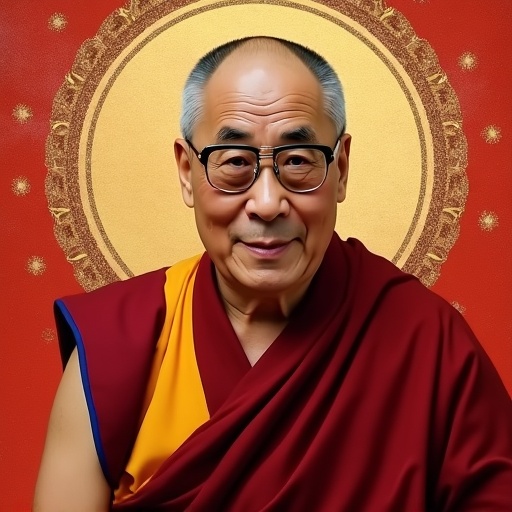
Dalai Lama
Dalai Lama
Oct 30, 2026
7 min de lecture

Source : Dalai Lama

À regarder · 7

Most people picture violence as something you can see: a fist, a blade, a gun. In a short teaching recorded on June 25, 2016, and later posted to the Dalai Lama's YouTube channel, His Holiness argues that this picture is backwards. The line between violence and non-violence, he says, is not drawn in the world of objects or even in the shape of an action. It is drawn in the mind of the person acting. Anger, jealousy, fear, and the wish to cheat or exploit someone make an action violent. Concern for another person's well-being can make an action non-violent even when that action sounds harsh or looks angry. The talk runs just under two minutes, and nearly every sentence turns on the same pivot: motivation decides, and compassion is where non-violence begins.

Lecture · 5 sections

Where Does Violence Actually Come From?

The teaching opens with a flat statement that is easy to pass over: "Violence never take place out of compassion." The Dalai Lama then names the sources. "Violence happen out of anger, jealousy, and fear." Notice what he does not say. He does not say violence comes from weapons, though weapons are how it usually shows up in the news. He puts the weapon second. "The person full of anger, fear, then use these instruments," he says, at roughly the 0:21 mark, describing a person whose inner state has already decided what will happen next.

This is the first and most important move in the talk. A weapon is inert. It has no intention, no grievance, no appetite. Whatever harm it does is delivered by a hand that has already been taken over by an emotion. If you want to understand violence, the Dalai Lama suggests, you have to look at the hand's owner before you look at the hand. That reframing matters because it moves the problem from the outside of a situation to the inside of a person, where the causes actually sit.

He draws the conclusion plainly: "the peaceful world must come through inner peace." It is a sentence that sounds like a slogan until you notice how much it asks. A peaceful world cannot be built by arranging objects differently, banning instruments, or policing outward behavior alone. It has to be built out of people whose minds are settled enough that anger, fear, and greed do not get to steer their hands.

Where Does the Line Between Violence and Non-Violence Fall?

Around the 0:39 mark, the Dalai Lama states what he calls the "final demarcation": the difference between violence and non-violence "is not external expression, but mental level." This is a strong claim, and it cuts against the instinct most of us have to judge by appearances. Two people can say the same words, make the same gesture, or take the same physical step, and the Dalai Lama would say they are doing different things if their motives differ.

He then makes the test concrete with a list. "Any motivation such as anger, hatred, jealousy, and want to cheat other people, and want to exploit other people, take advantage other people" — at around 0:49 he names these states — and "any action essentially violence." The word "essentially" is doing real work. He is not saying that every such action will produce a bruise. He is saying that the action has the nature of violence because of the intention driving it, whether or not the damage is visible.

The list is worth sitting with, because it shows how wide the net is. Anger and hatred are the obvious entries. Jealousy is less obvious, and so is the quieter wish to take advantage of someone, which can operate through contracts, flattery, or silence as easily as through force. By putting cheating and exploitation alongside anger on the same list, the teaching suggests that violence is not a single emotional event. It is a family of motives, many of which look civilized from the outside.

"Real demarcation of violence non-violence is not depend on action, but depend on motivation." (The Dalai Lama, talk recorded June 25, 2016)

Can Harsh Words Ever Be Non-Violent?

This is the part of the teaching that surprises people, and the Dalai Lama leans into the surprise on purpose. He describes a teacher, or a parent, who sometimes "take little bit sort of harsh word, or sometimes uh negative sort of angry face." Around the 1:09 mark, he is explicit that when this comes "out of sense of concern of student or children's well-being, actually that's non-violence."

Consider what that asks of us. A stern reprimand from a parent who is watching a child reach for a hot stove is not an attack, even if the voice is raised and the face is tight. A teacher who speaks bluntly to a student who is coasting on talent, because they can see what the student could become, is not practicing cruelty. The words may sting. The motive is care. By the Dalai Lama's standard, the sting does not make the act violent, and the softness of a pleasant tone does not make an act non-violent either.

This does not license anyone to shout and then claim good intentions. The teaching is a test, and the test is internal: what is actually driving the words? Anger that dresses itself up as concern is still anger, and by the list he gives earlier, it belongs on the violent side of the line. The discipline the talk asks for is honesty about one's own motive, which is harder than policing one's tone of voice.

What Does It Mean to Promote Non-Violence?

The talk ends with its practical conclusion, delivered in a few words: "So, the promotion of non-violence, we have to go the promotion of compassion." If the demarcation lives in the mind, then the work of non-violence cannot be carried out only by regulating conduct. Rules against violent acts matter, but they address the output. The Dalai Lama is pointing at the input, the motive that produces the output in the first place.

Two implications follow. First, anyone who wants a less violent world, whether in a family, a classroom, or a public institution, has to pay attention to the motives that are being cultivated there. Fear-based environments tend to produce fear-driven action. Environments where people feel genuinely cared for give the mind a different raw material to work with. Second, the work is personal before it is social. You cannot promote compassion in others while your own anger and jealousy remain unexamined, because those are the very motives the teaching identifies as violence.

There is also a quiet humility in the framing. The Dalai Lama does not claim that non-violence is easy to recognize from outside, or that a single gesture can prove someone's heart. He gives us a standard we can only apply to ourselves, and he asks us to keep applying it. That is why a talk of under two minutes can still feel demanding. It moves the measure of our lives from what we did to what moved us to do it.

Where to go from here

The teaching is brief, so the most useful next step is to return to it slowly. Watch the recording and pause at the moments that name the motives: anger, jealousy, fear, the wish to exploit. Ask which of them show up in your own day, and notice whether they arrive before your words or actions or only after you have already reacted.

From there, consider the second half of the talk. When you feel the urge to correct someone sharply, you can test the impulse against the Dalai Lama's question. Is the motive concern for the other person's well-being, or is it something else wearing concern's clothes? If it is concern, a hard word may still be non-violent. If it is not, no gentle phrasing will change the nature of the act.

Finally, take his closing principle as a practice rather than a conclusion. The promotion of non-violence, he says, comes through the promotion of compassion. That means tending the inner ground first: slowing down, noticing the anger and fear that drive you, and returning again and again to the wish for others to be well. The talk offers no shortcut, only a clear direction.

Comments

Loading the conversation…

Transcript

[0:00] Violence

[0:02] never take place out of compassion.

[0:06] Violence happen out of anger,

[0:10] jealously,

[0:11] and fear.

[0:14] So, they uh violence

[0:17] is not come from gun

[0:19] or some weapon.

[0:21] But, the user the person full of anger,

[0:26] fear, then use

[0:28] you see these instrument.

[0:30] So, therefore, the peaceful world must

[0:34] come through inner peace.

[0:38] So,

[0:39] uh

[0:39] violence and non-violence final

[0:43] demarcation is not external expression,

[0:47] but mental level.

[0:49] Any motivation such as anger, hatred,

[0:54] jealousy, and want to cheat other

[0:56] people, and want to exploit other

[0:59] people, take advantage other people, and

[1:03] such motivation, any action essentially

[1:07] violence.

[1:09] Then, out of sense of concern of others

[1:11] well-being,

[1:13] uh sometimes sensible teacher as for our

[1:15] parent, sometimes take little bit sort

[1:18] of harsh word,

[1:20] or sometimes uh negative sort of angry

[1:23] face, but out of sense of concern

[1:26] of student or children's well-being,

[1:30] actually that's non-violence.

[1:33] So, real demarcation of violence

[1:35] non-violence is not depend on action,

[1:38] but depend on motivation.

[1:40] So, the promotion of non-violence, we

[1:43] have to go the promotion of compassion.

[1:47] Like that.

Dalai Lama
ArtistDalai Lama

Spiritual leader of Tibetan Buddhism and Nobel Peace Prize laureate (1989). Born Lhamo Thondup in 1935, recognized at age two as the reincarnation of the 13th Dalai Lama, he fled i…

Voir le profilSite web
Explorer les thèmes
Non-violenceCompassionMotivationDalai-lama-teachingsInner-peace

Des questions ?

Questions fréquemment posées

According to the Dalai Lama, the line between violence and non-violence depends on motivation, not on the external action. In the teaching recorded June 25, 2016, he says the final demarcation is at the mental level, so an action driven by anger, hatred, jealousy, or a wish to exploit is violent in essence.
The Dalai Lama says yes, when harsh words come from genuine concern. He gives the example of a teacher or parent who speaks sharply or with an angry face out of concern for a student's or child's well-being, and he calls that non-violence.
He says violence happens out of anger, jealousy, and fear, not out of compassion. He also says weapons are secondary, since a person full of anger or fear is the one who uses the instrument.
He concludes that promoting non-violence means promoting compassion, because the motive is where non-violence begins. Rules that regulate outward conduct address the output, while cultivating compassion addresses the motive that produces it.
The video runs about one minute and 49 seconds. It was originally recorded on June 25, 2016, and the description summarizes it as the claim that motivation, not action, determines whether something is violent.
Apply his test to your own motive rather than your tone. If the impulse is driven by anger, hatred, jealousy, or a wish to take advantage of someone, the action is violent in essence, even if the words are polite. If it is driven by concern for the other person's well-being, a sharp word may still be non-violent.

Continuer la lecture

More from Dalai Lama

Voir tout
Why Motive, Not Action, Decides Whether Harm Is Violence
Inspire

Why Motive, Not Action, Decides Whether Harm Is Violence

In a short teaching recorded June 25, 2016, the Dalai Lama argues that violence is defined by the mind behind an act, not the act itself. Ha…

8 min read
Warm-Heartedness: Why Intelligence Needs a Kind Heart
Inspire

Warm-Heartedness: Why Intelligence Needs a Kind Heart

In a clip under two minutes, the Dalai Lama argues that a warm heart changes how the whole world appears, and that intelligence without it c…

6 min read
Beautiful Light and the Song for the Day You Can't Get Up
Inspire

Beautiful Light and the Song for the Day You Can't Get Up

Rick Jude's "Beautiful Light," performed acoustically with Janet Robin, is a song about staying with someone in the dark. Its lyrics move fr…

5 min read
Medicine Buddha Practice: Refuge When the Teacher Is Away
Inspire

Medicine Buddha Practice: Refuge When the Teacher Is Away

A community-led Medicine Buddha session opens with honest anxiety and closes with prayers for the world. Here is how its refuge-based struct…

9 min read

Continue d’explorer

Poursuis ton chemin

Plus de sagesse et de rassemblements dans tout l’annuaire BrightStar.

Plus d’articles

Parcours toute la bibliothèque d’enseignements, d’entretiens et de guides.

Retour à tous les articles →

Enseignants et artistes

Découvre les lignées, les musiciens et les guides du monde conscient.

Explorer les artistes →

Trouver un événement

Kirtan, retraites, bains sonores, breathwork, festivals — bientôt près de chez toi.

Parcourir les événements →