BrightStar

Parcourir tous les Events

Découvre des rassemblements conscients

events

Yoga
Meditation
Breathwork
Qigong
Tai Chi
Sacred Music
World Music
Medicine Music
Sound Healing
Ecstatic Dance
Destinations populaires
BaliSedonaLos AngelesCosta RicaNew YorkSan FranciscoAustinMiamiJoshua TreeTulum
Voir toutes les catégoriesVoir toutes les destinations

Explorer toutes les fonctionnalités

Des outils puissants pour développer tes événements

Fonctionnalités de la plateforme

Tarification dynamique intelligente
Catégories de billets
Places assignées
Récupération des paniers abandonnés
Récupération des visiteurs
Dons & Prix variables
Système d'affiliation
Scanner de billets
Codes promo
Questions personnalisées
Partage de billets
Ventes additionnelles & Options
Analyses & Rapports
Séquences d'emails
Liste d'attente / Notifier / Rappeler
Personnes & Lieux
Artists & TeachersEvent OrganizersVenues & StudiosKnowledge BaseGlossaryInspiration
Voir toutes les fonctionnalitésÀ propos
TarifsBlog
Language
Saved events
Parcourir tous les événements

events

YogaMeditationBreathworkQigongTai ChiSacred MusicWorld MusicMedicine Music

Destinations populaires

BaliSedonaLos AngelesCosta RicaNew YorkSan Francisco

Personnes & Lieux

Artists & TeachersEvent OrganizersVenues & StudiosKnowledge BaseGlossaryInspiration

Fonctionnalités de la plateforme

Tarification dynamique intelligenteCatégories de billetsPlaces assignéesRécupération des paniers abandonnésRécupération des visiteursDons & Prix variablesSystème d'affiliationScanner de billetsCodes promoQuestions personnaliséesPartage de billetsVentes additionnelles & OptionsAnalyses & RapportsSéquences d'emailsListe d'attente / Notifier / Rappeler
Voir toutes les fonctionnalitésÀ propos
TarifsBlog
ConnexionChercheursCréateurs
  • Parcourir tous les Événements
  • Pour les chercheurs
  • Yoga
  • Méditation
  • Breathwork
  • Qi gong
  • Tai-chi
  • Musique sacrée
  • Musiques du monde
  • Musique médecine
  • Soins sonores
  • Danse extatique
  • Retraites
  • Ateliers
  • Toutes les catégories →
  • Bali
  • Sedona
  • Los Angeles
  • Costa Rica
  • Tulum
  • Byron Bay
  • San Francisco
  • Austin
  • New York
  • San Diego
  • Denver
  • Seattle
  • Portland
  • Miami
  • Toutes les villes →
  • Be Found
  • Pour les créateurs
  • Pour les équipes
  • Pour les écrivains
  • Pour les enseignants
  • Pour les artistes de kirtan
  • Pour les studios
  • Pour les festivals
  • Pour les centres de retraite
  • Pour les associations
  • Ambassadeur de marque
  • Études de cas
  • Billetterie gratuite
  • Elevate
  • Amplify
  • Réseau de 500K+ acheteurs
  • Récupération des paniers abandonnés
  • Tarification dynamique intelligente
  • Catégories de billets
  • Événements récurrents
  • Places assignées
  • Système d'affiliation
  • Liste d'attente / Notifier
  • Scanner de billets
  • Widget intégrable
  • Diffusion d'événements
  • Messagerie
  • Intégrations
  • Rapports
  • Toutes les fonctionnalités →
  • À propos
  • L'écosystème
  • Blog
  • Glossaire
  • Inspiration
  • Centre d'aide
  • Contact
  • Documentation API
  • Ressources de marque
  • Carrières
  • Presse
  • Conditions d'utilisation
  • Politique de confidentialité

Événements

  • Parcourir tous les Événements
  • Pour les chercheurs
  • Yoga
  • Méditation
  • Breathwork
  • Qi gong
  • Tai-chi
  • Musique sacrée
  • Musiques du monde
  • Musique médecine
  • Soins sonores
  • Danse extatique
  • Retraites
  • Ateliers
  • Toutes les catégories →

Destinations

  • Bali
  • Sedona
  • Los Angeles
  • Costa Rica
  • Tulum
  • Byron Bay
  • San Francisco
  • Austin
  • New York
  • San Diego
  • Denver
  • Seattle
  • Portland
  • Miami
  • Toutes les villes →

Pour les créateurs

  • Be Found
  • Pour les créateurs
  • Pour les équipes
  • Pour les écrivains
  • Pour les enseignants
  • Pour les artistes de kirtan
  • Pour les studios
  • Pour les festivals
  • Pour les centres de retraite
  • Pour les associations
  • Ambassadeur de marque
  • Études de cas
  • Billetterie gratuite
  • Elevate
  • Amplify

Fonctionnalités

  • Réseau de 500K+ acheteurs
  • Récupération des paniers abandonnés
  • Tarification dynamique intelligente
  • Catégories de billets
  • Événements récurrents
  • Places assignées
  • Système d'affiliation
  • Liste d'attente / Notifier
  • Scanner de billets
  • Widget intégrable
  • Diffusion d'événements
  • Messagerie
  • Intégrations
  • Rapports
  • Toutes les fonctionnalités →

Entreprise

  • À propos
  • L'écosystème
  • Blog
  • Glossaire
  • Inspiration
  • Centre d'aide
  • Contact
  • Documentation API
  • Ressources de marque
  • Carrières
  • Presse
  • Conditions d'utilisation
  • Politique de confidentialité
BrightStar
© 2026 BrightStar. Tous droits réservés.
Inspiration

The Half-Life of Anger:Meditation Beyond the Myth

Sam Harris
Sam Harris
Sep 15, 2026
8 min de lecture
À regarder · 8

Everyone gets angry. The question isn't whether anger arises—it's how long it stays. When a wasp stings you, the initial recoil is neurological reflex, not failure. When you receive a scary diagnosis, an adrenaline spike is understandable. But here's the gap that separates a human hostage to their own mind from one who has learned to notice thought itself: the difference between five seconds of anger and five days. That gap, according to meditation teacher and neuroscience commentator Sam Harris, is where the real work happens. Not in chasing a myth of perpetual bliss, but in recognizing how the mind perpetuates suffering through a single mechanism—identification with thought.

Lecture · 6 sections

The Attainable Versus the Mythical

Harris draws a crucial distinction between two spiritual endpoints. The first is what he calls mythical and unattainable: perfect enlightenment, in which a human being never experiences anger, fear, judgment, or shame again. "All that the bad side of the menu has been wiped clean," he describes it. "All you have is rapture and bliss and compassion and good vibes." It sounds like freedom. It sounds like the goal.

It's also, in his experience, not something he's ever observed in a living person. Harris has spent decades in close contact with some of the greatest meditators of the 20th and 21st centuries—practitioners who spent twelve years in a cave, who emerged radiant and transformed. "I still don't think those are guys who never had a negative mind state again," he says. "You know, they get stung by a wasp, they're going to have that 'I got stung by a wasp' feeling and they're going to wince just like a normal neurologically intact person."

The second endpoint—the one that matters—is radically different because it's radically available. It's not about erasing anger. It's about changing the relationship to anger once it arises. Specifically, it's about cutting the half-life of negative mind states "way way way down" by recognizing how they get perpetuated. The mechanism is simple but usually invisible: every moment you believe your thoughts about what happened, you're re-igniting the fire.

Getting the Information Without the Fire

Harris uses a concrete example: a scary diagnosis, followed by a wait. The doctor orders an MRI, but it's Friday afternoon. Results won't come until Monday at the earliest. You now have 72 hours to fill. The question isn't whether you'll feel anxious—the question is how anxious you need to feel.

"The real superpower of meditative insight," Harris explains, "is to recognize that you will simply not be anxious unless you are lost in thought about this thing that worries you." The initial anxiety spike—the adrenaline dump—carries information. It tells you something has changed and requires attention. But the perpetuation of that anxiety for the next three days is not serving you. It's not helping you get better results on the MRI. It's not making you more prepared for Monday's call. It's just suffering.

He applies the same logic to any reactive moment: anger at injustice, fear at uncertainty, moral outrage at wrongdoing. "You understand, okay, something just broke and somebody just broke it and perhaps on purpose. Now what?" The initial reaction gives you data. The perpetuation through thought-identification gives you only suffering. The question then becomes strategic: "Is fear or anger or outrage the best state of mind to be in as you respond to that change in the world?" Almost always, the answer is no. "You want to be in a cooler state of mind and a more rational one," he says, "one where you have all of your wits about you so as to figure out what to do next."

Breaking Identification With Thought

The mechanism that keeps the half-life long is what Harris calls identification with thought. It's the basic human mistake: treating the thought that arises in consciousness as if it were true, as if it were you, as if it demands your attention in perpetuity. Most people live their entire waking lives "lost in thought"—not noticing thought as a phenomenon, but caught inside it like someone in a dream who doesn't know they're dreaming.

The meditation practice he describes is not a relaxation technique or a stress-reduction hack. It's waking up from that dream. He offers a nested analogy: a bad dream where you don't know you're dreaming (total identification); a lucid dream where you recognize it's a dream and you know you're safe in bed (recognition of thought); and waking up entirely, so the dream subsides (freedom from thought-driven suffering). "Those are increments of freedom that really matter," he says. "It's a totally different way of being in your life and in the world."

The recognition itself is the shift. "It's like you suddenly notice you're making a fist and you know how to relax your hand." Once you see that you've been clenching—that the discomfort you attributed to the world was actually the grip of identification with thought—the relaxation becomes possible. The person who doesn't know they have a hand will clench it until it aches and believe there's something trapped inside. "That's what it's like to not know how to meditate," Harris says. "You're just helplessly borne away by thought all the time to whatever end it's going to take you. You're just a mere hostage."

Meditation Isn't Over There

One widespread misunderstanding deserves correction: the idea that meditation is a practice you do on a cushion, a separate domain from the rest of your life. Harris is direct about this. The practice isn't compartmentalized. It's not something you do "over there" and then leave behind when you step into the world. "The thing that you're doing right now with me"—that capacity to notice thought and return attention—"is meditation."

The real work is bringing that noticing into the moments that matter: when you're about to explode at someone, when you're spiraling in anxiety, when you're righteously angry at the state of the world. The difference between the meditator and the non-meditator isn't that one never gets angry and the other does. It's that one can feel anger, notice it, and consciously choose their response—often before five seconds have passed. The other is hijacked for five minutes, five hours, or five days.

This reframes why Harris talks about meditation rarely, at least directly, in his public work. He focuses on world problems, on ethics, on neuroscience and philosophy. But beneath nearly everything he says is an assumption that people can pay attention to the world's problems and not be overwhelmed by them. They can feel upset and then turn it off. They can engage their rational faculties without drowning in emotion. That capacity—to "be upset in the moment and then turn it off and then walk into the room"—is the actual skill. It's not transcendence. It's not supernatural. It's recognizing how your mind works and using that recognition to shorten the half-life of suffering.

The Skeptic's Problem

Harris acknowledges the resistance he encounters when he mentions meditation in conversation. People roll their eyes. They say they can't sit still, they can't clear their mind, they're not the type. He recognizes the objection because he held it once too. "I always gave you the eye roll when you talked about it," a conversation partner admits. Harris's response is patient: "Everyone who's doing that is just still somebody who doesn't understand what it is you're talking about. Guaranteed 100%. They just don't know."

The misunderstanding is usually the same: meditation is assumed to be about calming, about achieving a blank mind, about becoming a certain kind of person. The actual practice is about noticing how the mind works right now—how thoughts arise and disappear on their own, how identification with those thoughts creates the sense of a solid, suffering self. "You can't persuade everyone," Harris acknowledges. But he also notes the paradox: "Everyone is at bottom interested in it whether they know it or not because everyone is suffering the consequences of being lost in thought every moment of their waking life."

The catch is that you can't know this intellectually. You have to notice it for yourself. "They can't know that until they do it," he admits. But the moment someone sits and actually watches their own mind—sees a thought arise unbidden, watches it disappear, notices the gap between thoughts—the entire frame shifts. The skepticism doesn't vanish; the understanding does. And with it, the half-life of anger begins to contract.

Where to go from here

The practical endpoint Harris offers is the Waking Up app, which translates these insights into guided meditations that don't require religious belief, philosophical background, or a particular kind of mind. The practice is accessible. The results—the ability to feel five seconds of anger instead of five days of it, to receive bad news and respond with clarity instead of reactivity, to stay present with whatever arises—are measurable in your own direct experience.

The attainable goal isn't enlightenment. It's freedom. Not the freedom to never feel anger, but the freedom to not be imprisoned by it. That freedom, Harris suggests, is already within reach. It just requires noticing what's already true: that you're not your thoughts, and the moment you see that, the half-life changes.
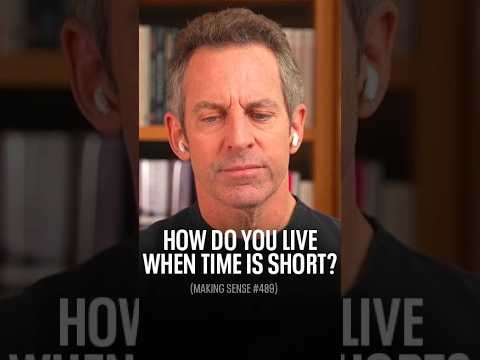
Transcript

[0:00] But I don't think most people understand

[0:01] that about you and that you what you

[0:04] teach in the waking up app is all about

[0:06] the ability to um be annoyed in a in one

[0:10] moment and switch it right off. Yeah.

[0:13] >> Into the next and go back to your life.

[0:15] You don't need to.

[0:17] >> It's the half the halflife of these

[0:20] kindly negative states of mind is what

[0:24] matters, right? Like so so I mean so

[0:25] there's there's two possible kind of

[0:27] spiritual end points to which you could

[0:28] be purposed you know and you know one

[0:32] might be mythical and unattainable but

[0:35] the other is absolutely attainable right

[0:37] so the the mythical one the the the or

[0:40] the perhaps unattainable one or not not

[0:43] attainable by everyone in any kind of

[0:45] time frame that matters one is the full

[0:48] enlightenment of never having a negative

[0:51] mind state again. Right? You never feel

[0:53] anger again. You never feel fear again.

[0:55] You never feel judgment again and shame

[0:58] again. Nothing. It's all all that that

[1:00] the bad side of the menu has been wiped

[1:02] clean. And all you have is rapture and

[1:04] bliss and compassion and good vibes.

[1:06] Right? That may be attainable. I don't

[1:09] believe I ever ever met that person.

[1:11] I've met some of the greatest meditators

[1:13] of the 20th century um if not the 21st.

[1:17] Uh, you know, I met the guys who had

[1:20] spent 12 years in a cave and and uh came

[1:24] out and they were radiant and and

[1:26] beautiful to hang out with. And I still

[1:28] don't think those are guys who never had

[1:31] a negative mind state again, right? You

[1:33] know, they they get stung by a wasp,

[1:35] they're going to have that [ __ ] I got

[1:38] got stung by a wasp feeling and and

[1:41] they're going to wse just like a normal

[1:43] neurologically intact person. Um

[1:46] so then what's the second end point that

[1:50] seems desirable and attainable? It's

[1:52] it's to recognize

[1:55] something about your mind such that the

[1:58] halflife of these negative states gets

[2:01] cut way way way down, right? Where you

[2:04] recognize how they get perpetuated

[2:06] by your identification with thought in

[2:09] every subsequent moment. And

[2:12] so there you can enjoy the benefit of

[2:15] getting the whatever information is

[2:17] contained in your reaction. You know,

[2:19] you hear so something happens in the

[2:21] world and your your reaction is

[2:25] fear or anger or or moral outrage. I

[2:29] it's negatively veanced. You understand,

[2:31] okay, something just broke and somebody

[2:33] just broke it and perhaps on purpose.

[2:36] Now what? Right? Then the question is is

[2:39] fear or anger or

[2:42] uh outrage the best state of mind to be

[2:45] in as you respond to that change in the

[2:48] world? And the answer to that is is

[2:50] almost always no. It's I mean you want

[2:52] to you want to be in a cooler state of

[2:54] mind um and just and a more rational one

[2:59] and and and one where you have you know

[3:01] all of your you know wits about you so

[3:03] as to figure out what to do next, right?

[3:05] And so you you you get a scary

[3:07] diagnosis. You know, a a a adrenaline

[3:12] dump of anxiety is is totally

[3:15] understandable, but the question is how

[3:17] anxious do you want to feel or how

[3:18] anxious do you need to feel going

[3:21] forward to do all the things you have to

[3:23] do to to respond to that new

[3:25] information? I mean, so you you now you

[3:28] know, this is the example I always use,

[3:29] right? some you get some, you know,

[3:32] scary doctor visit and now you need to

[3:34] have an MRI and you that's scheduled

[3:36] for, you know, 4 days from now or you

[3:39] just had the MRI but, you know, you had

[3:40] it on a Friday and you're not going to

[3:41] get results until Monday at the

[3:43] earliest, right? Because weekends for

[3:45] some reason are still sacrosanked in

[3:47] medicine. Um,

[3:49] that's a problem that the robots could

[3:51] solve for us. Uh so you have so now you

[3:54] have to so the question is how anxious

[3:56] do you want to be or have to be for the

[4:00] 72 hours you have to wait for the next

[4:03] increment of information right to to

[4:05] find out what you have or don't have.

[4:07] The the real superpower of of meditative

[4:11] insight is to recognize that you will

[4:15] you will see you will simply not be

[4:16] anxious unless you are lost in thought

[4:19] about this thing that worries you.

[4:22] Right? Like breaking this the the

[4:24] identification with thought. Noticing

[4:25] how thoughts just spontaneously arise

[4:28] and disappear in the mind is analogous

[4:31] to waking up from a dream. You know,

[4:33] you're not you're not in the dream

[4:35] anymore. You're not like you're the

[4:37] difference between having a bad dream

[4:38] and not knowing that you're dreaming,

[4:40] not knowing that you're safely in your

[4:42] bed and becoming lucid in that dream

[4:45] where you're where you now know it's a

[4:47] dream and you know you're really

[4:48] nothing's at stake and you're you're you

[4:51] know comfortable in your bed and you

[4:53] know further still actually just waking

[4:55] up so that the dream totally subsides. I

[4:58] mean those are those are um increments

[5:00] of freedom that are that really matter

[5:03] and they're it's a totally different way

[5:06] of being in your life and in the world

[5:07] and and the difference between being

[5:10] angry have you know for 5 seconds

[5:14] uh versus you know five minutes or 5

[5:16] hours or five days I mean those are

[5:18] those those

[5:20] orders of magnitude are are everything

[5:23] and um so it's not that I don't get

[5:25] angry I mean I get angry

[5:27] all the time. It just doesn't last very

[5:30] long, right? Because I because I it's

[5:32] like it's like you suddenly notice

[5:34] you're making a fist and you know how to

[5:37] relax your hand, right? Like so the

[5:39] person who doesn't know that they even

[5:41] have a hand, but they're uncomfortable

[5:43] all the time because they're they're

[5:46] clenching their fist uh and they're

[5:48] clenching it for so long that it begins

[5:50] to feel like there's something in it in

[5:52] the you know like they're holding

[5:53] something that they can't inspect,

[5:55] right? because they they literally can't

[5:57] figure out how to to relax their their

[6:00] their hand. Um, that's what it's like to

[6:03] not know how to meditate. I mean, you're

[6:04] just you're just helplessly born away by

[6:06] thought all the time to whatever end uh

[6:10] it's going to take you and you're you're

[6:12] just a mere hostage, right? But again, I

[6:15] think people think that

[6:18] meditation is the thing you do over

[6:19] there on the cushion and not the thing

[6:21] that you're doing right now with me. No.

[6:23] And the thing that you're you're doing

[6:24] in any moment that matters to you,

[6:26] you're always trying to uh re-engage and

[6:28] pay attention that you can blur the

[6:30] lines between, you know, the practice

[6:31] that sits over there and every moment in

[6:34] your life and bring it out into your

[6:35] life with you. And I think uh so if

[6:37] anybody uh would like to learn how to do

[6:39] that, um you can go to the uh check out

[6:42] the app. You can find it in the app

[6:44] store. That's my

[6:45] >> Yeah, that's my pitch.

[6:46] >> That's the one place that's the one

[6:47] place where I'm not winging about the

[6:48] world's problems. I mean, that's it's a

[6:50] different different stream of of

[6:52] content.

[6:53] >> I mean, well, but but but again, people

[6:55] can actually pay attention to the

[6:56] world's problems and not get upset.

[6:58] >> They can be upset in the moment and then

[6:59] turn it off and then walk into the room

[7:00] and

[7:01] >> No, I mean, it's it's it is it's the

[7:04] >> it is the thing that makes sense of my

[7:06] point of view on virtually every

[7:09] controversial topic. I mean, I'm rarely

[7:11] talking about meditation. I think to the

[7:13] to the relief of much of the the podcast

[7:15] audience that that isn't necessarily

[7:18] interested in it, but if you're

[7:20] >> Those are people, by the way, just to

[7:21] those are people who were like me who I

[7:24] I always gave you the eye roll when you

[7:27] talked about it. I was like, "Oh god,

[7:28] not this shit." But I just didn't

[7:29] understand what what it was. And so,

[7:32] everyone who's doing that is just still

[7:34] somebody who doesn't understand what it

[7:35] is you're talking about. Guaranteed

[7:37] 100%. They they just don't know. They

[7:40] think that it's about calming or I can't

[7:42] sit. I can't, you know, I can't do it

[7:44] because I know that's what I thought.

[7:46] They just don't know. And it's one of

[7:47] those things where you just can't

[7:48] persuade

[7:49] >> everyone's everyone is potentially. I

[7:51] mean, everyone is at bottom interested

[7:52] in it whether they know it or not

[7:54] because everyone is suffering the

[7:56] consequences of being lost in thought

[7:58] every moment of their waking life.

[8:00] Everyone's

[8:00] >> But it's paradoxical because they can't

[8:02] know that until they do it,

[8:03] >> right? But they're but yeah, everyone's

[8:06] in a everyone's lost in a dream

[8:09] >> and much of the time it's a problem for

[8:11] them. You know, they're not totally

[8:13] satisfied with their lives. They're

[8:15] they're worried about all kinds of

[8:16] things. They're afraid of death. They're

[8:18] afraid to lose everyone they love. The

[8:21] problems are coming.

[8:22] >> When you used to say that, I know, but

[8:23] when you used to say that, I was like,

[8:24] what is he [ __ ] talking about? I

[8:26] don't none of that. You have to actually

[8:28] learn how to pay attention to even

[8:30] notice any of those thoughts. And that's

[8:31] that's the problem.

[8:33] >> [music]

[8:40] [music]

Sam Harris
ArtistSam Harris

American neuroscientist, philosopher, and meditation teacher, one of the most influential voices on contemplative practice for the secular, scientifically-minded reader of the earl…

Voir le profilSite web
Explorer les thèmes
Meditation-practiceAnger-managementMindfulnessThought-identificationConsciousness

Des questions ?

Questions fréquemment posées

No. Harris distinguishes between the mythical goal of perfect enlightenment—never experiencing anger, fear, or judgment again—and the attainable one: dramatically shortening how long anger lasts. Even the greatest meditators still get stung by a wasp and wince. The practice is about changing your relationship to anger, not eliminating it.
The key is recognizing that anxiety perpetuates through identification with thought about the worst-case scenario. You'll only feel anxious if you're lost in thought about what you're worried about. Once you notice thought itself as a passing phenomenon, the anxiety naturally subsides, even though you still have information about the situation and can respond rationally.
The difference is identification with thought. The initial five-second reaction is neurological reflex—useful information. The five-day version is perpetuated by believing and re-engaging with thoughts about what happened. Meditation teaches you to notice thought arising and let it pass, collapsing that timeline.
Yes. The ability to notice and feel emotional reactions to injustice or crisis, then consciously choose your response from a clearer state of mind, is what meditation develops. You're not becoming apathetic—you're becoming more rational and capable of effective action.
Meditation isn't about clearing your mind or achieving blankness. It's about noticing that thoughts arise and disappear on their own, and recognizing that you're not obligated to believe or identify with every thought. That recognition—not any particular mental state—is the practice.
Most people misunderstand meditation as a relaxation technique or stress-reduction hack rather than a practice of noticing how the mind actually works. They think it requires a blank mind or a calm personality. Once someone sits and directly observes their own mind, the skepticism usually transforms into understanding.

Continuer la lecture

More from Sam

Voir tout
Living Fully When Mortality Becomes Real: Why Uncertainty Is Universal
Inspire

Living Fully When Mortality Becomes Real: Why Uncertainty Is Universal

A listener with a terminal brain cancer diagnosis asks an urgent philosophical question: Is it ethical to have another child? The answer rev…

1 min read
Navigating Hopelessness: Sam Harris on Consciousness in Chaos
Inspire

Navigating Hopelessness: Sam Harris on Consciousness in Chaos

In a world increasingly defined by political turmoil, social division, and existential uncertainty, how do we maintain our spiritual equilib…

1 min read
Om Namo Bhagavate Vasudevaya: Sacred Sound's Power
Inspire

Om Namo Bhagavate Vasudevaya: Sacred Sound's Power

Kirtan artist Radhika Das explores how transcendental sound awakens the heart's divine nature through the transformative power of mantra and…

1 min read
Sehaj: The Inner Peace Beyond Numbness
Inspire

Sehaj: The Inner Peace Beyond Numbness

Discover why emotional numbness persists even after trauma healing, and how Gurbani's concept of Sehaj reveals true spiritual peace through …

1 min read

Continue d’explorer

Poursuis ton chemin

Plus de sagesse et de rassemblements dans tout l’annuaire BrightStar.

Plus d’articles

Parcours toute la bibliothèque d’enseignements, d’entretiens et de guides.

Retour à tous les articles →

Enseignants et artistes

Découvre les lignées, les musiciens et les guides du monde conscient.

Explorer les artistes →

Trouver un événement

Kirtan, retraites, bains sonores, breathwork, festivals — bientôt près de chez toi.

Parcourir les événements →