BrightStar

Parcourir tous les Events

Découvre des rassemblements conscients

events

Yoga
Meditation
Breathwork
Qigong
Tai Chi
Sacred Music
World Music
Medicine Music
Sound Healing
Ecstatic Dance
Destinations populaires
BaliSedonaLos AngelesCosta RicaNew YorkSan FranciscoAustinMiamiJoshua TreeTulum
Voir toutes les catégoriesVoir toutes les destinations

Explorer toutes les fonctionnalités

Des outils puissants pour développer tes événements

Fonctionnalités de la plateforme

Tarification dynamique intelligente
Catégories de billets
Places assignées
Récupération des paniers abandonnés
Récupération des visiteurs
Dons & Prix variables
Système d'affiliation
Scanner de billets
Codes promo
Questions personnalisées
Partage de billets
Ventes additionnelles & Options
Analyses & Rapports
Séquences d'emails
Liste d'attente / Notifier / Rappeler
Personnes & Lieux
Artists & TeachersEvent OrganizersVenues & StudiosKnowledge BaseGlossaryInspiration
Voir toutes les fonctionnalitésÀ propos
TarifsBlog
Saved events
Parcourir tous les événements

events

YogaMeditationBreathworkQigongTai ChiSacred MusicWorld MusicMedicine Music

Destinations populaires

BaliSedonaLos AngelesCosta RicaNew YorkSan Francisco

Personnes & Lieux

Artists & TeachersEvent OrganizersVenues & StudiosKnowledge BaseGlossaryInspiration

Fonctionnalités de la plateforme

Tarification dynamique intelligenteCatégories de billetsPlaces assignéesRécupération des paniers abandonnésRécupération des visiteursDons & Prix variablesSystème d'affiliationScanner de billetsCodes promoQuestions personnaliséesPartage de billetsVentes additionnelles & OptionsAnalyses & RapportsSéquences d'emailsListe d'attente / Notifier / Rappeler
Voir toutes les fonctionnalitésÀ propos
TarifsBlog
ConnexionChercheursCréateurs
Tibetan BuddhistOm Mani Padme Hum · Om Mani Padme Hum · Om Mani Padme Hum · Om Mani Padme Hum ·
  • Parcourir tous les Événements
  • Pour les chercheurs
  • Yoga
  • Méditation
  • Breathwork
  • Qi gong et tai-chi
  • Tai-chi
  • Musique sacrée
  • Retraites
  • Ateliers
  • Toutes les catégories →
  • Bali
  • Sedona
  • Los Angeles
  • Costa Rica
  • Tulum
  • Byron Bay
  • San Francisco
  • Austin
  • Toutes les villes →
  • Pour les créateurs
  • Pour les équipes
  • Pour les écrivains
  • Pour les enseignants
  • Pour les artistes de kirtan
  • Pour les studios
  • Pour les festivals
  • Pour les centres de retraite
  • Pour les associations
  • Ambassadeur de marque
  • Études de cas
  • Billetterie gratuite
  • Elevate
  • Amplify
  • Réseau de 350K+ acheteurs
  • Récupération des paniers abandonnés
  • Tarification dynamique intelligente
  • Catégories de billets
  • Événements récurrents
  • Places assignées
  • Système d'affiliation
  • Liste d'attente / Notifier
  • Scanner de billets
  • Widget intégrable
  • Diffusion d'événements
  • Messagerie
  • Intégrations
  • Rapports
  • Toutes les fonctionnalités →
  • À propos
  • L'écosystème
  • Blog
  • Glossaire
  • Inspiration
  • Centre d'aide
  • Contact
  • Documentation API
  • Ressources de marque
  • Carrières
  • Presse
  • Conditions d'utilisation
  • Politique de confidentialité

Événements

  • Parcourir tous les Événements
  • Pour les chercheurs
  • Yoga
  • Méditation
  • Breathwork
  • Qi gong et tai-chi
  • Tai-chi
  • Musique sacrée
  • Retraites
  • Ateliers
  • Toutes les catégories →

Destinations

  • Bali
  • Sedona
  • Los Angeles
  • Costa Rica
  • Tulum
  • Byron Bay
  • San Francisco
  • Austin
  • Toutes les villes →

Pour les créateurs

  • Pour les créateurs
  • Pour les équipes
  • Pour les écrivains
  • Pour les enseignants
  • Pour les artistes de kirtan
  • Pour les studios
  • Pour les festivals
  • Pour les centres de retraite
  • Pour les associations
  • Ambassadeur de marque
  • Études de cas
  • Billetterie gratuite
  • Elevate
  • Amplify

Fonctionnalités

  • Réseau de 350K+ acheteurs
  • Récupération des paniers abandonnés
  • Tarification dynamique intelligente
  • Catégories de billets
  • Événements récurrents
  • Places assignées
  • Système d'affiliation
  • Liste d'attente / Notifier
  • Scanner de billets
  • Widget intégrable
  • Diffusion d'événements
  • Messagerie
  • Intégrations
  • Rapports
  • Toutes les fonctionnalités →

Entreprise

  • À propos
  • L'écosystème
  • Blog
  • Glossaire
  • Inspiration
  • Centre d'aide
  • Contact
  • Documentation API
  • Ressources de marque
  • Carrières
  • Presse
  • Conditions d'utilisation
  • Politique de confidentialité
BrightStar
© 2026 BrightStar. Tous droits réservés.
Inspiration

Open Heart, Open World: TheHandpan Path to Softness

Malte Marten
Malte Marten
Sep 4, 2026
6 min de lecture

An open heart is not something you achieve and then forget about. It's a decision renewed each morning, and again each evening—a practice as deliberate as any instrument you'd learn to play. This is the central truth woven through an hour of meditative handpan music that frames vulnerability not as a liability, but as the only ground from which anything real can grow. The paradox at the heart of it: the easiest path is also the loneliest one. We can retreat behind walls where nothing can hurt us. But nothing can reach us either. No love. No trust. No genuine closeness. Life doesn't move past a closed door.

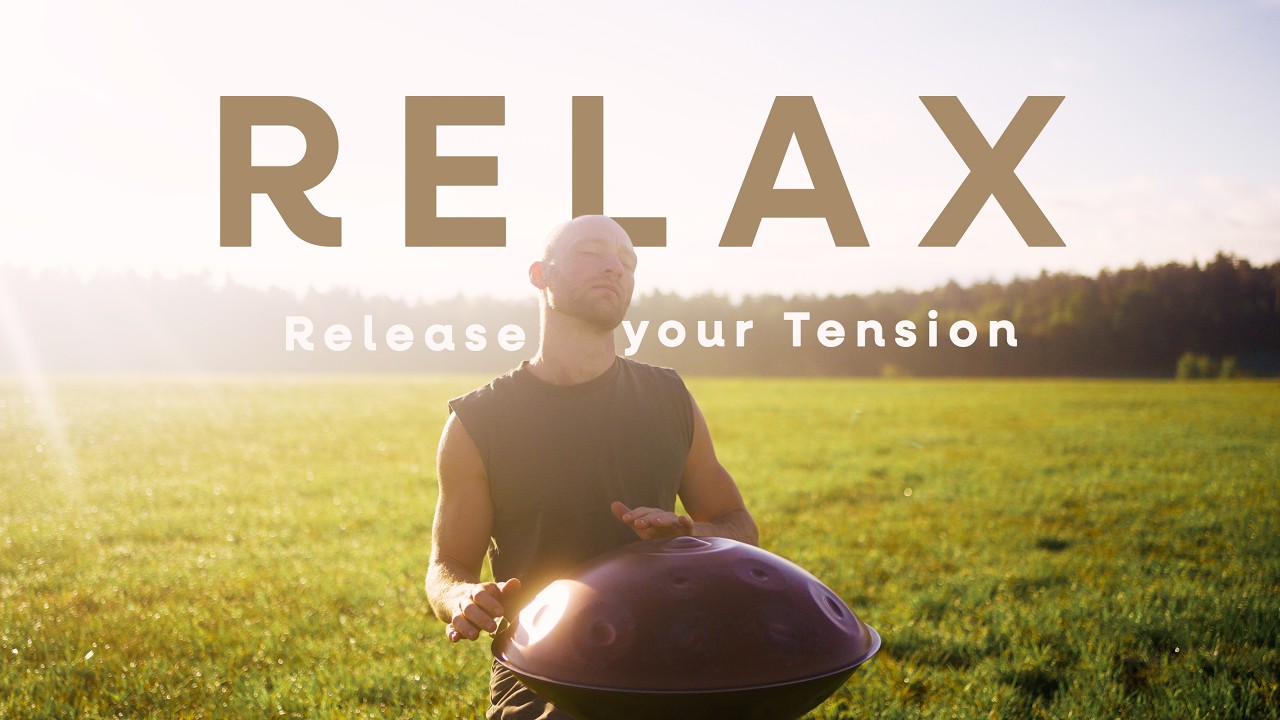
The handpan—that ethereal, mushroom-shaped percussion instrument with its haunting metallic voice—has become an unlikely ambassador for this message. Unlike the guitar or piano, which demand technique and years of disciplined practice before yielding beauty, the handpan seems almost to sing on its own. It's an instrument that feels less like something you play and more like something you listen through, a hollow vessel that the player fills with intention and the listener absorbs as medicine. When played with intention toward the open heart, it becomes a sonic metaphor for the very surrender it accompanies.

The philosophy embedded in this work reflects something older than Western psychology's rediscovery of vulnerability as strength. It echoes the Vedantic and Buddhist understanding that the heart—not the mind—is the organ of wisdom. The Sanskrit word hridaya, often translated as heart, literally means "that which receives." An open heart receives. A closed one hoards and protects and grows calcified. The choice, then, is not between safety and risk—it's between aliveness and survival. Most people, most of the time, choose survival. The invitation here is different: to choose the harder, softer path. To let life in, knowing it will bring pain alongside joy.

Playing a handpan in a meditative context requires a particular kind of vulnerability too. The instrument has no loud attack, no way to mask hesitation or unsureness. Every note exists in silence; every silence matters as much as the notes. There's nowhere to hide. This is why the handpan has become popular in sound baths, yoga studios, and contemplative spaces—it mirrors internally what the practice asks of you externally. You can't play armor. You can only play truth.

The work of keeping an open heart across a lifetime is genuinely counterintuitive. We are animals, and animals protect themselves. We've learned from experience, from betrayal, from loss, that closure is safer. The walls we build are rational responses to real hurt. The suggestion to voluntarily set those walls down feels naive, even dangerous. Yet the evidence of those who do—who make this choice day after day—suggests something unexpected: that the world becomes softer around us when we become softer with it. Not because danger disappears, but because we stop recruiting it as an excuse. We stop letting fear be the architect of our lives.

This isn't about toxic positivity or spiritual bypassing. It's about a clear-eyed recognition of what closedness costs. Behind those walls, we are safe. We are also alone. We are protected from harm, and protected from love. And since love is what makes life worth living—the connection, the touch, the being known—safety purchased at that price becomes very expensive indeed.

The daily practice, then, becomes almost liturgical. Open your heart. Today. Tomorrow. The day after. Not once. Not when it feels safe. But as a renewing vow, like returning to a meditation cushion or picking up an instrument. Each time you do, the world is asking whether you'll choose aliveness or protection. Each time you choose aliveness, something in you softens. And each time you soften, you give permission to those around you to do the same.

The handpan, played over an hour in this meditative space, becomes the teacher. Its patient, unhurried drone—especially tuned to frequencies associated with opening (the 1111 Hz mentioned in the title)—creates a held space where the body can begin to believe that softness is possible. That vulnerability won't destroy you. That the other side of that choice, where love and trust and real closeness live, is worth the risk.

Lecture · 4 sections

Why Vulnerability Feels Like Weakness

In a world built on performance and self-protection, the open heart seems like a liability. We've been taught that appearing strong means appearing certain, unaffected, in control. Vulnerability reads as instability. Yet research and lived wisdom suggest the opposite is true: the capacity to stay open in the face of real threat is perhaps the most rigorous form of strength. It's not the strength of armor—it's the strength of roots. An oak tree bends in the wind; a wall doesn't, but it also can't grow.

How Softness Changes the World Around You

The most unexpected discovery in this practice is that the world doesn't take advantage of softness the way we've been conditioned to fear. Instead, softness tends to call out softness in others. When we lower our defenses, we give others implicit permission to lower theirs. The hardened people around you—the ones behind their own walls—begin to sense that it might be safe to come out. This doesn't happen because you've been naive or weak; it happens because you've modeled an alternative to the exhausting performance of invulnerability.

The Handpan as Mirror

Few instruments reveal the player's internal state as clearly as the handpan does. There's no distortion pedal, no heavy attack to cover uncertainty, no volume to hide behind. Every hesitation, every moment of openness, becomes audible. This makes the handpan an ideal tool for contemplative practice. Playing it becomes meditation; listening to it becomes an invitation to examine your own walls.

Where to Go From Here

If this resonates, the practice is simple: begin with the decision itself. Not a grand gesture of transformation, but a quiet morning acknowledgment: today, I will keep my heart open. Feel what that commitment calls up in your body. Notice where your defenses want to activate. The handpan—or any music that feels like medicine to you—can be a companion in that noticing. Return to it when you forget. Let it remind you that softness is not naïveté. It's the bravest choice you can make.
Malte Marten
AuteurMalte Marten

German musician and spiritual teacher who blends ambient, folk, and world music with Eastern philosophies to create healing soundscapes that invite introspection and connection.

Voir le profilSite web
Explorer les thèmes
Open-heartVulnerabilityHandpan-musicMeditationEmotional-resilience

Des questions ?

Questions fréquemment posées

No. An open heart and healthy boundaries are not opposites—they're complementary. Openness refers to your capacity to feel, receive, and connect; boundaries are about how you protect that capacity. You can be emotionally open while still maintaining clear limits on what behavior you'll tolerate.
Frequency-specific sound is believed in some contemplative traditions to support particular states or intentions. The 1111 Hz frequency is sometimes associated with opening and spiritual alignment, though the scientific mechanism remains debated. The value may lie primarily in the intention you bring when listening.
The practice isn't about ignoring past pain—it's about choosing not to let that pain become the architect of your future. Start small: begin each day with the intention to stay open, knowing you can close if you need to. Pair this with grounded practices like breath work or movement to help your nervous system trust the choice.
The handpan is a relatively modern idiophone (struck percussion) instrument with a warm, melodic tone that sounds more like a hybrid between a drum and a melodic instrument. Unlike drums, it produces distinct pitches; unlike pianos, it requires no strings or keys. Its simplicity and meditative quality make it popular in sound healing and contemplative music.
Yes. The handpan's accessibility is one of its gifts—it's easier to produce pleasant sounds than on many instruments. However, developing nuance, rhythm, and intentional expression requires practice and instruction, much like any instrument. Many teachers offer beginner-friendly approaches focused on meditation and simple patterns rather than complex technique.
When you're open and authentic, you give others permission to be the same. Vulnerability isn't contagious in a negative sense—it actually tends to call out trust and reciprocal openness. People recognize authenticity and respond to it. A closed, defended person often keeps others at arm's length; an open person invites genuine relationship.

Continuer la lecture

More from Malte

Voir tout
Gratitude as Practice: One Hour of Handpan Meditation
Inspire

Gratitude as Practice: One Hour of Handpan Meditation

Malte Marten's gratitude prayer explores the discipline of finding thanks in all conditions—pain and ease alike—through meditative handpan m…

1 min read
The Missing Piece: How Real Thinking Creates Real Results
Inspire

The Missing Piece: How Real Thinking Creates Real Results

Most vision boards fail because people skip the actual thinking. Eckhart Tolle reveals the rhythm that unlocks insight and the two distinct …

1 min read
Dark Night of the Soul: What It Actually Is
Inspire

Dark Night of the Soul: What It Actually Is

The dark night of the soul is not what most people think it is. Eckhart Tolle distinguishes it from the many forms of depression that affect…

1 min read
Stop Self-Judgment: Building Inner Compassion
Inspire

Stop Self-Judgment: Building Inner Compassion

Discover why your inner critic feels relentless and learn grounded practices to replace self-judgment with genuine compassion and acceptance…

1 min read

Continue d’explorer

Poursuis ton chemin

Plus de sagesse et de rassemblements dans tout l’annuaire BrightStar.

Plus d’articles

Parcours toute la bibliothèque d’enseignements, d’entretiens et de guides.

Retour à tous les articles →

Enseignants et artistes

Découvre les lignées, les musiciens et les guides du monde conscient.

Explorer les artistes →

Trouver un événement

Kirtan, retraites, bains sonores, breathwork, festivals — bientôt près de chez toi.

Parcourir les événements →