BrightStar

Parcourir tous les Events

Découvre des rassemblements conscients

events

Yoga
Meditation
Breathwork
Qigong
Tai Chi
Sacred Music
World Music
Medicine Music
Sound Healing
Ecstatic Dance
Destinations populaires
BaliSedonaLos AngelesCosta RicaNew YorkSan FranciscoAustinMiamiJoshua TreeTulum
Voir toutes les catégoriesVoir toutes les destinations

Explorer toutes les fonctionnalités

Des outils puissants pour développer tes événements

Fonctionnalités de la plateforme

Tarification dynamique intelligente
Catégories de billets
Places assignées
Récupération des paniers abandonnés
Récupération des visiteurs
Dons & Prix variables
Système d'affiliation
Scanner de billets
Codes promo
Questions personnalisées
Partage de billets
Ventes additionnelles & Options
Analyses & Rapports
Séquences d'emails
Liste d'attente / Notifier / Rappeler
Personnes & Lieux
Artists & TeachersEvent OrganizersVenues & StudiosKnowledge BaseGlossaryInspiration
Voir toutes les fonctionnalitésÀ propos
TarifsBlog
Language
Saved events
Parcourir tous les événements

events

YogaMeditationBreathworkQigongTai ChiSacred MusicWorld MusicMedicine Music

Destinations populaires

BaliSedonaLos AngelesCosta RicaNew YorkSan Francisco

Personnes & Lieux

Artists & TeachersEvent OrganizersVenues & StudiosKnowledge BaseGlossaryInspiration

Fonctionnalités de la plateforme

Tarification dynamique intelligenteCatégories de billetsPlaces assignéesRécupération des paniers abandonnésRécupération des visiteursDons & Prix variablesSystème d'affiliationScanner de billetsCodes promoQuestions personnaliséesPartage de billetsVentes additionnelles & OptionsAnalyses & RapportsSéquences d'emailsListe d'attente / Notifier / Rappeler
Voir toutes les fonctionnalitésÀ propos
TarifsBlog
ConnexionChercheursCréateurs
  • Parcourir tous les Événements
  • Pour les chercheurs
  • Yoga
  • Méditation
  • Breathwork
  • Qi gong
  • Tai-chi
  • Musique sacrée
  • Musiques du monde
  • Musique médecine
  • Soins sonores
  • Danse extatique
  • Retraites
  • Ateliers
  • Toutes les catégories →
  • Bali
  • Sedona
  • Los Angeles
  • Costa Rica
  • Tulum
  • Byron Bay
  • San Francisco
  • Austin
  • New York
  • San Diego
  • Denver
  • Seattle
  • Portland
  • Miami
  • Toutes les villes →
  • Join the Movement
  • Why we list
  • Sell Globally
  • Pour les créateurs
  • Pour les équipes
  • Pour les écrivains
  • Pour les enseignants
  • Pour les artistes de kirtan
  • Pour les studios
  • Pour les festivals
  • Pour les centres de retraite
  • Pour les associations
  • Ambassadeur de marque
  • Billetterie gratuite
  • Elevate
  • Amplify
  • Réseau de 500K+ acheteurs
  • Récupération des paniers abandonnés
  • Tarification dynamique intelligente
  • Catégories de billets
  • Événements récurrents
  • Places assignées
  • Système d'affiliation
  • Liste d'attente / Notifier
  • Scanner de billets
  • Widget intégrable
  • Diffusion d'événements
  • Messagerie
  • Intégrations
  • Rapports
  • Toutes les fonctionnalités →
  • À propos
  • L'écosystème
  • Blog
  • Glossaire
  • Inspiration
  • Centre d'aide
  • Contact
  • Documentation API
  • Ressources de marque
  • Carrières
  • Presse
  • Conditions d'utilisation
  • Politique de confidentialité

Événements

  • Parcourir tous les Événements
  • Pour les chercheurs
  • Yoga
  • Méditation
  • Breathwork
  • Qi gong
  • Tai-chi
  • Musique sacrée
  • Musiques du monde
  • Musique médecine
  • Soins sonores
  • Danse extatique
  • Retraites
  • Ateliers
  • Toutes les catégories →

Destinations

  • Bali
  • Sedona
  • Los Angeles
  • Costa Rica
  • Tulum
  • Byron Bay
  • San Francisco
  • Austin
  • New York
  • San Diego
  • Denver
  • Seattle
  • Portland
  • Miami
  • Toutes les villes →

Pour les créateurs

  • Join the Movement
  • Why we list
  • Sell Globally
  • Pour les créateurs
  • Pour les équipes
  • Pour les écrivains
  • Pour les enseignants
  • Pour les artistes de kirtan
  • Pour les studios
  • Pour les festivals
  • Pour les centres de retraite
  • Pour les associations
  • Ambassadeur de marque
  • Billetterie gratuite
  • Elevate
  • Amplify

Fonctionnalités

  • Réseau de 500K+ acheteurs
  • Récupération des paniers abandonnés
  • Tarification dynamique intelligente
  • Catégories de billets
  • Événements récurrents
  • Places assignées
  • Système d'affiliation
  • Liste d'attente / Notifier
  • Scanner de billets
  • Widget intégrable
  • Diffusion d'événements
  • Messagerie
  • Intégrations
  • Rapports
  • Toutes les fonctionnalités →

Entreprise

  • À propos
  • L'écosystème
  • Blog
  • Glossaire
  • Inspiration
  • Centre d'aide
  • Contact
  • Documentation API
  • Ressources de marque
  • Carrières
  • Presse
  • Conditions d'utilisation
  • Politique de confidentialité
BrightStar
Téléchargez l'app
Télécharger dans l'App StoreDisponible surGoogle Play
© 2026 BrightStar. Tous droits réservés.
Inspiration

Om Mani Padme Hum Live in Almere: A Chant for Compassion

Regina Rhythm
Regina Rhythm
Oct 21, 2019
6 min de lecture

Source : Regina Rhythm

Thirteen minutes into a rainy autumn of listening, the room in this recording does something most concert footage never manages: it goes quiet on purpose. The live performance of Om Mani Padme Hum, filmed in Almere during a European tour and posted to the Regina Rhythm channel in October 2019, is built around a single Tibetan mantra repeated until the voices and the room start to sound like one instrument. It is a short video with a long afterglow, and the best way to experience it is the way its own description suggests: sit down, join in, and do not rush the ending.

Lecture · 6 sections

What is the chant at the center of this recording?

Om Mani Padme Hum is a Tibetan mantra. The video's description calls it "the Universal chant for compassion," and that single phrase does a lot of work. A mantra in this tradition is not a song with a story arc. It is a short sequence of sounds meant to be repeated, and the repetition is the practice. The syllables never change. What changes is the listener, who is asked to keep returning to the same phrase while attention wanders, settles, and wanders again.

That repetition is what makes a live recording like this one worth watching rather than merely hearing. In a studio album the mantra is polished into a single take. In a hall, with a crowd joining in, it becomes a shared pulse. The voices rise and fall in slightly different places, and the gaps between them produce a texture that no one person planned. The sound is communal in a literal way: the chanting belongs to everyone in the room at once.

Who is performing, and why is the performance framed around the Dalai Lama?

The description credits the version to Deva Premal, Miten and Manose, and says the chant is offered "with conscious intention dedicated to the Dalai Lama, a man of peace." That dedication is not decoration. It tells you what the music is for. A dedicated chant is a sung intention: the singers are not only performing a melody but directing the practice toward a particular person and a particular hope, in this case peace.

The description also places the recording inside a larger movement. It was filmed at one of the group's live concerts in Almere during their European tour, described as moving "from city to city, country to country," chanting mantras and spreading what the description calls their "message of peace around the world." That is a useful lens for the video. Touring a chant is an unusual act. A mantra travels from hall to hall, and each audience becomes its next set of voices. The recording captures one stop on that route, which is why it feels both intimate and wide.

How do you chant along with a mala?

The most practical line in the description is also the most evocative. "As Miten says," the text reads, "bring your bead to the mala." A mala is a string of beads used to count repetitions of a mantra. The idea is simple: each recitation moves one bead through the fingers, so the counting happens by touch rather than by the mind. You do not have to track the number. You only have to keep moving from one bead to the next, and when you reach the end of the string you start again.

Used this way, the mala solves a real problem for anyone who tries to chant with attention. Without a physical anchor, the mind drifts into lists, plans, and small arguments with itself, and the mantra becomes background. With the beads, the hands give the attention something to do. The bead is a small, concrete promise to come back. Bringing your mala to a recording like this one turns passive listening into participation, even if you are sitting in a kitchen rather than a concert hall.

If you do not own a mala, the video still works. Many listeners chant with a steady breath and let the phrase carry them. The beads are a support, not a requirement. What matters is returning, again and again, to the same small set of sounds.

Why does the silence at the end matter so much?

The description contains one instruction that is easy to miss: "Don't miss the silence at the end." That sentence treats the quiet after the last chant as part of the piece, not as dead air before the next video. This is worth taking seriously. A repeated mantra builds a kind of momentum in the body and the breath. When it stops, there is a short interval in which that momentum has nowhere to go. Listeners who stay still through that interval often find the stillness is the most noticeable part of the experience.

Live recordings are especially good at capturing this. The sound of a room holding its breath after a final note is a distinct thing, and it cannot be simulated. If you watch the full thirteen minutes and then immediately close the window, you have heard the chant but skipped the part the video asks you not to skip. Give the silence the same attention you gave the sound.

What does this video teach a first-time listener?

The clip is brief and unadorned, and that is its strength. There is no narration explaining the history of the mantra, no interview padding the performance, and no attempt to turn compassion into a slogan. The message is carried by three simple instructions: chant together, bring your bead to the mala, and do not miss the silence. Each one asks the viewer to move from observer to participant.

The video's reach is also worth noting. At the time of this writing it has about 114,000 views, which suggests that many people have sat with this chant and found something in it. The recording does not need to be explained to be useful. It needs to be played, followed, and allowed to end.

Where to go from here

Start by playing the full recording once without doing anything else. On the second listen, join the chant on the phrase and let your voice find the pulse of the room. On a third pass, try the mala: pick a bead, move it with each repetition, and keep going until you reach the end of the string. When the chant stops, stay where you are. The silence the description asks you not to miss is the last part of the practice, and it is the part most listeners forget to hear.

If you want to go further, look for other recorded Om Mani Padme Hum sessions and compare how different voices shape the same short phrase. Notice which versions you return to and why. The mantra is short enough that its variations become the subject of study: tempo, breath, the length of the pauses, and how the room responds. A single thirteen-minute recording is enough to begin that kind of attentive listening.

Peace for all, as the description closes. The chant asks for nothing more elaborate than your voice, your attention, and a moment of quiet at the end.

Comments

Loading the conversation…

Regina Rhythm
ArtistRegina Rhythm

Regina Rhythm is a London-based Spanish drummer, composer and meditation teacher who has led sacred rhythm ceremonies rooted in African, South American and Asian indigenous traditi…

Voir le profilSite web
Explorer les thèmes
Om-mani-padme-humMantra-chantingMala-beadsDeva-premalLive-kirtan

Des questions ?

Questions fréquemment posées

The video describes Om Mani Padme Hum as a Tibetan mantra, which it calls the universal chant for compassion. The recording itself is a sung performance meant to be repeated, so the practice centers on returning to the same short phrase rather than following a narrative.
The video's description credits the version to Deva Premal, Miten and Manose, recorded at one of their live concerts in Almere during a European tour. The chant is dedicated to the Dalai Lama, described in the description as a man of peace.
A mala is a string of beads used to count mantra repetitions, with each recitation moving one bead through the fingers. The video's description quotes Miten saying to bring your bead to the mala, which invites viewers to chant along with the beads. Many listeners also chant with steady breath and skip the beads entirely.
The video's description specifically asks viewers not to miss the silence at the end, treating it as part of the piece. After a repeated mantra, the quiet interval lets the built-up momentum settle, and many listeners find that stillness the most noticeable part of the experience.
This version was recorded live in Almere during the group's European tour, as described in the video's description. The video was published to the Regina Rhythm channel on October 21, 2019, and runs about 13 minutes.
Yes. The video invites viewers to chant together, and a recording like this one gives a steady pulse to join. You can start by listening once fully, then joining the phrase on a second pass without needing any special equipment.

Continuer la lecture

More from Regina Rhythm

Voir tout
Om Namo Bhagavate Vasudevaya: Meaning of the Mukti Mantra
Inspire

Om Namo Bhagavate Vasudevaya: Meaning of the Mukti Mantra

What Om Namo Bhagavate Vasudevaya means, why it is recited for liberation from samsara, and how this acoustic chant with calabash, guitar an…

6 min read
Why Motive, Not Action, Decides Whether Harm Is Violence
Inspire

Why Motive, Not Action, Decides Whether Harm Is Violence

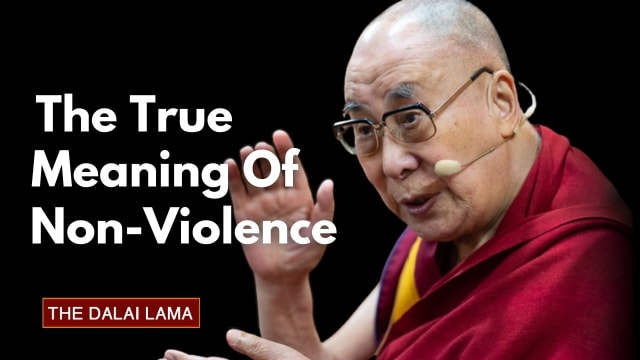
In a short teaching recorded June 25, 2016, the Dalai Lama argues that violence is defined by the mind behind an act, not the act itself. Ha…

8 min read
The True Meaning of Non-Violence: It's Motive, Not Action
Inspire

The True Meaning of Non-Violence: It's Motive, Not Action

In under two minutes, the Dalai Lama redraws the line between violence and non-violence. It runs through the mind, not the act, and a stern …

7 min read
Deva Premal & Miten Australia Tour 2026: Singing Our Prayers
Inspire

Deva Premal & Miten Australia Tour 2026: Singing Our Prayers

Deva Premal and Miten announce their return to Australia in October 2026 for three concerts and a Gayatri Gathering Retreat in Byron Shire.…

6 min read

Continue d’explorer

Poursuis ton chemin

Plus de sagesse et de rassemblements dans tout l’annuaire BrightStar.

Plus d’articles

Parcours toute la bibliothèque d’enseignements, d’entretiens et de guides.

Retour à tous les articles →

Enseignants et artistes

Découvre les lignées, les musiciens et les guides du monde conscient.

Explorer les artistes →

Trouver un événement

Kirtan, retraites, bains sonores, breathwork, festivals — bientôt près de chez toi.

Parcourir les événements →