BrightStar

Parcourir tous les Events

Découvre des rassemblements conscients

events

Yoga
Meditation
Breathwork
Qigong
Tai Chi
Sacred Music
World Music
Medicine Music
Sound Healing
Ecstatic Dance
Destinations populaires
BaliSedonaLos AngelesCosta RicaNew YorkSan FranciscoAustinMiamiJoshua TreeTulum
Voir toutes les catégoriesVoir toutes les destinations

Explorer toutes les fonctionnalités

Des outils puissants pour développer tes événements

Fonctionnalités de la plateforme

Tarification dynamique intelligente
Catégories de billets
Places assignées
Récupération des paniers abandonnés
Récupération des visiteurs
Dons & Prix variables
Système d'affiliation
Scanner de billets
Codes promo
Questions personnalisées
Partage de billets
Ventes additionnelles & Options
Analyses & Rapports
Séquences d'emails
Liste d'attente / Notifier / Rappeler
Personnes & Lieux
Artists & TeachersEvent OrganizersVenues & StudiosKnowledge BaseGlossaryInspiration
Voir toutes les fonctionnalitésÀ propos
TarifsBlog
Language
Saved events
Parcourir tous les événements

events

YogaMeditationBreathworkQigongTai ChiSacred MusicWorld MusicMedicine Music

Destinations populaires

BaliSedonaLos AngelesCosta RicaNew YorkSan Francisco

Personnes & Lieux

Artists & TeachersEvent OrganizersVenues & StudiosKnowledge BaseGlossaryInspiration

Fonctionnalités de la plateforme

Tarification dynamique intelligenteCatégories de billetsPlaces assignéesRécupération des paniers abandonnésRécupération des visiteursDons & Prix variablesSystème d'affiliationScanner de billetsCodes promoQuestions personnaliséesPartage de billetsVentes additionnelles & OptionsAnalyses & RapportsSéquences d'emailsListe d'attente / Notifier / Rappeler
Voir toutes les fonctionnalitésÀ propos
TarifsBlog
ConnexionChercheursCréateurs
  • Parcourir tous les Événements
  • Pour les chercheurs
  • Yoga
  • Méditation
  • Breathwork
  • Qi gong
  • Tai-chi
  • Musique sacrée
  • Musiques du monde
  • Musique médecine
  • Soins sonores
  • Danse extatique
  • Retraites
  • Ateliers
  • Toutes les catégories →
  • Bali
  • Sedona
  • Los Angeles
  • Costa Rica
  • Tulum
  • Byron Bay
  • San Francisco
  • Austin
  • New York
  • San Diego
  • Denver
  • Seattle
  • Portland
  • Miami
  • Toutes les villes →
  • Join the Movement
  • Why we list
  • Sell Globally
  • Pour les créateurs
  • Pour les équipes
  • Pour les écrivains
  • Pour les enseignants
  • Pour les artistes de kirtan
  • Pour les studios
  • Pour les festivals
  • Pour les centres de retraite
  • Pour les associations
  • Ambassadeur de marque
  • Billetterie gratuite
  • Elevate
  • Amplify
  • Réseau de 500K+ acheteurs
  • Récupération des paniers abandonnés
  • Tarification dynamique intelligente
  • Catégories de billets
  • Événements récurrents
  • Places assignées
  • Système d'affiliation
  • Liste d'attente / Notifier
  • Scanner de billets
  • Widget intégrable
  • Diffusion d'événements
  • Messagerie
  • Intégrations
  • Rapports
  • Toutes les fonctionnalités →
  • À propos
  • L'écosystème
  • Blog
  • Glossaire
  • Inspiration
  • Centre d'aide
  • Contact
  • Documentation API
  • Ressources de marque
  • Carrières
  • Presse
  • Conditions d'utilisation
  • Politique de confidentialité

Événements

  • Parcourir tous les Événements
  • Pour les chercheurs
  • Yoga
  • Méditation
  • Breathwork
  • Qi gong
  • Tai-chi
  • Musique sacrée
  • Musiques du monde
  • Musique médecine
  • Soins sonores
  • Danse extatique
  • Retraites
  • Ateliers
  • Toutes les catégories →

Destinations

  • Bali
  • Sedona
  • Los Angeles
  • Costa Rica
  • Tulum
  • Byron Bay
  • San Francisco
  • Austin
  • New York
  • San Diego
  • Denver
  • Seattle
  • Portland
  • Miami
  • Toutes les villes →

Pour les créateurs

  • Join the Movement
  • Why we list
  • Sell Globally
  • Pour les créateurs
  • Pour les équipes
  • Pour les écrivains
  • Pour les enseignants
  • Pour les artistes de kirtan
  • Pour les studios
  • Pour les festivals
  • Pour les centres de retraite
  • Pour les associations
  • Ambassadeur de marque
  • Billetterie gratuite
  • Elevate
  • Amplify

Fonctionnalités

  • Réseau de 500K+ acheteurs
  • Récupération des paniers abandonnés
  • Tarification dynamique intelligente
  • Catégories de billets
  • Événements récurrents
  • Places assignées
  • Système d'affiliation
  • Liste d'attente / Notifier
  • Scanner de billets
  • Widget intégrable
  • Diffusion d'événements
  • Messagerie
  • Intégrations
  • Rapports
  • Toutes les fonctionnalités →

Entreprise

  • À propos
  • L'écosystème
  • Blog
  • Glossaire
  • Inspiration
  • Centre d'aide
  • Contact
  • Documentation API
  • Ressources de marque
  • Carrières
  • Presse
  • Conditions d'utilisation
  • Politique de confidentialité
BrightStar
Téléchargez l'app
Télécharger dans l'App StoreDisponible surGoogle Play
© 2026 BrightStar. Tous droits réservés.
Inspiration

Nāda Yoga, Kīrtan and Rishikesh: A Teacher Revisits Her 2015 Intro

Anandra George
Anandra George
Feb 20, 2015
7 min de lecture

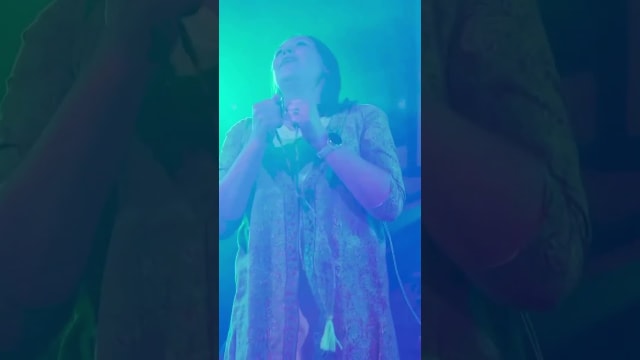
Source : Heart of Sound

Ten years ago, in February 2015, a Rishikesh-based teacher posted a three-and-a-half-minute introduction to the mantra, nāda, kīrtan and bhakti yoga work she was then teaching in the foothills of the Himalayas. The clip is small, and it was never meant as a manifesto. Yet it captures a specific moment in the life of a sound practitioner, a moment when the chanting, the classical singing and the ashram rhythm were all new enough to feel total. Revisited now, with the description she wrote underneath it, the video becomes something more useful than a throwback: a record of how a devotional sound practice gets absorbed, and of what a student can learn when she later looks back and asks what she took in along with the music.

Lecture · 6 sections

What was the video, and why does it matter a decade later?

The video, titled "My first video Intro (10 Years Ago) to our Mantra, Nāda, Kīrtan, Bhakti Yoga RYT200 Rishikesh, India," was uploaded by the Heart of Sound channel under the name of its speaker, Anandra George. It is an introduction to a teacher training program, the kind of short film a school produces to explain what students will learn. Its subject is the combination that gives the program its identity: mantra, the repetition of sacred sounds; nāda yoga, the yoga of sound; kīrtan, communal call-and-response singing of the sacred; and bhakti, the path of devotion that animates all three.

What makes the clip worth a second look is the context she added in the description. She writes that the video was made when she was "nearly fully assimilated into being a 'good Indian girl' and pretty smacked out on the Himālayan āśram life," chanting mantra and practicing Indian classical rāga "6-7 hours per day." That is a striking number, and it tells you the video was filmed inside a total immersion. It was also recorded before the Sacred Sound Stage at the International Yoga Festival, which she dates to 2017.

What is nāda yoga, and why is sound at the center?

Nāda is the Sanskrit word for sound, and in the yoga traditions it carries a particular weight: the idea that sound is not only something we hear but a force that moves through the body and the mind. Nāda yoga is the discipline of working with sound as a path, whether through chanting, singing, listening or attention to subtle resonance. Its place in a teacher training is significant because it asks the student to treat the voice as the instrument, not as a tool for performance. The teacher's job, in that frame, is to hold the sound steady and let it do its work.

Mantra sits close to this idea. A mantra is a sacred syllable, word or phrase repeated, often silently or aloud, to focus attention. In the sound-based trainings that have grown up around modern yoga, mantra is usually taught as a discipline of repetition and precision: learning the exact pronunciation, understanding the Sanskrit, and then sustaining the practice over time. The emphasis is on the ear and the breath, not on a result.

How do kīrtan and bhakti fit together?

Kīrtan is the communal singing of sacred names and verses, usually in call-and-response, where a leader sings a line and the room answers. It is the most visible part of the tradition for people who come to yoga from outside India, and it is also the part most easily reduced to a pleasant group activity. Bhakti is what gives kīrtan its depth. It is the path of loving devotion, the idea that the singer is oriented toward the divine rather than toward self-expression.

The tension in that pairing is one the teacher herself seems to have lived with. Devotion, when it is practiced inside a long-term ashram setting, can come with structures of authority, hierarchy and gendered expectation that are not always visible from the inside. Her later comments name this directly, and they are the most important part of the video's afterlife.

What did the teacher change her mind about?

In the description, Anandra George writes that she has "graduated from a lot of the hierarchical, patriarchal religious overlay that I had unconsciously assimilated into during my long years in India." That sentence is the spine of the whole piece. It does not disown the practice of mantra or kīrtan. It separates the sound itself from the social and religious framing that arrived with it, and it says plainly that some of that framing was absorbed without conscious choice.

"I've graduated from a lot of the hierarchical, patriarchal religious overlay that I had unconsciously assimilated into during my long years in India." — Anandra George, video description, Heart of Sound

She also notes a practical change: "I'm no longer teaching in Rishikesh (since 2020), for one thing." The sentence is brief, but it marks a decade in which the teacher moved on from the place where the video was made, and the practice itself has been reshaped by that move. The description is candid that the clip is a snapshot, and she chose to keep it online "just for posterity."

There is a lesson in that choice for anyone who teaches or studies sound. Practices like mantra and kīrtan are often transmitted inside communities that carry strong assumptions about who leads, who listens and what counts as devotion. A student who arrives young and immersed may take those assumptions along with the chant. Years later, the same student may find that the sound is still useful while the surrounding hierarchy no longer fits.

What does the course promise, and what should a reader check?

The description also advertises the program the video introduces. It calls the course "the world's first entirely sound-based Yoga Alliance approved teacher training RYT course," and it lists sanskrit, mantra, kīrtan, bhakti and nāda yoga as its subjects, taught in Rishikesh with what it describes as "esteemed Indian and international guest lecturers, scholars & performers." It also points to an online sound healing teacher training. These are claims made by the teacher and her channel, and they belong to her. A prospective student should verify current details, curriculum and accreditation directly with the program rather than relying on a clip from a decade ago.

That caution is not a criticism. It is simply how to read an old video well. The most valuable thing the 2015 intro offers is not the pitch but the honesty of the later note: a teacher who spent years inside a tradition, who sang for hours a day, and who now can say which parts of that inheritance she still values and which she has put down.

Where to go from here

If the video has sparked a question about sound practice, start with the terms it uses and learn them in context. Read about nāda as the yoga of sound, about mantra as a repeated sacred sound used to focus the mind, about kīrtan as communal devotional singing and about bhakti as the devotional path that holds them together. Then ask the question the teacher's own reflection invites: when you practice a tradition, which parts are the sound and which parts are the social structure around it? Listen to a range of teachers, compare how they frame devotion and authority, and make those choices consciously. The clip is three and a half minutes long. The question it leaves behind takes a lot longer to answer.

Comments

Loading the conversation…

Avec

Les artistes de cet article

Anandra George
Anandra George
Kirtan Artist & Teacher

Anandra George is a kīrtan artist, Sanskrit mantra teacher and sound yoga pioneer, based in Hawai'i and India, and the founder of Heart of Sound. A yoga therapist certified by the…

Explorer les thèmes
Nada-yogaKirtanMantra-practiceBhakti-yogaRishikesh

Des questions ?

Questions fréquemment posées

Nāda yoga is the discipline of working with sound, from the Sanskrit word nāda meaning sound, as a spiritual path. It can involve chanting, singing, listening and attention to subtle resonance. In teacher trainings it treats the voice as the primary instrument of practice.
A mantra is a sacred syllable, word or phrase repeated to focus the mind, often practiced individually. Kīrtan is communal devotional singing of sacred names and verses, usually in call-and-response between a leader and a group. Bhakti, the path of devotion, is what connects both.
In her video description, Anandra George wrote that she had unconsciously absorbed a hierarchical, patriarchal religious overlay during her years in India, and that she has since moved beyond much of it. She separates the sound practice itself from the social and religious framing that came with it. The description is her own account and does not detail specific events.
According to the description of her 2015 video, she was chanting mantra and practicing Indian classical rāga for 6-7 hours per day while living the Himālayan āśram life. She describes this as a period of near-total immersion.
The video's description says the program covers Sanskrit, mantra, kīrtan, bhakti and nāda yoga, taught in Rishikesh with guest lecturers and performers, and presents it as Yoga Alliance approved. Prospective students should confirm current curriculum, accreditation and schedule directly with the program, as details may have changed since 2015.
Yes. A three-and-a-half-minute introduction titled 'My first video Intro (10 Years Ago)' was posted to the Heart of Sound channel on February 20, 2015. It introduces mantra, nāda, kīrtan and bhakti yoga in a Rishikesh RYT200 context, and the speaker later added reflections in its description.

Continuer la lecture

More from Anandra George

Voir tout
Heart of Sound: Mantra and Nada Yoga Teacher Training
Inspire

Heart of Sound: Mantra and Nada Yoga Teacher Training

Heart of Sound bills itself as the world's first sound-only yoga teacher training. Here is what founder Anandra George says it offers, and w…

6 min read
Om Namah Shivaya and the Yoga of Sound as Mental Digestion
Inspire

Om Namah Shivaya and the Yoga of Sound as Mental Digestion

A close reading of Anandra George's 53-minute Om Namah Shivaya session: the mental-digestion framing, the tongue placement that shapes the s…

10 min read
Jaya Radhe Govinda: The Meaning Behind a Devotional Refrain
Inspire

Jaya Radhe Govinda: The Meaning Behind a Devotional Refrain

A 59-second clip from Radhika Das titled "Jaya Radhe Govinda." This piece unpacks the refrain's meaning and its place in bhakti and kirtan p…

2 min read
Cacao Prayer: The Chant That Travels From Circle to Circle
Inspire

Cacao Prayer: The Chant That Travels From Circle to Circle

A close listen to Cacao Prayer, the chant that has moved from circle to circle with Bruna Bortolato and Mose. Here is how its few lines repe…

5 min read

Continue d’explorer

Poursuis ton chemin

Plus de sagesse et de rassemblements dans tout l’annuaire BrightStar.

Plus d’articles

Parcours toute la bibliothèque d’enseignements, d’entretiens et de guides.

Retour à tous les articles →

Enseignants et artistes

Découvre les lignées, les musiciens et les guides du monde conscient.

Explorer les artistes →

Trouver un événement

Kirtan, retraites, bains sonores, breathwork, festivals — bientôt près de chez toi.

Parcourir les événements →