BrightStar

Parcourir tous les Events

Découvre des rassemblements conscients

events

Yoga
Meditation
Breathwork
Qigong
Tai Chi
Sacred Music
World Music
Medicine Music
Sound Healing
Ecstatic Dance
Destinations populaires
BaliSedonaLos AngelesCosta RicaNew YorkSan FranciscoAustinMiamiJoshua TreeTulum
Voir toutes les catégoriesVoir toutes les destinations

Explorer toutes les fonctionnalités

Des outils puissants pour développer tes événements

Fonctionnalités de la plateforme

Tarification dynamique intelligente
Catégories de billets
Places assignées
Récupération des paniers abandonnés
Récupération des visiteurs
Dons & Prix variables
Système d'affiliation
Scanner de billets
Codes promo
Questions personnalisées
Partage de billets
Ventes additionnelles & Options
Analyses & Rapports
Séquences d'emails
Liste d'attente / Notifier / Rappeler
Personnes & Lieux
Artists & TeachersEvent OrganizersVenues & StudiosKnowledge BaseGlossaryInspiration
Voir toutes les fonctionnalitésÀ propos
TarifsBlog
Language
Saved events
Parcourir tous les événements

events

YogaMeditationBreathworkQigongTai ChiSacred MusicWorld MusicMedicine Music

Destinations populaires

BaliSedonaLos AngelesCosta RicaNew YorkSan Francisco

Personnes & Lieux

Artists & TeachersEvent OrganizersVenues & StudiosKnowledge BaseGlossaryInspiration

Fonctionnalités de la plateforme

Tarification dynamique intelligenteCatégories de billetsPlaces assignéesRécupération des paniers abandonnésRécupération des visiteursDons & Prix variablesSystème d'affiliationScanner de billetsCodes promoQuestions personnaliséesPartage de billetsVentes additionnelles & OptionsAnalyses & RapportsSéquences d'emailsListe d'attente / Notifier / Rappeler
Voir toutes les fonctionnalitésÀ propos
TarifsBlog
ConnexionChercheursCréateurs
  • Parcourir tous les Événements
  • Pour les chercheurs
  • Yoga
  • Méditation
  • Breathwork
  • Qi gong
  • Tai-chi
  • Musique sacrée
  • Musiques du monde
  • Musique médecine
  • Soins sonores
  • Danse extatique
  • Retraites
  • Ateliers
  • Toutes les catégories →
  • Bali
  • Sedona
  • Los Angeles
  • Costa Rica
  • Tulum
  • Byron Bay
  • San Francisco
  • Austin
  • New York
  • San Diego
  • Denver
  • Seattle
  • Portland
  • Miami
  • Toutes les villes →
  • Join the Movement
  • Why we list
  • Sell Globally
  • Pour les créateurs
  • Pour les équipes
  • Pour les écrivains
  • Pour les enseignants
  • Pour les artistes de kirtan
  • Pour les studios
  • Pour les festivals
  • Pour les centres de retraite
  • Pour les associations
  • Ambassadeur de marque
  • Billetterie gratuite
  • Elevate
  • Amplify
  • Réseau de 500K+ acheteurs
  • Récupération des paniers abandonnés
  • Tarification dynamique intelligente
  • Catégories de billets
  • Événements récurrents
  • Places assignées
  • Système d'affiliation
  • Liste d'attente / Notifier
  • Scanner de billets
  • Widget intégrable
  • Diffusion d'événements
  • Messagerie
  • Intégrations
  • Rapports
  • Toutes les fonctionnalités →
  • À propos
  • L'écosystème
  • Blog
  • Glossaire
  • Inspiration
  • Centre d'aide
  • Contact
  • Documentation API
  • Ressources de marque
  • Carrières
  • Presse
  • Conditions d'utilisation
  • Politique de confidentialité

Événements

  • Parcourir tous les Événements
  • Pour les chercheurs
  • Yoga
  • Méditation
  • Breathwork
  • Qi gong
  • Tai-chi
  • Musique sacrée
  • Musiques du monde
  • Musique médecine
  • Soins sonores
  • Danse extatique
  • Retraites
  • Ateliers
  • Toutes les catégories →

Destinations

  • Bali
  • Sedona
  • Los Angeles
  • Costa Rica
  • Tulum
  • Byron Bay
  • San Francisco
  • Austin
  • New York
  • San Diego
  • Denver
  • Seattle
  • Portland
  • Miami
  • Toutes les villes →

Pour les créateurs

  • Join the Movement
  • Why we list
  • Sell Globally
  • Pour les créateurs
  • Pour les équipes
  • Pour les écrivains
  • Pour les enseignants
  • Pour les artistes de kirtan
  • Pour les studios
  • Pour les festivals
  • Pour les centres de retraite
  • Pour les associations
  • Ambassadeur de marque
  • Billetterie gratuite
  • Elevate
  • Amplify

Fonctionnalités

  • Réseau de 500K+ acheteurs
  • Récupération des paniers abandonnés
  • Tarification dynamique intelligente
  • Catégories de billets
  • Événements récurrents
  • Places assignées
  • Système d'affiliation
  • Liste d'attente / Notifier
  • Scanner de billets
  • Widget intégrable
  • Diffusion d'événements
  • Messagerie
  • Intégrations
  • Rapports
  • Toutes les fonctionnalités →

Entreprise

  • À propos
  • L'écosystème
  • Blog
  • Glossaire
  • Inspiration
  • Centre d'aide
  • Contact
  • Documentation API
  • Ressources de marque
  • Carrières
  • Presse
  • Conditions d'utilisation
  • Politique de confidentialité
BrightStar
Téléchargez l'app
Télécharger dans l'App StoreDisponible surGoogle Play
© 2026 BrightStar. Tous droits réservés.
Inspiration

Mamwlad Music Video: Healing Europe's Witch-Burning Wound

LJ
Lyla June
May 3, 2018
7 min de lecture

Source : Lyla June

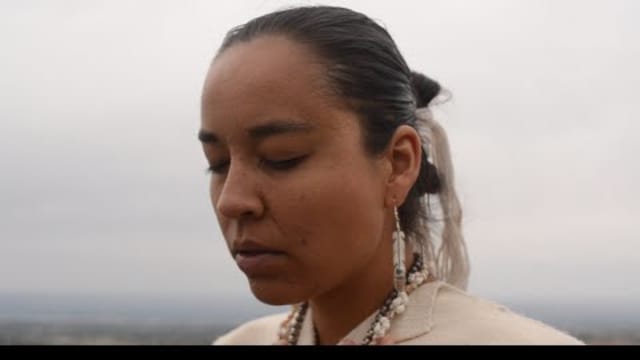
Lyla June's "Mamwlad," released as a music video timed to Beltane in 2018, takes on one of the most grievous chapters of European history: the persecution of people accused of witchcraft, and what those deaths may still be doing to the living. The note that accompanies the video frames the song as a memorial to grandmothers and grandfathers who were burned, drowned, raped, and tortured, and it makes a claim that reaches well past a single piece of music. Europeans, the note argues, have never fully faced, forgiven, or healed from this wound, and the healing could break cycles of untended intergenerational trauma that touch far more people than Europe alone. This piece draws on the release note and credits published with the video, and it tries to explain the ideas that note sets in motion.

Lecture · 8 sections

What is the song Mamwlad about?

The note begins with the artist's identity. Lyla June describes herself as a biracial woman, Native American and European, and says she wrote the song to honor the people her European ancestors harmed in the name of "witchcraft." The song's name is pronounced Mah-Mu-Lahd. The note begins to explain the word as "Mothe," and the copy available for this article cuts off there, so the full meaning should be checked against the complete note on the video's page rather than reconstructed here.

What matters most is the stance. The song is not presented as a lament for distant victims. It is presented as a family matter: the artist's own grandmothers and grandfathers, on the European side of her lineage, are named among those who suffered. That personal claim is what gives the project its weight, and it is why the video reads less like a history lesson and more like a reckoning.

Why does the note call the witch trials a wound Europeans have not healed?

The central move in the note is a reframing of who the accused were. The artist writes, "I know that these people were not evil, but rather were the carriers of Indigenous European knowledge that was demonized by colonizing forces, just as my Native American ancestors were demonized and persecuted."

That sentence does a lot of work. It places the witch persecutions in the same family as the colonization of the Americas: a process of demonizing a people's knowledge and then punishing the people who held it. The parallel is not that the two histories were identical. It is that the same logic, the labeling of inherited wisdom as dangerous, appears on both sides of the ocean. Seen this way, the European witch trials are not an event that happened to someone else's ancestors. They are an act of colonization carried out against Europe's own Indigenous roots.

From there the note makes its most consequential claim: "This is a wound that we as Europeans have yet to heal face, forgive, and heal from." The three verbs are deliberate. Facing the wound means acknowledging it as real. Forgiving it means releasing the anger that keeps it active. Healing means doing the slower work afterward. The note suggests that European descendants have skipped the first two steps, and that the skipping has consequences.

What do the numbers say about the scale of persecution?

The video's description cites an estimated 6 to 9 million women persecuted as "witches" in Europe. The figure is offered as an estimate, and it is worth reading that way. The note's purpose is not to settle a historical count but to insist on the scale of loss, and to make clear that the victims were overwhelmingly women. The description ties the number to the choice of Beltane as a release date, pairing a spring festival with an act of forgiveness on behalf of those women.

The note also points readers toward a documentary on the subject, linking to the National Film Board of Canada's film "The Burning Times." For anyone who wants to see the historical record the song is drawing on, that link is the most direct next step the material offers.

Why does the song link the persecution of women to the wounding of men?

This is the part of the note that may surprise listeners most. It asks not only women and Europeans to heal, but men as well, and it does so through the figure of the men who could not intervene. The note states:

"Our elders have taught us that any assault on the women of a society is also an assault on the men who love them. Imagine having your wife, or daughter burned alive and being restrained from helping her. This is what so many of our grandfathers went through and it drove them purely mad."

(Lyla June, video description, Mamwlad)

The argument here is that the harm was not contained to the people who died. The men who loved them were also injured, made helpless in front of violence they could not stop. The note goes further, calling for prayer "for the soul of the masculine that was tricked into thinking it was insufficient, tricked into thinking it 'failed to protect.'" In this reading, a particular story about masculinity, that a good man protects by force and fails when he cannot, was itself a product of the same violence. The men were not failing. They were being set up to believe they had failed.

That is a sophisticated point, and it's the reason the song resonates beyond its immediate subject. Patterns of self-blame are often the most durable effects of historical trauma, because they keep the wound alive from the inside. The note calls these "psychological tactics to make us hate ourselves across the board," and argues that they have done damage for "too many generations."

How does forgiveness become a method of healing in this song?

Forgiveness in the note is not a request to excuse the perpetrators. It is paired with a different kind of work, which the artist describes this way: "This is healed through self-love and the forgiveness of this unimaginable cruelty of others."

The sequence matters. Self-love comes first, and it is aimed at undoing the internalized shame the note describes. Forgiveness then addresses the cruelty of others, releasing the hold that the old violence still has on the living. The note's last movement is spiritual and declarative: "It is time to throw off these chains and throw off these lies and affirm our sacredness and worth as men and women in the eyes of Creator."

In other words, the note treats healing as a reclaiming of worth. The lies to be thrown off are the ones that told people their ancestors were evil and their men were inadequate. The chains are the inherited shame that makes those lies feel true. Forgiveness is the act that breaks them.

Why release the video at Beltane?

The description opens with the line "This Beltane, we are forgiving the persecution of an estimated 6-9 million women," which makes the release date part of the message. The video was published on May 3, 2018, and the note ties it to Beltane, a spring festival. Choosing a seasonal turning point to mark a act of forgiveness is a way of making the work feel like a ritual rather than a single release, and it signals that the song is meant to be used, not only listened to.

Who made the video?

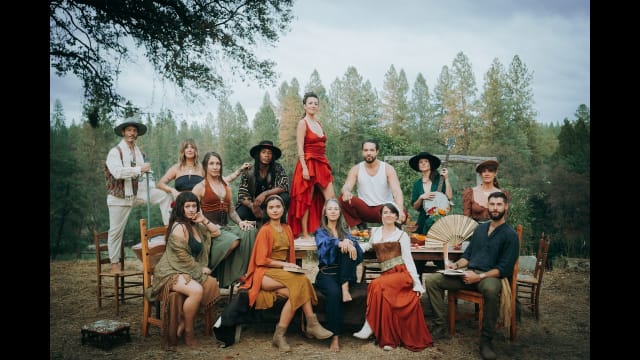
The credits name Jay Jacoby, Craig Whyte, and Michael Clark on cinematography, with Clark also credited as editor. Priscilla Peña is listed as wardrobe supervisor, and Lyla June is credited as composer. The credits are brief, but they show a small, collaborative team building the visual side of a song whose subject is intimate and historical at once.

Where to go from here

The most useful next step is the full release note on the video's page, which carries the complete explanation of the song's name and the rest of the artist's argument. From there, the National Film Board of Canada film "The Burning Times," linked in the description, offers the historical context the song assumes. Read the note alongside that film and the song's central proposition becomes clear: that the witch trials were not a closed chapter, and that facing them honestly, forgiving them, and healing the self-blame they left behind is work the living still have to do.
Comments

Loading the conversation…

LJ
Artist
Lyla June

Watch more from Lyla June on YouTube.

Site web
Explorer les thèmes
MamwladWitch-persecutionIntergenerational-traumaIndigenous-european-knowledgeForgiveness

Des questions ?

Questions fréquemment posées

The name is pronounced Mah-Mu-Lahd, and the release note begins to define it as "Mothe..." in the copy available for this article, which is cut off before the full meaning. The complete definition is in the full note on the video's page.
The video's description cites an estimated 6 to 9 million women persecuted as "witches" in Europe. The figure is presented as an estimate, and the note uses it to emphasize the scale of loss.
The note argues that the accused were carriers of Indigenous European knowledge that colonizing forces demonized, the same logic used against her Native American ancestors. It frames the witch trials as a colonizing act against Europe's own Indigenous roots.
The note describes untended intergenerational trauma as wounds passed down through families and communities, and it claims that healing the European witch-burning wound could break those cycles. It links this to helping not only European people but everyone affected by unresolved trauma.
The note says any assault on the women of a society is also an assault on the men who love them, and it describes men restrained from protecting women they loved. It also argues that the masculine was tricked into believing it had failed to protect, a belief the note treats as a psychological tactic.
The video was published on May 3, 2018, and its description ties the release to Beltane, a spring festival. The note frames the release as a moment of forgiving the persecution of women accused as witches.

Continuer la lecture

More from Lyla June

Voir tout
Indigenous Awakening: Warriors of Love Rise Now
Inspire

Indigenous Awakening: Warriors of Love Rise Now

A song of reclamation and unity: addressing centuries of suppression while calling all nations to awaken together through compassion and tru…

6 min read
Piper (A Dagger & A Poem): A Song for Aliveness and Soil
Inspire

Piper (A Dagger & A Poem): A Song for Aliveness and Soil

Ayla Nereo's music video Piper (A Dagger & A Poem) invokes a figure called Piper through melodic house, conscious dance, and images of f…

9 min read
How Loving Kindness Practice Protects Your Mind
Inspire

How Loving Kindness Practice Protects Your Mind

Explore how metta (loving kindness) meditation builds psychological resilience and protects against suffering through systematic heart-openi…

7 min read
How to Repair Karma and Mend Life's Broken Fabric
Inspire

How to Repair Karma and Mend Life's Broken Fabric

Explore how forgiveness, understanding karma, and repairing relational harm can restore balance in your life and create meaningful healing.…

8 min read

Continue d’explorer

Poursuis ton chemin

Plus de sagesse et de rassemblements dans tout l’annuaire BrightStar.

Plus d’articles

Parcours toute la bibliothèque d’enseignements, d’entretiens et de guides.

Retour à tous les articles →

Enseignants et artistes

Découvre les lignées, les musiciens et les guides du monde conscient.

Explorer les artistes →

Trouver un événement

Kirtan, retraites, bains sonores, breathwork, festivals — bientôt près de chez toi.

Parcourir les événements →