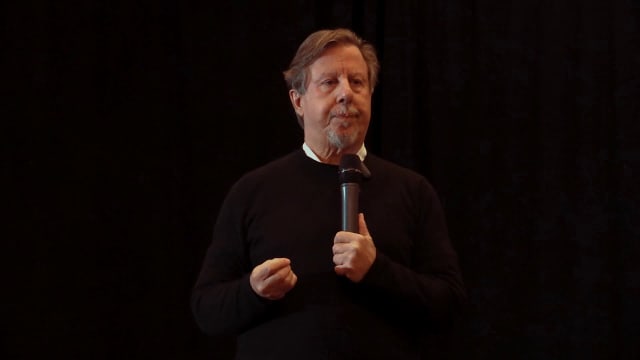
Picture a therapist asking a furious client to do something strange: stop arguing the anger away and find where it lives in the body. Chest, maybe. Then ask it a question and wait for the answer. That small instruction sits at the center of Internal Family Systems, the psychotherapy model developed by Richard Schwartz, Ph.D., after clients began describing inner voices, feelings and figures that his training had taught him to be wary of. In a 2018 interview posted by the IFS Institute, Schwartz talks with interviewer Simon about what parts are, how a voice in your head differs from a part, why he capitalized the word Self, why the model borrows its name from family therapy, and what healing means when the inner world is treated as a family rather than a problem to be fixed. The spine of his account is a counterintuitive discovery: the people he worked with seemed to carry an undamaged core that knew how to heal, and he could not find where it came from.
Whatare"parts"inInternalFamilySystems?
The model starts with a claim about the mind's makeup. Asked what parts are, Schwartz answers plainly: "Parts turn out to be little personalities inside, full range personalities." (Richard Schwartz, IFS Institute interview, 0:11)
He illustrates with anger. If you say you're angry, he explains, the working method is to have you focus on it, notice where you feel it in your body, and ask how you feel toward it. Once you're curious about it and ask it questions, something shifts. If you wait for the answer rather than deciding in advance what the anger means, you may discover it is "much more than a bundle of anger." It may carry fear. It may hold desires for you. It may be trying to protect other parts of you. Schwartz's point is that the emotion is not a single fixed thing but a character with a history and a motive.
He says he stumbled onto this as a young man, around age 32 by his account, when clients started talking about parts. His first reaction was fear, because multiplicity has been pathologized in Western culture. His second was curiosity. What he found, he says, is that these parts "have a strong desire to help us," and that "there aren't any bad ones, it turns out." That claim, that no part is inherently harmful, runs through the rest of the model.
Iseveryvoiceinmyheadapart?
This is the question most people bring to IFS, and Schwartz's answer is direct: "Every voice in your head is an expression of a part." (Richard Schwartz, IFS Institute interview, 2:04) The voice is only one way a part shows up. For some people a part arrives as a thought, for others as an emotion, and for others as a physical sensation.
Simon offered an everyday example, a voice reminding him to pick up the milk. Schwartz's method is the same as before: start with the voice, focus on it, and ask it questions. In his telling, the voice will often explain why it is there, how it has been struggling to keep up with everything you have to remember, and how tired it is or how badly it wants to rest. The reminder becomes a character with a job, not just a nagging thought.
Schwartz is candid that this will sound unbelievable from the outside. "I don't expect people to believe this because I'm saying it's true," he says, adding that he wouldn't have believed it either if he were watching someone describe it. His answer is experiential. He wants people to try the inquiry themselves rather than accept his word. He also notes a practical advantage: because he was trained as a family therapist and had deliberately stayed away from theories of the psyche as a set of interacting selves, he came to clients without a framework to impose. He had to listen to what they said about themselves. In his experience, most people get past the initial "Oh my God, am I multiple?" and begin to say, "Yeah, that sounds right to me."
WhatistheSelf,andwhyisitcapitalized?
The Self is the centerpiece of IFS, and Schwartz is clear that he arrived at it by accident. Many models talk about subpersonalities. What set his apart began in the room. When he tried to hold a dialogue between a client and one part, other parts kept interfering. Family therapists know this problem: when a third person keeps cutting into a two-person conversation, you ask that person to step out. Schwartz applied the same move to the inner family and asked the interfering parts to give the conversation some space.
When he did, something unexpected happened. In his words, a new person "would pop out of nowhere." This person was calm, confident, and curious about the part the client had been talking to. The part, which had been defensive, would soften and become willing to speak about itself and be vulnerable. When he asked who that was, clients gave the same answer: "that's not a part like these others, that's me, that's my Self."
That is why Schwartz capitalizes the word. It distinguishes the Self from the everyday meaning of "self," which refers to the whole person including all the parts. The Self is the part of the system that is not a part. He describes it with what he calls the 8 C words. The ones he names in this interview are curiosity, creativity, clarity, and connectedness. He also describes calm, confidence, compassion, and courage as qualities that show up in the Self. In his observation, the Self often feels compassion for the part it is working with almost immediately. Clarity lets the part change its image of itself so the therapist and client can see it for what it actually is. Connectedness reflects a sense that the Self wants to connect with Self in other parts and in other people, and feels much less isolated when it does.
WhydidSchwartzconcludetheSelfisinborn?
This is the part of the story that surprised Schwartz most, and it is the one that changed his thinking. He had been trained in attachment theory, which suggested that qualities like this kind of steadiness and ego strength come from another person, from a secure relationship. So when he met clients who showed a stable Self, he combed their histories looking for the good parent or caregiver who must have given it to them.
Often, he found no such person. "There was no person in their life they could have possibly gotten that from," he recalls in the interview. Over time he had to shift his view to something more radical: that this Self is inherent in us, "sort of our birthright." Alongside the qualities, he saw a kind of wisdom about how to heal internally and externally. That led to a line he says he may one day print on a bumper sticker: "Self heals," because, in his experience, it is really true. When clients access that state and begin relating to their parts, they often take over the session, and he says he simply gets out of the way, because they really do know how to heal themselves.
He is also honest about the resistance. Both ideas, that we are multiple and that the inner core is undamaged and knows how to heal, sit uneasily with the dominant culture. Schwartz describes it as a tough sell and an uphill battle. That tension is part of why the model asks people to test it rather than believe it.
WhatdoeshealinglooklikeinIFS?
Schwartz describes parts as arriving in the world in one of two states, either dormant or manifest, with natural value in both. Trauma and attachment injuries force them out of those states. Parts then take on extreme beliefs and emotions from those experiences and carry them as if they were true. His examples include "I'm worthless," "the world is really dangerous," "I need to lash out at somebody," and "I need to withdraw all the time."
Healing, in one sense, is the release of these burdens. Schwartz compares the lifting of a burden to a curse being lifted: the part immediately transforms back into its naturally valuable state. That is the first level. The second is what he calls restoring the parts' trust in the leadership of the Self. When something bad has happened, parts often feel they must protect the system, stand in front of the bullet, and take it themselves. In doing so they lose trust in the Self and become, in his phrase, parentified children, carrying roles far too heavy for them.
This is where the name comes from. Schwartz calls the model Internal Family Systems because it mirrors what family therapists see when trauma hits a family. Kids get pushed into rigid roles, and the schools of family therapy have different names for those roles. A good family therapist can make things safe enough for those children to step out of their roles and become who they actually are. Schwartz sees the same dynamic inside. Parts are stuck in roles by their burdens, by the belief that they must protect the system, by the system's increased vulnerability, and by the fact that many are frozen in the scene where they were burdened. As he puts it, they are "frozen in time in these different trauma scenes."
Whycan'twillpowerchangetheseparts?
A common assumption is that a person can simply decide to stop being angry or withdrawn. Schwartz's experience is that this approach fails for parts carrying burdens. Trying to change them by willpower creates polarization inside. A part that rages or withdraws all the time, he notes, often feels fragile because it could explode at any moment, or it fails to change and feels stuck and ashamed. The effort to force a part into a different behavior sets up an internal conflict rather than resolving one.
What works, in his account, is a different kind of attention. Parts need to be understood on their own terms, and the Self has to be the one doing the understanding.
Whathappensduringunburdening?
Schwartz describes the unburdening process through concrete moments in sessions. Parts would say they carried a fireball in their gut, and the natural impulse was to ask them to simply take it off. Some would feel better when asked. But the central insight is that the burden is tied to a specific history, and the release depends on the Self knowing what happened.
He is specific about who does this work. It is not the therapist. "The Self needs to really get what happened" when the part took on the burden. That understanding includes not only the story but the emotions and physical sensations the part felt. The Self goes into the memory, the frozen scene, and takes the part to a safe place. Schwartz says the process continues until the part signals that it has been understood: "Now I feel like you can finally get it." At that point, he says, the burden can be released. Parts that had been carrying something for thirty or forty years can feel the curse lifted and transform.
He acknowledges how this sounds. "It sounds kind of new 'woo woo,' kind of new agey at first," he says. "But it actually does work."
WhatisthedeepershiftIFSpointstoward?
Near the end of the excerpt, Simon asks Schwartz what he would say if he could explain the model in one thing. Schwartz points to the way people identify with their parts and burdens. Down deep, he says, many people believe they are not very valuable. The model's aim is to help them recognize that what they really are is the Self. He connects this to spiritual traditions: "what most spiritual traditions call enlightenment is simply that shift in identity." The excerpt ends before he finishes that thought, so it is worth hearing the full video before drawing conclusions about the rest of his argument.
Wheretogofromhere
The interview is a good introduction, but it is a conversation, not a training. Schwartz himself notes that people often need an experience of the model rather than an explanation. A few practical steps follow from what he describes:
Watch the full 2018 IFS Institute video to hear the rest of Schwartz's answer on identity and enlightenment.
Try the basic inquiry he describes: pick one voice, emotion, or sensation, locate it in the body, get curious, ask it a question, and wait without deciding what it means in advance.
Notice how you respond to the parts that show up. Schwartz's view is that these parts are not bad, even when they feel that way.
If the work stirs up something heavy, especially around trauma, look for a practitioner trained in IFS. The IFS Institute, which describes its mission as bringing more Self leadership to the world, offers training and a practitioner directory on its website, ifs-institute.com.
Schwartz's core message is simple to state and hard to fully accept: the inner family already contains what it needs to heal. The work is less about fixing the parts than about learning to listen to them, and letting the Self lead.
Comments
Loading the conversation…
Transcript
[0:11] Simon: So Dick can you tell us what Parts
are within the IFS System
[0:15] Dick: Parts turn out to be little personalities
inside, full range personalities. So if, for
[0:23] example you got angry and I asked you to focus
on your anger. I'd ask you where you find
[0:30] it in your body and around your body that
you could locate. Maybe it's in your chest,
[0:36] and then I'd ask you how you felt toward it.
To the point where you got curious about it
[0:44] and you asked it some questions. You would
learn if you waited for the answer and not
[0:48] think of what it was saying that it's much
more than a bundle of anger. That it has fear
[0:54] maybe it has desires for you that it's trying
to protect other parts of you. It would have
[1:01] a lot to tell you about itself. So - I just
stumbled onto that discovery when I was very
[1:07] young, maybe 32 - and my clients started talking
about these parts. And I got scared at first
[1:14] because multiplicity has been pathologized
in our culture, and uh, after that I got intrigued
[1:21] and did find that as they started to talk
to them these parts have a lot to tell us.
[1:28] They're not just single emotions. They're
not just a "voice" saying the same thing over
[1:35] and over. They actually have a strong desire
to help us. And there aren't any bad ones,
[1:42] it turns out.
Simon: Can you say a little about the difference
[1:46] between a Part and maybe just a voice in my
head? So if I have a voice that says, "shoot
[1:51] you forgot the milk, today" or "don't forget
this" - Is there any way for me to help identify
[1:58] if that thought is a part? Or if every voice
in my head is an expression of a part?
[2:04] Dick: Every voice in your head is an expression
of a part. And the voice is just one manifestation
[2:10] of it. For other people it might be a thought
or for some people it might be an emotion,
[2:15] or a sensation even. But if you start with
the voice and you just focus on it and ask
[2:22] it some questions. It'll tell you things you
didn't know often. And it will tell you about
[2:27] itself and why it's in there, and how it's
struggled to try and keep up with all the
[2:32] things you have to remember, and how much
it's tired or wants to rest and you know I
[2:38] don't expect people to believe this because
I'm saying it's true. I wouldn't have believed
[2:43] it if I was watching this video and somebody
was talking about it. So maybe later we can
[2:47] actually help people with an experience of
it, a taste of it. But that's what I discovered
[2:53] and because I am trained as a family therapist
I had stayed away from any understanding of
[3:00] the interpsychic process, so when I had clients
start to talk about these things I didn't
[3:06] have any presumptions, and I was forced to
actually listen to what they were saying about
[3:11] themselves. So the model is pretty experience
friendly that way. Most people once they get
[3:17] past the "Oh my God and I a multiple?" They
start to actually say "yeah, that sounds right
[3:25] to me".
Simon: Can you say what Self is within the
[3:29] IFS model?
Dick: Yeah, so Self is now become the centerpiece
[3:33] of the model and I just stumbled onto that.
There are a lot of models that talk about
[3:41] sub-personalities actually. But because of
my family therapy background when I would
[3:48] try to have dialogues between my client and
these parts I started to notice that other
[3:54] parts would interfere. And as I got them to
separate - cause when your working with a
[3:59] family you want to have just two people talk
to each other and if the third starts to interfere
[4:03] you ask them to step out- So I thought maybe
the same operations for this inner family
[4:08] and I would ask the other parts- the interfering
ones to give us some space. And when I would
[4:14] do that it was like a new person would pop
out of no where. And would be calm, and confident
[4:21] and would be curious about the part that they
were talking to and the part would sort of
[4:28] disarm and would be much more willing to talk
about itself and to be vulnerable actually.
[4:37] And when I would ask people about "who was
that". I would say "what part of you was that".
[4:41] They'd say "that's not a part like these others,
that's me, that's my Self". So we came to
[4:47] call that the Self with a capital S to distinguish
it from the common usage of the word self
[4:52] which means the whole person. And as I tried
it with other clients, it was like the same
[4:58] person who would pop up and always undamaged
kind of essence that in addition to be curious,
[5:09] confident, and calm. Often would have compassion,
just immediately for the part that we were
[5:14] working with. For the person that we were
talking to. Would have a lot of courage...so
[5:19] we have what we call the 8 C words that characterize
Self. Curious, Creativity, Clarity, so the
[5:28] part would change its image and we'd see it
much more for what it is actually. And Connectedness,
[5:33] there's a kind of innate desire in Self to
connect to Self in parts and people. And a
[5:42] sense of being much more connected an isolated.
So that was remarkable when I started to see
[5:50] that in a couple clients and I thought well
they must have had really good parenting because
[5:55] how else could they have this kind of ego
strength? And I would comb their histories
[5:59] to find the person that they got it from because
I was trained in attachment theory to believe
[6:04] that to have any of that you had to have gotten
it from another person. From an outside relationship.
[6:11] And many of these clients, there was no person
in their life they could have possibly gotten
[6:18] that from. So I really started to have to
shift at some point to believe that this is
[6:22] just inherent in us. That it's sort of our
birthright. And that in addition to those
[6:30] qualities there's a kind of wisdom about how
to heal internally and externally. So "Self
[6:36] Heals" is a bumpersticker someday I'm going
to print because it's really true. So often
[6:42] as we have clients access that state and then
begin to relate to these parts they sort of
[6:49] take over the session. And I just get out
of the way. Cause they really do know how
[6:54] to heal themselves. And that's a tough sell.
Both the idea that we're multiple, and the
[7:00] idea that this is in there undamaged and knows
how to heal - isn't sin-tonic with our culture
[7:07] at all. So it's been a kind of uphill battle
to convince people.
[7:11] Simon: And what does healing look like within
IFS?
[7:14] Dick: That's another good question. So parts,
as I say, come with us into the world either
[7:23] dormant, or manifest, but they are forced
out of their naturally valuable states by
[7:32] traumas and attachment injuries and they take
on extreme beliefs and emotions from those
[7:38] experiences that they kind of take to heart.
So healing - one way to describe healing - is
[7:47] the release of these burdens, these extreme
beliefs and emotions like "I'm worthless"
[7:51] or "the World is really dangerous", or "I
need to lash out at somebody" or "I need to
[7:59] withdraw all the time"...The release of those
which then almost like a curse is lifted the
[8:06] parts immediately transform into their naturally
valuable states. So that at one level is healing,
[8:12] another level is what we call restoring of
the parts trust in the leadership of Self.
[8:19] Because often if somethings happened to us
the parts feel like they have to protect the
[8:26] Self and they have to stand in front of the
bullet and take it. And then they lose trust
[8:32] in the Self leadership. And they have to become
like parentified children. In fact all these
[8:40] parts - that's why I call it Internal Family
Systems - it's sort of like in families - especially
[8:48] where there's been trauma - kids get forced
into kind of rigid roles and the different
[8:54] schools of family therapy have different names
for those roles. And then a good family therapist
[8:59] can come in and make things safe for them
to step out of those roles and to be who they
[9:02] actually are. To me that's the same as these
parts - they're really stuck in these roles,
[9:08] by these burdens, by the belief that they
have to protect the system by the fact that
[9:14] the system is now much more vulnerable and
by the other fact that many of them are frozen
[9:22] in the scene in which they got burdened. So
they're frozen in time in these different
[9:27] trauma scenes. So as I explored it became
clear that the idea that people can just change
[9:36] these things that are causing their symptoms,
causing them to act out, causing them to explode
[9:42] in rage or withdraw all the time, by willpower
- it just creates a lot of polarization inside
[9:50] of people. Either they succeed, in which case
they're sitting on all this stuff, and they
[9:57] feel delicate because they could explode all
the time. Or they don't succeed and they feel
[10:02] totally like failures because they should
be able to - everyone says "why can't you
[10:08] stop". So it turns out these parts generally
can't change until what they protect have
[10:16] been healed and the system isn't so vulnerable
and until they've unloaded these extreme beliefs
[10:22] and emotions they've been carrying.
Simon: And what does the process of unloading
[10:27] look like?
Dick: Ok, so when I was exploring all of this,
[10:34] we would run into this. Parts would actually
say I carry this fireball in my gut and it's
[10:39] driving me to do these things or there's this
weight on my shoulders. We started having
[10:44] them just take it off. Just see how it feels,
and they would feel better, but it would be
[10:48] back the next session. So over time, I learned
that first of all they need to feel like the
[10:57] Self - not the therapist- but the Self needs
to really get what happened when they picked
[11:03] up these burdens in the past. So you become
a compassionate witness to your own history.
[11:08] Not only the video of the history - but also
the emotions that part felt or the sensations.
[11:15] And different parts need different things
to feel witnessed. But if you can do that
[11:21] to the point where the part says: "Now I feel
like you can finally get it". Then that's
[11:28] a huge release in most of these parts and
they're still frozen in time. So another step
[11:34] is to have you, the Self, go into the scene
and take the part to a safe place. At which
[11:40] point they're usually ready to let go of these
emotions and beliefs they've been carrying
[11:46] for some times 30 - 40 years. And they feel
like a curse is lifted, will transform. So
[11:54] that's what it seems to take. This is again
through years of trial and error and it all
[12:01] sounds kind of new "woo woo" kind of new agey
at first. But it actually does work.
[12:07] Simon: What would you say is the heart or
the core tenant of IFS that kind of fuels
[12:13] everything? If I was to know one thing about
it and only one thing what would that be?
[12:19] Dick: I would say that we aren't who we think
we are. Cause we tend to identify with the
[12:25] parts and their burdens. Down deep inside
believe basically we're not very valuable
[12:32] or I'm really dangerous or whatever the part
is that often becomes our identity. And actually
[12:42] what most spiritual traditions call enlightenment
is simply that shift in identity. Shift in
[12:48] your center of inner gravity from these parts,
and their beliefs to knowing that this self
[12:55] I've been describing is who you really are.
And that is quite liberating and in addition
[13:03] to knowing that that's who you are that that
self can lead both internally and externally
[13:10] in a much better way than these parts can
and will create harmony at both levels. So
[13:16] I guess to answer your question that's what
I would say.
[13:19] Simon: And how does IFS differ from some of
the other forms of therapy that people might
[13:24] be introduced to? What is - How does IFS maybe
differ or take a different approach to the
[13:30] internal system?
Dick: Yeah, well most other forms of therapy
[13:33] are based on this mono-mind idea. That we
just have one mind, which I believe is a myth.
[13:40] And when you think of that way than there's
only a limited range you have for having people
[13:45] relate to their emotions and their thoughts
and their urges and their impulses and all
[13:50] of that. Cause if that's the way you think
of them as random impulses than - you know-
[13:57] you gonna try to control them, your gonna
try - if you think of it as irrational thought-
[14:02] your gonna try to correct that. If you think
of it as an out of control impulse your gonna
[14:07] try and you know just use your willpower to
control it. And I did that in the beginning.
[14:17] Finding that it just made them more extreme.
And it isn't until they're actually considered
[14:23] a personhood that you'll have compassion for
them and you'll relate to them in a different
[14:28] way. They way you would to a suffering being
on the outside. I had a conversation once
[14:34] with the Dalai Lama once, the enlightenist,
saying you asked people to go with their external
[14:41] enemies with compassion why don't you know
that with your internal enemies. Because he
[14:46] talks about that there are these conflictive
emotions that we have to control and so on.
[14:52] SImon: Greed and Anger and....
Dick: Yeah. Those things. So it turns out
[14:57] that greed and anger are just parts that are
trying their best. And they need compassion
[15:03] and the more you attack them or the more you
ignore them, the stronger they get. And the
[15:08] more they try to take over. So, most therapies
are based on that. There are a few that actually
[15:16] take this multiplicity of the mind seriously
and find pretty similar results or at least
[15:23] a similar view of what these parts are as
you kind of get to know them. But the way
[15:31] I judge a therapeutic system is how it teaches
you to relate to these - to your thoughts
[15:37] and emotions which are coming out of these
different parts. And not that many have a
[15:42] real compassionate take on it. Mindfulness
has been a big step forward in my mind because
[15:49] rather than what we were talking about - judging
them, or stifling them, you just separate
[15:57] and you observe them and you kind of accept
them. So IFS can be seen as a next step. So
[16:05] separating-noticing them- is great. Because
that is way to access Self and people do feel
[16:13] some of these C-word qualities I've been talking
about when they're practicing mindfulness.
[16:20] But it isn't necessarily compassionate to
watch suffering beings parade by. Just passively
[16:26] observing them. So people generally have an
impulse to actually go to them, and want to
[16:32] hold them and hug them and care for them.
And so that's what we do. So that's the next
[16:37] step is to actually begin interacting with
them like a good leader, a good parent, getting
[16:42] to know them. Honoring them for their service.
Learning about what they protect. Negotiating
[16:50] permission to go to what they protect. All
of that from a kind of mindful place, and
[16:57] so mindfulness practice is very complementary.
Internal Family Systems (IFS) is a psychotherapy model developed by Richard Schwartz, Ph.D., based on the idea that the mind contains multiple parts, each with its own feelings, beliefs, and motives, plus a core Self that can lead them. Schwartz says the model grew out of clients describing their inner voices and emotions as characters with things to say. The goal is to help parts release the extreme burdens they carry from trauma so they can return to their natural, valuable roles.
According to Richard Schwartz, every voice in your head is an expression of a part, and the voice is only one way a part can show up. Others experience parts as thoughts, emotions, or physical sensations. To learn more about a voice, you focus on it and ask it questions, then wait for its answer.
The capital S distinguishes the Self from the everyday meaning of self, which refers to the whole person including all their parts. Schwartz says he discovered the Self when interfering parts stepped aside and a calm, curious, confident presence emerged. Clients consistently described it as "that's me, that's my Self," not as another part.
Schwartz named the model after the family systems approach in family therapy, where children are often pushed into rigid roles by trauma and a good therapist can make it safe for them to step out. He sees the same dynamic inside the mind, where parts become stuck in roles and frozen in the scenes where they were burdened. The name reflects that the inner world is organized like a family.
Unburdening is the process of releasing the extreme beliefs and emotions that parts have taken on from traumas and attachment injuries, such as "I'm worthless" or "the world is really dangerous." In Schwartz's description, the Self goes into the frozen memory, understands what happened, and takes the part to a safe place. When the part feels understood, the burden can be released and the part returns to its natural state.
Schwartz says there are no bad parts, and that he initially felt fear about multiplicity because the culture has pathologized it. He describes parts as having a strong desire to help and says that many people, once past the initial shock, come to recognize the model as describing their experience. He treats multiplicity as a normal feature of the mind rather than a disorder.
This interview does not address self-directed practice, so it cannot settle that question. It does describe a basic inquiry, locating a part in the body, getting curious, and asking it questions, that people can try themselves. For trauma or deeper unburdening work, the IFS Institute points people toward trained practitioners through its directory.