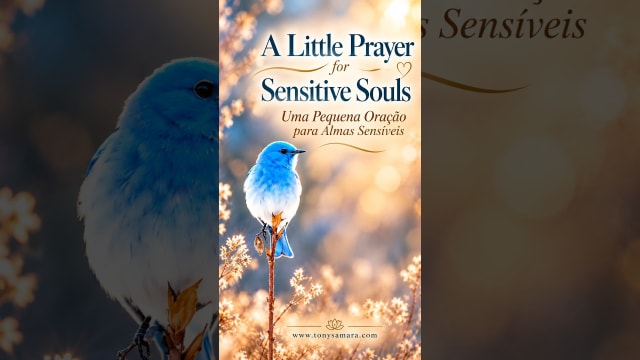
Picture a kitchen table at seven in the morning, a mug going cold, and a phone propped against the sugar bowl. A soft bell sounds, then a low pad of music, and a calm voice says, "I invite you now to settle into these affirmations. Here to support your immune system." That opening line, at about the two-second mark of Glenda Cedarleaf's video "Immune Support Affirmations | Gentle Encouragement for Sensitive Souls," sets the terms for everything that follows: a spoken-word practice built on present-tense "I" statements, laid over ambient music, meant to be heard in a quiet moment rather than studied. This piece looks at how that language is constructed, what its images are doing, and where a listener should draw the line between encouragement and medical care.
The track is a sequence of short declarative lines, each one spoken slowly with room for music to fill the gaps. Almost every sentence is written in the first person and the present tense: "My body already knows how to move toward balance." "I pace myself." "I rest." The grammar is doing real work. An affirmation is not a report about the world; it is a sentence the listener is invited to try on, to say silently along with the voice, and to let become a little more true each time it is heard.
That is also why the track is built the way it is. Affirmation practice, at its most useful, depends on repetition and on lines simple enough to remember while making tea. Cedarleaf's sentences are short, mostly one clause long, and they circle back to a few key ideas: trust, safety, rest, boundaries, choice. A listener who hears the track more than once will start to recognize the handholds before the voice reaches them.
The first substantive lines are not commands. They are statements of trust: "I now trust that my body has an innate wisdom." Around the 1:12 mark comes a shift in register: "My body deserves kindness. I give my body permission to rest. And restore." The sequence is worth noticing. Before the track asks for anything, it establishes that the body is not an opponent to be managed. It is a system that, in the track's framing, already knows how to find its way toward balance.
The next move, around 1:27, narrows the focus to the nervous system: "I give my nervous system opportunities to experience safety. In this moment, I am safe enough to rest." The phrase "safe enough" is a considered choice. It does not claim the listener is in a perfectly safe world. It makes a smaller, more achievable claim about this moment, which is the only moment an affirmation can actually address. For sensitive listeners, who may already be running on alert, that modesty matters. A line that promises total safety is easy to dismiss; a line that asks only for enough safety to rest is easier to receive.
Pacing is the other recurring theme in this early stretch. "I intuitively know how to pause and give myself space. For healing. I pace myself." The track keeps returning to the idea that healing unfolds on its own schedule: "I allow healing to unfold in the ways that are possible for me." That phrasing quietly releases the listener from a common trap, the sense that recovery is a test to be passed on a deadline.
Around the 3:40 mark, the track introduces its most vivid image: "I imagine my gut with healthy boundaries so that it protects the rest of my body from toxins." This is the kind of line that rewards a slower reading. The track does not explain the image or support it with any claim about physiology, and nothing in the material should be read as one. What it does is give the listener a concrete picture of boundaries, something that can be visualized, held, and returned to, rather than an abstract instruction to "be healthy."
The image then broadens into a theme of discernment: "My innate wisdom knows how to discern what is healthy for my mind, body, and spirit. Just as it also knows how to shield me from input that is not mine to take in." The phrase "not mine to take in" is a useful one for a sensitive listener. It treats the body and mind as systems that can receive things selectively, and it names that selectivity as a form of self-respect rather than rigidity. Later, at about 5:00, the track returns to the same idea in a more emotional key: "I choose to embrace my inner wisdom and power as I filter out all that would sabotage the health of my body, mind, and spirit."
One of the more distinctive ideas in the track arrives around 2:25: "Each healthy choice becomes a beautiful ritual rather than simply a task." The track follows it immediately with an example: "Drinking pure water becomes an act of receiving the sacred gift of life." Whatever one thinks of the wording, the principle is clear. A task is something to finish; a ritual is something to attend to. A listener who has been told for years to drink water, rest, and eat well may find that reframing changes the emotional texture of those habits, even if the habits themselves stay the same.
This is the craft move that separates an affirmation from a to-do list. The track is not asking the listener to do more. It is asking them to notice differently what they already do, and to bring a bit more care to it.
The middle of the track deals directly with the feeling that tends to surround illness and long-term health concerns: worry. "When difficult scenarios come my way, I can trust I'll find my answers and respond with grace and confidence." Then comes a short, firm sequence: "I choose peace over worry. I let go of things I cannot control."
The most important passage may be the one about overwhelm, around 5:43: "When I feel overwhelmed, I pause and fill my heart and soul with healing, compassionate energy. I rest. I grieve. I move my body with love." The inclusion of grief is notable. Many wellness recordings skip past sadness toward uplift. This one gives it a line of its own, and places it alongside rest and movement as a legitimate response. For listeners who are living with ongoing health challenges, that permission may matter more than any single affirmation about strength.
The track then offers a menu of ways to return to steadiness: "I immerse myself into music. I meditate or pray. I am creative." Its last worry-related line is a reminder that the cycle can be interrupted: "I choose not to stay stuck in the cycle of worry. I trust the process and move through it."
At about 7:05, the voice announces a closing reading: "We close now with this quote from Maria Sabina." The video's description names the source as Oaxacan poet Marina Sabina, and the spoken text is the track's closing passage, which runs from "Speak your truth. Live in your power. Create your life," through "Never abandon yourself. And when you do, make sure you leave a light to guide you back home," and on to the lines that give the video its title. "Cure yourself with the light of the sun and the rays of the moon. With the sound of the river and the waterfall. Jump. Dance. Sing." The final phrase, at about 8:24, is "Heal yourself with a beautiful love and always remember you are the medicine."
"Cure yourself with the light of the sun and the rays of the moon. With the sound of the river and the waterfall. Jump. Dance. Sing." — Glenda Cedarleaf, reading closing text in her affirmation track (around 8:00)
The ending works because it moves the locus of healing away from outside authority and back toward the listener's own life: light, water, movement, song, love. Whatever a reader thinks of the poetic framing, the message is consistent with the rest of the track. The body already knows the way. The listener's job is to create conditions for that knowledge to show up.
The video's own description offers the most important guidance, and it deserves to be read in full: "These affirmations are offered for encouragement, reflection, and emotional well-being. They are not a medical treatment or a substitute for professional medical advice or care." That line matters most for anyone living with an autoimmune condition or managing a serious illness. An affirmation can be a source of calm, a daily anchor, or a reminder to rest. It cannot stand in for diagnosis, monitoring, or treatment.
Within those limits, the description suggests practical ways to use the track: "in the morning as a gentle intention for your day, during a quiet break, or whenever you need a few moments of encouragement." It also invites repeat listening: "Return to these affirmations whenever they feel supportive to you." The production credits in the description, which list meditation chimes by Christopher Lloyd Clarke, "Beautiful Female Singing" by Oli Bryson, and "Floating Angels" by Jeff Woodall, are a reminder that the track is a produced piece of audio, shaped as much by sound as by words.
If this track resonates, the most useful next step may be to listen once without trying to believe anything, simply letting the sentences land. On a second listen, try saying a few lines silently in your own voice and notice which ones feel true, which feel like wishful thinking, and which feel too big for this particular day. Then consider writing two or three of your own affirmations in the same form: first person, present tense, specific enough to picture, and modest enough to say before breakfast.
For any health concern, the track's own note points the way: encouragement and reflection can sit beside professional medical care, but they do not replace it. Let the words be company on the hard mornings. Let the medical team handle the medicine.