BrightStar

Parcourir tous les Events

Découvre des rassemblements conscients

events

Yoga
Meditation
Breathwork
Qigong
Tai Chi
Sacred Music
World Music
Medicine Music
Sound Healing
Ecstatic Dance
Destinations populaires
BaliSedonaLos AngelesCosta RicaNew YorkSan FranciscoAustinMiamiJoshua TreeTulum
Voir toutes les catégoriesVoir toutes les destinations

Explorer toutes les fonctionnalités

Des outils puissants pour développer tes événements

Fonctionnalités de la plateforme

Tarification dynamique intelligente
Catégories de billets
Places assignées
Récupération des paniers abandonnés
Récupération des visiteurs
Dons & Prix variables
Système d'affiliation
Scanner de billets
Codes promo
Questions personnalisées
Partage de billets
Ventes additionnelles & Options
Analyses & Rapports
Séquences d'emails
Liste d'attente / Notifier / Rappeler
Personnes & Lieux
Artists & TeachersEvent OrganizersVenues & StudiosKnowledge BaseGlossaryInspiration
Voir toutes les fonctionnalitésÀ propos
TarifsBlog
Saved events
Parcourir tous les événements

events

YogaMeditationBreathworkQigongTai ChiSacred MusicWorld MusicMedicine Music

Destinations populaires

BaliSedonaLos AngelesCosta RicaNew YorkSan Francisco

Personnes & Lieux

Artists & TeachersEvent OrganizersVenues & StudiosKnowledge BaseGlossaryInspiration

Fonctionnalités de la plateforme

Tarification dynamique intelligenteCatégories de billetsPlaces assignéesRécupération des paniers abandonnésRécupération des visiteursDons & Prix variablesSystème d'affiliationScanner de billetsCodes promoQuestions personnaliséesPartage de billetsVentes additionnelles & OptionsAnalyses & RapportsSéquences d'emailsListe d'attente / Notifier / Rappeler
Voir toutes les fonctionnalitésÀ propos
TarifsBlog
ConnexionChercheursCréateurs
Tibetan BuddhistOm Mani Padme Hum · Om Mani Padme Hum · Om Mani Padme Hum · Om Mani Padme Hum ·
  • Parcourir tous les Événements
  • Pour les chercheurs
  • Yoga
  • Méditation
  • Breathwork
  • Qi gong et tai-chi
  • Tai-chi
  • Musique sacrée
  • Retraites
  • Ateliers
  • Toutes les catégories →
  • Bali
  • Sedona
  • Los Angeles
  • Costa Rica
  • Tulum
  • Byron Bay
  • San Francisco
  • Austin
  • Toutes les villes →
  • Pour les créateurs
  • Pour les équipes
  • Pour les écrivains
  • Pour les enseignants
  • Pour les artistes de kirtan
  • Pour les studios
  • Pour les festivals
  • Pour les centres de retraite
  • Pour les associations
  • Ambassadeur de marque
  • Études de cas
  • Billetterie gratuite
  • Elevate
  • Amplify
  • Réseau de 350K+ acheteurs
  • Récupération des paniers abandonnés
  • Tarification dynamique intelligente
  • Catégories de billets
  • Événements récurrents
  • Places assignées
  • Système d'affiliation
  • Liste d'attente / Notifier
  • Scanner de billets
  • Widget intégrable
  • Diffusion d'événements
  • Messagerie
  • Intégrations
  • Rapports
  • Toutes les fonctionnalités →
  • À propos
  • L'écosystème
  • Blog
  • Glossaire
  • Inspiration
  • Centre d'aide
  • Contact
  • Documentation API
  • Ressources de marque
  • Carrières
  • Presse
  • Conditions d'utilisation
  • Politique de confidentialité

Événements

  • Parcourir tous les Événements
  • Pour les chercheurs
  • Yoga
  • Méditation
  • Breathwork
  • Qi gong et tai-chi
  • Tai-chi
  • Musique sacrée
  • Retraites
  • Ateliers
  • Toutes les catégories →

Destinations

  • Bali
  • Sedona
  • Los Angeles
  • Costa Rica
  • Tulum
  • Byron Bay
  • San Francisco
  • Austin
  • Toutes les villes →

Pour les créateurs

  • Pour les créateurs
  • Pour les équipes
  • Pour les écrivains
  • Pour les enseignants
  • Pour les artistes de kirtan
  • Pour les studios
  • Pour les festivals
  • Pour les centres de retraite
  • Pour les associations
  • Ambassadeur de marque
  • Études de cas
  • Billetterie gratuite
  • Elevate
  • Amplify

Fonctionnalités

  • Réseau de 350K+ acheteurs
  • Récupération des paniers abandonnés
  • Tarification dynamique intelligente
  • Catégories de billets
  • Événements récurrents
  • Places assignées
  • Système d'affiliation
  • Liste d'attente / Notifier
  • Scanner de billets
  • Widget intégrable
  • Diffusion d'événements
  • Messagerie
  • Intégrations
  • Rapports
  • Toutes les fonctionnalités →

Entreprise

  • À propos
  • L'écosystème
  • Blog
  • Glossaire
  • Inspiration
  • Centre d'aide
  • Contact
  • Documentation API
  • Ressources de marque
  • Carrières
  • Presse
  • Conditions d'utilisation
  • Politique de confidentialité
BrightStar
© 2026 BrightStar. Tous droits réservés.
Inspiration

How Sleep, Meditation, and StrengthTraining Shape Your Day

JS
Jay Shetty
Aug 31, 2026
7 min de lecture
À regarder · 8

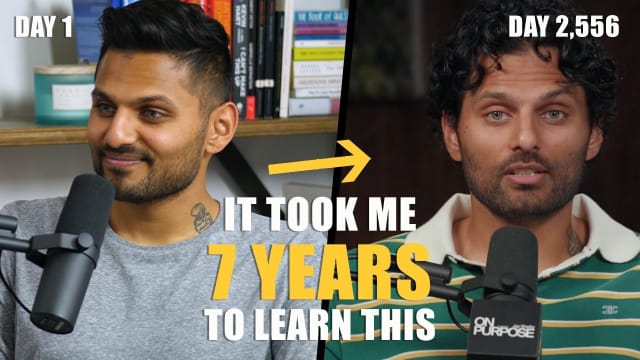
The first thing you hear when you wake up shapes the entire day. For most people, it's the voice in their head saying "go back to bed." Jay Shetty has spent the last two decades building a morning practice that flips this narrative—one that treats the early hours as the only part of the day you fully control. The payoff isn't about becoming a 4 a.m. riser (those days, he admits, are long gone). It's about creating a foundation so solid that whatever chaos arrives by noon feels manageable.

Lecture · 7 sections

Sleep as the Core Pillar

Most people frame health as a three-way race: eat better, move more, meditate harder. Shetty inverts the hierarchy. "I think about sleep as the core pillar of health," he explains. "If you're trying to solve your health and well-being, the first thing you should try and fix is your sleep."

The logic is subtle but powerful. When you sleep poorly, your body desperately seeks quick energy—sugars, carbs, fats. Your brain screams for comfort. The afternoon slump feels inevitable. But when you sleep well, something shifts. You naturally crave vegetables and proteins. You have enough energy to actually want to work out. And when you exercise and eat well, you feel so much better at the end of the day that sleep comes naturally. It becomes a self-reinforcing cycle, not a daily fight.

For those who struggle to get out of bed, Shetty offers one of his most practical hacks: record an alarm with your own voice. "When you wake up in the morning, the first thing you hear in your mind is your voice that says, 'Go back to bed. You're tired.' You've got a voice in your head anyway," he says. "Record an alarm so that when it goes off, it's the opposite: 'I can't wait for today. I'm grateful for today. I'm excited for what I've got coming up.'" It rewires the first thought of the day from resignation to intention.

The 90-Minute Meditation Practice

Shetty wakes around 6:00 to 6:30 a.m. on weekdays and begins with a simple anchor: be where your feet are. Everything is competing for attention—phone notifications, worries about the day ahead, the habitual mental sprawl. The mind is rarely present in the moment. So the first practice is to call it home.

He often starts by getting outside, catching fresh air and morning light. This simple act carries centuries of intention. When he lived as a monk, Shetty practiced Surya Namaskar—sun salutations, an honoring of the sun. That practice of kickstarting the circadian rhythm through early sunlight has existed for hundreds of years, grounded in biology as much as spirituality.

Then comes meditation: 90 minutes, broken into three distinct sections.

Breathwork calms the nervous system. A few minutes of intentional breathing can dissolve the cortisol spike of waking up.

Visualization rehearses the day ahead. If Shetty has a big podcast recording coming up or an important guest, he doesn't visualize a perfect result. Instead, he visualizes the process—meeting the guest, being fully present in conversation, listening rather than performing. This is rehearsal for presence, not a thought experiment about success.

Mantra—the repetition of sacred sound—is the primary form of meditation in Eastern traditions. Shetty practices it on beads, engaging multiple senses: touching the beads, hearing the sound, speaking the mantra aloud, sometimes lighting incense. "The best types of meditations engage all your senses," he says. The sensory engagement is what keeps the mind tethered when it wants to wander.

Here's the candor: Shetty has meditated for 90 to 120 minutes every day for 20 years, and it's still hard. There are still mornings when he's ready to quit after 17 minutes. Breaking the practice into three phases is what makes that sustainable. And for beginners, he has a clear warning: don't attempt 90 minutes. Start at 7 to 10 minutes. That's the sweet spot. A brutal first experience will kill the practice before it starts.

There's also a misconception to unwind: the goal of meditation is not an empty mind. "I think it's pretty much impossible to have an empty mind," Shetty says. The real goal is one-pointed attention—bringing a wandering mind back to breath, mantra, or sensation over and over. That's the whole practice.

Strength Training as an Energy Generator

By 8:00 a.m., meditation winds down and the body demands movement. In LA, Shetty follows a structured split: two push days, two pull days, and one leg day. The work is specific—dips, single-arm chest presses, incline barbell bench presses, weighted chain side planks. The intensity is real.

But the deeper insight isn't about the exercises. It's about when to do them. "I used to believe that I could only work out when I had energy," Shetty reflects. "I realized it wasn't the case. Working out gave me more energy."

This flips the common excuse: I'll exercise once I feel better. In truth, exercise is what creates the feeling. When Shetty travels and skips training, he ends up ordering pizza and fries at midnight—not out of depravity but out of genuine exhaustion. His body is searching for energy anywhere it can find it. But a morning workout generates a surplus of vitality that carries through the day, making unhealthy choices less magnetic.

Diet: The Oats Discovery

Breakfast was a long struggle. Shetty would end up either sluggish or bloated until he discovered, through an allergy test, a slight intolerance to oats. For years he'd been eating oatmeal every morning, unknowingly triggering inflammation. Once he removed oats, the picture cleared. He now turns to protein shakes with simple ingredients: protein powder, water, sometimes greens. The formula works because it doesn't leave him searching for energy mid-morning.

In the kitchen, turmeric and ginger are staples. Anti-inflammatory, nutrient-dense, they support both recovery and immune function. The principle is consistency: small, effective choices repeated daily.

Skincare as a Completion Ritual

After the workout comes a shower and skincare routine. This might seem like cosmetic detail, but Shetty treats it as part of the morning's coherence—a transition from the body's work into the mind's work. Cleanser, vitamin C serum, moisturizer, sunscreen, lip balm. The ritual marks a threshold: the internal work of meditation and the external work of training are complete. Now the day proper begins.

The Architecture of Control

What makes this routine resilient isn't the specific practices—plenty of people meditate or strength train—but the way they're woven together. Sleep feeds nutrition. Nutrition enables exercise. Exercise ensures sleep. Meditation teaches the mind to stay present when stress arrives (and it always does). By 9:00 a.m., having controlled the controllables, Shetty meets the unpredictability of the day from a place of genuine stability.

"A morning routine is critical in order to set yourself up for the day," he says at the outset. "It's the part of the day you control. Control it as well as you can to make it as effective as you can so that you feel rested, calm, ready, and grounded for the day ahead."

Where to go from here

If you're starting a morning practice, begin with sleep. Track it for a week. Notice how your food cravings and energy shift. Then add meditation—not 90 minutes, but 7 to 10 minutes of breath or mantra. Record your own alarm voice. Add movement that feels sustainable, not punishing. The goal isn't to copy Shetty's routine exactly; it's to build your own architecture of control. The morning is the only time of day you fully own. Make it count.

Transcript

[0:00] A morning routine is critical in order

[0:02] to set yourself up for the day. It's the

[0:04] part of the day you control. Control it

[0:07] as well as you can to make it as

[0:08] effective as you can so that you feel

[0:11] rested, calm, ready, and grounded for

[0:13] the day ahead.

[0:16] There are upgrades and updates in my

[0:19] morning routine.

[0:20] I focus on meditation, exercise, diet,

[0:24] and sleep. If I can set myself up for a

[0:26] strong foundation, I'm ready to take on

[0:29] the day no matter what may come.

[0:32] Every day, every morning, I wake [music]

[0:34] up at 4:00 a.m.

[0:36] No, I don't.

[0:38] Those days are long gone. I wake up

[0:40] around 6:00 to 6:30 a.m. on a weekday

[0:42] and around 7:00 or 8:00 if I'm lucky

[0:45] [music]

[0:45] on a weekend. If I could lie in till

[0:47] noon on a weekend, I would definitely do

[0:50] it. [music] I have experienced an

[0:51] incredible connection between sleep,

[0:54] exercise, diet, [music] and meditation.

[0:57] And here's how I think about it. I think

[0:58] about sleep as the core pillar of

[1:01] health. If you're trying to solve your

[1:02] health and well-being, the first thing

[1:04] you should try and fix is your sleep.

[1:06] And the reason I say that is because

[1:07] when you sleep well, you now don't crave

[1:10] foods that are quick sources of energy

[1:13] but aren't really great for your health.

[1:15] So, when I sleep poorly, I'm reaching

[1:17] for sugars for energy. I'm reaching for

[1:19] carbs and fats to make me feel better to

[1:21] get through [music] the rest of the day.

[1:23] When I sleep really, really well, I'm

[1:24] naturally turning to veggies, proteins,

[1:27] healthier foods because I don't need

[1:29] that extra energy from food. Now, when I

[1:31] sleep well, I also have energy to want

[1:33] to work out. And then when I go and work

[1:36] out and I'm eating well, I now feel

[1:37] better at the end of the day and then I

[1:38] naturally feel tired. I'm really lucky.

[1:41] I don't snooze. I don't struggle to get

[1:43] out of bed in the morning. But if you

[1:44] are someone who struggles to do that,

[1:46] this is one of my favorite hacks. Record

[1:48] an alarm with your voice because see,

[1:51] when you wake up in the morning, the

[1:52] first thing you hear in your mind is

[1:53] your voice that says, "Go back to bed.

[1:55] You're tired. Give yourself some more

[1:57] time." So, you've got a voice in your

[1:59] head that's talking to you anyway.

[2:00] Record an alarm clock so that when it

[2:02] goes off, it's the opposite. It's the

[2:03] voice that says, "I can't wait for

[2:05] today. I'm grateful for today. I'm

[2:06] excited for what I've got coming up

[2:08] today." Whatever it is that you want to

[2:09] program your mind to think [music] of

[2:11] first thing in the morning instead of

[2:13] I'm tired, go back to bed, snooze. I

[2:15] promise you it'll work. Give it a go. I

[2:18] generally wake up without an alarm, and

[2:19] I'll sleep between 7 to 8 hours any

[2:22] given night. But, if I have a really

[2:24] important meeting or something I can't

[2:26] miss, then I will set an alarm as the

[2:28] latest backup I can wake up. But, I'm

[2:30] usually up well before that. My first

[2:32] thought of the day is be where your feet

[2:35] are. Everything is competing for my

[2:36] attention, and so we're never where our

[2:39] feet are. We [music] are where our mind

[2:40] is, and our mind is rarely present in

[2:42] the moment. I then brush my teeth. I

[2:44] really hope everyone knows I brush my

[2:46] teeth. We're not going to show you

[2:47] everything. And I get into my morning

[2:50] meditation.

[2:52] >> [music]

[2:53] >> I'll often start by just getting

[2:55] outdoors to just get some air and some

[2:57] light. When I lived as a monk, we

[3:00] practiced Surya Namaskar, which

[3:02] translates in English to sun

[3:04] salutations. It's the [music] honoring

[3:07] of the sun. And so, that practice of

[3:09] kickstarting the circadian rhythm has

[3:11] existed [music] for hundreds of years

[3:13] now, if not more. Getting some fresh

[3:15] air, getting sunlight first thing in the

[3:16] morning is a beautiful way of really

[3:18] feeling like my day's beginning. I

[3:21] meditate for 90 minutes a day. It's

[3:23] broken down into breathwork, [music]

[3:24] visualization, and mantra. For me,

[3:26] breathing in the morning is a beautiful

[3:28] way to calm the body and calm [music]

[3:30] the mind.

[3:32] >> [snorts]

[3:34] >> I find visualization is a great way of

[3:36] rehearsing the day, especially if I have

[3:38] a big podcast. If I have an amazing

[3:39] guest coming on the show, and I'm

[3:41] feeling a little nervous and anxious

[3:42] about it, I want to visualize meeting

[3:44] them. I want to visualize being present

[3:45] with them in the conversation. I'm not

[3:47] visualizing a perfect result. I'm

[3:49] visualizing the process and the practice

[3:52] of being present. And then finally

[3:54] mantra, this is the repetition of sacred

[3:56] sound. This is the primary form of

[3:58] meditation in the East and it's usually

[4:01] practiced on beads where you repeat the

[4:03] mantra on each bead. The mantra gives

[4:05] you a place to focus your attention and

[4:08] your senses are engaged. So you're

[4:10] touching the beads, you're hearing the

[4:11] sound, you're speaking the mantra. You

[4:14] might even light some incense so you

[4:16] have a beautiful scent. And so the best

[4:18] types of meditations engage all your

[4:20] senses. I still find it hard. I've been

[4:23] meditating for 90 to 120 minutes for 20

[4:26] years now and it has got easier but at

[4:29] the same time it's still hard. There are

[4:31] still days when I am ready to get up

[4:34] after 17 minutes and that's why breaking

[4:37] it up has become a really beautiful way

[4:39] of keeping [music] that practice. Now,

[4:41] if you've never meditated before or

[4:43] you're new to meditation, please do not

[4:45] try and do 90 minutes to 120 minutes. Do

[4:47] not try this at home. It will ruin your

[4:50] experience meditation. When I started

[4:52] and I was first trained to meditation, I

[4:53] started at 7 to 10 minutes which I

[4:55] believe is the sweet spot. The goal of

[4:58] meditation is not to have an empty mind

[5:01] which is often the misconception. I

[5:02] think it's pretty much impossible to

[5:04] have an empty mind. What it is to have

[5:06] one-pointed attention.

[5:10] >> [music]

[5:10] >> This usually takes me up to 8:00 a.m.

[5:12] which is when I start my workout. When

[5:15] I'm in LA, I'm doing strength training.

[5:17] I do two days of push days, two days of

[5:20] pull days [music] and one day of a leg

[5:22] day. Today I was at Prevail which is my

[5:26] friend Ricky's gym. Everyone there is

[5:28] wonderful. They're great energy and

[5:30] they're to sweat.

[5:32] Workout number one was dips, single arm

[5:34] chest presses, ab rollouts.

[5:40] >> [music]

[5:42] >> The second part of my workout was we did

[5:44] an incline barbell bench press, they

[5:47] cable tricep overhead extension, and

[5:49] then we did weighted V-ups.

[5:53] And then the third part of my workout,

[5:55] we did the weighted chain side planks.

[5:57] This is painful. It is so rough.

[6:01] And then we did 15 push-ups.

[6:05] That's a chest, triceps, and abs day.

[6:11] I used to believe that I could only work

[6:13] out when I had [music] energy, and I

[6:15] realized it wasn't the case. Working out

[6:16] gave me more energy. It's why when I'm

[6:18] on the road, I sometimes end up eating

[6:20] more [music] pizzas, fries, burgers,

[6:22] whatever else it may be, because I'm not

[6:23] working out,

[6:24] >> [music]

[6:25] >> I'm feeling tired, I'm wanting energy,

[6:27] and then I'm turning towards those

[6:28] sources. So, if it's midnight in London,

[6:32] I'm ordering a margherita pizza and

[6:34] fries, and

[6:37] then regretting [music] it the next day.

[6:38] Yeah, that that that's happened a few

[6:39] times.

[6:40] And in New York as well, I think

[6:42] actually. That that happens in New York,

[6:43] too.

[6:47] So, we just got back from the gym. I

[6:49] showered up, and now I'm about to walk

[6:51] you through my skin care routine. So,

[6:53] we're going to start off with a quick

[6:54] face rinse, and then now we've got Dr.

[6:56] Dennis Gross. This is a cleanser. I

[6:58] absolutely love this cleanser. Can

[7:00] lather it on.

[7:01] And then now, vitamin C serum. This is

[7:05] the thing that I think is actually

[7:07] giving me a really nice glow.

[7:11] I feel like a little baby when I do

[7:12] this, try so.

[7:13] And then this is the secret formula.

[7:16] Shout out to Hailey Bieber. Rhode, this

[7:18] [music] Rhode milk is unbelievable.

[7:21] So, to finish it off, sunscreen, so

[7:23] important when you live in LA. When I

[7:24] first moved here, I didn't realize just

[7:27] how much sun exposure there was. There

[7:29] we go. Oh, wait, and some lip balm.

[7:31] This is Lucas' Papaw ointment, whatever

[7:35] that is. It's papaya, I think. All

[7:37] right, now I need to do my hair. So, get

[7:38] out of here.

[7:41] So, breakfast was something I struggled

[7:43] with for a very, very long time. I'd

[7:46] either end up feeling sluggish or

[7:47] bloated. I found out a few years ago

[7:50] through an allergy test that I have a

[7:52] slight allergy to oats. And for a long

[7:54] time I was eating oatmeal in the morning

[7:57] and I would end up feeling bloated after

[7:58] that. I then turned to protein shakes

[8:00] and sometimes I'd feel bloated after

[8:01] that. I finally actually created my own

[8:04] protein shake with Joe [music] and the

[8:06] Juice. It's called a muscle up and I

[8:08] will have that every morning. This has

[8:09] got double plant protein. It's got some

[8:12] date puree for the perfect amount of

[8:14] sweetness. It's got [music] creatine in

[8:16] it and it's almond milk and ice. And so,

[8:18] that's it. Simple ingredients. This is

[8:20] my morning breakfast straight after

[8:22] working out and it tastes amazing. And I

[8:26] also get my turmeric shot and ginger

[8:28] shot. When you're Indian, turmeric and

[8:30] ginger are like staples in the kitchen

[8:32] >> [music]

[8:33] >> and my mom's always on my case saying,

[8:35] "Have you had your turmeric today? Have

[8:36] you had your ginger today?" This is the

[8:38] turmeric. Anti-inflammatory, great for

[8:40] digestion. And ginger is the same. Keeps

[8:43] me Ginger's always made me feel like

[8:44] I've got a strong immunity when I'm

[8:46] taking a ginger shot every day.

[8:49] There we go. And before I start my work

[8:51] day, I'm going to have my BiOptimizers

[8:54] Magnesium Breakthrough. This is

[8:56] incredible for sleep. It's incredible

[8:58] for healthy stress recovery. It supports

[9:01] muscle function. It's also really,

[9:03] really helped the fact that I don't get

[9:05] bloated and I don't have to take like 20

[9:07] pills a day to get what I need. This is

[9:10] incredible.

[9:12] >> I like this. Yeah, there's double

[9:13] posters.

[9:14] >> Double posters. Wild posters.

[9:15] >> Yeah, wild posters.

[9:16] >> Where it's like kind of like put them

[9:18] You like situate them into different

[9:20] places.

[9:20] >> If you had a picture of me like this and

[9:22] you added fun text to it.

[9:24] >> Yeah, yeah, yeah.

[9:24] >> that would be like yeah, Jay's now added

[9:26] a cooling episode. I started to realize

[9:28] that I really sought connection in the

[9:30] morning. I really sought this desire to

[9:33] want to feel camaraderie, belonging, and

[9:36] love in the morning and I find that

[9:38] connecting with some of my best friends

[9:40] can be one of my favorite ways to do

[9:42] that and I think for me it's become a

[9:44] non-negotiable to want to talk to my

[9:46] best mates two or three times a week.

[9:47] It's allowed me to feel really connected

[9:50] to my friends that I grew up around

[9:52] especially since we all live in

[9:54] different time zones now and my life has

[9:56] changed drastically. Oh, what's up

[9:58] Jessie? What's up? It's good to see you.

[10:00] Congrats. And so that's a really nice

[10:02] way of feeling grounded, feeling

[10:03] connected, feeling seen, heard and

[10:05] understood. And I find that makes me

[10:07] feel really confident throughout the

[10:08] rest of the day and it makes me feel

[10:09] like I'm not catching up with my friends

[10:12] but that they're actually living life

[10:13] with me.

[10:14] And that's my morning routine. I focus

[10:17] on meditation, exercise, diet and sleep.

[10:21] That's meds. I think what we forget is

[10:23] that our days are full of so much

[10:25] unpredictability and uncertainty. My

[10:28] morning is pretty much the only thing I

[10:30] actually have control over. So if I can

[10:33] set myself up for a strong foundation,

[10:35] then I'm ready to take on the day no

[10:38] matter what may come. Hope you have an

[10:39] awesome day.

JS
AuteurJay Shetty

Watch more from Jay Shetty on YouTube.

Voir le profilSite web
Explorer les thèmes
Morning-routineMeditationSleep-healthStrength-trainingDiscipline

Des questions ?

Questions fréquemment posées

Good sleep naturally reduces cravings for sugar and processed foods, while also giving you energy to exercise and feel better throughout the day. This creates a positive cycle where sleep, diet, and fitness reinforce each other.
Record an alarm with your own voice saying positive affirmations like "I can't wait for today" or "I'm excited for what's coming." This replaces the inner voice telling you to go back to bed with an encouraging one instead.
No—starting with 7 to 10 minutes is the sweet spot. A harsh first experience will kill the practice. Once you build consistency, you can gradually extend your practice over time.
An empty mind is nearly impossible and not the goal. One-pointed attention means bringing your wandering mind back to your breath, mantra, or sensation repeatedly—that constant returning is the entire practice.
When you don't exercise, your body is genuinely tired and seeks quick energy from sugar and fat. Working out actually generates surplus energy that makes unhealthy foods less appealing throughout the day.
Surya Namaskar (sun salutations) kickstart your circadian rhythm through early sunlight exposure. This ancient practice, verified by modern biology, helps regulate sleep, energy, and hormones naturally.
Consider getting an allergy or sensitivity test—common culprits like oats can cause inflammation without obvious symptoms. A simple protein shake or easily digestible meal may be the reset you need.

Continuer la lecture

More from Jay

Voir tout
Dark Night of the Soul: What It Actually Is
Inspire

Dark Night of the Soul: What It Actually Is

The dark night of the soul is not what most people think it is. Eckhart Tolle distinguishes it from the many forms of depression that affect…

1 min read
Stop Self-Judgment: Building Inner Compassion
Inspire

Stop Self-Judgment: Building Inner Compassion

Discover why your inner critic feels relentless and learn grounded practices to replace self-judgment with genuine compassion and acceptance…

1 min read
Taking Life Too Seriously: Why External Fixes Fail
Inspire

Taking Life Too Seriously: Why External Fixes Fail

When you treat every problem as something to fix externally, you enter an unwinnable game. Gurmat teaches that inner mental state must come …

1 min read
Opening to Joy: How to Cultivate Aliveness in Daily Life
Inspire

Opening to Joy: How to Cultivate Aliveness in Daily Life

Joy isn't rare—it's intrinsic to us. A conversation on what blocks joy, why it matters, and how spiritual practice can help us access it.…

1 min read

Continue d’explorer

Poursuis ton chemin

Plus de sagesse et de rassemblements dans tout l’annuaire BrightStar.

Plus d’articles

Parcours toute la bibliothèque d’enseignements, d’entretiens et de guides.

Retour à tous les articles →

Enseignants et artistes

Découvre les lignées, les musiciens et les guides du monde conscient.

Explorer les artistes →

Trouver un événement

Kirtan, retraites, bains sonores, breathwork, festivals — bientôt près de chez toi.

Parcourir les événements →