
BrightStar

Parcourir tous les Events

Découvre des rassemblements conscients

events

Yoga
Meditation
Breathwork
Qigong
Tai Chi
Sacred Music
World Music
Medicine Music
Sound Healing
Ecstatic Dance
Destinations populaires
BaliSedonaLos AngelesCosta RicaNew YorkSan FranciscoAustinMiamiJoshua TreeTulum
Voir toutes les catégoriesVoir toutes les destinations

Explorer toutes les fonctionnalités

Des outils puissants pour développer tes événements

Fonctionnalités de la plateforme

Tarification dynamique intelligente
Catégories de billets
Places assignées
Récupération des paniers abandonnés
Récupération des visiteurs
Dons & Prix variables
Système d'affiliation
Scanner de billets
Codes promo
Questions personnalisées
Partage de billets
Ventes additionnelles & Options
Analyses & Rapports
Séquences d'emails
Liste d'attente / Notifier / Rappeler
Personnes & Lieux
Artists & TeachersEvent OrganizersVenues & StudiosKnowledge BaseGlossaryInspiration
Voir toutes les fonctionnalitésÀ propos
TarifsBlog
Language
Saved events
Parcourir tous les événements

events

YogaMeditationBreathworkQigongTai ChiSacred MusicWorld MusicMedicine Music

Destinations populaires

BaliSedonaLos AngelesCosta RicaNew YorkSan Francisco

Personnes & Lieux

Artists & TeachersEvent OrganizersVenues & StudiosKnowledge BaseGlossaryInspiration

Fonctionnalités de la plateforme

Tarification dynamique intelligenteCatégories de billetsPlaces assignéesRécupération des paniers abandonnésRécupération des visiteursDons & Prix variablesSystème d'affiliationScanner de billetsCodes promoQuestions personnaliséesPartage de billetsVentes additionnelles & OptionsAnalyses & RapportsSéquences d'emailsListe d'attente / Notifier / Rappeler
Voir toutes les fonctionnalitésÀ propos
TarifsBlog
ConnexionChercheursCréateurs
  • Parcourir tous les Événements
  • Pour les chercheurs
  • Yoga
  • Méditation
  • Breathwork
  • Qi gong
  • Tai-chi
  • Musique sacrée
  • Musiques du monde
  • Musique médecine
  • Soins sonores
  • Danse extatique
  • Retraites
  • Ateliers
  • Toutes les catégories →
  • Bali
  • Sedona
  • Los Angeles
  • Costa Rica
  • Tulum
  • Byron Bay
  • San Francisco
  • Austin
  • New York
  • San Diego
  • Denver
  • Seattle
  • Portland
  • Miami
  • Toutes les villes →
  • Be Found
  • Sell Globally
  • Pour les créateurs
  • Pour les équipes
  • Pour les écrivains
  • Pour les enseignants
  • Pour les artistes de kirtan
  • Pour les studios
  • Pour les festivals
  • Pour les centres de retraite
  • Pour les associations
  • Ambassadeur de marque
  • Études de cas
  • Billetterie gratuite
  • Elevate
  • Amplify
  • Réseau de 500K+ acheteurs
  • Récupération des paniers abandonnés
  • Tarification dynamique intelligente
  • Catégories de billets
  • Événements récurrents
  • Places assignées
  • Système d'affiliation
  • Liste d'attente / Notifier
  • Scanner de billets
  • Widget intégrable
  • Diffusion d'événements
  • Messagerie
  • Intégrations
  • Rapports
  • Toutes les fonctionnalités →
  • À propos
  • L'écosystème
  • Blog
  • Glossaire
  • Inspiration
  • Centre d'aide
  • Contact
  • Documentation API
  • Ressources de marque
  • Carrières
  • Presse
  • Conditions d'utilisation
  • Politique de confidentialité

Événements

  • Parcourir tous les Événements
  • Pour les chercheurs
  • Yoga
  • Méditation
  • Breathwork
  • Qi gong
  • Tai-chi
  • Musique sacrée
  • Musiques du monde
  • Musique médecine
  • Soins sonores
  • Danse extatique
  • Retraites
  • Ateliers
  • Toutes les catégories →

Destinations

  • Bali
  • Sedona
  • Los Angeles
  • Costa Rica
  • Tulum
  • Byron Bay
  • San Francisco
  • Austin
  • New York
  • San Diego
  • Denver
  • Seattle
  • Portland
  • Miami
  • Toutes les villes →

Pour les créateurs

  • Be Found
  • Sell Globally
  • Pour les créateurs
  • Pour les équipes
  • Pour les écrivains
  • Pour les enseignants
  • Pour les artistes de kirtan
  • Pour les studios
  • Pour les festivals
  • Pour les centres de retraite
  • Pour les associations
  • Ambassadeur de marque
  • Études de cas
  • Billetterie gratuite
  • Elevate
  • Amplify

Fonctionnalités

  • Réseau de 500K+ acheteurs
  • Récupération des paniers abandonnés
  • Tarification dynamique intelligente
  • Catégories de billets
  • Événements récurrents
  • Places assignées
  • Système d'affiliation
  • Liste d'attente / Notifier
  • Scanner de billets
  • Widget intégrable
  • Diffusion d'événements
  • Messagerie
  • Intégrations
  • Rapports
  • Toutes les fonctionnalités →

Entreprise

  • À propos
  • L'écosystème
  • Blog
  • Glossaire
  • Inspiration
  • Centre d'aide
  • Contact
  • Documentation API
  • Ressources de marque
  • Carrières
  • Presse
  • Conditions d'utilisation
  • Politique de confidentialité
BrightStar
© 2026 BrightStar. Tous droits réservés.
Inspiration

Healing Through Connection: AGuide to Oneness

Oneness Movement
Oneness Movement
Jun 29, 2024
7 min de lecture

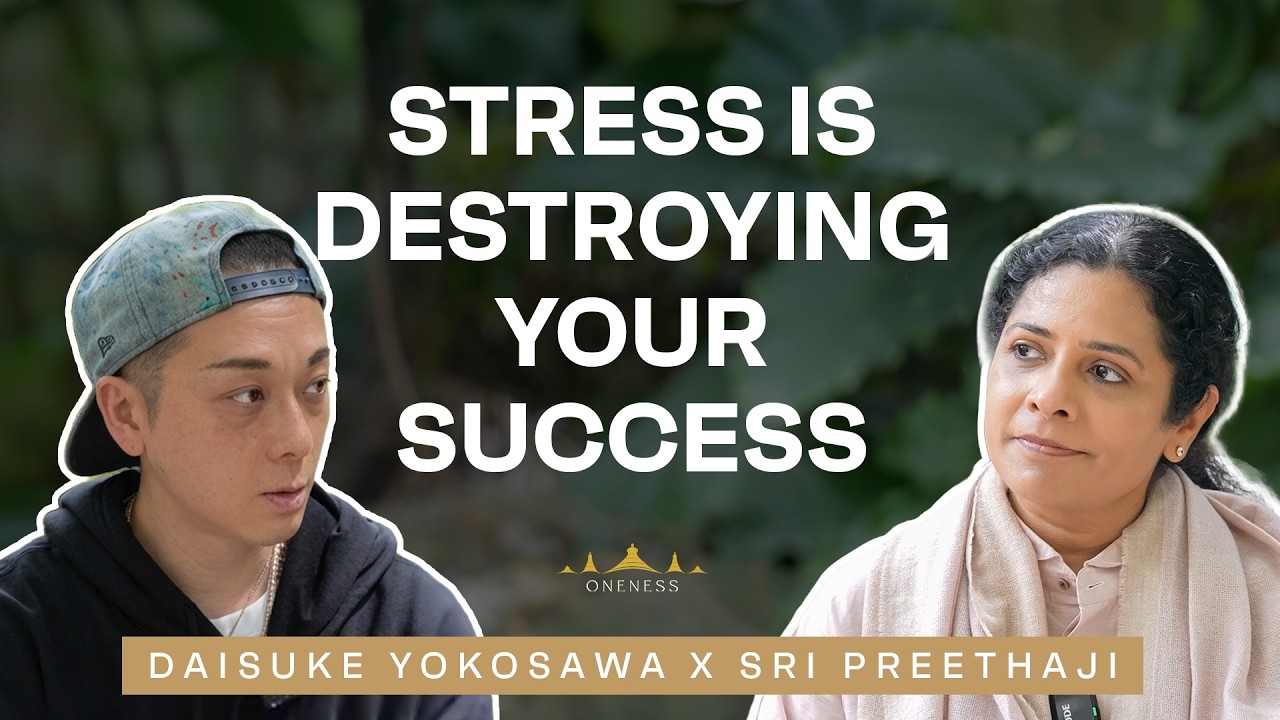
The Oneness Movement, led by Sri Preethaji and Sri Krishnaji, teaches that healing and genuine transformation occur not in isolation but through authentic relational connection. Rather than viewing the self as separate, the movement emphasizes how consciousness flows between people, and how recognizing our fundamental interconnectedness activates the body's innate capacity for healing and awakening. This approach integrates practical relational techniques with contemplative insight to create measurable shifts in nervous system regulation, emotional resilience, and spiritual maturation.

Lecture · 7 sections

What Is the Oneness Movement's Core Teaching?

The Oneness Movement, represented through Sri Preethaji and Sri Krishnaji, centers on the understanding that separation is a fundamental illusion—one that creates suffering and blocks access to natural states of healing and well-being. Rather than prescribing individual disciplines or techniques to "fix" yourself, the movement's framework places relational awareness at the center of spiritual development and somatic transformation.

The teaching rests on a simple yet radical proposition: consciousness is not confined to individual bodies or minds. When two people meet with genuine attention and without the filters of conditioned expectation, something shifts at a neurological and energetic level. This is not metaphorical—the nervous systems of two people in authentic connection actually begin to synchronize, creating a field within which healing becomes possible.

How Does Connection Activate Healing?

The Oneness Movement distinguishes between transactional relating—where people interact to get something, protect something, or maintain an image—and what might be called relational presence. In relational presence, the aim is not to change, convince, or manage the other person, but to meet them as they are with full attention.

When this kind of meeting happens, several things occur simultaneously. First, the nervous system of the receiver (the one being truly seen) begins to settle. This is not a placebo effect but a documented neurological response: when a human being experiences being received without judgment or agenda, their vagal tone improves, their cortisol decreases, and their capacity for self-regulation expands. Over time, this creates a window in which the body can begin to heal trauma stored in the nervous system.

Second, the quality of attention itself becomes medicine. Most people move through life largely unseen—their deeper experience, their fears, their longings acknowledged only in fragments. The Oneness Movement teaches that systematic exposure to genuine attention—the kind that asks "What is true for you right now?" rather than "How can I fix this?"—slowly rewires the brain's threat-detection systems.

What Role Does Individual Work Play?

While the Oneness Movement emphasizes relational healing, it does not dismiss inner practice or individual responsibility. Rather, it reframes what individual work is for. Instead of meditation or self-inquiry aimed at transcending the body or emotions, personal practice becomes preparation for deeper connection.

A person might work with their own conditioning—the beliefs, fears, and defenses that make authentic connection difficult. This could involve noticing how habit patterns show up in the body, recognizing where you habitually contract or perform, or observing the stories you tell about yourself and others. But the goal is not self-perfection; it is removing obstacles to meeting another human being with presence.

The movement also teaches that certain kinds of awareness practices expand the nervous system's capacity to hold space for what is true—without collapsing into agreement or bouncing into argument. This is sometimes called "choiceless awareness"—a quality of attention that can be present with multiple truths simultaneously: your truth and mine, your pain and my boundaries, your experience and my limits.

How Does the Oneness Approach Differ From Individual Healing Models?

Mainstream healing cultures often operate on a problem-solution model: identify the wound, apply the technique, expect the symptom to resolve. The Oneness Movement does not reject this approach outright, but it offers a different entry point. Instead of asking "What is wrong with me?" it asks "What becomes possible when I am truly met?"

This is subtle but significant. A person in chronic pain, for instance, might work with a somatic therapist to release muscular holding patterns. That has value. But the Oneness approach suggests that many pain patterns persist precisely because the person has learned that their body, emotions, and experience are not safe to share. The nervous system remains contracted in a stance of protection. When that person experiences being received without needing to change, something in the body recognizes it is safe to soften. The pain may not disappear, but the resistance to it—which is often the actual suffering—begins to dissolve.

Similarly, the movement teaches that many forms of anxiety and depression are not simply chemical or individual-psychological problems but relational wounds—ways the self has learned to contract away from connection, usually because genuine connection felt dangerous at some point. While medication or cognitive work have roles, the deepest healing often requires the nervous system to have a new relational experience: being present with someone who is genuinely present with you.

What Does a Relational Practice Look Like?

The Oneness Movement offers specific frameworks for relational practice, though the core is always the same: two people meeting with attention. In some formats, this might look like dyadic conversation—structured dialogue where each person speaks what is true for them while the other listens without trying to fix, advise, or debate. Other practices involve synchronized attention, where two people sit together and practice meeting each other's gaze or breathing without agenda.

These are not group therapy or support groups, where the focus is on processing trauma or gaining insight. They are relational containers—spaces where the nervous systems of two people can find homeostasis together. Over time, this rewires the assumption that the world is a place of threat or isolation. It becomes a place of meeting.

The movement also emphasizes the quality of questions. Instead of "Why do you feel that way?" (which can be investigating), a relational question might be "What is alive in you right now?" or "What do you need to know that I see you?" These questions create space for what is true to emerge, rather than space for analysis or justification.

How Does This Teaching Address Spiritual Maturity?

One of the Oneness Movement's insights is that spiritual maturity cannot be measured by individual attainment—how deep your meditation, how clear your insight, how free you are from desire. Instead, spiritual maturity shows up in how you meet other human beings. Can you be present with someone's pain without needing to transcend it? Can you hold your own boundaries while remaining open to another's experience? Can you acknowledge your limitations without collapsing or defending?

This reframes enlightenment not as escape from the human realm but as full, sober engagement with it. A truly mature being, from this view, is not detached but deeply attuned to the relational field. They can navigate complexity without losing presence. They can be authentic without being reactive. They can hold paradox.

Where to Go From Here

If you are drawn to the Oneness Movement's teaching, the first step is often to find a relational container—a structured space where you can practice meeting and being met by another person with genuine attention. Many facilitators trained in this work offer dyadic sessions or group practices. If that is not immediately accessible, you might begin by noticing in your own relationships where you are actually present versus performing, where you are defended versus open, where you are trying to change someone versus meeting them.

The teaching is not about adding more to your spiritual to-do list. It is about recognizing that the healing and awakening you seek may be waiting in the very capacity to be genuinely relational. The practices of the Oneness Movement provide structures and understanding to deepen that capacity. But the real work—and the real grace—happens in the simple act of one human being meeting another with full attention.

Comments

Loading the conversation…

Oneness Movement
Artist
Oneness Movement

Watch more from Oneness Movement on YouTube.

Site web
Explorer les thèmes
Relational-healingOneness-movementNervous-systemAuthentic-connectionSpiritual-maturity

Des questions ?

Questions fréquemment posées

When a nervous system is met with genuine, non-judgmental attention, it begins to settle and regulate. This creates a neurological shift where the body recognizes safety, allowing stored trauma to gradually release. Over time, repeated experiences of being truly received rewire the brain's threat-detection systems.
While traditional therapies focus on identifying and fixing individual problems, the Oneness Movement asks what becomes possible when you are genuinely met by another person. It emphasizes relational healing as primary rather than supplementary.
While individual awareness practices have value in the Oneness approach, the core teaching centers on relational presence. The deepest transformation typically occurs within authentic connection with another person, not in isolation.
Relational presence is attention given to another person without agenda—not to change, fix, or manage them, but simply to receive what is true for them. This quality of meeting activates the nervous system's capacity to heal and awakens authentic connection.
Spiritual maturity in this teaching is measured not by individual attainment (deep meditation, freedom from desire) but by how authentically and consciously you meet other human beings—with presence, boundaries, and genuine engagement.
Two people meet with structured attention, typically through guided dialogue or synchronized awareness practices. Rather than processing trauma or gaining insight, dyadic practice creates a container where nervous systems find homeostasis together.
Yes; chronic pain often persists because the nervous system remains contracted in protection. When the body experiences being safely received by another person, the resistance and contraction—often the source of actual suffering—begins to soften.

Continuer la lecture

More on Inspiration

Voir tout
Leader's Edge: Power Without Stress or Burnout
Inspire

Leader's Edge: Power Without Stress or Burnout

True leadership excellence comes from a calm state of mind, not from stress-driven hustle. Learn why a leader's real edge depends on the men…

1 min read
Inner State Over Stress: Why Clarity Drives Leadership
Inspire

Inner State Over Stress: Why Clarity Drives Leadership

True leadership emerges from inner calm and clarity, not stress. Learn why sustainable success requires vision for both your organization an…

1 min read
Govinda Jaya: How Sacred Sound Awakens the Heart
Inspire

Govinda Jaya: How Sacred Sound Awakens the Heart

Radhika Das channels the liberating power of mantra through a luminous kirtan performance at Medicine Festival, invoking divine names to pur…

1 min read
Om Namah Shivaya Chant: Ecstatic Trance Meditation
Inspire

Om Namah Shivaya Chant: Ecstatic Trance Meditation

Jai Uttal guides listeners into an ecstatic chant trance with Om Namah Shivaya, the Sanskrit invocation of Shiva consciousness. A 91-second …

1 min read

Continue d’explorer

Poursuis ton chemin

Plus de sagesse et de rassemblements dans tout l’annuaire BrightStar.

Plus d’articles

Parcours toute la bibliothèque d’enseignements, d’entretiens et de guides.

Retour à tous les articles →

Enseignants et artistes

Découvre les lignées, les musiciens et les guides du monde conscient.

Explorer les artistes →

Trouver un événement

Kirtan, retraites, bains sonores, breathwork, festivals — bientôt près de chez toi.

Parcourir les événements →