BrightStar

Parcourir tous les Events

Découvre des rassemblements conscients

events

Yoga
Meditation
Breathwork
Qigong
Tai Chi
Sacred Music
World Music
Medicine Music
Sound Healing
Ecstatic Dance
Destinations populaires
BaliSedonaLos AngelesCosta RicaNew YorkSan FranciscoAustinMiamiJoshua TreeTulum
Voir toutes les catégoriesVoir toutes les destinations

Explorer toutes les fonctionnalités

Des outils puissants pour développer tes événements

Fonctionnalités de la plateforme

Tarification dynamique intelligente
Catégories de billets
Places assignées
Récupération des paniers abandonnés
Récupération des visiteurs
Dons & Prix variables
Système d'affiliation
Scanner de billets
Codes promo
Questions personnalisées
Partage de billets
Ventes additionnelles & Options
Analyses & Rapports
Séquences d'emails
Liste d'attente / Notifier / Rappeler
Personnes & Lieux
Artists & TeachersEvent OrganizersVenues & StudiosKnowledge BaseGlossaryInspiration
Voir toutes les fonctionnalitésÀ propos
TarifsBlog
Language
Saved events
Parcourir tous les événements

events

YogaMeditationBreathworkQigongTai ChiSacred MusicWorld MusicMedicine Music

Destinations populaires

BaliSedonaLos AngelesCosta RicaNew YorkSan Francisco

Personnes & Lieux

Artists & TeachersEvent OrganizersVenues & StudiosKnowledge BaseGlossaryInspiration

Fonctionnalités de la plateforme

Tarification dynamique intelligenteCatégories de billetsPlaces assignéesRécupération des paniers abandonnésRécupération des visiteursDons & Prix variablesSystème d'affiliationScanner de billetsCodes promoQuestions personnaliséesPartage de billetsVentes additionnelles & OptionsAnalyses & RapportsSéquences d'emailsListe d'attente / Notifier / Rappeler
Voir toutes les fonctionnalitésÀ propos
TarifsBlog
ConnexionChercheursCréateurs
  • Parcourir tous les Événements
  • Pour les chercheurs
  • Yoga
  • Méditation
  • Breathwork
  • Qi gong
  • Tai-chi
  • Musique sacrée
  • Musiques du monde
  • Musique médecine
  • Soins sonores
  • Danse extatique
  • Retraites
  • Ateliers
  • Toutes les catégories →
  • Bali
  • Sedona
  • Los Angeles
  • Costa Rica
  • Tulum
  • Byron Bay
  • San Francisco
  • Austin
  • New York
  • San Diego
  • Denver
  • Seattle
  • Portland
  • Miami
  • Toutes les villes →
  • Join the Movement
  • Why we list
  • Sell Globally
  • Pour les créateurs
  • Pour les équipes
  • Pour les écrivains
  • Pour les enseignants
  • Pour les artistes de kirtan
  • Pour les studios
  • Pour les festivals
  • Pour les centres de retraite
  • Pour les associations
  • Ambassadeur de marque
  • Billetterie gratuite
  • Elevate
  • Amplify
  • Réseau de 500K+ acheteurs
  • Récupération des paniers abandonnés
  • Tarification dynamique intelligente
  • Catégories de billets
  • Événements récurrents
  • Places assignées
  • Système d'affiliation
  • Liste d'attente / Notifier
  • Scanner de billets
  • Widget intégrable
  • Diffusion d'événements
  • Messagerie
  • Intégrations
  • Rapports
  • Toutes les fonctionnalités →
  • À propos
  • L'écosystème
  • Blog
  • Glossaire
  • Inspiration
  • Centre d'aide
  • Contact
  • Documentation API
  • Ressources de marque
  • Carrières
  • Presse
  • Conditions d'utilisation
  • Politique de confidentialité

Événements

  • Parcourir tous les Événements
  • Pour les chercheurs
  • Yoga
  • Méditation
  • Breathwork
  • Qi gong
  • Tai-chi
  • Musique sacrée
  • Musiques du monde
  • Musique médecine
  • Soins sonores
  • Danse extatique
  • Retraites
  • Ateliers
  • Toutes les catégories →

Destinations

  • Bali
  • Sedona
  • Los Angeles
  • Costa Rica
  • Tulum
  • Byron Bay
  • San Francisco
  • Austin
  • New York
  • San Diego
  • Denver
  • Seattle
  • Portland
  • Miami
  • Toutes les villes →

Pour les créateurs

  • Join the Movement
  • Why we list
  • Sell Globally
  • Pour les créateurs
  • Pour les équipes
  • Pour les écrivains
  • Pour les enseignants
  • Pour les artistes de kirtan
  • Pour les studios
  • Pour les festivals
  • Pour les centres de retraite
  • Pour les associations
  • Ambassadeur de marque
  • Billetterie gratuite
  • Elevate
  • Amplify

Fonctionnalités

  • Réseau de 500K+ acheteurs
  • Récupération des paniers abandonnés
  • Tarification dynamique intelligente
  • Catégories de billets
  • Événements récurrents
  • Places assignées
  • Système d'affiliation
  • Liste d'attente / Notifier
  • Scanner de billets
  • Widget intégrable
  • Diffusion d'événements
  • Messagerie
  • Intégrations
  • Rapports
  • Toutes les fonctionnalités →

Entreprise

  • À propos
  • L'écosystème
  • Blog
  • Glossaire
  • Inspiration
  • Centre d'aide
  • Contact
  • Documentation API
  • Ressources de marque
  • Carrières
  • Presse
  • Conditions d'utilisation
  • Politique de confidentialité
BrightStar
Téléchargez l'app
Télécharger dans l'App StoreDisponible surGoogle Play
© 2026 BrightStar. Tous droits réservés.
Inspiration

He Yama Yo: A Wordless Healing Song and Its Disputed Origins

Curawaka
Curawaka
Jan 3, 2014
7 min de lecture

Source : Curawaka Official

À regarder · 6

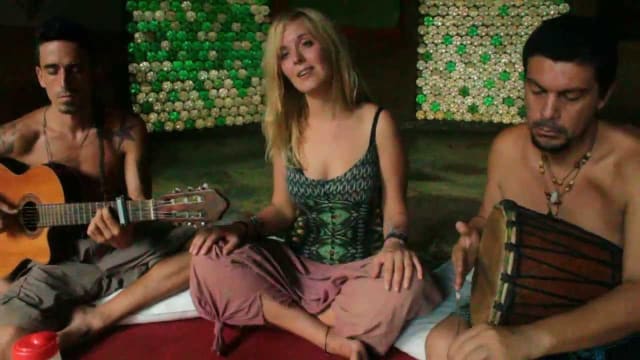
Curawaka's "He Yama Yo" is a wordless chant built from a handful of repeated syllables, and it has traveled far beyond its original upload: the clip has been viewed roughly 7.5 million times. What makes it worth a closer listen is not only its open, prayer-like shape but the note the band attached to it, which pushes back against the idea that the song is an indigenous piece with a known tradition behind it. The result is a small, unusually candid case study in how a song gets carried across the internet, how listeners attach stories to it, and what happens when the performers themselves ask people to check the facts.

Lecture · 5 sections

What does the listening experience of "He Yama Yo" actually feel like?

The clip opens without ceremony. There is no spoken introduction and no instrument announcing the key. A voice simply enters and sets down a few sounds: a sustained breath, then "hei hei," then a shape that sounds like "wahi." Silence sits between the phrases, and the spaces matter as much as the sung material. At roughly the half-minute mark the same cluster returns in a slightly altered form, "hei hei heio," and the ear begins to sort the pattern: a short motif, a rest, a return.

That pattern is the core of the piece. The syllables do not tell a story in the way a verse does. They work more like a melodic and rhythmic container, and a listener is left to supply the meaning. The repeated "he," "hei," and "wahi" sit close to one another in sound, and the phrase keeps circling back to them rather than pushing forward to a resolution. If you have sung in a group where nobody knows the words, you know the feeling: the attention moves from understanding to shared breath.

Around the 1:17 mark the vocal drops to a single "he," then picks up "wi" and "hei" with long gaps between them. Around 2:04 "Wahi" comes back with more weight, and the line seems to lean on the syllable rather than rush past it. By the three-minute point the phrases have settled into "wio," "maayo," and "mayo mao," which repeat in a loop that feels less like a chorus than a breathing pattern. The clip closes on "Wiana," a little sigh of a word that lands and then leaves room.

It is worth saying plainly what this means for a listener who wants to sing along. The syllables are easy to hum, and the phrases are short enough to hold in memory after one or two passes. That accessibility is likely part of why the piece travels so well. A melody that asks for no translation can be carried into any language, any room, any healing circle, without anyone needing to understand a word.

Where does the claim of Lakota or Navajo origin come from?

The most important sentences in this video are not sung. They are typed beneath it. The band's description begins with a clarification that few performers would think to add:

"We want to clarify that there are no evidence to support that this song has Lakota or Navajo origins. It is important to know that nobody from the Lakota or Navajo nations has ever confirmed that this is even an indigenous song. Nor does it have any translation."

— Curawaka, video description accompanying the 2014 upload

That is a remarkable thing for a band to publish alongside a song that has been shared as a healing piece. The note does not claim the song is or is not indigenous. It says the attribution has no evidence behind it, that no Lakota or Navajo nation has confirmed it, and that there is no translation to lean on. In other words, the band is separating what listeners have been told from what can be verified.

This distinction is worth keeping in view because songs with uncertain origins tend to gather confident stories quickly. A melody passed from person to person, recorded and re-uploaded, arrives at new listeners with a label attached, and the label can become more certain with every share. The band's note asks the audience to notice the gap between a song that feels ancient and one whose ancestry can be documented. Those are not the same thing, and a chant can be deeply moving without its history being settled.

There is also a respect question buried here. Naming a sacred or traditional origin, when none has been confirmed by the people it would belong to, can be its own kind of claim, one that other people then repeat. The band's wording, asking viewers to "be aware of the facts regarding its origin," is an invitation to care about accuracy rather than a verdict on anyone's sincerity.

Why does a wordless song need an honest backstory?

A song with lyrics carries its own explanation in every line. A song without them invites projection. Listeners hear the open vowels and the rising "hei" and read into them whatever they most need, whether that is grief, release, or the sense of standing in a larger tradition. That openness is the source of the song's power, and it is also the reason an honest note matters. The band did not take the openness away. It simply named what the sound does and does not establish.

The description ends with a line that works almost as a benediction:

"May the wings of your heart set you free. Wishing you all a beautiful day. Aho."

— Curawaka, video description accompanying the 2014 upload

Read together with the disclaimer above it, the sign-off suggests a band that wants people to receive the song warmly and also to get the facts right. Those two intentions do not conflict. A healing song can be shared generously while its origin is described carefully.

What is the half-length upload, and why does it break in the middle?

The title is "He Yama Yo (half only!)," and the description notes a break in the middle, apologizing for it. The clip runs four minutes and forty-one seconds. The band's own framing treats the upload as a partial document: a performance captured with an interruption and offered as a fragment rather than a finished recording. The description also points listeners to the band's album, which it says contains "He Yama Yo," so the full presentation of the song lives there rather than in this clip.

That honesty about incompleteness fits the rest of the note. The band is not presenting itself as the keeper of an ancient text. It is presenting a piece of music it performed, with its gaps showing, and inviting people to listen to it on those terms.

Where to go from here

If this song has moved you, the most useful next step is to listen to it as what it is documented to be: a performance by Curawaka, released with a clear statement that its indigenous origin has not been established. Listen for the rests between the phrases, notice how the syllables return and vary, and let the wordless form do its work without filling it with a story you cannot verify.

If you want to go further, the band's album is the place the song appears in full, according to the description, and its website is listed there as music.curawaka.com. When you share the piece, consider sharing the note along with it. The band asked for exactly that: a song passed along widely, with its facts intact.

Comments

Loading the conversation…

Transcript

[0:06] వాహ

[0:09] [Musik]

[0:26] [Musik]

[0:33] hei hei

[0:37] wahi

[0:41] hei hei heio

[0:44] [Musik]

[0:49] maana

[0:53] [Musik]

[1:00] maoana.

[1:02] [Musik]

[1:17] he

[1:18] [Musik]

[1:21] wi

[1:25] hei

[1:26] [Musik]

[1:44] ما

[1:47] [Musik]

[2:04] Wahi

[2:06] [Musik]

[2:08] he

[2:11] wahi

[2:14] [Musik]

[2:18] he

[2:20] [Musik]

[2:25] वा

[2:27] [Musik]

[2:46] Wi

[2:48] [Musik]

[2:50] he

[2:53] wio

[2:56] [Musik]

[3:01] maayo

[3:05] [Musik]

[3:07] mayo

[3:11] mao

[3:11] [Musik]

[3:16] Wiana.

[3:22] He

[3:24] [Musik]

[3:26] wa

[3:28] [Musik]

[3:29] heya

[3:30] [Musik]

[3:37] mayo

[3:40] mayo

[3:44] [Musik]

[3:53] වි

[4:01] [Musik]

[4:13] ఎమో

[4:16] ఎరయ y

Avec

Les artistes de cet article

Curawaka
Curawaka
sacred world music band and workshop facilitators

Curawaka is an international group that describes its sound as "sacred world music": a way of connecting the new with the ancient, the open mind and searching heart with the…

Explorer les thèmes
He-yama-yoCurawakaWordless-chantIndigenous-attributionHealing-songs

Des questions ?

Questions fréquemment posées

The band's video description says there is no evidence to support Lakota or Navajo origins for the song. It also states that nobody from the Lakota or Navajo nations has confirmed it as an indigenous song.
According to the description accompanying the video, the song does not have a translation. Its sung material is made of repeated syllables such as 'hei,' 'wahi,' and 'mayo,' which is why listeners often experience it as a wordless chant.
The upload is labeled as a half, and the description apologizes for a break in the middle of the performance. The clip runs about four minutes and forty-one seconds, so it is presented as a partial document rather than the complete recording.
The video description says the song appears on Curawaka's album and points listeners to music.curawaka.com. The full recording is presented there rather than in this partial upload.
The song has been widely shared as a healing piece, and the band's own description refers to it as a healing song that people share 'wide and far.' Its open, repetitive syllables and long pauses give listeners space to receive it in their own way.
The sung phrases are short and repeated, built from syllables like 'he,' 'hei,' 'wahi,' 'wio,' and 'mayo.' Because there is no translation to learn, listeners can hum or sing the motifs by ear, following the pauses between phrases.
Without lyrics or a documented translation, a song carries no built-in explanation of its history. Its origin depends on records and confirmation from the people it is claimed to belong to, which is what the band's note says is missing for He Yama Yo.

Continuer la lecture

More from Curawaka

Voir tout
Cunaq Performed Live at Praia Almada, Ubatuba, Brazil
Inspire

Cunaq Performed Live at Praia Almada, Ubatuba, Brazil

A short outdoor performance of the chant Cunaq, recorded in January 2014 on a beach in Ubatuba, Brazil. Here is what the video shows, what i…

6 min read
Aad Guray Nameh: Sacred Sound for Protection
Inspire

Aad Guray Nameh: Sacred Sound for Protection

Explore Snatam Kaur's transcendent mantra for spiritual protection and inner peace, rooted in Kundalini yoga tradition.…

6 min read
Govinda Jaya: How Sacred Sound Awakens the Heart
Inspire

Govinda Jaya: How Sacred Sound Awakens the Heart

Radhika Das channels the liberating power of mantra through a luminous kirtan performance at Medicine Festival, invoking divine names to pur…

7 min read
Om Namah Shivaya Chant: Ecstatic Trance Meditation
Inspire

Om Namah Shivaya Chant: Ecstatic Trance Meditation

Jai Uttal guides listeners into an ecstatic chant trance with Om Namah Shivaya, the Sanskrit invocation of Shiva consciousness. A 91-second …

5 min read

Continue d’explorer

Poursuis ton chemin

Plus de sagesse et de rassemblements dans tout l’annuaire BrightStar.

Plus d’articles

Parcours toute la bibliothèque d’enseignements, d’entretiens et de guides.

Retour à tous les articles →

Enseignants et artistes

Découvre les lignées, les musiciens et les guides du monde conscient.

Explorer les artistes →

Trouver un événement

Kirtan, retraites, bains sonores, breathwork, festivals — bientôt près de chez toi.

Parcourir les événements →