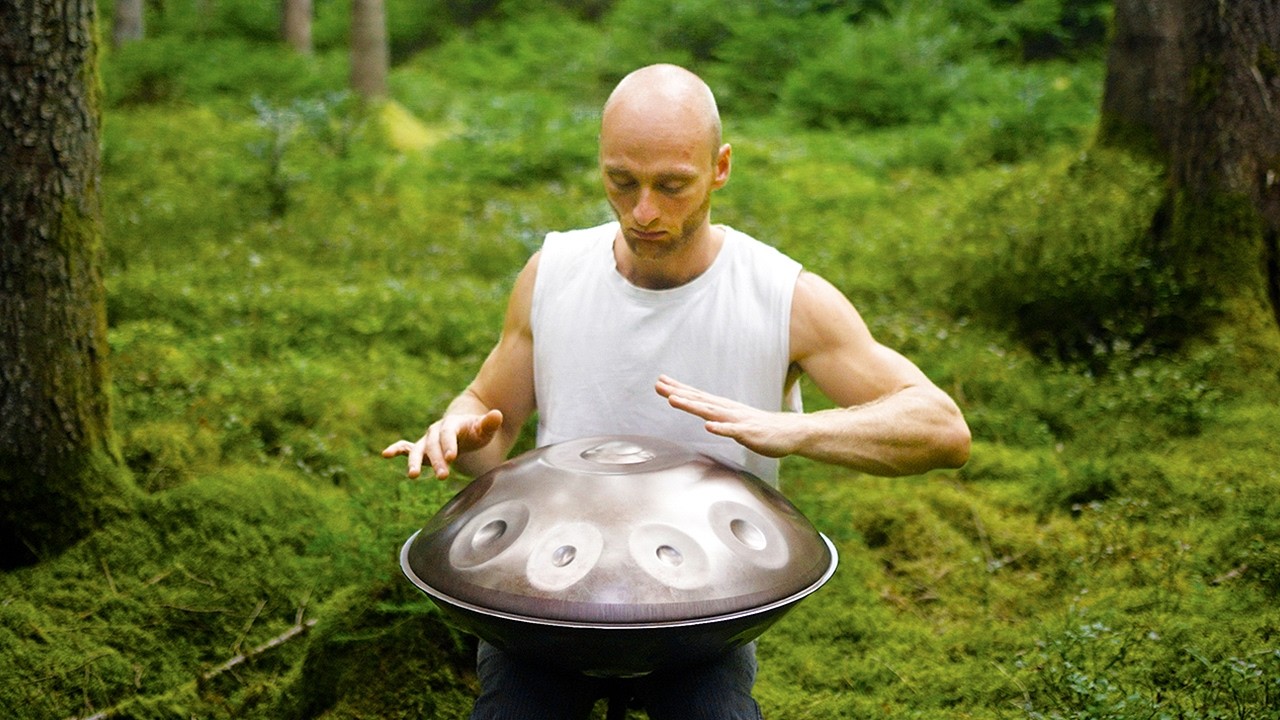
The handpan—a relatively young instrument with roots in West African and Caribbean percussion traditions—has emerged as one of the most profound vehicles for contemplative listening in modern sound practice. Unlike the distraction economy of algorithmic playlists or background ambience, a handpan played in full presence operates as a sustained meditation: each strike of the metal creates a tone that blooms, decays, and lingers in the listener's consciousness. When tuned to frequencies like 1111 Hz—a pitch associated in sound healing traditions with spiritual awakening and alignment—the instrument becomes more than percussion. It becomes a mirror for attention itself.
The concept behind extended handpan sessions centers on a paradox explored in contemplative traditions across cultures: we cannot move forward without first knowing where we come from. The handpan's deep, resonant tones create what practitioners call a "sonic ground"—a stable field of vibration that allows the nervous system to settle. In this settled state, the listening mind becomes available for insight and release. The foundation, in other words, does not trap us; it frees us. This is the teaching embedded in two hours of continuous handpan music: that grounding and expansion are not opposing forces, but partners in the same journey toward wholeness.
What Makes the Handpan a Tool for Meditation?
The handpan belongs to a family of instruments designed, often intuitively, to produce tones that naturally activate the parasympathetic nervous system—the body's rest-and-digest response. Unlike instruments designed for speed, precision, or performance virtuosity, the handpan prioritizes resonance, sustain, and tonal purity. Each note has a beginning, middle, and end; the listener follows the arc of the sound from attack through decay, learning (without instruction) the rhythm of emergence and dissolution.
The instrument's design—a hollowed steel pan, typically tuned to a specific scale—means that any player, regardless of training, can create coherent, harmonically pleasing sequences. There is no "wrong note" in the way a piano or guitar presents one. This removes a layer of judgment from listening. The brain is freed from evaluating whether the musician "got it right" and can instead simply receive the vibration. In the context of meditation, this permissiveness is profound: it mirrors the non-judgmental awareness that meditators are trained to cultivate toward their own experience.
How Does 1111 Hz Frequency Relate to Spiritual Practice?
In sound healing and numerological traditions, the frequency 1111 Hz carries associations with alignment, awakening, and the integration of spiritual insight into daily life. While scientific evidence for specific healing frequencies remains limited and contested, the power of intentional listening to tuned instruments is not in dispute. When a listener *knows* they are engaging with a frequency chosen for a particular purpose—calm, grounding, expansion—that knowledge itself shapes the listening experience. Expectation, attention, and the ritual of devoted listening are active ingredients in any sound meditation.
The handpan tuned to a D Aegean scale, as used in contemplative recordings, sits in a range that feels both intimate and vast—low enough to be felt in the chest and belly, yet bright enough to engage the mind. The combination of the instrument's tonal qualities and the frequency intention creates what might be called a "sympathetic resonance" with the listener's own intention to settle and find clarity. This is not magic; it is the ordinary power of attention meeting craft.
The Philosophy of Grounding and Freedom
A central insight in contemplative traditions—and one embedded in extended handpan listening—concerns the relationship between rootedness and possibility. We do not transcend our origins; we integrate them. The people, places, and lessons that shaped us become the ground beneath our feet. From that ground, paradoxically, we can move further, take greater risks, and explore more courageously than we ever could without it. This is not about staying put. It is about knowing where you stand so thoroughly that you can walk in any direction without losing yourself.
In a two-hour handpan session, this philosophy becomes visceral. The listener's mind, settling into the repetitive, non-narrative flow of the tones, experiences directly what it feels like to be held and released simultaneously. The steady pulse and resonance hold; the ever-changing melodic content releases. Neither is negated; both are necessary. A meditator emerges from such an experience not more dissociated from the world, but more anchored in it—more present, more available, more capable of meeting what comes.
Where to go from here
If you are drawn to this approach, sustained listening is the practice. A two-hour session is not about achieving a particular state or solving a problem; it is about creating the conditions for your own wisdom to surface. Find a quiet space, remove distractions, and allow the handpan's tones to become your companion. You may experience deep calm, emotional release, clarity, or simply the pleasant sensation of time disappearing. All of these are valid. The handpan does not demand anything of you except presence. For those interested in learning the instrument itself, or in deepening your understanding of handpan music and its role in contemplative practice, community and instruction are readily available through teachers and makers who work within this lineage. The invitation, ultimately, is simple: listen, and notice what becomes possible when you do.