Rishi of Good Karma Meditations built this roughly 18-minute guided relaxation for people living with exhaustion, burnout, chronic fatigue syndrome (CFS) and M.E. It asks the listener to lie down, breathe with deliberate sighs, travel slowly through the body from the forehead to the toes, and then settle attention on the navel, where a soft yellow light is imagined to glow and grow with each breath. The session is short on instruction and long on permission: nothing is asked of the listener except to stop doing and let the body rest. For anyone whose energy is already spent, that stillness is the whole point, and the structure of the practice shows how a teacher can build it.
The video opens with a plain statement of purpose. Rishi describes it as "a guided relaxation for chronic fatigue syndrome, but it will also be helpful for exhaustion, burnout, that kind of thing." The channel's description widens the scope to include "relief from physical fatigue or emotional overwhelm," and it frames the session as something to take in a quiet space as a form of self-care.
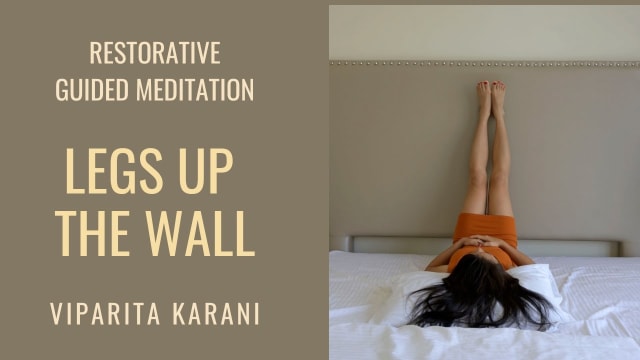
Posture comes first. At 0:04 Rishi says: "I recommend that you listen to this lying down, maybe lying down on the floor, on your back, lying on the couch, or even in bed. Just make sure that you're as comfortable as you can be, and ideally, you're in a place where you won't be disturbed for the next while." For a person with CFS or ME, that instruction carries weight. The practice is designed to be done horizontally, with no effort required to hold a shape, and with the expectation that the listener may be in bed.
Whybeginwiththreedeliberatesighs?
Before any body scan, the session asks for three slow breaths in through the nose and long, audible sighs out through the mouth. Each exhale is paired with a release: "letting go of any tension, worries," and then "letting go further of any tension in body or mind." The sigh is a useful opening gesture because it lengthens the exhale, and it gives the listener a clear signal that the practice has started. After the third sigh, Rishi asks the listener to "come back to normal natural or passive breath." The word passive matters. The breath is not being controlled or deepened for effect; it is being allowed to happen.
Howdoesthehead-to-toebodyscanwork?
The body scan is the longest stretch of the session and runs in a deliberate order: forehead, eyelids, cheeks, lips, tongue, chin and jaw, then the scalp and back of the head, the throat and neck, the shoulders, arms, wrists and hands, the chest and heart space, the abdomen and lower back, the hips, glutes and pelvic floor, the thighs, knees, calves, ankles, heels, feet and toes. The sequence moves downward and outward, so attention is never asked to jump around.
Rishi's cues are phrased as invitations rather than commands. At around 3:53 he says "Give yourself permission to let go and become aware of the closed eyes and see if you can let the eyelids be a little more heavy." Later, in the arms, the language shifts to images of surrender: "Feel the muscles surrendering as your awareness moves down into the elbows into the forearms. All tension in the arms dissolving." The verbs are soft ones (soften, release, sink, surrender) and the scan repeatedly acknowledges that tension may not be obvious: at the chest, he says "even if there's no obvious tension, just have a look and see if you're able to let go a little more." That line is worth noticing for a listener whose body feels tight in ways that do not show up as visible strain.
The scan closes with a sweep of the whole body and a question. "Is there anywhere in the body that you could surrender a little more? Where you could soften tension or just let go?" Then comes the moment the session has been building toward, at about 9:51: "Nowhere to be. Nothing else to do right now than just surrender and rest completely." For many people who live with fatigue, the difficulty is not the absence of rest but the habit of mentally working through it. This script takes that habit on directly.
Whatisthenavelvisualization,andwhythebelly?
At about 12:19 the attention shifts from the body as a whole to a single point. Rishi asks the listener to "focus your attention gently at the naval center in the middle of the abdomen," and to notice what they feel there. He admits the area may be hard to find: "Are you able to connect to this area easily? Or perhaps it's a little hard to identify. Just do your best."
The channel's description explains the logic in a single line: by bringing awareness to the abdominal and navel centre, "considered the body's energetic core," the practice aims to foster "inner stability, replenishment, and connection to vital energy." The description attributes this framing to yoga philosophy, and the session draws on it without going into detail. Nothing in the audio defines the navel's energetic role in technical terms; what the listener gets is the experience of attention settling in one place.
Then the visualization begins. At around 13:42 Rishi says: "imagine if you like a soft yellow light beginning to glow here at the navel. And the more you concentrate here, the brighter the yellow light starts to glow." The image is not dramatic. It is a glow, a warmth, a light that grows in proportion to the attention given to it. A listener who cannot feel much at the navel can still hold the image, and the session accepts that as a legitimate starting point.
Canbreath"store"energyinthebody?
The breath becomes the mechanism. The instruction is to imagine the inhale "comes straight in through the navel center, stoking that fire glowing at the belly," and the exhale leaves from the same point. Each cycle is described as cultivating warmth. The metaphor is of fuel: the inhale feeds the glow, the exhale releases tension while the glow remains.
The session's central claim comes in one sentence that is worth quoting in full:
"The abdomen and the navel are the storehouse for your energy reserves. And now we're building them, growing and cultivating that energy at the navel." (Rishi, in the guided session, around 14:36)
For a listener with chronic fatigue, the idea of building reserves rather than spending them is the emotional core of the practice. It reframes rest from a gap in productivity into an active process of accumulation. The session is careful, though, not to make the energy concrete. The words used are "a sense of energy" and "a feeling of strength and recovery." The practice is about attending to a felt quality, not about achieving a measurable result.
Howdoyoucomebackfromthepractice?
The return is gradual and deliberately keeps the navel as an anchor. Rishi asks the listener to hold the warm glow "as you start to notice the rest of the body out into the hands and the feet down into the fingers and toes centered at the navel." Then come small movements: wiggling fingers and toes, rotating wrists and ankles, and gentle stretching "in any way that feels comfortable." The movement is slow and optional, which suits a body that may be easily tired.
The closing invitation is to keep the practice going after the audio ends. At around 17:52 Rishi says: "See if you can hold on to that warmth and awareness at the abdomen long after the session has finished. and come back to this region throughout the day whenever you remember." He ends by asking listeners to share their experience in the comments, and he notes that donations are welcome.
Whatdoesthispracticeclaim,andwhatdoesitnot?
The honest reading is that this is a relaxation session, not a treatment. The material does not include medical claims, clinical outcomes, or evidence about CFS or ME, and the video does not offer any. What it offers is a structured invitation to lie down, release, and attend to a single centre of warmth. Anyone living with a diagnosed condition should keep their own medical care in charge of treatment decisions. Within that frame, the session's value is its tone: it is patient, unhurried, and free of performance. It asks for nothing except time and attention, which may be the most generous thing a person with depleted energy can be offered.
Wheretogofromhere
If you are new to guided relaxation, try the session lying down, in a quiet room, with the sighs at the start and the body scan in full. Notice which cues land and which feel empty. On a second listen, give the navel visualization more time and simply observe whether the glow appears, flickers, or stays away. Then carry the one-line instruction from the close into your day: come back to the navel whenever you remember. The source video is Good Karma Meditations' "Guided Relaxation For Exhaustion | Burnout | Chronic Fatigue Syndrome [CFS] | M.E," published in April 2025 and narrated by Rishi. Watch it, rest with it, and let the practice be the first place you return to when the day runs down.
Good Karma Meditations is led by Rishi, a meditation teacher and yoga therapist initiated in the Saraswati lineage, offering calm guided practices for relaxation, self-awareness, a…
The session is described by its narrator, Rishi, as a guided relaxation for chronic fatigue syndrome that will also help with exhaustion and burnout. It is a relaxation practice, not a medical treatment, so anyone with a diagnosed condition should keep their own clinical care in charge of decisions.
The video runs about 18 minutes and 42 seconds. It includes opening sighs, a head-to-toe body scan, a navel-centred visualization, and a short wind-down with gentle movement.
Listeners are asked to bring attention to the navel and imagine a soft yellow light that grows brighter with concentration. Each inhale is imagined as stoking that warm glow, and the session describes the abdomen as a storehouse for energy reserves.
Yes, the narrator recommends lying on the floor, on your back, on a couch, or in bed, and making sure you will not be disturbed. The posture is chosen so the body can rest without effort.
The scan moves from the forehead and face through the neck, shoulders, arms, hands, chest, abdomen, hips, legs and feet to the toes. It finishes with a whole-body awareness pause and an invitation to rest more deeply where tension remains.
The channel's description says the navel centre is considered the body's energetic core, and the practice aims to support inner stability, replenishment, and connection to vital energy. The narrator presents the abdomen as the place where energy is stored and rebuilt through breath.