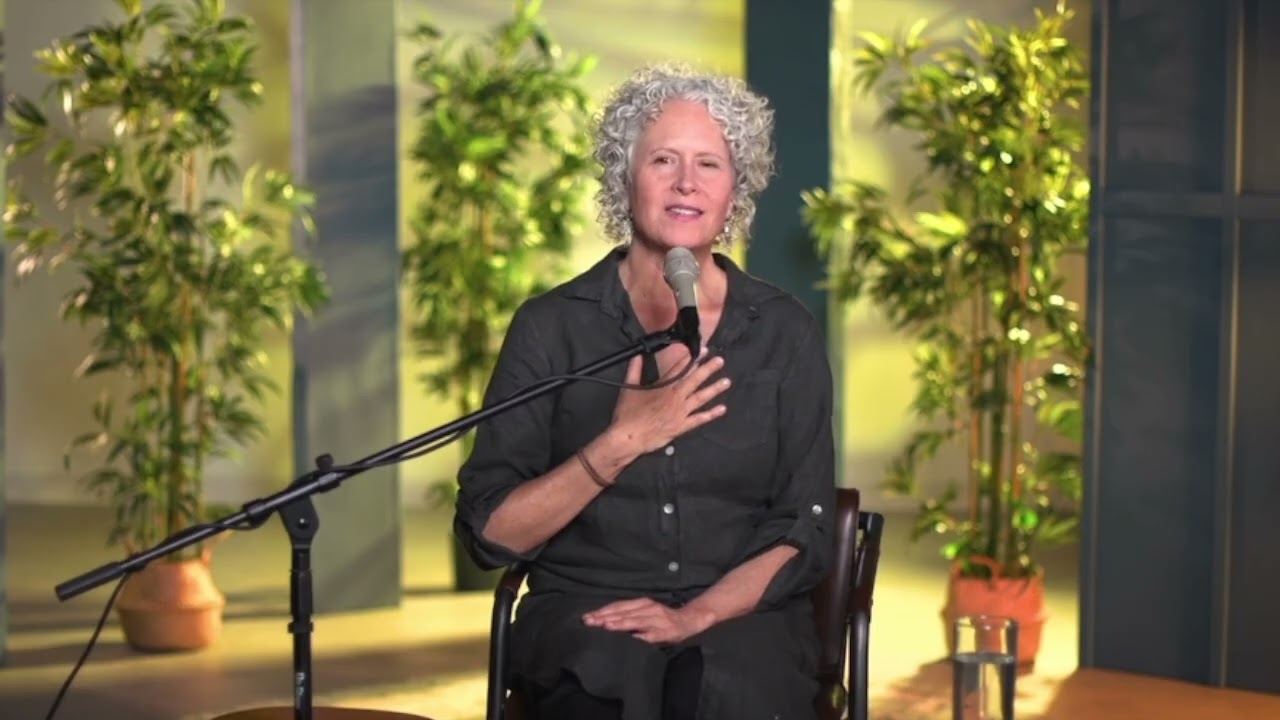
A six-minute guided meditation with no music worth mentioning and no backstory on screen can still hold a room, and this one has held close to a million viewers since it went up on October 13, 2016. Michelle Chalfant's "5-Minute Self Love Meditation" asks you to lie back or sit up with your palms turned toward the ceiling, follow a slow breath, fill your body with a white or golden light, and let go of the inner voices that tell you that you are unworthy. The video itself is spare: a soft voice, pauses marked by a faint musical bed, and a script that moves in a clear arc from breath to light to release to receiving. What follows is a reading of how that arc works, why its order matters, and how to use it when you have five minutes and an open heart.
Most guided practices that aim at emotional healing reach for imagery first, because imagery is vivid and easy to follow. Chalfant reverses that. The first thing she asks for, after the posture, is "a slow long deep breath inhaling and exhaling." The breath is the anchor. Everything else in the session hangs from it.
The instruction is precise about what the breath is supposed to do. On the inhale, you "feel our breath filling up and expanding our insides." On the exhale, you "let go of all stress worry or concerns," and she frames the whole session as "choosing this time just for you to become present with you." That phrase is worth sitting with. The practice is not presented as a task to complete or a state to achieve. It is a decision to be somewhere for five minutes. The breath is simply the proof that you have arrived.
This is a useful lesson for anyone who has tried meditation and quit because they felt they were failing at it. The script never asks you to empty your mind. It asks you to notice, and then to exhale away "any stress or thoughts that take you out of this moment." Distraction is expected. Returning is the practice.
Around the one-and-a-half-minute mark (91 seconds, in the recording), the guide shifts from releasing to receiving: "we breathe in the energy of Love." She offers a specific picture: "a beautiful white or Golden Light." Then she gives the light a job. See it "come in with your breath and illuminate every cell in your body."
The choice of light over other images is not incidental. Light is something that fills a space without effort, that cannot be grasped or earned, and that spreads evenly. Those qualities matter for a meditation about self-love, because the most common obstacle to self-compassion is the sense that you have to qualify for it. Light does not check your record first.
Notice too the movement from body to cell. The visualization is not a general glow around you. It is a scan. You are invited to look at "each cell in your body beaming with this white golden light." Attention that moves methodically through the body is one of the oldest tools in contemplative practice, and here it has been turned toward warmth rather than sensation. The cells are not described as tense or sore. They are described as "smiling back at you as it's filled with joy." Whatever you do or do not feel physically, the script keeps the body in a posture of welcome.
"Each cell smiling back at you as it's filled with joy" (the guide, around 3:25 in the recording)
The description on the video calls the practice useful for "emotional healing and/or physical healing," and that framing is broad by design. The meditation does not claim to diagnose or treat anything. It offers a container, a way of directing attention and breath toward the idea that the body can be held in light, and it leaves the outcome open.
This is the emotional center of the session, and it is structured with care. Before the light can be received, the listener is asked to let something go. On the exhale, you release "any obstacles, any thoughts that we may have that make us feel doubt, unworthy of this light, like we don't deserve, don't matter, self-hatred or any other thought you may be having that blocks this love."
The list is specific. Chalfant names the common forms the inner critic takes: doubt, unworthiness, the feeling that you don't matter, and self-hatred. Naming them out loud does two things. It gives the listener permission to notice these thoughts are present without pretending they are absent. And it places them in the category of things that block, rather than things that define.
Then comes the line that gives the practice its agency. "Remembering that you're in charge, you get to choose what stays and what goes." Many self-compassion practices fail because they ask people to suppress or argue down negative thoughts, which tends to make them louder. Here the instruction is to choose. You are not told the thoughts are false in this moment. You are told you have authority over which ones you keep carrying. That is a subtler and more durable frame.
The back third of the script, from roughly the four-minute mark, is where the meditation makes its boldest claim. "You are worthy of this love. You deserve this love. You don't have to do anything to receive this love, just be open to it as it's always there for you."
The idea that love is already present, and that the only task is openness, runs against the grain of most self-improvement culture, which tends to treat self-worth as a finish line. Chalfant puts it differently. Worthiness is not earned in the meditation; it is recognized. The practice asks you to stop performing for approval, including your own, and simply let the light be there.
She also names what she considers the source of the doubt. "Any other belief is an illusion from the mind, for you are love and only love." This is a strong statement, and it is the teacher's view rather than an established finding. Read it as a spiritual assertion you can test in practice, not as a clinical claim. What the line does on the page is clear: it reframes self-criticism as mental noise rather than as the truth about who you are.
The full recording runs about six minutes, but the structure is simple enough to reproduce in five minutes of your own silence. Find a comfortable seat or a lying position, palms up. Take a slow, long breath, letting the inhale fill your body and the exhale release what you no longer need to hold. Imagine a white or golden light coming in with each inhale, moving through your body cell by cell. On each exhale, name what gets in the way: doubt, the sense that you don't deserve this, any self-hatred. Let it go, and remind yourself that you choose what stays. When you feel open, let the light extend beyond your skin and keep expanding as far as it wants to go. Then rest in the phrase the video closes on, which Chalfant delivers as the final line of the session: "This light is who you really are, only love, nothing else. Let it in, for it is yours. You are love."
Practice it once and it will feel like an exercise. Practice it for a few weeks and the shape of the sequence starts to do the work: breath first, then light, then release, then receiving. The order is the lesson.
If this meditation speaks to you, the most useful next step is repetition at a small scale. Five minutes a day, at the same time, with the same breath, will teach you more than any single long session. Pay attention to which of the named obstacles show up most often for you: doubt, unworthiness, feeling you don't matter, or self-hatred. Those are the thoughts the practice asks you to notice and release, and tracking them can tell you where your self-compassion needs the most room. The video is free to watch, and the description notes it is suited to anyone seeking "greater peace in their lives." Whether you come to it for healing or for quiet, the structure is the same: breathe, let the light in, let go of what blocks it, and receive what was already yours.