BrightStar

Parcourir tous les Events

Découvre des rassemblements conscients

events

Yoga
Meditation
Breathwork
Qigong
Tai Chi
Sacred Music
World Music
Medicine Music
Sound Healing
Ecstatic Dance
Destinations populaires
BaliSedonaLos AngelesCosta RicaNew YorkSan FranciscoAustinMiamiJoshua TreeTulum
Voir toutes les catégoriesVoir toutes les destinations

Explorer toutes les fonctionnalités

Des outils puissants pour développer tes événements

Fonctionnalités de la plateforme

Tarification dynamique intelligente
Catégories de billets
Places assignées
Récupération des paniers abandonnés
Récupération des visiteurs
Dons & Prix variables
Système d'affiliation
Scanner de billets
Codes promo
Questions personnalisées
Partage de billets
Ventes additionnelles & Options
Analyses & Rapports
Séquences d'emails
Liste d'attente / Notifier / Rappeler
Personnes & Lieux
Artists & TeachersEvent OrganizersVenues & StudiosKnowledge BaseGlossaryInspiration
Voir toutes les fonctionnalitésÀ propos
TarifsBlog
Language
Saved events
Parcourir tous les événements

events

YogaMeditationBreathworkQigongTai ChiSacred MusicWorld MusicMedicine Music

Destinations populaires

BaliSedonaLos AngelesCosta RicaNew YorkSan Francisco

Personnes & Lieux

Artists & TeachersEvent OrganizersVenues & StudiosKnowledge BaseGlossaryInspiration

Fonctionnalités de la plateforme

Tarification dynamique intelligenteCatégories de billetsPlaces assignéesRécupération des paniers abandonnésRécupération des visiteursDons & Prix variablesSystème d'affiliationScanner de billetsCodes promoQuestions personnaliséesPartage de billetsVentes additionnelles & OptionsAnalyses & RapportsSéquences d'emailsListe d'attente / Notifier / Rappeler
Voir toutes les fonctionnalitésÀ propos
TarifsBlog
ConnexionChercheursCréateurs
  • Parcourir tous les Événements
  • Pour les chercheurs
  • Yoga
  • Méditation
  • Breathwork
  • Qi gong
  • Tai-chi
  • Musique sacrée
  • Musiques du monde
  • Musique médecine
  • Soins sonores
  • Danse extatique
  • Retraites
  • Ateliers
  • Toutes les catégories →
  • Bali
  • Sedona
  • Los Angeles
  • Costa Rica
  • Tulum
  • Byron Bay
  • San Francisco
  • Austin
  • New York
  • San Diego
  • Denver
  • Seattle
  • Portland
  • Miami
  • Toutes les villes →
  • Join the Movement
  • Why we list
  • Sell Globally
  • Pour les créateurs
  • Pour les équipes
  • Pour les écrivains
  • Pour les enseignants
  • Pour les artistes de kirtan
  • Pour les studios
  • Pour les festivals
  • Pour les centres de retraite
  • Pour les associations
  • Ambassadeur de marque
  • Billetterie gratuite
  • Elevate
  • Amplify
  • Réseau de 500K+ acheteurs
  • Récupération des paniers abandonnés
  • Tarification dynamique intelligente
  • Catégories de billets
  • Événements récurrents
  • Places assignées
  • Système d'affiliation
  • Liste d'attente / Notifier
  • Scanner de billets
  • Widget intégrable
  • Diffusion d'événements
  • Messagerie
  • Intégrations
  • Rapports
  • Toutes les fonctionnalités →
  • À propos
  • L'écosystème
  • Blog
  • Glossaire
  • Inspiration
  • Centre d'aide
  • Contact
  • Documentation API
  • Ressources de marque
  • Carrières
  • Presse
  • Conditions d'utilisation
  • Politique de confidentialité

Événements

  • Parcourir tous les Événements
  • Pour les chercheurs
  • Yoga
  • Méditation
  • Breathwork
  • Qi gong
  • Tai-chi
  • Musique sacrée
  • Musiques du monde
  • Musique médecine
  • Soins sonores
  • Danse extatique
  • Retraites
  • Ateliers
  • Toutes les catégories →

Destinations

  • Bali
  • Sedona
  • Los Angeles
  • Costa Rica
  • Tulum
  • Byron Bay
  • San Francisco
  • Austin
  • New York
  • San Diego
  • Denver
  • Seattle
  • Portland
  • Miami
  • Toutes les villes →

Pour les créateurs

  • Join the Movement
  • Why we list
  • Sell Globally
  • Pour les créateurs
  • Pour les équipes
  • Pour les écrivains
  • Pour les enseignants
  • Pour les artistes de kirtan
  • Pour les studios
  • Pour les festivals
  • Pour les centres de retraite
  • Pour les associations
  • Ambassadeur de marque
  • Billetterie gratuite
  • Elevate
  • Amplify

Fonctionnalités

  • Réseau de 500K+ acheteurs
  • Récupération des paniers abandonnés
  • Tarification dynamique intelligente
  • Catégories de billets
  • Événements récurrents
  • Places assignées
  • Système d'affiliation
  • Liste d'attente / Notifier
  • Scanner de billets
  • Widget intégrable
  • Diffusion d'événements
  • Messagerie
  • Intégrations
  • Rapports
  • Toutes les fonctionnalités →

Entreprise

  • À propos
  • L'écosystème
  • Blog
  • Glossaire
  • Inspiration
  • Centre d'aide
  • Contact
  • Documentation API
  • Ressources de marque
  • Carrières
  • Presse
  • Conditions d'utilisation
  • Politique de confidentialité
BrightStar
Téléchargez l'app
Télécharger dans l'App StoreDisponible surGoogle Play
© 2026 BrightStar. Tous droits réservés.
Inspiration

Finding Your Path: A Scavenger Hunt Approach to Life Purpose

Michael Caloz
Michael Caloz
Oct 27, 2026
7 min de lecture

Source : Full-Stack Human, by Michael Caloz

À regarder · 7

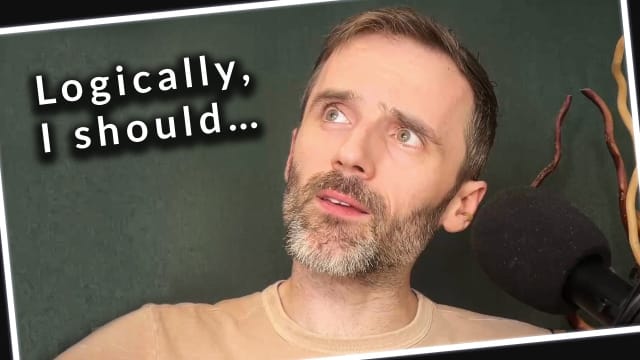
The problem with finding your life purpose, your ideal hobby, your perfect community—the thing that truly lights you up—is that most of us approach it like a treasure hunt. We sit in our heads, thinking hard, imagining the perfect scenario, waiting for the 10 out of 10 moment to arrive fully formed. But Michael Caloz, an existential counselor and transformation coach, has spent years testing a radically different approach: treat it like a scavenger hunt instead. You're not looking for the final prize yet. You're looking for the next clue.

Lecture · 6 sections

The Low Scores Are the Real Data

The shift begins with permission to fail small. Most people expect their first attempt at finding something meaningful—a hobby, a community, an event that resonates—to be good. When it isn't, they abandon the whole direction. Caloz invites a different interpretation: a 2 out of 10 or a 3 out of 10 isn't failure. It's the beginning of a conversation with yourself.

"Maybe the first time you're going to find a two out of 10," Caloz explains in the video. "It's not really what you want, but it's giving you some key pieces of information to help you better understand yourself, your needs, your preferences."

That low score is actually the most useful feedback you can get—provided you know how to read it. The temptation is to write off the entire category. But Caloz's method asks you to do something harder: stay with the discomfort, get curious, and extract the signal from the noise.

Breaking It Down Into Variables

The secret to moving from a 2 to a 3 to a 4, and eventually closer to what you actually want, is learning to deconstruct any event or experience into its component parts. Caloz calls these attributes or variables—the individual elements that, together, make up the whole.

Take an art gallery opening. On the surface, it's one thing. But decompose it, and you find several distinct elements: you're in a room full of people (group size); you're dressed up fancy (dress code); and the focus is on art (activity type). Each one of these variables can energize you or drain you independently. That matters.

The art gallery was a 3 out of 10. Rather than dismiss it entirely, Caloz's method is to interrogate each variable. "Well, I kind of liked being in a room full of people. Maybe this was too many people though," you might notice. "The dressing fancy, I didn't actually enjoy that. I like being more casual. Oh, but art. That was kind of cool. Something about creativity." Now you have data. The group size needs to be smaller. Dress code should be casual. But the creative element? Keep that. Adjust the others.

Next time, you try a wine and paint event—still art, still people, but fewer of them and a more relaxed atmosphere. Maybe that's a 5 out of 10. You're closer. You tweak again. Over time, by isolating which variables work for you and which ones drain you, you gradually drift toward something that actually feels like yours.

The Spreadsheet as Experiment Log

For those whose minds work more analytically—and Caloz is speaking directly to people who live in their heads—the practice can be formalized. A spreadsheet, a journal, or any tracking system becomes a laboratory notebook. After each event or outing, you record which variables were present and how they landed.

"I've kept a spreadsheet for years as I've gone to events and kind of slowly dialed them in more and more," Caloz says. "You can list like what are the different attributes, the variables of this event, and then after the event which ones worked for me, which ones didn't work for me, what did I learn about myself thanks to this event, and then how can I tweak those variables to then plot the next thing that I'm going to try."

For someone stuck in analysis paralysis—someone who has thought about what they want so thoroughly that they've never actually tested anything—this shifts the job of the analytical mind. Instead of ruminating about the "right" choice, the mind gets deployed to run experiments, record results, and identify patterns. It's a job that satisfies the need for rigor while actually moving you forward.

The Vipassana Clue That Led to Zen

Caloz's own origin story with this method offers a vivid example of how the scavenger hunt works in real time. Years ago, he attended a 10-day Vipassana retreat—an intensive meditation practice rooted in Buddhist tradition. "It changed my life," he recalls. "I came out of that thinking, whoa, um there's something about deep meditation, about Buddhism that really works for me."

But here's where the method diverges from conventional wisdom. Rather than declaring "Buddhism is my path" and staying put, he did something subtler. He recognized that while the core variable—meditation and Buddhist practice—resonated deeply, another variable felt off. "This particular tradition feels kind of a bit too hardcore, a bit too conservative for me," he says. "I like the Buddhism, I like the meditation, but I think I need something that's a bit more community oriented, a bit gentler, a bit more talking involved."

He didn't abandon meditation or Buddhism. He identified which variables worked (contemplative practice, philosophical depth) and which didn't (the intensity, the hierarchy, the isolation). Then he experimented with other Buddhist traditions until he found Zen—still Buddhism, still meditation, but a different flavor. The scavenger hunt led him from one clue to the next, each iteration adding clarity.

You Can't Think Your Way There

The hardest part of Caloz's method, for the overthinking mind, is the demand to actually go. "You can't just keep sitting at home thinking about this to figure out what is my life purpose," he says bluntly. "You can start by watching videos and trying to find something that sparks you, listening to podcasts. But then eventually you have to actually go out and try things."

This is the non-negotiable piece. The analytical mind wants to solve the puzzle entirely on the interior, to construct the perfect theory and then execute it. But life doesn't work that way. Reality has information your imagination doesn't. The only way to close the gap is to move into the world, try something imperfect, and pay attention to what happens.

The invitation, then, is to make a list of potential starting points—workshops, meetups, events, classes—knowing full well they won't be 10 out of 10. Knowing they might be 2s and 3s. But committing to track them, reflect on them, and let each low score inform your next choice. Over time, the iterations compound. The 2 becomes a 3, the 3 becomes a 4, and eventually, you find yourself in spaces, with people, doing things that genuinely light you up. Not because you found the perfect answer through thinking, but because you let your lived experience teach you, one clue at a time.

Where to Go From Here

Start by listing five things you've been curious about but haven't tried yet—an event type, a community gathering, a class, a meetup. Pick one and commit to going, knowing it might be a 2 or a 3. Afterward, spend 10 minutes writing down or tracking which elements worked and which drained you. What did you notice about yourself? Then, identify one variable to adjust and plan your next experiment. Repeat. The scavenger hunt begins not with perfect clarity, but with willingness to gather one clue at a time. For deeper support with this process, Caloz offers one-on-one coaching at michaelcaloz.com.
Comments

Loading the conversation…

Transcript

[0:01] to find what really lights you up in

[0:03] life. Think of it like a scavenger hunt.

[0:06] You're not trying to find the final

[0:08] prize right away. You're trying to find

[0:11] the next clue that will give you some

[0:13] more information than you had before

[0:15] that will then lead you to the next

[0:17] clue. Right? So, don't imagine that

[0:21] you're going to find the 10 out of 10,

[0:24] perfect hobby, perfect community,

[0:27] perfect person, perfect anything right

[0:30] away, right? Maybe the first time you're

[0:32] going to find a two out of 10. And it's,

[0:36] you know, it's it's not really what you

[0:38] want, but it's giving you some key

[0:41] pieces of information to help you better

[0:44] understand yourself, your needs, your

[0:46] preferences. So then you can kind of

[0:48] reorient your compass and next time

[0:50] maybe you find a three out of 10 or a

[0:52] four out of 10, right? So you're going

[0:54] piece by piece. So you can think about

[0:57] breaking down events and hobbies and um

[1:02] meetups and you know activities into

[1:04] different attributes. So let's say

[1:07] you're you're you're trying to figure

[1:08] out what what do I like in life? I'm

[1:09] gonna try going to an art gallery

[1:11] opening. You might think, well, what are

[1:13] the attributes of an art gallery

[1:15] opening? Maybe one is I get to be in a

[1:18] room full of people. Two is I get to

[1:22] dress up fancy. And um three is I get to

[1:26] do something involving art.

[1:29] So let's say you go to the art gallery

[1:31] and it's a three out of 10. You know,

[1:34] you know, this isn't really quite right

[1:36] for me. It's not exactly my scene, but

[1:39] something was good about it. So then you

[1:41] can look at the attributes of like of

[1:43] those three, which one did I enjoy?

[1:46] Well, I kind of liked being in a room

[1:47] full of people. Maybe this was too many

[1:49] people though. Uh the dressing fancy,

[1:51] you know, I didn't actually enjoy that.

[1:53] I like being more casual. Oh, but art.

[1:55] That was kind of cool. Something about

[1:56] creativity, right? So maybe next time

[1:59] you try a, you know, wine and paint

[2:02] event. So you know, it's got it's got

[2:04] art. it's got a smaller group of people

[2:06] and it's a different vibe, less fancy,

[2:09] more casual, right? Cool. Okay, now

[2:11] maybe you're on the more on the right

[2:13] track. So, you try that for a while and

[2:15] then that gives you a clue about your

[2:17] next thing.

[2:18] So, for me, as an example, um years ago,

[2:21] I went to my first vaposa 10-day uh

[2:24] Buddhist meditation retreat. It changed

[2:26] my life. I came out of that thinking,

[2:29] whoa, um there's something about deep

[2:31] meditation, about Buddhism that really

[2:33] works for me. But this particular

[2:35] tradition feels kind of a bit too

[2:37] hardcore, a bit too conservative for me.

[2:40] Um, you know, so I like the Buddhism, I

[2:42] like the meditation, but I think I need

[2:44] something that's a bit more uh community

[2:46] oriented. Um, you know, a bit gentler, a

[2:49] bit more talking involved, right? So

[2:52] then I checked out other Buddhist

[2:54] traditions and eventually I found my way

[2:55] to Zen, right? So it's still a form of

[2:58] Buddhism, but it's a different flavor

[3:00] that worked better for me. So uh I

[3:03] invite you to start brainstorming

[3:08] what are some starting points some types

[3:10] of meetups or events or workshops or you

[3:13] know whatever whatever else things you

[3:15] can go out in the world to try out

[3:17] because you can't just keep sitting at

[3:19] home thinking about this to figure out

[3:21] what is my life purpose what should my

[3:23] hobbies be you know what's going to make

[3:25] me excited about life. You can't just

[3:27] kind of be in your head on that. You can

[3:29] start by, you know, watching videos and

[3:31] um, you know, trying to find something

[3:32] that sparks you, listening to podcasts,

[3:34] right? But then eventually you have to

[3:36] actually go out and try things. So try

[3:38] to make a list of potential starting

[3:40] points, different meetups to go to or

[3:42] events or whatever, knowing that they're

[3:44] not going to be perfect. They're not

[3:45] going to be a 10 out of 10. But then for

[3:47] each one, you can keep a spreadsheet if

[3:48] you want or a journal. I I've kept a

[3:51] spreadsheet for years as I've gone to

[3:52] events and kind of slowly dialed them in

[3:55] more and more. And then you can list

[3:56] like what are the different attributes

[3:59] the variables of this event and then

[4:01] after the event which ones worked for me

[4:03] which ones didn't work for me what did I

[4:05] learn about myself thanks to this event

[4:07] and then how can I tweak those variables

[4:09] to then plot the next thing that I'm

[4:12] going to try and you keep doing that

[4:13] over time and over time it gets closer

[4:16] and closer to your ideal event your

[4:18] ideal community and that's where you

[4:20] find belonging that's where you find

[4:21] purpose that's where you find the the

[4:23] hobbies and events and things that

[4:25] really light you up inside and make you

[4:27] feel excited about life like you're

[4:29] aligned. This is the life that I want to

[4:31] be living. I hope that helps. And if you

[4:34] need uh more support with this, this is

[4:37] something that I love supporting people

[4:38] with one-on-one with coaching,

[4:40] michaelal.com.

[4:41] And I hope you have a nourishing day.

Michael Caloz
ArtistMichael Caloz

Michael Caloz is a transformation coach, Hakomi-trained counselor and Zen practitioner who helps analytical, stuck thinkers find purpose, motivation and connection.

Voir le profilSite web
Explorer les thèmes
Life-purposeScavenger-hunt-methodSelf-discoveryMeditation-buddhismOverthinking

Des questions ?

Questions fréquemment posées

Caloz's method reframes low scores (2s and 3s) as useful data, not failure. Rather than abandoning an entire direction, break the experience into its variables—group size, activity type, dress code, etc.—and identify which elements worked and which drained you. Adjust those variables for your next attempt. You're not looking for a perfect 10 on the first try; you're gathering clues that lead to the next experiment.
Thinking alone won't solve it—you have to leave your head and test things in the real world. Start by listing potential events or meetups you're curious about, attend them knowing they might not be perfect, then track which variables (group size, intensity, activity type) worked for you. Use a spreadsheet or journal to notice patterns over time. This gives your analytical mind a productive job: running experiments instead of ruminating.
That's exactly the point. An art gallery opening that felt slightly off might have energized you around art and people, but overwhelmed you with the dress code and crowd size. Keep the parts that worked—creativity, social interaction—and adjust the others. This is how the method moves you from a 3 out of 10 toward something that feels truly aligned.
Yes. Caloz's own path illustrates this: a 10-day Vipassana retreat opened him to meditation and Buddhism, but he realized the tradition felt too rigid and isolated. He then explored other Buddhist lineages until he found Zen—which preserved what he loved (deep practice, philosophy) while offering what he needed (community, gentleness, conversation). Each experience was a clue leading to the next.
There's no fixed timeline. Caloz has kept a spreadsheet for years, continuously refining through trial and error. The speed of refinement depends on how often you try new things and how honestly you reflect on each experience. The key is consistency: small adjustments compound over time until you're spending time in spaces and communities that genuinely light you up.

Continuer la lecture

More from Michael Caloz

Voir tout
Why Rational Minds Guess at Their Own Feelings
Inspire

Why Rational Minds Guess at Their Own Feelings

Smart, analytical people often answer "what do I feel?" by reasoning their way to a plausible guess. Michael Caloz argues the body registers…

9 min read
Overthinking in Meditation: Deflating Thoughts Before They Form
Inspire

Overthinking in Meditation: Deflating Thoughts Before They Form

Michael Caloz argues that "let the thought go" is only the first stage. The next one means meeting thoughts early, softening them until they…

9 min read
Stop Waiting for Permission: Three Questions for Brave Moves
Inspire

Stop Waiting for Permission: Three Questions for Brave Moves

Voice coach Amanda Sellers reflects on a sold-out workshop, Oprah's idea that we block ourselves, and three questions for choosing one coura…

9 min read
Sleep Hypnosis for Overthinkers: Letting Thoughts Wait
Inspire

Sleep Hypnosis for Overthinkers: Letting Thoughts Wait

Picture a body ready for sleep and a mind still on duty. Chibs Okereke's eight-hour hypnosis argues thoughts can keep moving while rest arri…

8 min read

Continue d’explorer

Poursuis ton chemin

Plus de sagesse et de rassemblements dans tout l’annuaire BrightStar.

Plus d’articles

Parcours toute la bibliothèque d’enseignements, d’entretiens et de guides.

Retour à tous les articles →

Enseignants et artistes

Découvre les lignées, les musiciens et les guides du monde conscient.

Explorer les artistes →

Trouver un événement

Kirtan, retraites, bains sonores, breathwork, festivals — bientôt près de chez toi.

Parcourir les événements →