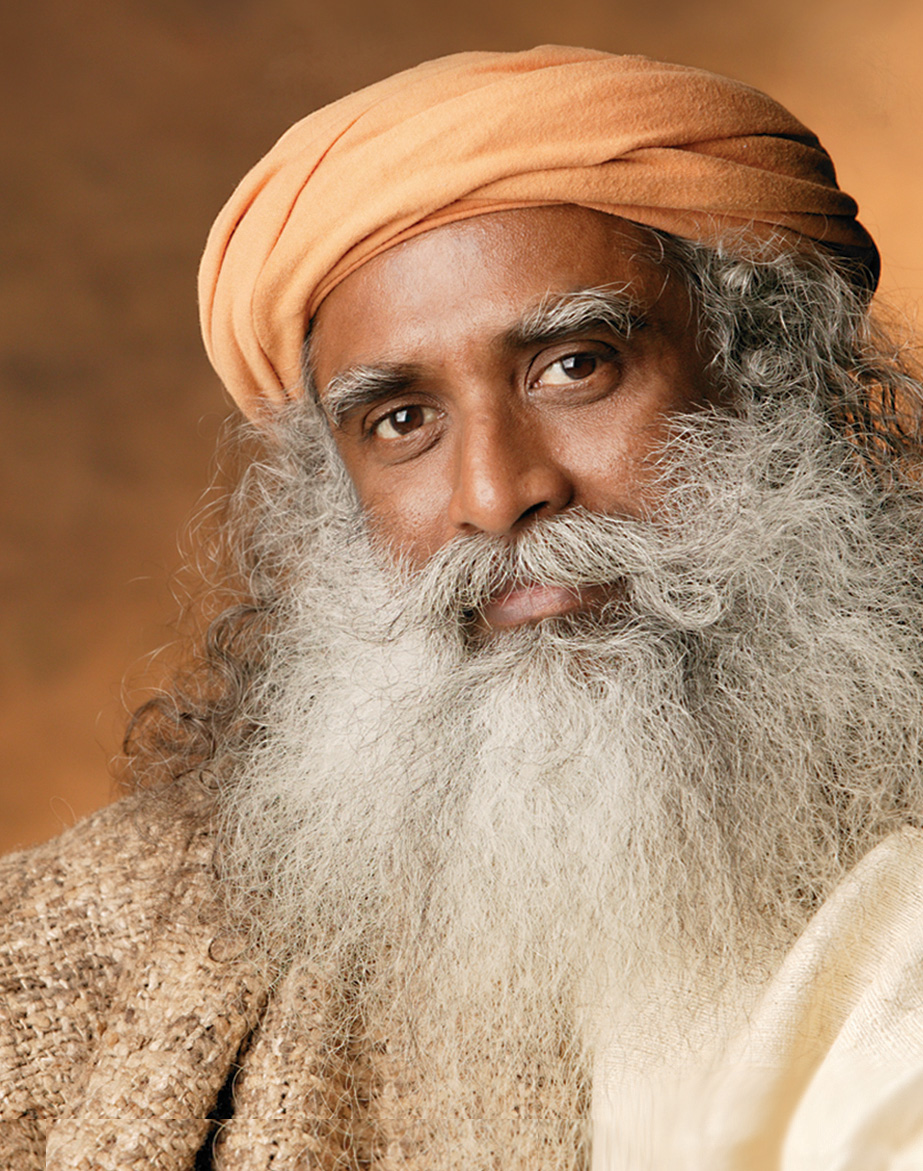
A plain white pillowcase, in one short memory Sadhguru shared in a 2026 episode of his Sadhguru 360 series, becomes an argument about what human life needs beyond function. His mother, he says, could not look at an undecorated bed linen without comment. "How can children sleep on an empty pillowcase?" she would ask, and within five minutes a green parrot or a five-petal flower would be stitched into the cloth. The clip runs barely ninety seconds, but it holds a complete theory: that the feminine is not a job description for cooking and cleaning, and that a home without its touch can be perfectly functional and still feel lifeless.
The clip opens with a claim that is easy to skip past: "In countless little ways, without teaching or saying anything, my mother shaped who I am." Sadhguru is not describing lessons. He is describing presence. "Her presence was simply there, all the time," he says, and the embroidery is the evidence he offers for it.
Notice what the memory is made of. Not a grand gesture, not a speech about beauty, but a reflex. Every pillowcase and every bedsheet in the house carried some embroidery she had done herself. Beauty was not something set aside for holidays or guests. It was applied to the most private surfaces of daily life, the cloth a child's face touches each night.
He was, by his own account, only three or four years old, lying in bed looking at the stitched petals. He describes the specific puzzle that held his attention: "wondering why two were red and three were pink, until I fell asleep." It is a small detail and a telling one. A child's first encounter with art is rarely about technique. It is about noticing, counting, asking why, and drifting off inside a question.
There is a quiet point in that image. The petals were not decorative wallpaper designed to impress. They were fine-grained variation, two shades of one thing and three of another, the kind of difference a young mind has to actually look at. The beauty was of a sort that rewards attention, and it rewarded a three-year-old lying still in the dark.
This is where the memory turns into a claim. "This is what the feminine brings to human life," he says. "It is not merely about cooking, cleaning, or taking care of practical necessities. It's about bringing beauty, warmth, color, and grace into everything."
The sentence is built as a correction. Practical necessities are not dismissed; the list of cooking, cleaning and care is named openly. The point is that those tasks, on their own, are not the whole of what the feminine offers. The embroidery is his example of the surplus: the thing that was not required for the pillowcase to work, and that made the difference anyway.
"Without that dimension, life may be perfectly functional, but it becomes dry and mechanical."
— Sadhguru, Sadhguru 360 (YouTube, October 2026)
The line is worth holding onto because it names a distinction most people feel but rarely articulate. Function answers whether something works. Grace answers whether anyone wants to live inside it. A house can have clean sheets, hot meals and a reliable routine, and still be experienced as a series of tasks. The embroidery is what turns the same house into a place.
The clip does not say, in so many words, that only women can provide beauty, nor does it draw a line around a gender. Sadhguru frames it as "the feminine," a quality he attributes to his mother's way of being and names as a dimension of human life. The distinction matters for readers who come to the idea from different places. The claim is that beauty, warmth and color are not optional additions to life. Whatever name you give the quality, the example he chooses is domestic, intimate and unpaid, which is exactly where such qualities tend to be quietly carried.
The channel's own description of the video makes the same point in fewer words: "Without the feminine, life may be perfectly functional, but it will become dry and mechanical." Read alongside the clip, it suggests that the sentence is not a passing remark. It is a theme Sadhguru returns to as a way of reading ordinary things.
Three ideas are worth carrying out of the clip, each drawn directly from what he says.
- Influence often arrives without instruction. He says his mother shaped him "without teaching or saying anything." Much of what forms a person is absorbed through repeated, unremarked acts.
- Beauty belongs in the everyday surfaces. The pillowcase, the bedsheet, the thing you touch every night. Grace is not reserved for special objects.
- Attention is itself a kind of beauty. The three-year-old counting red and pink petals until sleep took him is the picture of a mind being quietly enriched by something small.
It is also a fair reading that the clip is not a full account of anyone's childhood. It is a short, deliberate reflection, and it does not supply the wider biography, the name of the mother, or the circumstances of the household. What it offers is a single image, carefully chosen, and a single claim about what that image reveals.
If the clip stayed with you, the most direct next step is to watch it again with the pillowcase in mind and notice where in your own week beauty is treated as optional. Sadhguru 360, the series this reflection comes from, is a solo podcast in which he speaks directly to the audience, covering topics from the mystical to current affairs, with new episodes released every Purnima on his YouTube channel. Listening to a full episode will show how a memory like this one tends to open into larger questions about how people live. For readers who want to keep thinking about the idea, the useful question the clip leaves is simple: what in your home is functional, and what is there because someone decided it should be beautiful?


