BrightStar

Parcourir tous les Events

Découvre des rassemblements conscients

events

Yoga
Meditation
Breathwork
Qigong
Tai Chi
Sacred Music
World Music
Medicine Music
Sound Healing
Ecstatic Dance
Destinations populaires
BaliSedonaLos AngelesCosta RicaNew YorkSan FranciscoAustinMiamiJoshua TreeTulum
Voir toutes les catégoriesVoir toutes les destinations

Explorer toutes les fonctionnalités

Des outils puissants pour développer tes événements

Fonctionnalités de la plateforme

Tarification dynamique intelligente
Catégories de billets
Places assignées
Récupération des paniers abandonnés
Récupération des visiteurs
Dons & Prix variables
Système d'affiliation
Scanner de billets
Codes promo
Questions personnalisées
Partage de billets
Ventes additionnelles & Options
Analyses & Rapports
Séquences d'emails
Liste d'attente / Notifier / Rappeler
Personnes & Lieux
Artists & TeachersEvent OrganizersVenues & StudiosKnowledge BaseGlossaryInspiration
Voir toutes les fonctionnalitésÀ propos
TarifsBlog
Language
Saved events
Parcourir tous les événements

events

YogaMeditationBreathworkQigongTai ChiSacred MusicWorld MusicMedicine Music

Destinations populaires

BaliSedonaLos AngelesCosta RicaNew YorkSan Francisco

Personnes & Lieux

Artists & TeachersEvent OrganizersVenues & StudiosKnowledge BaseGlossaryInspiration

Fonctionnalités de la plateforme

Tarification dynamique intelligenteCatégories de billetsPlaces assignéesRécupération des paniers abandonnésRécupération des visiteursDons & Prix variablesSystème d'affiliationScanner de billetsCodes promoQuestions personnaliséesPartage de billetsVentes additionnelles & OptionsAnalyses & RapportsSéquences d'emailsListe d'attente / Notifier / Rappeler
Voir toutes les fonctionnalitésÀ propos
TarifsBlog
ConnexionChercheursCréateurs
  • Parcourir tous les Événements
  • Pour les chercheurs
  • Yoga
  • Méditation
  • Breathwork
  • Qi gong
  • Tai-chi
  • Musique sacrée
  • Musiques du monde
  • Musique médecine
  • Soins sonores
  • Danse extatique
  • Retraites
  • Ateliers
  • Toutes les catégories →
  • Bali
  • Sedona
  • Los Angeles
  • Costa Rica
  • Tulum
  • Byron Bay
  • San Francisco
  • Austin
  • New York
  • San Diego
  • Denver
  • Seattle
  • Portland
  • Miami
  • Toutes les villes →
  • Join the Movement
  • Why we list
  • Sell Globally
  • Pour les créateurs
  • Pour les équipes
  • Pour les écrivains
  • Pour les enseignants
  • Pour les artistes de kirtan
  • Pour les studios
  • Pour les festivals
  • Pour les centres de retraite
  • Pour les associations
  • Ambassadeur de marque
  • Billetterie gratuite
  • Elevate
  • Amplify
  • Réseau de 500K+ acheteurs
  • Récupération des paniers abandonnés
  • Tarification dynamique intelligente
  • Catégories de billets
  • Événements récurrents
  • Places assignées
  • Système d'affiliation
  • Liste d'attente / Notifier
  • Scanner de billets
  • Widget intégrable
  • Diffusion d'événements
  • Messagerie
  • Intégrations
  • Rapports
  • Toutes les fonctionnalités →
  • À propos
  • L'écosystème
  • Blog
  • Glossaire
  • Inspiration
  • Centre d'aide
  • Contact
  • Documentation API
  • Ressources de marque
  • Carrières
  • Presse
  • Conditions d'utilisation
  • Politique de confidentialité

Événements

  • Parcourir tous les Événements
  • Pour les chercheurs
  • Yoga
  • Méditation
  • Breathwork
  • Qi gong
  • Tai-chi
  • Musique sacrée
  • Musiques du monde
  • Musique médecine
  • Soins sonores
  • Danse extatique
  • Retraites
  • Ateliers
  • Toutes les catégories →

Destinations

  • Bali
  • Sedona
  • Los Angeles
  • Costa Rica
  • Tulum
  • Byron Bay
  • San Francisco
  • Austin
  • New York
  • San Diego
  • Denver
  • Seattle
  • Portland
  • Miami
  • Toutes les villes →

Pour les créateurs

  • Join the Movement
  • Why we list
  • Sell Globally
  • Pour les créateurs
  • Pour les équipes
  • Pour les écrivains
  • Pour les enseignants
  • Pour les artistes de kirtan
  • Pour les studios
  • Pour les festivals
  • Pour les centres de retraite
  • Pour les associations
  • Ambassadeur de marque
  • Billetterie gratuite
  • Elevate
  • Amplify

Fonctionnalités

  • Réseau de 500K+ acheteurs
  • Récupération des paniers abandonnés
  • Tarification dynamique intelligente
  • Catégories de billets
  • Événements récurrents
  • Places assignées
  • Système d'affiliation
  • Liste d'attente / Notifier
  • Scanner de billets
  • Widget intégrable
  • Diffusion d'événements
  • Messagerie
  • Intégrations
  • Rapports
  • Toutes les fonctionnalités →

Entreprise

  • À propos
  • L'écosystème
  • Blog
  • Glossaire
  • Inspiration
  • Centre d'aide
  • Contact
  • Documentation API
  • Ressources de marque
  • Carrières
  • Presse
  • Conditions d'utilisation
  • Politique de confidentialité
BrightStar
Téléchargez l'app
Télécharger dans l'App StoreDisponible surGoogle Play
© 2026 BrightStar. Tous droits réservés.
Inspiration

Cleaning the Mind: Satsang, Sadhana and Sadachar Explained

Radhanath Swami
Radhanath Swami
Oct 19, 2026
8 min de lecture
À regarder · 7

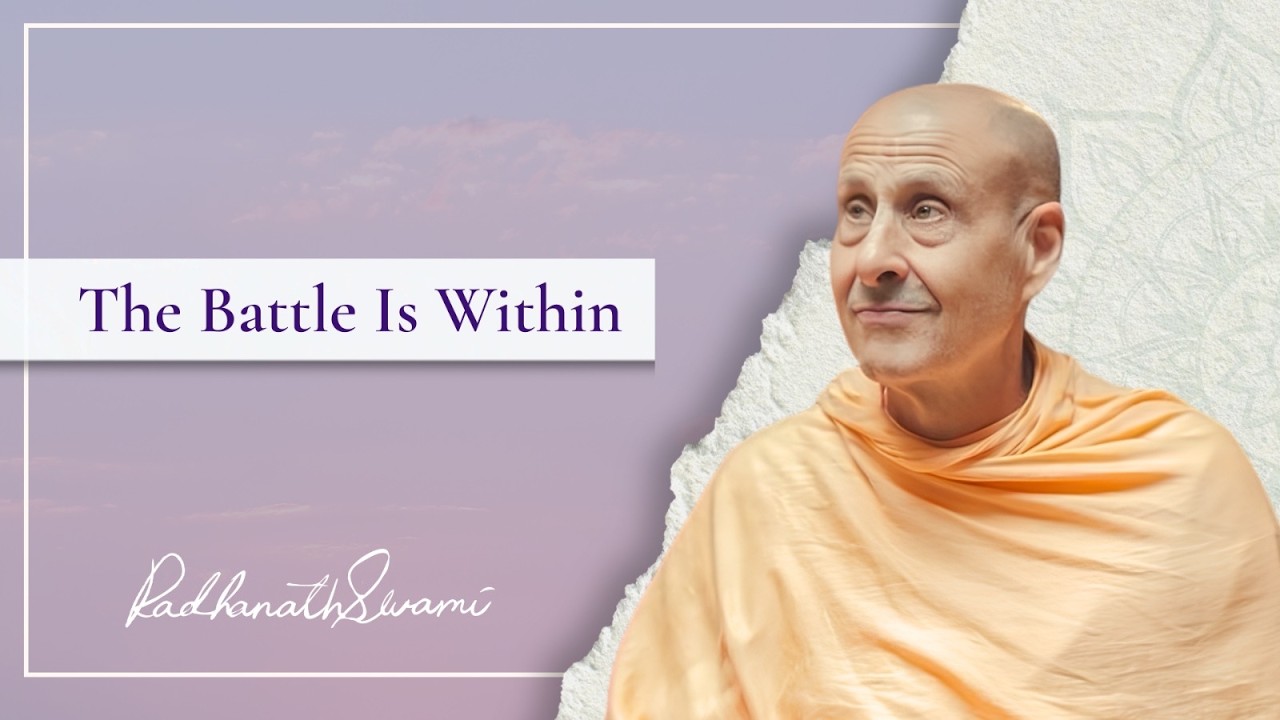
Partway through a short talk published this October, a room full of listeners laughs. Radhanath Swami, a monk in the Bhakti tradition for more than fifty years and the author of several New York Times bestselling books, has just made a point about brushing teeth, and the joke lands because everyone in the room knows the feeling of a clean mouth going dirty again by dinner. He is using that small, familiar habit to explain something much larger: that the mind collects dust the same way, that its cleaning is never finished, and that the cleaning is the path to seeing who we really are. The talk, which runs under eight minutes, moves from a diagnosis of inner pollution to three working principles of spiritual life, and it ends by tying those principles to the way we treat our families, our communities and the wider world.

Lecture · 6 sections

What does it mean to clean the mind?

The talk opens with a picture of layered dust. Radhanath Swami describes the mind as coated by misconceptions, misidentifications, and the desires and aversions that grow out of them. Clear that away, he says, and we get to see who we really are. The image is not of adding anything new to the mind but of removing what has settled on top of something already present.

He then widens the frame to the environment. Rivers, oceans and air are polluted, and global warming is, in his words, a consequence. But he presses the point further: there is also a great deal of pollution within relationships and families, and it has become rare for a family simply to be there for one another. "What to speak of the world family," he says, "the root cause is pollution within the ecology of our own minds." It is a claim about cause. External damage, in his telling, is what inner damage looks like when it spreads.

What does cleaning look like on that account? He describes true prayer and true spirituality as the thing that "cleans the mind, cleans the heart," so that the mind can reflect the divinity within us. Once that reflection is clear, he says, we can perceive the potential divinity in everyone and everywhere. The consequence is practical. He describes a shift in how we hold people who are struggling: we stop hating the diseased person and direct our aversion at the disease itself, and in its place comes compassion and a felt urge to help.

"The cleaning of the mind requires perseverance through our prayer, through our meditation."

— Radhanath Swami, in the video (published October 2026)

Why does the mind get dirty again every day?

This is the part of the talk where the teeth come in, and it is worth taking seriously because it rules out a common misunderstanding. Many people treat spiritual practice as a one-time purification, a retreat or a breakthrough after which the work is done. Radhanath Swami rejects that model. "It's not that you get healthy teeth by cleaning them six years ago," he says, to laughter. The reason is structural: we have to eat and live in this world, and every day the environment deposits something new. So the mind, like the mouth, "requires regular cleaning." He allows that you might brush once or twice a day, and adds that good hygiene simply means regular cleaning.

The analogy carries a second lesson. Regularity is not optional maintenance for people who have fallen behind; it is the definition of hygiene. A practice that depends on a dramatic moment will leave the mind dirty most of the time, and dirt that is ignored compounds. That is why, for him, the cleaning of the mind comes down to perseverance: showing up to prayer and meditation even when nothing seems to happen.

What are satsang, sadhana and sadachar?

Radhanath Swami frames the practice around three principles that he calls very important within his tradition. Each one answers a different part of the problem, and he is clear that they only work together.

Satsang is association with people who inspire us and who share the values we are trying to live by. The reason it matters, he says, is that "our company so much influences the way we think, the way we act, the way we speak and our values." Anyone who has noticed their own speech shifting after a season of time with a particular group will recognize the claim. Satsang is the recognition that the mind is shaped by its surroundings, so the surroundings deserve deliberate choice. He also describes gatherings like the one in which he is speaking as a place where people help refocus one another on what is truly important and of lasting value.

Sadhana is a regular spiritual practice, and his argument here is about attention. People give time to what they understand to be important. "If we understand its importance, we will give time to it every day." Sadhana is the daily act that turns understanding into a habit, the cleaning that actually happens rather than the cleaning one intends to do someday.

Sadachar is the third principle, and he defines it in terms of conduct: our behavior, what we speak, what we choose to do. In other words, character. He puts it in a memorable image: choosing to feed the good dog, meaning the choices that actually enlighten us and enlighten others. The point is that spiritual life is not confined to the hour of prayer. Whatever a person's occupation or social status, they can build on the foundation of these values through ordinary work and ordinary decisions.

Why does laziness count as a spiritual obstacle?

Perhaps the most striking passage in the talk is its argument about laziness, which Radhanath Swami connects to a verse he attributes to the Bhagavad Gita. The Gita, he says, identifies two of the greatest impediments to spiritual progress: ego, meaning egoism, and laziness. He treats laziness as a serious and underrated problem, "especially in spiritual life."

His illustration is autobiographical. As a boy, he recalls, if he wanted to research something he would ride his bicycle across town to the library, look through the books and take notes, and the work felt exciting. Now, he observes, people lie on the couch with a small phone and look everything up. He is careful to say that technology "has its use, no doubt." But he argues it can make us lazy in a particular way. We may have time for many things, entertainment and work included, and still find we have no time to nourish our own spirituality. The question he is asking is not whether we are busy but what we are busy with, and whether the mind and heart are being kept clean at all.

This is a useful reframing for a modern reader. Laziness here is not the absence of activity. It is the drift toward whatever is easiest and most immediately gratifying, with the slower work of inner cleaning quietly dropped from the schedule.

How does inner cleaning change how we treat other people?

The talk ends where it began, with relationships. Radhanath Swami's larger claim is that the inner work is not private. A person whose mind is clearer is better equipped to bring positive change into families, communities and the world. He returns to the idea that we can be the change we want to see, and he frames it as something available to anyone who holds the foundational principles and reconnects regularly with God and with themselves.

What makes the argument persuasive is its modesty. He does not promise that three principles will solve the world's problems. He says that a clean mind sees more clearly, that a clear mind responds to people with compassion rather than aversion, and that this kind of response, repeated across ordinary days, is where change begins. The teeth come back to mind: nobody cleans them once for good, and nobody becomes a different person in a single afternoon. The work is the regularity.

Where to go from here

If the talk has raised a question about your own inner life, start small and specific rather than ambitious. Radhanath Swami's framework suggests three honest questions. Who are the people shaping how you think and speak right now, and do they share the values you are striving for? What daily practice, however brief, do you actually keep, as opposed to one you intend to start? And where in your conduct, in what you say and choose, does your stated value show up in practice?

Watching the full video will give you the speaker's own phrasing, including the pauses and the laughter that make his points land. For a longer treatment of the ideas, look for his published writing, which the video description identifies as the work of a New York Times bestselling author. The talk is short, but its central claim is substantial: the mind needs cleaning every day, and the cleaning is part of who we are becoming.

Comments

Loading the conversation…

Transcript

[0:00] So in the dust of all of our

[0:03] misconceptions, our misidentifications

[0:07] and the subsequent

[0:11] desires that are created and aversions,

[0:15] when that's cleared from our mind,

[0:18] then we actually get to see who we

[0:20] really are.

[0:22] The ecology of the mind,

[0:27] the environment today.

[0:29] So much pollution of the rivers and the

[0:32] oceans and the air.

[0:36] Global warming is [music] a consequence

[0:40] and so much pollution within our

[0:43] relationships,

[0:46] families.

[0:48] It's it's becoming so rare for a family

[0:52] just to be there for each other.

[0:56] What to speak of the world family

[1:02] and the root cause

[1:04] is pollution within the ecology of our

[1:06] own minds.

[1:09] So true prayer, true spirituality

[1:13] cleans the mind, cleans the heart,

[1:17] allows our minds to reflect

[1:21] the divinity

[1:23] within us of who we are.

[1:27] And when we make that connection, we

[1:29] actually can perceive [music] the

[1:30] potential inherent divinity everywhere

[1:33] and in everyone.

[1:36] Then we no [music] longer hate the

[1:37] diseased.

[1:39] We hate the disease.

[1:42] We love the disease.

[1:45] The diseased

[1:47] we feel compassion. We feel impelled to

[1:50] help

[1:52] to manage the mind

[1:56] requires regular cleaning.

[2:01] Just like the we have our Dr. Ash from

[2:05] the dental college. And it's not it's

[2:10] not that you [music] get healthy teeth

[2:13] by cleaning them

[2:17] six years ago.

[2:20] [laughter]

[2:20] I brushed my teeth six years ago.

[2:26] Because the nature of when you have to

[2:28] eat and you have to live in this world,

[2:30] every day it gets dirty again. Yes. So

[2:33] you have to brush it regularly.

[2:36] You may brush it once a day or twice a

[2:38] day.

[2:41] But good hygiene means regular cleaning.

[2:43] So the cleaning of the mind requires

[2:47] perseverance

[2:51] through our prayer, through our

[2:52] meditation.

[2:59] And there's no there's no purpose to our

[3:01] mar [music] our

[3:04] our spiritual practice

[3:06] unless we live by

[3:10] the principles [music] that they're

[3:12] based upon.

[3:15] Within our tradition, there's three very

[3:18] important principles to make that inner

[3:21] connection.

[3:23] There's satsang, which means to

[3:26] associate with people who really inspire

[3:28] us

[3:31] and who share the same values that we're

[3:34] striving for

[3:38] because our company so much influences

[3:42] the way we think, the way we act, the

[3:44] way we speak and our values.

[3:49] and sadena having a a regular spiritual

[3:54] practice

[3:55] giving value to

[3:59] cleansing our minds, our hearts, making

[4:02] that reconnection.

[4:07] If we understand its importance, [music]

[4:09] we will give time to it every day.

[4:16] Laziness

[4:18] is a great impediment

[4:22] especially in spiritual life.

[4:28] In today's world

[4:35] often times progress means [music] to

[4:38] help us become more lazy.

[4:41] When I was a little boy, if I wanted to

[4:43] [music] research something, I would ride

[4:45] my bicycle across the town and go to the

[4:48] library and be looking in the books and

[4:50] taking notes. And it was really

[4:51] exciting.

[4:55] Now people just lay on the couch with a

[4:57] [music] little phone and just look it

[4:59] all up.

[5:04] So it has its use, no doubt, but it can

[5:07] also make us really lazy. All this

[5:09] technology can really make us lazy

[5:18] and spiritually

[5:21] if we have time for so many other things

[5:23] but we don't have time to actually

[5:26] nourish our [music] own spirituality.

[5:30] If we have so many so much time to do

[5:33] our work and our and our entertainment

[5:36] and everything but we don't have time to

[5:40] keep our minds and our hearts clean

[5:45] that's that's a serious impediment

[5:50] laziness

[5:53] Bhagavad Gita explains [music] two of

[5:54] the greatest

[5:56] impediments to spiritual progress

[5:59] is ego egoism and laziness.

[6:08] So it's really a beautiful

[6:11] um

[6:13] virtue that we can gain by

[6:17] such meetings like we're having today

[6:21] where we help to refocus each other

[6:25] to the to what's really important in

[6:27] life, what's of true value.

[6:30] and inspiring us to give time and energy

[6:34] to cultivate that

[6:38] satsang, sadena, spiritual [music]

[6:40] practice and sadachar.

[6:44] Sadachar means our behavior,

[6:48] what we speak, what we choose [music] to

[6:51] do. In other words, our character

[6:58] to choose to feed the good dog, to

[7:01] choose to make the decisions that are

[7:03] actually going to enlighten us and

[7:05] enlighten others.

[7:08] If we have these foundational [music]

[7:10] principles

[7:12] of these values and regularly making

[7:15] this connection

[7:19] to God, to ourselves

[7:24] that we can [music] build upon that

[7:28] foundation

[7:30] through whatever we do,

[7:34] whatever our occupation may be, whatever

[7:36] our status in society may be,

[7:41] We actually

[7:46] be the change that we want to see in the

[7:49] world.

Radhanath Swami
ArtistRadhanath Swami

Monk in the bhakti tradition who has spent over 50 years guiding individuals toward deeper purpose and directing transformative social initiatives across India, Europe, and North A…

Voir le profilSite web
Explorer les thèmes
Mind-cleansingSatsangSadhanaSadacharBhakti-tradition

Des questions ?

Questions fréquemment posées

He describes the mind as covered in dust made of misconceptions, misidentifications, desires and aversions. Prayer, meditation and spiritual practice remove that buildup so a person can see who they really are and reflect the divinity within.
Radhanath Swami compares it to teeth: you cannot get healthy teeth by cleaning them once years ago, because daily living makes them dirty again. He says the mind requires regular cleaning and that good hygiene means regular cleaning.
Satsang is keeping company with people who inspire you and share your values, sadhana is a regular spiritual practice, and sadachar is living your values through your behavior, speech and choices. He presents them as foundations that work together.
He says the Bhagavad Gita identifies ego and laziness as two of the greatest impediments to spiritual progress. He argues that modern technology and entertainment can make people lazy about nourishing their spirituality even when they are busy.
Sadachar refers to good conduct: what we speak, how we behave and the choices we make. Radhanath Swami describes it as character, and uses the image of choosing to feed the good dog as an example of choosing decisions that enlighten oneself and others.
Radhanath Swami argues that a clearer mind stops hating the person who is struggling and directs its aversion at the disease, which produces compassion. He says this inner change can positively affect families, communities and the wider world.

Continuer la lecture

More from Radhanath

Voir tout
From Civil Rights to Spiritual Search: One Man's Journey
Inspire

From Civil Rights to Spiritual Search: One Man's Journey

A teenager in 1960s America witnessed injustice and hypocrisy, leading him to protest the Vietnam War and join the Civil Rights Movement. Hi…

1 min read
Two Dogs Within: Choosing Love Over Ego
Inspire

Two Dogs Within: Choosing Love Over Ego

Ancient wisdom meets modern struggle: the choice between feeding your ego or nurturing your compassionate nature shapes your character and t…

1 min read
Namo Namo: The Devotional Song Sung Back to a Teacher
Inspire

Namo Namo: The Devotional Song Sung Back to a Teacher

A three-minute devotional song, written by Sutara and Omkara and shared with a sangha room in June 2026, turns a teacher's teaching into a c…

1 min read
Why Does God Allow Suffering? A Reframing of the Argument
Inspire

Why Does God Allow Suffering? A Reframing of the Argument

A therapist's question about suffering becomes a lesson on why the classic argument against God rests on a flawed picture. Here is Tolle's r…

1 min read

Continue d’explorer

Poursuis ton chemin

Plus de sagesse et de rassemblements dans tout l’annuaire BrightStar.

Plus d’articles

Parcours toute la bibliothèque d’enseignements, d’entretiens et de guides.

Retour à tous les articles →

Enseignants et artistes

Découvre les lignées, les musiciens et les guides du monde conscient.

Explorer les artistes →

Trouver un événement

Kirtan, retraites, bains sonores, breathwork, festivals — bientôt près de chez toi.

Parcourir les événements →