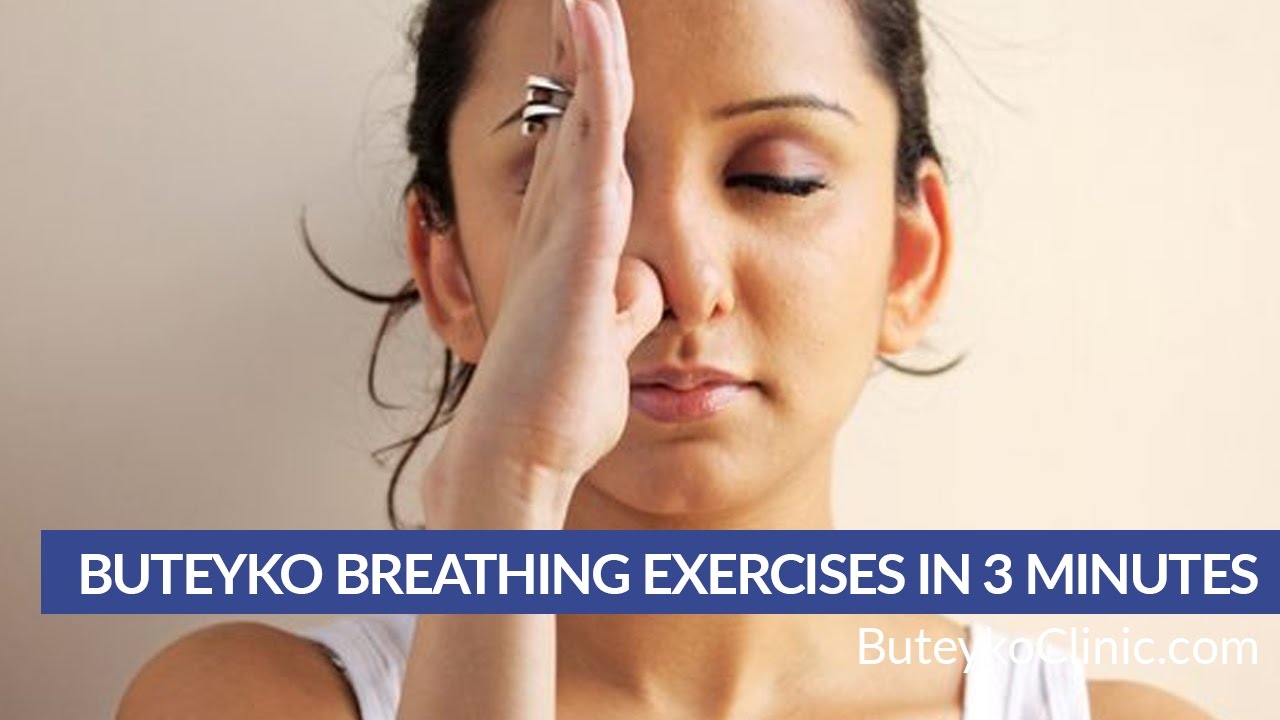
On screen, Patrick McKeown asks you to try something that sounds like a dare. Take a small breath in through the nose, a small breath out, pinch the nostrils shut, and nod your head gently while you hold. Keep holding until you feel a strong need for air, let go, calm your breathing at once, wait about a minute, and go again. Five or six rounds, he says, and the nose should be open. This eleven-and-a-half-minute video from Buteyko Clinic International is a demonstration of the first exercise McKeown uses with almost everyone, and it doubles as a short case for why nasal breathing matters more than most people assume. Along the way it raises a theory about nitric oxide that McKeown himself admits nobody has fully pinned down.
McKeown begins by describing the usual sequence. A person with a stuffed nose goes to the pharmacist for a decongestant, then to a doctor for a nasal steroid, and if the problem persists, may end up facing surgery. He sets his own approach against that path. He says he has used this exercise with thousands of people and that only about ten to twelve were unable to restore nose breathing. He claims it still works with a slight deviated septum, and that small nasal polyps can shrink. Very large polyps are a different matter, and he says those people need to see an ear, nose, and throat specialist.
That claim deserves to be read as what it is: a practitioner's reported experience, not a controlled trial result stated in the video. What the video does give is a clear mechanism to test for yourself, which is more than most advice on congestion offers.
The sequence is simple, but the details matter. Start with a small, quiet breath in and a small, quiet breath out through the nose. Pinch the nose closed and hold, gently nodding or swaying as you go. The aim is to build what McKeown calls a strong air shortage without forcing it. When you release and resume breathing, breathe only through the nose and bring the volume back toward normal immediately.
The first breath after the hold will usually be bigger than normal, and McKeown tells viewers to suppress the second and third breaths to calm things down. A useful self-check is recovery: you should settle the breath within two to three breaths. If you cannot, you held too long. Rest for a minute or so, then repeat. He suggests five or six rounds, which he estimates at roughly five minutes in total, and says that by the end the nose should be temporarily decongested.
He also advises a small test along the way. Block one nostril and breathe through the other, then switch, to notice which side feels more open. Viewers may feel their diaphragm spasm during a longer hold. McKeown's instruction for that moment is to relax into the body rather than fight it, and to let go when the need to breathe becomes strong.
Note the word "temporarily." McKeown is clear that the breath hold produces a short-term effect. For a more lasting result, he says, the control pause needs to be increased, and for children the work is adjusted differently. The breath hold is, in his framing, the opening move rather than the whole practice.
This is the part of the video that most viewers should not skip. McKeown names specific groups for whom he would not push the exercise: people with high blood pressure, type 1 diabetes, and cardiovascular issues. His advice for anyone in doubt is blunt: "If in doubt, go easy with the exercises." He describes the practice as safe for the vast majority of people, but powerful enough that holding your breath as long as possible can feel intense.
The practical takeaway is that the goal is not a heroic breath hold. It is a strong but manageable air hunger, followed by a calm recovery. Anyone with a cardiovascular condition or diabetes should check with their own clinician before attempting it.
Before he asks viewers to breathe, McKeown asks them to explore their own anatomy. Drag your tongue along the roof of your mouth from front to back, he says, until you reach the soft palate. The floor of the nasal cavity, in his description, is the roof of the mouth. His reasoning is one of the more striking lines in the video: "nature doesn't waste space." The nasal cavity contains turbinates, and it also releases nitric oxide.
The argument continues from there. As air passes through the nose it picks up moisture, and McKeown says gas exchange, the transfer of oxygen from the lungs into the blood, takes place in the presence of that moisture. He cites an estimate that nasal breathing can improve arterial oxygen uptake by between 10 and 20 percent. He adds that nasal breathing also helps with oxygen delivery to the cells because of carbon dioxide, a point he says he had covered earlier in the series.
"The key is to breathe gently, softly and slowly through the nose. And by that we have to optimize our oxygen uptake."
Patrick McKeown, in the video, around 3:00
The 10-to-20-percent figure is an estimate he attributes to research rather than a finding he demonstrates on screen. Read it as a point in a larger argument about why the nose, not the mouth, should do the work.
Nitric oxide is the video's central mystery and its most ambitious claim. McKeown describes it as a wonderful gas and says that, in 1992, the journal Science called it a molecule of the air. In his telling, it plays a role in opening up blood vessels, in reversing cholesterol and the buildup of plaque, in neurotransmission (how brain cells communicate), and in homeostasis.
He then connects that gas to the exercise itself. His hypothesis is that after you pinch the nose, nitric oxide pools in the nasal cavity, and that this pooling is probably what helps decongest it. He is candid about the limits of his knowledge. "We're not exactly sure how this works," he says. "However, we know it works."
"We're not exactly sure how this works. However, we know it works."
Patrick McKeown, in the video, around 4:10
That honesty is worth noticing. The exercise has a track record in his clinic, and the mechanism is a working hypothesis. Viewers who want to take the nitric oxide idea further should treat it as an open question rather than settled science.
The final section moves from technique to stakes. When someone has a head cold and a stuffed nose, they tend to breathe through the mouth. McKeown's concern is that this lets in unfiltered, cold, dry air, which he says can inflame both the upper and lower airways. He points to people prone to asthma, many of whom also have rhinitis, and argues that learning to breathe through the nose is crucial, because nasal breathing filters and conditions incoming air.
Sleep is the other stake he names. People with a blocked nose, he says, often sleep poorly, wake tired, hold their breath during the night, get up to use the bathroom, and wake with a dry mouth and a stuffed nose. Those with asthma may wake with wheezing or coughing. His conclusion is that breathing through the nose "at all times" is the goal, and the breath hold is a way to restore that habit.
"It's crucial to breathe through the nose at all times."
Patrick McKeown, in the video, around 5:36
The nose-unblocking exercise is easy to try and easy to overdo, which makes the caution in the video as important as the instructions. If you try it, keep the holds comfortable, follow the two-to-three-breath recovery rule, and stop if you feel unwell. If you have high blood pressure, type 1 diabetes, a cardiovascular condition, or a large nasal polyp, speak with your own clinician first.
For a broader view, the video is most useful as an entry point. McKeown's underlying argument is that nasal breathing governs how we take in air, how we sleep, and how our airways respond to illness. The breath hold is one tool within that larger practice. Treat the five-minute routine as a test of how open your nose is today, and let the rest of the Buteyko material, including the control pause work McKeown mentions, do the longer job.