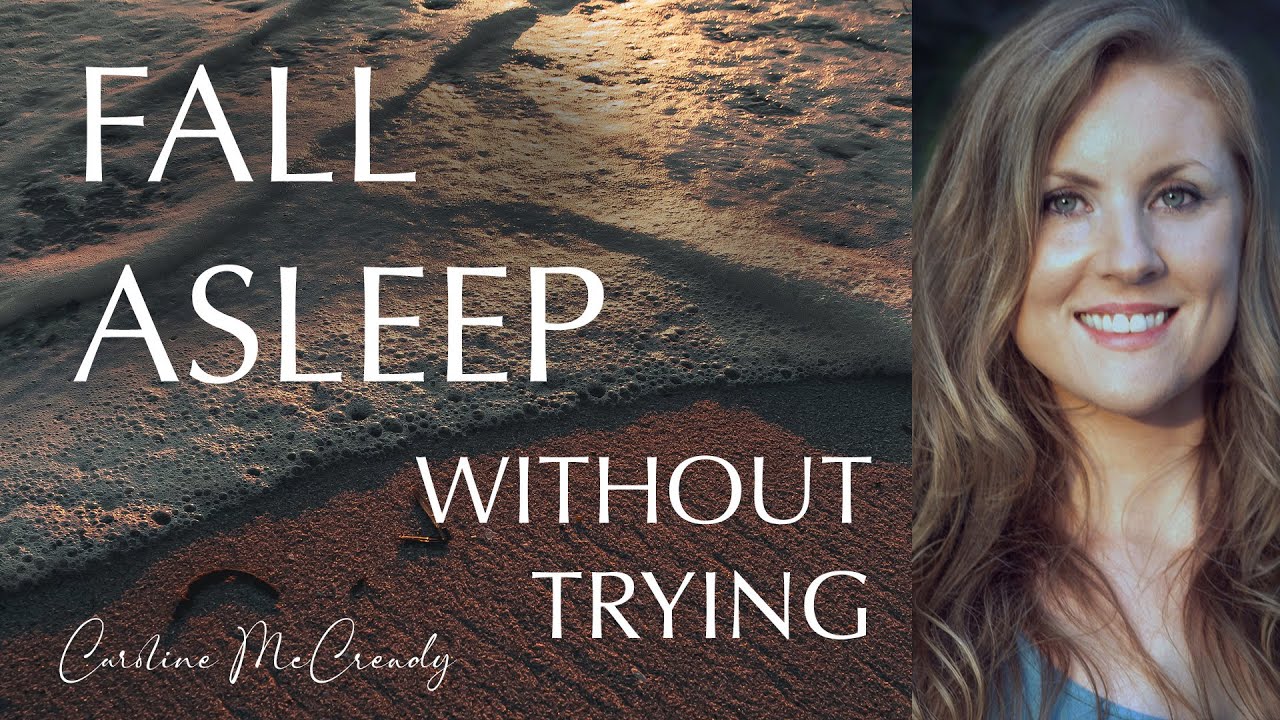
The meditation opens not with philosophy but with a practical instruction—"close your eyes"—and immediately establishes an intimate space. Caroline McCready's 40-minute guided breathing meditation is a masterclass in the architecture of stillness: a methodical descent from distraction into what the practice calls "spacious inner stillness." With nearly 800,000 views since its 2019 release, it has become a touchstone for those seeking structured entry into deep relaxation without requiring belief or prior experience.
What distinguishes this meditation is precision. McCready doesn't ask you to visualize or adopt a philosophy. She builds the practice around a single instrument everyone possesses: the breath. Yet the journey isn't static. It unfolds through distinct phases—from breath awareness, through full-body release, into a fundamental shift in how you relate to breathing itself, and finally into extended periods of silence.
The meditation begins simply: "start taking some nice big, slow breaths, imagine drawing the breath right into the base of your stomach" (70 seconds). This isn't mechanical abdominal breathing. It's an invitation to reorganize the nervous system through sensation—noticing where breath actually moves when you're not controlling it.
Over the next ten minutes, McCready systematically guides attention through the body's primary holding patterns: shoulders ("feel any weight on your shoulders release," 163 seconds), jaw ("allow your jaw to completely soften," 193 seconds), face ("feel your forehead, your temples and your eyes relax," 601 seconds). Her language is consistently kinesthetic, never abstract. You feel muscles releasing, tension leaving. This somatic approach treats the body not as an obstacle but as the gateway to stillness. Conceptual thinking naturally stills when consciousness is fully devoted to physical sensation.
Around the four-minute mark arrives a crucial pivot. McCready instructs: "let go of trying to slow or control the breath and allow each breath to simply rise and fall of its own accord" (233 seconds). This marks the shift from active effort to receptive awareness. You're no longer directing your breath; you're witnessing it. The autonomic nervous system can relax only when it's not being consciously managed. Paradoxically, deeper relaxation requires less doing, not more.
As the meditation deepens, McCready introduces what becomes its heart: "just notice a space between each exhale and inhale" (913 seconds). That micro-silence when exhalation ends and inhalation hasn't begun is rarely contemplated—yet it contains the practice's deepest teaching.
McCready describes this pause as foundational: "this quiet stillness is the origin of the breath, a space from which the breath rises and returns" (1120 seconds). The respiratory pause is where the autonomic nervous system finds genuine rest—it's built into your physiology. By inviting you to "follow the full length of the exhale to the very last whisper of the breath" (995 seconds) and "let the exhale lead you to the quiet stillness" (1025 seconds), she teaches that peace isn't distant. It already exists in the margins of ordinary breathing.
The meditation's central insight is radical: stillness is not a state to achieve but the ground upon which each breath naturally rests. McCready emphasizes, "notice how this stillness exists beneath and throughout each breath" (1266 seconds). You're not transcending ordinary experience; you're noticing where stillness already lives—in the micro-pauses your body creates continuously. As practice deepens, repeated attention to the pause extends it naturally, not through forcing breath-retention but through the nervous system's own downregulation.
One of the meditation's key innovations is how it uses the body as primary teacher. Rather than asking you to observe thoughts, McCready uses precise somatic instruction to naturally quiet mental activity. When attention is fully on "the muscles between your ribs expanding and contracting" (381 seconds) or "the breath reaching into every part of you from the tips of your toes, to the top of your head" (458 seconds), there's no bandwidth left for rumination. The mind stills through redirection into richer sensory experience.
The meditation's instructions also address posture pragmatically. You can sit cross-legged, sit upright in a chair, or lie down—whatever allows "a balance between being comfortable and alert." This flexibility reflects deep understanding: genuine ease allows the nervous system to relax. Tension or discomfort pulls attention outward; the body and brain are unified. Physical support becomes the foundation upon which consciousness can safely deepen.
The final phase deliberately shifts from deepening to conscious return. McCready brings attention back to "your body and the room or space that you are in" (2338 seconds), asks you to feel "the weight of your body on the surface beneath you" (2351 seconds), then invites grounding movements: "gently wiggle your fingers and toes" (2357 seconds). Only after re-embodiment does she suggest opening your eyes (2364 seconds).
This return isn't incidental. It's part of the practice itself—integration that honors both the depth reached and the world you're transitioning back into. The instruction to "notice how you feel" (2370 seconds) and "give yourself a big thank you for taking this time" (2380 seconds) brings the practice full circle. The silence discovered in meditation isn't confined to cushions; it remains available throughout your day.
Explore this practice at different times: morning for grounding, evening for integration before sleep, or in stress moments as an immediate reset. The 40-minute depth allows genuine nervous system recalibration. McCready offers a 15-minute version for constrained days, but the full journey has architectural integrity. Consistency matters more than duration—meditation is a skill developed through repetition. As familiarity deepens, you might explore related traditions like Zen or Vipassana, but this foundation of somatic breath awareness provides a universal grammar translating across many paths.