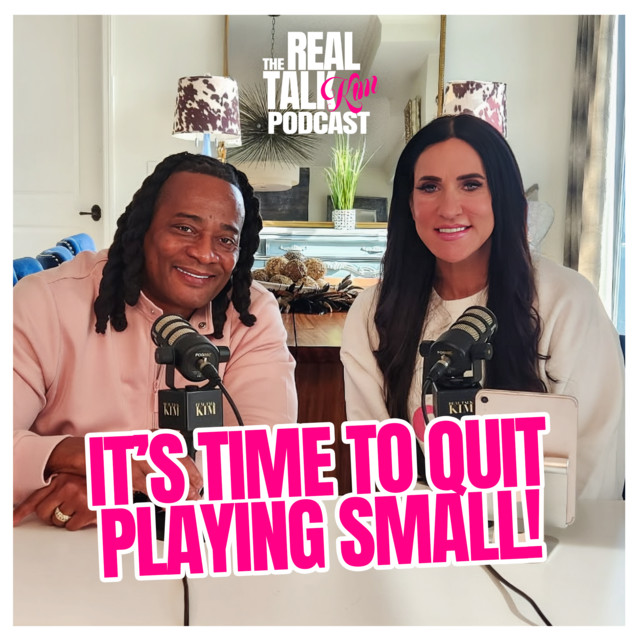
In a world that often encourages us to stay quiet, blend in, and avoid making waves, there's something profoundly revolutionary about choosing to play big. Real Talk Kim's latest podcast episode, "It's Time to Quit Playing Small!" delivers a powerful message that resonates deeply with anyone on a journey of and conscious living.
The episode opens with a bold declaration that sets the tone for everything that follows: an unwavering commitment to authenticity and direct communication. This isn't just about being honest—it's about embracing a way of being that transforms not only how we interact with others but how we show up in the world as our fullest selves.
One of the most striking aspects of Kim's approach is her commitment to direct, face-to-face communication. As she powerfully states in the episode:
"I tell you in your face. I don't talk behind people back. So that's why I handle the public and the spotlight a lot better... Because I say what's on my mind."
This approach to communication represents something much deeper than just being straightforward—it's about living in complete alignment with your . When we speak our truth directly and honestly, we eliminate the energy drain that comes from maintaining facades or engaging in passive-aggressive behaviors.
The Spiritual Foundation of Authentic Communication
From a perspective, authentic communication is a spiritual practice. It requires us to:
- Trust in our inner wisdom and intuition
- Release the need for external validation
- Embrace vulnerability as a strength
- Honor our boundaries and values
- Accept that not everyone will understand or agree with us
When Kim speaks about handling "the public and the spotlight," she's touching on something profound: those who live authentically naturally develop resilience against external judgment because they're anchored in their truth rather than in others' opinions.
Playing small manifests in countless ways in our daily lives. It might look like:
- Avoiding difficult conversations to keep the peace
- Diminishing your achievements to make others comfortable
- Staying silent when you have valuable insights to share
- Choosing comfort over growth opportunities
- Apologizing for taking up space or having needs
These patterns often stem from childhood conditioning, societal expectations, or past experiences where authenticity felt unsafe. However, requires us to examine and transform these limiting patterns.
The Energy of Authenticity
There's a unique energetic signature that comes with authentic living. When we align our actions, words, and intentions, we create a coherent energy field that others can sense. This is why some people naturally command respect and attention—not through force or manipulation, but through the power of their authentic presence.
Kim's ability to "handle the public and the spotlight" isn't just about confidence; it's about the magnetic quality that emerges when someone lives in complete integrity with themselves. This kind of becomes a beacon for others who are seeking permission to live authentically too.
The episode's mention of the upcoming Dream Conference in Atlanta represents more than just an event—it's a symbol of what becomes possible when we stop playing small. Creating and hosting transformational events requires tremendous courage, vision, and commitment to serving others' growth.
The conference details shared in the episode demonstrate practical aspects of playing big:
- Taking bold action on inspired visions
- Creating community and connection opportunities
- Investing in experiences that facilitate transformation
- Sharing resources and opportunities with others
Transitioning from playing small to living authentically requires intentional practice and commitment. Here are actionable steps inspired by Kim's approach:
1. Develop Direct Communication Skills
Practice having honest, respectful conversations instead of avoiding difficult topics. Start small with low-stakes situations and build your confidence over time.
2. Examine Your Motivations
Before speaking or acting, ask yourself: "Am I doing this from fear or from love? Am I trying to please others or honor my truth?"
3. Create Boundaries
Playing small often involves poor boundaries. Learn to say no to what doesn't align with your values and yes to opportunities that support your .
4. Embrace Visibility
Whether in your personal relationships, career, or spiritual practice, practice being seen for who you truly are rather than hiding behind masks or roles.
5. Trust Your Inner Guidance
Develop a strong connection with your intuition through practices like meditation, journaling, or prayer. Let this inner wisdom guide your choices rather than external expectations.
When we choose to stop playing small, we don't just transform our own lives—we give others permission to do the same. This is the essence of : leading by example and creating space for others to step into their power.
Kim's podcast itself is a perfect example of this ripple effect. By sharing her authentic voice and experiences, she creates a container for listeners to examine their own patterns and make empowering choices.
Building Communities of Authenticity
The mention of vow renewals and community gatherings in the episode highlights another crucial aspect of playing big: creating and nurturing communities where authenticity is celebrated rather than hidden. These spaces become sanctuaries where people can practice being their true selves without fear of judgment.
The journey from small to big isn't always comfortable. Common fears that arise include:
- Fear of rejection or criticism
- Imposter syndrome
- Concern about outshining others
- Worry about increased responsibility
- Anxiety about failure or success
These fears are natural parts of the , but they don't have to control our choices. By developing spiritual practices that anchor us in our truth and purpose, we can move through fear with courage and grace.
The message from Kim's podcast is clear and urgent: it's time to quit playing small. The world needs your authentic voice, your unique gifts, and your bold presence. Every moment you spend diminishing yourself is a moment the world loses access to what you came here to offer.
Playing big isn't about ego or self-aggrandizement—it's about honoring the divine spark within you and allowing it to shine brightly for the benefit of all. It's about having the courage to be honest, direct, and authentic in all your interactions.
As you reflect on this message, ask yourself: Where in your life are you playing small? What would change if you fully embraced your authentic power? What conversations need to be had, what dreams need to be pursued, what truth needs to be spoken?
The time for playing small has passed. Your is calling you to step fully into who you were meant to be. The spotlight isn't something to fear—when you're living authentically, it becomes a natural place to shine your light for others to see and follow.
Take inspiration from Kim's example and commit to authentic communication, bold action, and unwavering truth-telling. Your journey of conscious living depends on it, and the world is waiting for what you have to offer.
- Authentic communication requires speaking your truth directly and honestly, avoiding behind-the-back conversations
- Playing small diminishes your divine light and prevents you from fulfilling your spiritual purpose
- Direct, honest communication builds resilience against external judgment and criticism
- Living authentically creates a magnetic energy that naturally draws respect and opportunities
- Building communities where authenticity is celebrated helps others permission to play big too
- Fear of visibility and judgment are natural but shouldn't control your choices or actions
- Spiritual growth requires breaking free from people-pleasing patterns and embracing your true self
How can I start playing bigger in my spiritual journey?
Begin by practicing authentic communication in low-stakes situations, setting healthy boundaries, and trusting your inner guidance. Start sharing your truth more openly and stop apologizing for taking up space.
What if people don't like my authentic self?
Not everyone will resonate with your authentic self, and that's perfectly okay. Those who are meant to be in your life will appreciate your honesty and authenticity. Playing small to please others ultimately serves no one.
How do I overcome the fear of being too direct?
Practice speaking your truth with love and respect. Remember that being direct doesn't mean being harsh. Start with small conversations and build your confidence gradually while maintaining compassion.
Can playing big be spiritual if it draws attention to myself?
Absolutely. Playing big in a spiritual context means serving your highest purpose and helping others do the same. When you shine your authentic light, you inspire others to do the same, creating a ripple effect of positive transformation.
How do I know if I'm playing small?
Signs include avoiding difficult conversations, diminishing your achievements, staying silent when you have valuable input, choosing comfort over growth, and constantly apologizing for having needs or taking up space.
What's the difference between playing big and being egotistical?
Playing big comes from authentic self-expression and serving your divine purpose, while ego comes from a need for validation or superiority over others. Playing big uplifts everyone; ego diminishes others.
How can authentic communication improve my relationships?
Honest, direct communication eliminates misunderstandings, builds trust, and creates deeper connections. It also helps establish healthy boundaries and ensures both parties know where they stand.