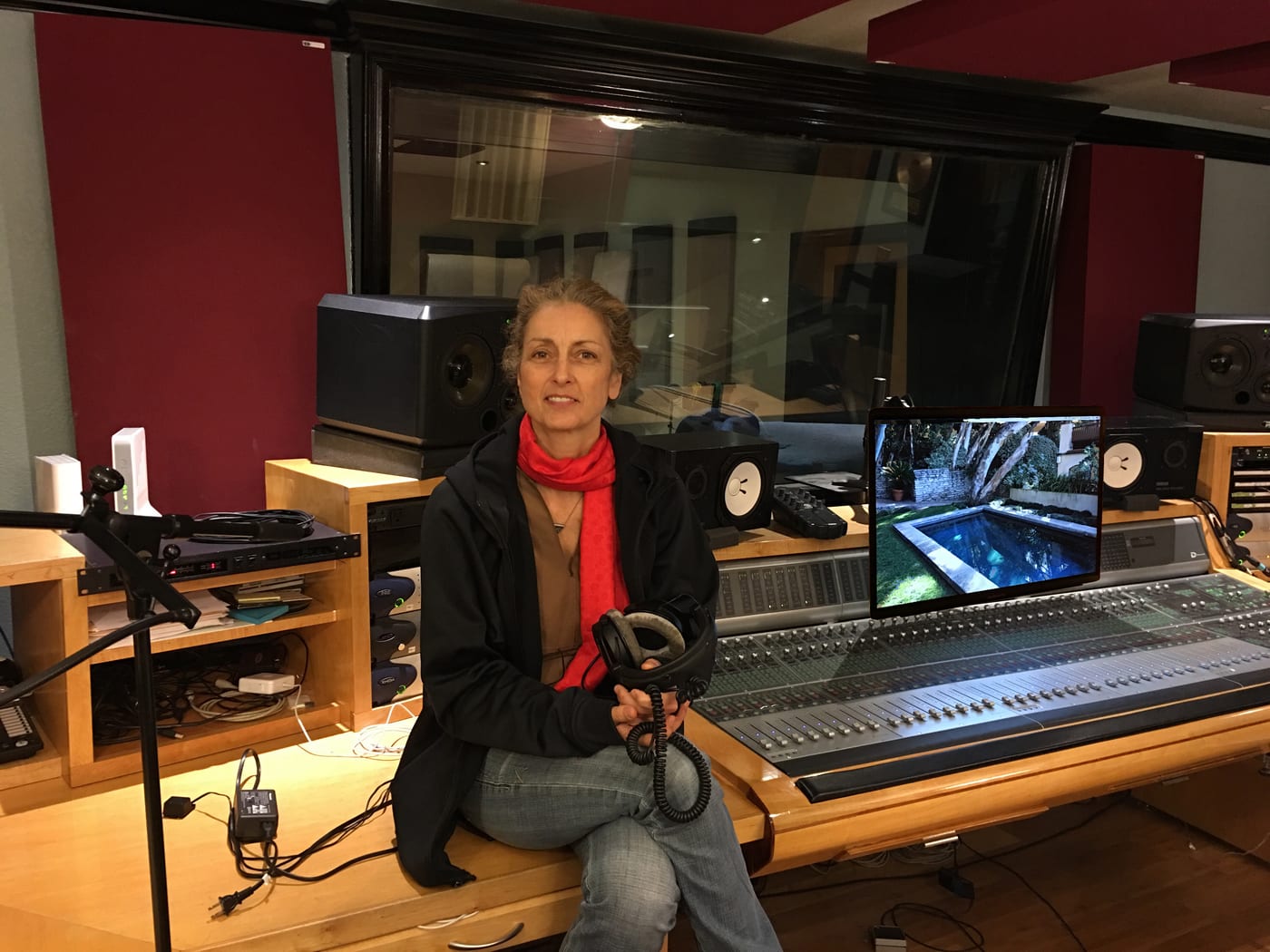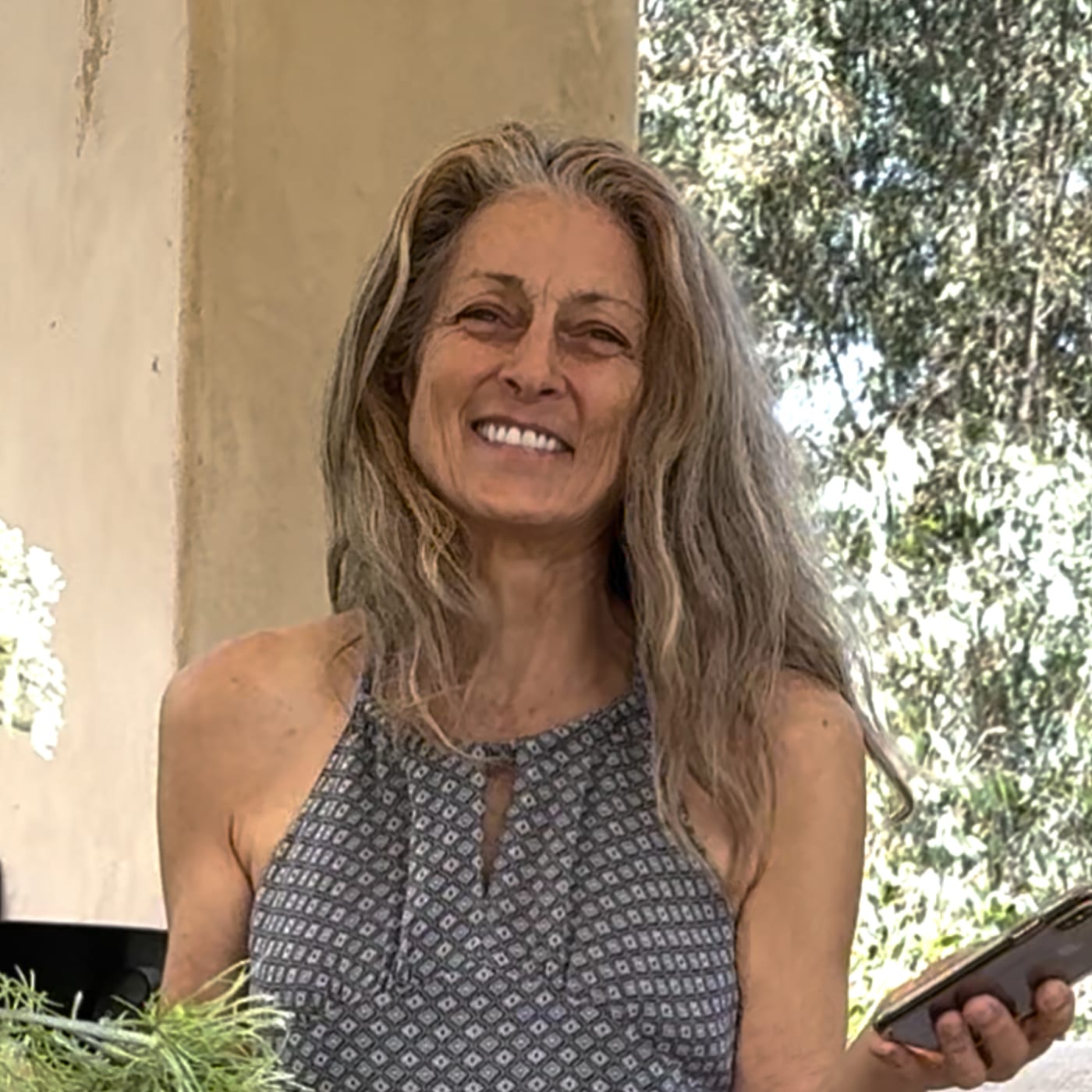

Wah! is a musician who brings healing through sound and the teachings of yoga. Her work sits where devotional chanting meets yoga teaching and the wellness world, and it is hard to place in any single category. She is a kirtan leader, a bass player, an author, a sound healer, a speaker and a life coach. Her own website describes her as the first female to bring kirtan, the call-and-response chanting of India, to the West in the 1990s. That is her account, not something independently documented, but it anchors her reputation in American yoga circles.
The available record does not document Wah!'s hometown or early life, so this profile leaves them aside. What it does show is a working musician whose path ran through rock before it settled into chant. Since 1997 she has played bass guitar with her joyful rock band at yoga festivals and centers around the U.S. That background is unusual for a chant artist, and it helps explain why her shows can feel closer to a rock concert than a meditation session.
The record does not name a single moment that turned her toward this work, and it would be inventing to supply one. What can be said is that the 1990s and the years after brought together the three strands that define her: the devotional practice of kirtan, the community of yoga studios and festivals, and the rhythmic instincts of a bass player.
Wah!'s work belongs to bhakti, the devotional path in which sung names of the divine carry the practice, and her form is kirtan. Her recordings and online concerts are built on Sanskrit mantra, with her voice carrying the melody and the call-and-response structure at the center. The available data names no specific teacher or line of succession, so her place in the tradition is best understood through the work itself.
What sets her apart is how she treats that material. Many kirtan artists work in acoustic, unamplified settings. Wah!'s catalog reaches into rock, dance and dub, and she treats mantra as something that can be remixed as well as recited. In her online kirtan concerts she performs with Ableton Live, vocals and harmonium, bringing a studio-production sensibility into a practice usually associated with room singing. Some purists may read this as a departure from older forms. Others will hear it as a warm, contemporary way of keeping the practice alive.
Her audience has made its own mark on her reputation. Fans once made a bumper sticker that reads "Less Stress More Wah!", which captures how personally many listeners relate to her music, books and lectures.
Her recordings serve both the yoga world and the therapeutic market. The Savasana CDs, made for the closing relaxation pose of a yoga class, have sold over 100,000 copies worldwide according to her bio.
The streaming catalog shows the range of her output. Queen of Mantra (2019) is an eight-track album of Sanskrit mantra and the clearest introduction to her kirtan sound, with an instrumental companion released the same day. DEVOTION followed in August 2019 with ten tracks. Offering (2020) is a compact eight-track record, and Elevated (2021) belongs to her middle period. Blessings (February 2023) has ten tracks, and Prabhuji (December 2023) runs to twenty, the most expansive album of her recent work. Singles include Ganeshaya (2019), devoted to Ganesha, and Prano Devi Saraswati (2024), which invokes the goddess of learning and the arts.
Her more experimental side appears in High Energy Dance and Instrumental Mixes Vol. 2 (2018), the reggae-influenced compilation Chill Yoga Music 2 (2019), the 2018 Yellow Lakshmi remixes, and the 2025 single Ma Song, remixed by Atom Smith.
In 2012 she began the Healing Concert, a multi-media event that combines projections, slow-moving laser lights and live music to inspire world peace and peace within. It has been staged at Fiske Planetarium, the Franklin Institute and the Reuben H. Fleet Science Center, among other venues. She has also appeared at Omega Institute and the Globe Sound Healing Conference.
Wah! is also an author and teacher. Healing: A Vibrational Exchange (2013) introduced the ideas behind her music. Self Care: Building a Smarter, Stronger, More Peaceful Self is a book and card deck offering tools such as tapping, meridian stimulation, breathing and humming. It is written for people recovering from illness, injury and trauma, and for those managing stress, burnout and depression. The cards give readers a repeatable structure for daily practice. Readers dealing with serious health conditions should treat it as a complement to professional care, and the available data offers no clinical evidence for the vibrational claims in her writing.
Her lectures have been welcomed at Princeton University and Loyola Marymount University, as well as at expos and conferences around the country. She also teaches through training that helps students lead sound healing events, and through private sessions in sound healing, life coaching and health coaching.
Her most recent album, It's Friday Night (June 2026), marks 30 years in the music industry. It gathers mid-tempo mantra and one song in English, a deliberate shift in language in an otherwise Sanskrit catalog. The album was inspired by her Friday night online programs and the global community that has formed around them. That community, built through screens rather than studios, now shapes her recordings, and the album reads as a thank-you to it.
The one upcoming date in the available record is an appearance at the Omega Institute in Rhinebeck, New York, on August 30, 2027. Anyone hoping to see her elsewhere should check her website, wahmusic.com, for current listings.
Wah! reaches several audiences at once: yoga students who meet her music in class, kirtan lovers who join her online, people in recovery or under stress who turn to her books and cards, and concertgoers who find her in planetariums and science museums. Her Spotify following of roughly 67,775 points to a loyal audience in a niche genre rather than mainstream chart success.
Her work will not suit everyone. Listeners who want purely traditional, unaccompanied kirtan may find the band arrangements and production too polished. Those wary of wellness vocabulary may find talk of vibrational exchange overstated. The catalog rewards people who are comfortable with repetition and devotional sincerity.
Her significance lies in the bridge she builds. She takes a centuries-old devotional form and places it in rock-band energy, studio technology, planetarium light and the language of self-care. Whether one regards that as translation or departure, it has kept a sizable community singing together for three decades. The claims of firsts and sales figures come from her own materials and deserve to be weighed as her account, but the longevity of the work, and the people who still gather around it on Friday nights, are easy to see.