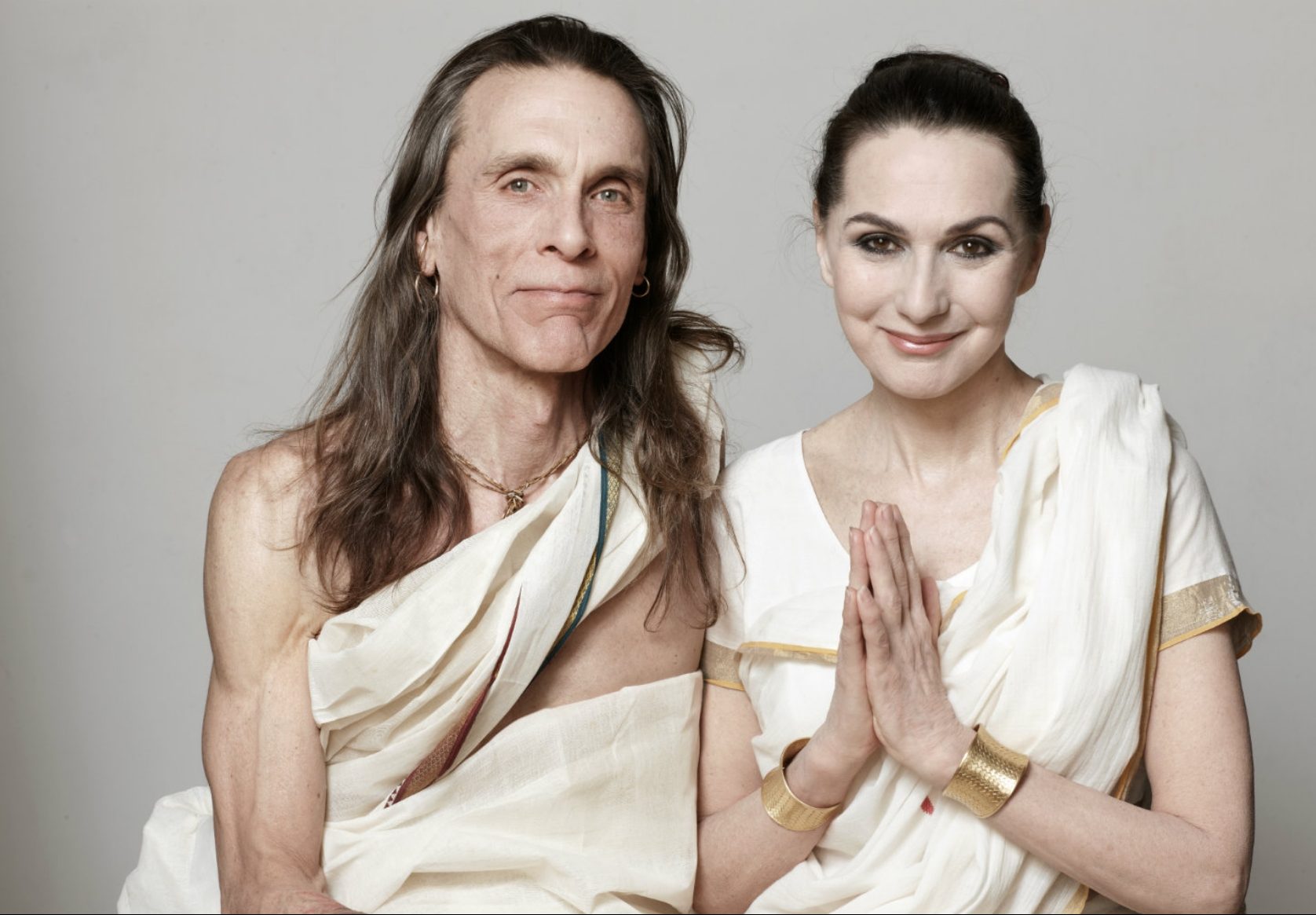

A Sharon Gannon class does not ease you in. There is chanting in Sanskrit, often for twenty minutes before the first vinyasa. There are readings from the Yoga Sutras or Bhagavad Gita, delivered with intensity and without apology for their difficulty. The music might be kirtan one moment, punk rock the next. The room smells of incense. Students are expected to know that their practice extends beyond the mat—into what they eat, what they wear, how they move through the world. This is not yoga as self-care. It is yoga as moral demand.
Gannon teaches as if the entirety of the eight-limbed path matters equally. Where many Western yoga teachers cordon off asana practice from philosophy, treating ancient texts as optional seasoning, Gannon refuses the separation. A typical Jivamukti class she leads builds toward a peak pose, yes, but the physical sequence is deliberately threaded through with a theme drawn from scripture—often relating to liberation, to the illusion of separateness, to the violence embedded in habits students don't question. The practice is devotional, vigorous, and unapologetically political. She will quote Patanjali and then speak about factory farming in the same breath.
Gannon returns, again and again, to ahimsa—nonviolence—not as abstract principle but as practical litmus test. In her teaching, nonviolence is the hinge on which everything else turns. She interrogates what it means to claim a spiritual practice while participating in animal exploitation. The question is not rhetorical. She expects an answer, lived out in daily choices. Veganism, in Gannon's framework, is not dietary preference but spiritual imperative, the unavoidable extension of yoga's first ethical precept.
Another obsession: the relationship between sound and consciousness. Chanting, for Gannon, is not ornamental. It is technology. She teaches that Sanskrit mantras carry specific vibrational frequencies that alter awareness, that nada yoga—the yoga of sound—is as rigorous a practice as any arm balance. Classes often begin with prolonged chanting, and students either surrender to it or sit restlessly, waiting for the "real" yoga to begin.
Liberation appears constantly in her language—moksha, freedom from the cycle of suffering. But Gannon frames liberation as collective, not individual. Enlightenment that leaves the world untouched is not enlightenment. She challenges students to ask what their practice is actually for, whether it serves ego comfort or genuine transformation.
Gannon does not let students rest in vague spirituality. She asks: If you believe in ahimsa, what are you eating? If you chant about devotion, what are you devoted to? If yoga is about liberation, who benefits from your freedom? These are not koan-like mysteries meant to float unresolved. They are practical, moral questions that demand behavioral response.
She pushes students to examine the violence they consider normal, acceptable, inevitable. To sit with complicity. To ask whether the effort they put into perfecting chaturanga might be better spent dismantling harm.
Gannon's delivery mixes downtown New York edginess with genuine devotional fervor. She can be blunt, even confrontational, but there is no meanness in it. Her background in performance art shows—she understands rhythm, pacing, how to use shock and silence. Humor arrives sideways, often self-deprecating. Stories from her years in the East Village arts scene sit alongside tales of her teachers in India. She quotes scripture with the ease of someone who has lived inside these texts for decades, not as academic material but as living instruction.
The aesthetic is maximalist: sound, scent, image, physical demand, philosophical inquiry all at once. It overwhelms some students. For others, it feels like finally encountering yoga that doesn't dilute itself for Western consumption.
Gannon's teaching finds its audience among those hungry for rigor, for a practice that doesn't separate ethics from effort. It appeals to students exhausted by self-help yoga, by classes that promise only stress relief and tight glutes. Her approach works for people willing to have their lives questioned, who want tradition delivered without infantilizing translation.
It does not land for everyone. Students seeking gentle encouragement, or those who experience her vegan advocacy as moralistic, often leave. People uncomfortable with devotional language, with chanting, with being told their choices have spiritual consequences—they bounce off quickly.
Gannon belongs to the modern vinyasa tradition that draws from Krishnamacharya's descendants—particularly Pattabhi Jois—but she insists on reinstalling what much of American yoga discarded. She stands in a lineage that refuses to make yoga easier, more convenient, more compatible with consumer culture. Jivamukti emerged when Western yoga could have become purely physical; Gannon and David Life pulled it back toward integration, toward the ethical and devotional dimensions that make the practice whole.