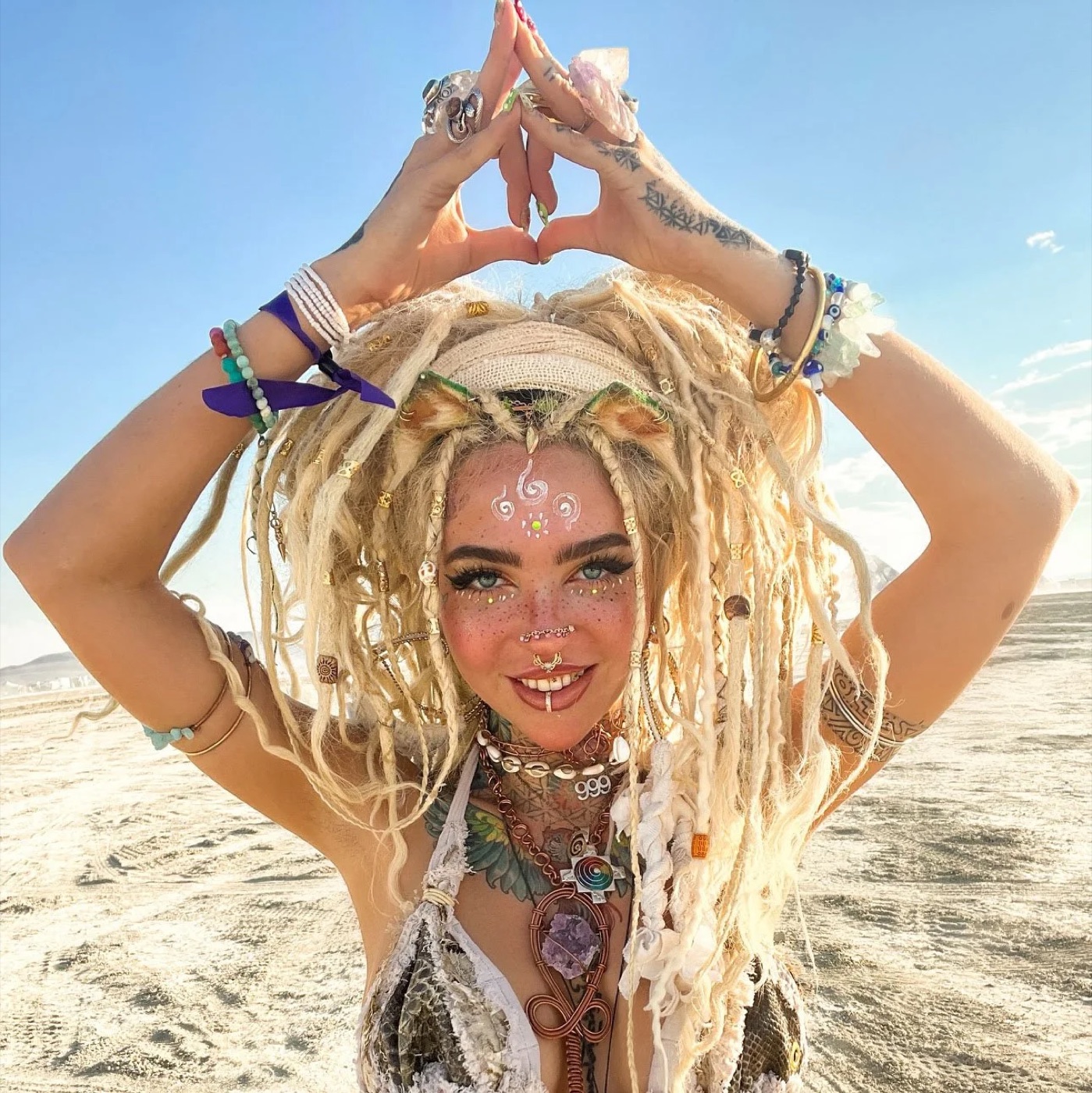

Shanin Blake calls their work "Music for the Heart": songs, retreats and experiences meant to help people reconnect with their truth. They are a musician, retreat leader and sound healer, and the catalog and the live gatherings are meant to be understood together. This guide gives you an order to work through.
Start with Rainbow Codes ~ Medicine Music ~ Live Sound Healing, Vol. 1, the eight-track album released in June 2026. Its title and subtitle show the clearest link between the recordings and the live sound healing practice. The "Live Sound Healing" framing suggests the material was built for listening in a session rather than for background playlists. Give it a full sitting, ideally with headphones or a quiet room, and don't shuffle it. Eight tracks is short enough to finish in one go.
This recommendation rests on titles, dates and format, not on detailed listening notes, so trust your own first impression over any description.
Innerpeace (single, July 2026). The most recent release, and the one that points toward the current direction of the work. Its title suggests a grounding purpose, though that reading comes from the name alone.
Back Into Alignment (single, November 2025). Another inward-facing title that fits the retreat language of reconnecting with your truth. Together with Innerpeace it shows how the artist handles a compact, single-track format.
Alchemist (single, April 2026). A third single, released between the others, and a useful way to hear how the 2026 material develops before Rainbow Codes arrived in June.
Once you know what the sound is about, the larger catalog is there. Divine Dopamine, from October 2024, runs to 31 tracks and is better treated as a project to return to than as an introduction.
Expect intention-led music, not a playlist designed to disappear into the background. The framing centers on ceremony, initiation and inner reconnection. The profile does not list instruments, vocal approach or tempo, so there is no reliable description of the sound to give you. Audition the tracks yourself on Spotify or Apple Music.
Expect the catalog to be uneven in tone. Alongside the meditative register of the Medicine Music material, there are singles like Money Flow and Lucky Girl Syndrome that sit in a more pop-facing, self-empowerment space. That range is part of the picture, not an error.
The live side is a different kind of experience altogether. The retreats are described as intimate, retreat-style private concerts paired with ceremony, in places described as energetically charged. Live music and sound baths sit at the center. Around them a retreat may include breathwork, yoga, meditation, intuition practices, ShanTalks and deep community sharing, plus time in nature such as saunas, cold plunges and wildlife adventures.
Treating it as one sound. Someone who starts with Money Flow expecting a sound bath, or starts with Rainbow Codes expecting pop, will be confused. Pick your entry point deliberately.
Starting with the biggest project. Divine Dopamine's 31 tracks look like the obvious place to begin. It isn't.
Expecting a ticketed show. The vocabulary of sound initiation and sacred ceremonies frames attendance as participation, with a beginning, middle and integration period. It is closer to an immersion than a concert.
Hunting for a lineage. The available material names no formal tradition, guru or teacher. The vocabulary (sound initiation, sacred ceremonies, vortex gatherings, soul family) places the work in the contemporary sound healing and ceremony scene. Don't assign it a pedigree it hasn't claimed.
Assuming it's for everyone. If you want music purely as background texture, or you're skeptical of intuition practices and spiritual vocabulary, the framing is central to the work and may not connect.
The material is aimed at people who want to reconnect with their truth, so it likely lands hardest when you're actively looking for a reset: a stretch of feeling out of step with yourself, a transition, or a wish for a slower, more intentional practice. The catalog's own titles point there: Back Into Alignment, Innerpeace, Intuition, Self Love. It also suits people who already use breathwork, yoga or meditation and want music built for that setting. The retreat format asks for real commitment, including travel, time away from routine and group sharing, so it fits best when you have room to give it.
Day 1: Listen to Rainbow Codes straight through, in a quiet room, with nothing else going on. Note what you feel, not what you think.
Day 2: Play Innerpeace once in the morning before checking your phone.
Day 3: Repeat Rainbow Codes during a meditation, a yoga session or a few minutes of breathwork.
Day 4: Listen to Back Into Alignment and Alchemist back to back.
Day 5: Try Money Flow and Lucky Girl Syndrome to hear the pop-facing side of the catalog. Decide whether it works for you.
Day 6: Visit shaninblake.com and the YouTube channel (youtube.com/c/shaninblakemusic) to see how the live work is presented. No upcoming events were available in the data, so check the site for any retreat details.
Day 7: Return to Rainbow Codes and compare it with Day 1. If it has changed for you, consider sampling Divine Dopamine over the following weeks.