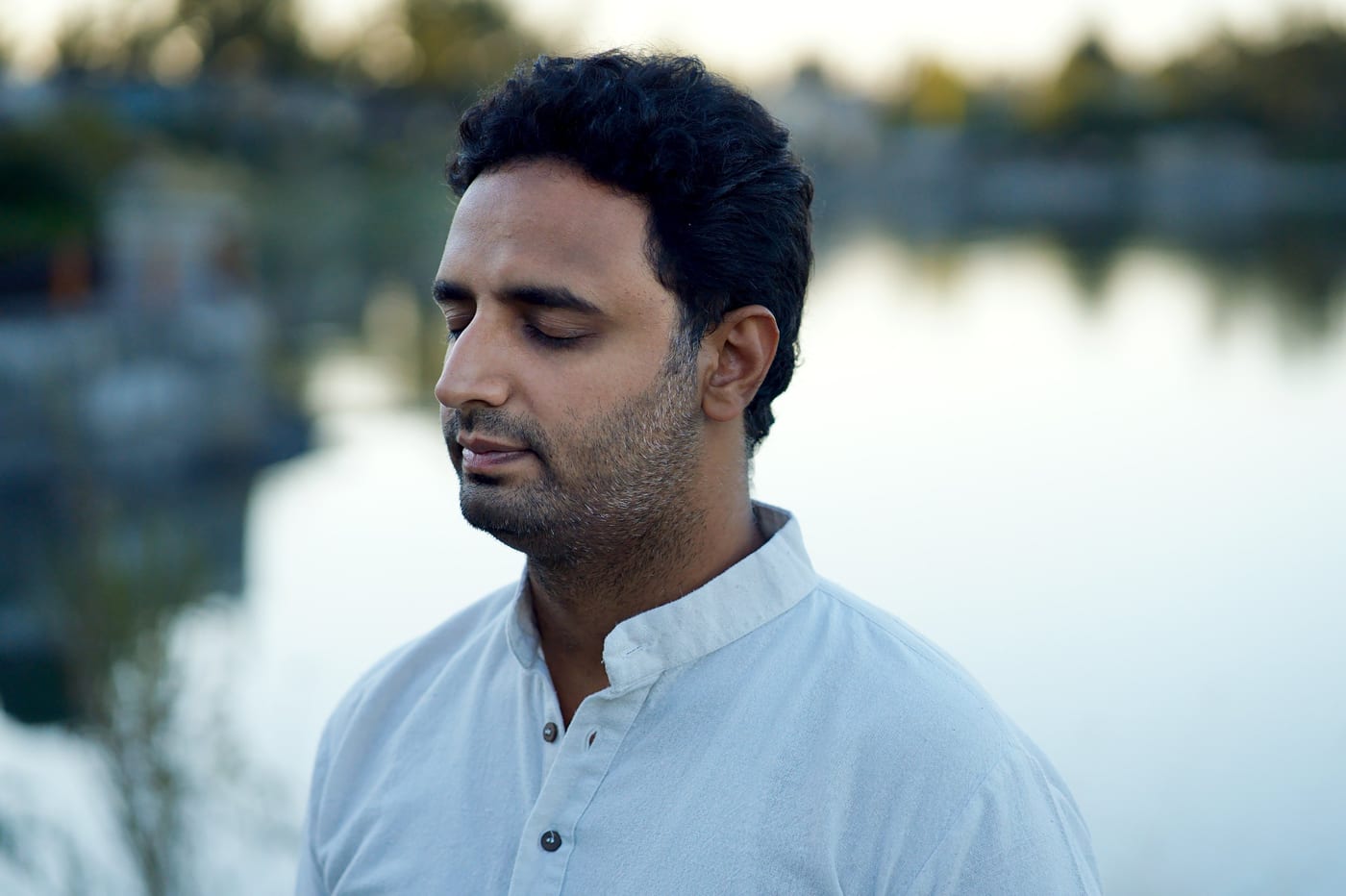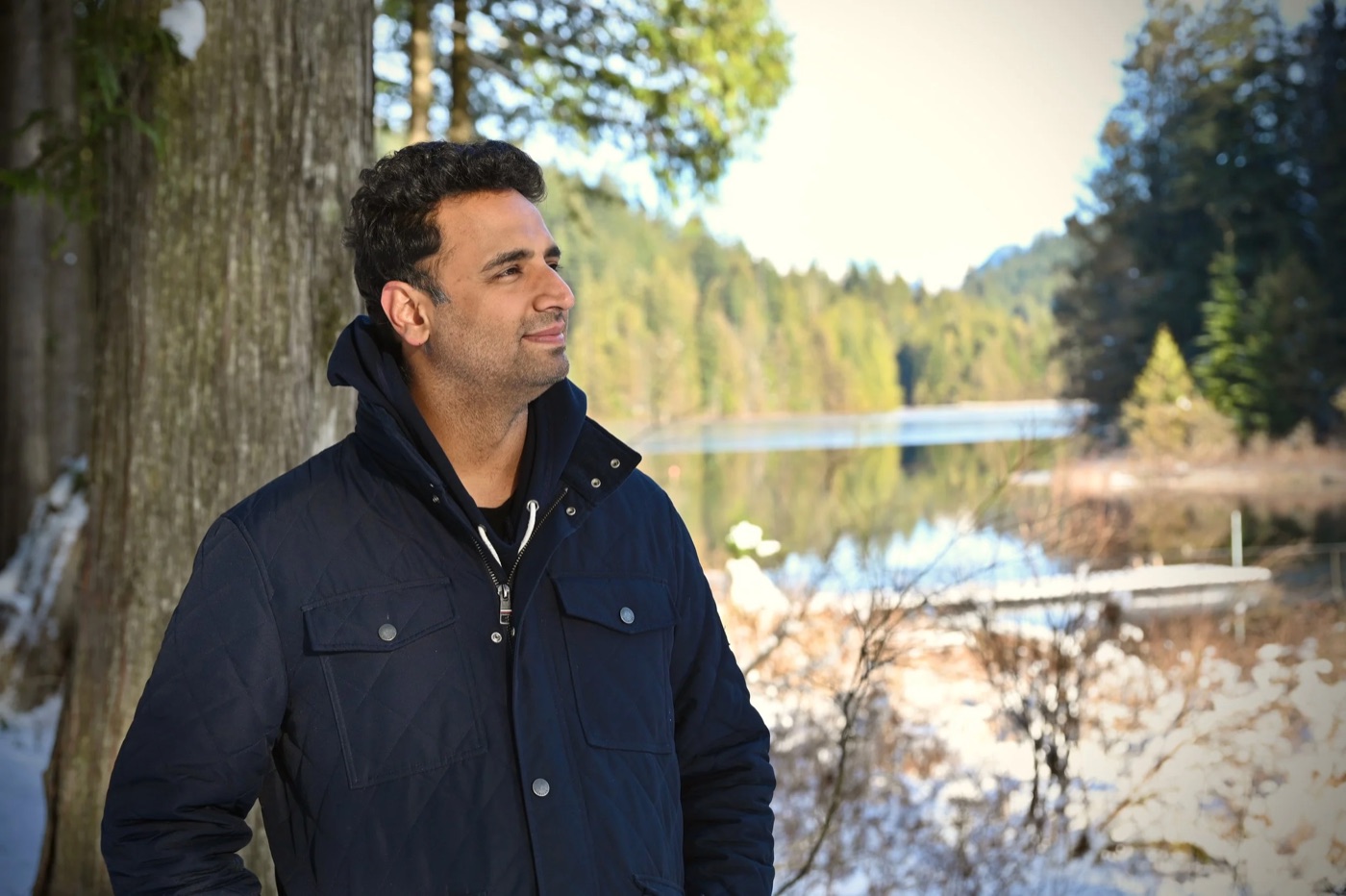

Saqib Rizvi is a meditation teacher based in Vancouver, British Columbia. He describes his work as guiding people on their inner journeys and bringing science and spirit together. His website invites visitors to turn inward and offers a deceptively simple premise: all paths are pathless, and whichever one you choose leads to the same point. It is an unusual sentence to find on the home page of a man whose first career was built on the exacting logic of electronic circuits.
His story is one of deliberate unlearning. The details of his early childhood and hometown are not documented in the sources available, but the outline of his working life is clear. He trained as a professional engineer, later earning an MBA in Marketing Communications, and spent his days on electronic circuits and telecommunication systems in India. By conventional measures, it was a successful and orderly path.
About fifteen years ago, Rizvi came to feel caught in what he calls his "Mind Prison." It was a life shaped by a conservative mindset and religious doctrine, one he had inherited rather than chosen. Against this, he describes a quiet voice of intuition that began to question those beliefs.
What followed was not a gentle adjustment. He left his religious identity. He left his career. He took up meditation, eventually became a teacher, and moved from India to Canada. Each of these steps meant setting down something that had defined him. The inner question that drove him was the oldest one in contemplative life: "Who Am I?"
Rizvi's search for an answer did not stay within a single tradition. He drew on the teachings of Buddha and Lao Tzu, and on modern voices including Osho, Neale Donald Walsch and Rupert Spira. At the same time, the engineer in him wanted to understand consciousness from the scientific side. He studied quantum physics and the science of consciousness, reading Nassim Haramein, Robert Lanza, Amit Goswami, Rupert Sheldrake, Dean Radin and Carl Jung.
This breadth is central to who he is. He does not present science as a decoration for spiritual ideas, nor spirituality as a footnote to science. Instead, the two are treated as parallel investigations into the same questions. His own framing, that wisdom and meditation are two profound methods to raise one's consciousness and experience Awakening, reflects that pairing of understanding and direct practice.
The practical grounding of his work comes from time spent in meditation settings. He refined his practice at the Tushita Meditation Centre in Dharamsala, a Buddhist meditation center, and Tibetan Buddhist meditation forms the backbone of his instruction. In Delhi, he facilitated spiritual programs at the "Zorba The Buddha" meditation centre, a name that itself suggests the union of worldly engagement and inner stillness.
He has also shared meditations with a global community on Insight Timer, where he has built a following of more than 71,000 people. For a teacher rather than a musician, that is a substantial audience, and it makes the platform the most natural place for newcomers to hear his voice and pacing.
Rizvi's contribution is less a single book or recording than a particular stance. He speaks with the clarity of someone trained in engineering: precise, logical and wary of vagueness, while still taking mystical insight and awakening seriously. Rather than presenting meditation primarily as stress relief or wellness, he frames it as an exploration of consciousness and identity.
A recurring thread in his teaching is direct experience over belief. Given his own history of stepping away from inherited doctrine, this emphasis feels earned rather than rhetorical. The aim is not to swap one set of beliefs for another but to verify, through observation and practice, what holds true. He tends to avoid positioning himself as an authority to be revered, and instead as a guide toward a student's own clarity.
His approach will not suit everyone. Those seeking devotional warmth, ecstatic ritual or a comforting guru figure may find his style cool and analytical. Listeners who want meditation purely as a sleep aid or productivity tool may also look elsewhere. But for the analytical seeker, and especially for those who recognize something of their earlier selves in a former engineer, that directness is the point.
Today Rizvi offers one-to-one mentoring sessions and live workshops, and his YouTube channel shares spiritual wisdom for people on their own awakening journeys. The channel, found at @saqibrizvi, serves as a library of talks and meditations, including material that places consciousness research in conversation with contemplative practice. His website, saqibrizvi.com, is the place to find details on booking sessions and workshops.
No major touring schedule is publicly listed, and based in Vancouver, he works with students both locally and through online offerings. For newcomers, a sensible approach is to match the entry point to temperament: those who learn by doing can start with guided meditations on Insight Timer, while those who want the framework first can begin with the YouTube talks on consciousness and then move into practice.
The meditation world is crowded, and much of it divides into two camps: traditional teaching rooted in a specific lineage, and secular, health-oriented instruction. Rizvi occupies a space between them. He is not a lineage-holder in a formal sense, and his sources are deliberately varied, yet his practice is anchored in sustained time at a Tibetan Buddhist centre. He takes science seriously without using it merely to lend legitimacy to spiritual claims.
His significance lies partly in who he reaches. Analytical people, including engineers, technologists and skeptics who have been put off by faith-based or heavily mystical teaching, can find in him a voice that does not ask them to switch off their minds. His own life makes the case more persuasively than argument could: he walked away from a stable career and an inherited identity because an inner question would not be silenced.
That biography also carries a quiet caution. He is not suggesting that meditation requires anyone to abandon a profession or a faith. The lesson he offers is subtler: that it is worth examining the beliefs, roles and stories we carry, and checking them against our own experience.
Saqib Rizvi's legacy is still being written, but its shape is already visible. It is the story of a person who traded certainty for inquiry, and who now invites others, without pressure and without promises of comfort, to turn inward and see for themselves.