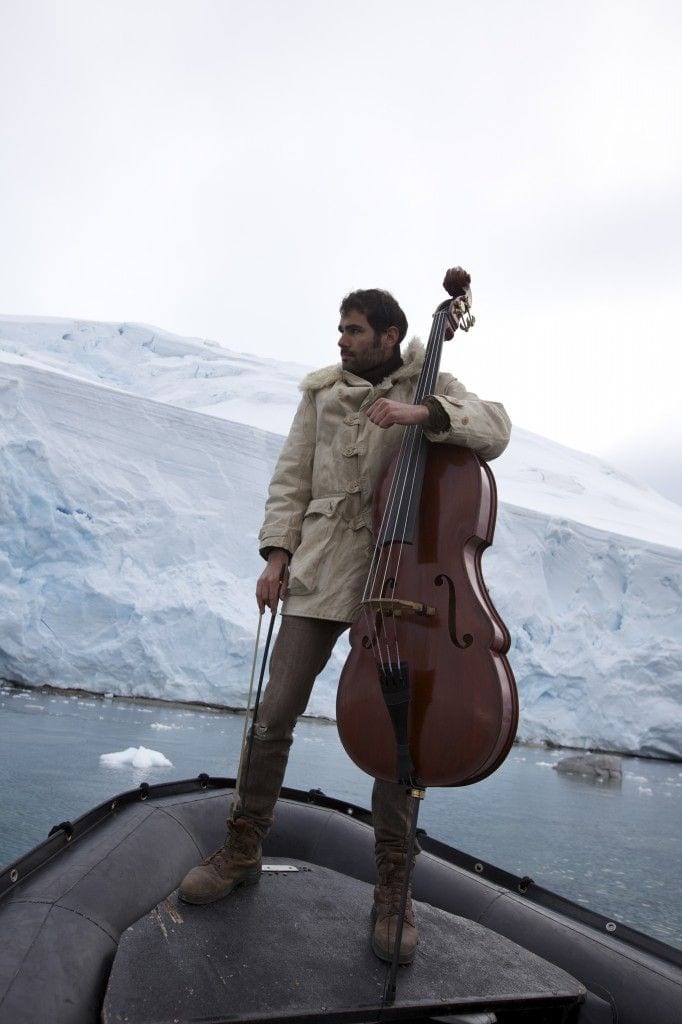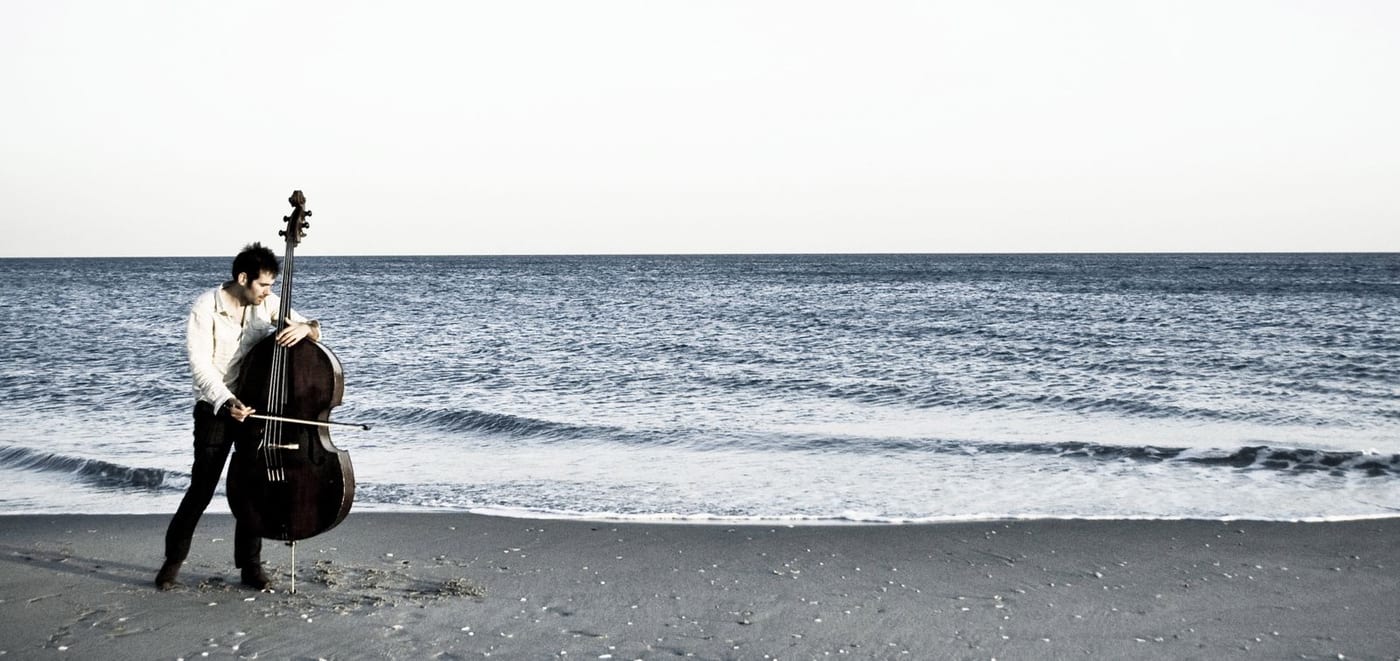
The core of Garth Stevenson's music is a single instrument: the double bass, played alone. There is no band, no sung voice and no lyric. The recordings are wordless, and the bass is typically captured with minimal processing, so its woody attack, bowed sustain and plucked textures sit close to how they sound in the room, or in this case, the forest, beach or ice field.
The pacing is slow and the arrangements are sparse. A phrase may hold for a long stretch before the next one arrives, and the silences carry nearly as much weight as the notes. What fills those gaps is not studio ambience. Wind, water and natural reverb enter through the performance itself. The same kind of piece can sound entirely different on a coastal British Columbia beach than on the Antarctic Peninsula, because the place answers the instrument differently each time. Improvisation shapes each take, which is why the albums read as sonic journals rather than fixed scores.
Garth Stevenson is a composer and double bassist raised in the mountains of Western Canada, and he also works as a meditation teacher who leads guided outdoor sessions. It would be wrong to place his music inside bhakti, kirtan, mantra or any other devotional line. No lineage, guru, teacher or formal school is documented for him, and none should be assigned.
What the bio does state is the root of the work: training in music performance, and a longstanding engagement with backcountry hiking and environmental observation. The project began as a personal experiment in solitude and attention, which makes it closer to self-directed practice than to an institutional tradition. The most honest frame is contemplative listening, sitting between mindfulness practice and nature observation. His listed areas of knowledge include meditation, guided meditation, mindfulness and sound journey work, but those describe the subjects he touches, not a credential or a school.
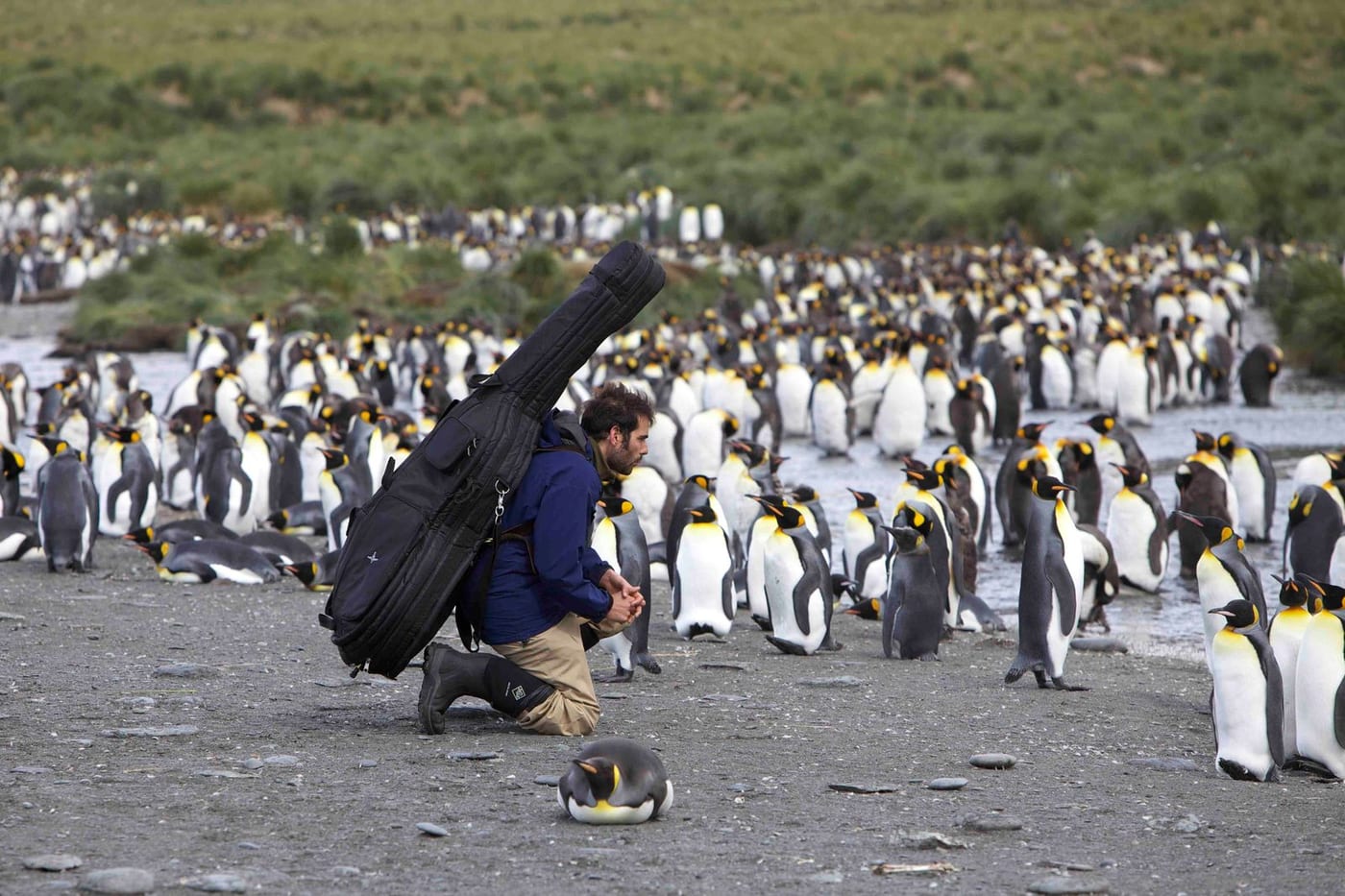
Many acoustic and ambient artists layer field recordings or synthesize environmental sound afterward. Stevenson does the opposite. He carries the double bass into remote places, including forests, beaches, deserts and polar regions, and performs there, leaving wind, water and reverb unprocessed. The room becomes a participant in the composition rather than a texture added at the mixing desk.
The aesthetic favors patience and space over virtuosity. The bass is allowed to be quiet, and the environment is allowed to answer it. The result sounds less like a produced ambient record and more like a field notebook kept in sound. An iTunes description quoted in his bio, applied to an album called The Southern Sea, calls it "the aural equivalent of effortlessly swimming underwater without ever needing to come up for air." That title does not appear in the discography listed in our data, so it is worth verifying before you go looking for it.
No co-performers, producers or session musicians are named in the available material, so there is no verified collaborator list. In a practical sense, the other participants are the acoustics of each site and the weather. His screen work does connect him to larger creative teams, most visibly the Ken Burns, Lynn Novick and Sarah Botstein production behind the 2022 soundtrack for The U.S. and the Holocaust. He has also made film and documentary soundtracks, including Tracks and Ten Thousand Saints. Individual personnel on those projects are not listed, so credits are best checked at garthstevenson.com.
Start with Voyage (2016). It is a full 13-track album and the most complete statement of the solo, bass-in-place method. Alpine (2007, 12 tracks) is the earlier, more compact record of the same approach and shows where the signature began. Flying (2011, 14 tracks) sits between them and is useful for hearing how the location recordings changed over time. For a short sample, try the three-track Tracks single from 2015, drawn from the film soundtrack. The YouTube channel is a practical way to hear the location sound before committing to an album.
Expect slowness. Expect audible wind and water. Headphones bring out the low register and the room sound most clearly, and the desert and Antarctic recordings in particular reward focused attention and can feel thin through laptop speakers.
What may surprise you is how little the music tries to impress. There is no hook, no verse and chorus, and no build toward a climax. At first the recordings can feel formless, which is intentional. If you want rhythm, a melody to hum or background noise to fill a room, this is not that music. The Ken Burns compilation, with 18 tracks, is a different listen: documentary film music rather than the core of the solo work.
Within conscious music, Stevenson occupies a quiet corner. Much of the field leans toward devotional chanting, layered synth pads or produced soundscapes. His work offers none of those. It is unaccompanied, acoustic and tied to specific places, which puts it nearer to deep listening and nature observation than to kirtan circles or studio ambient.
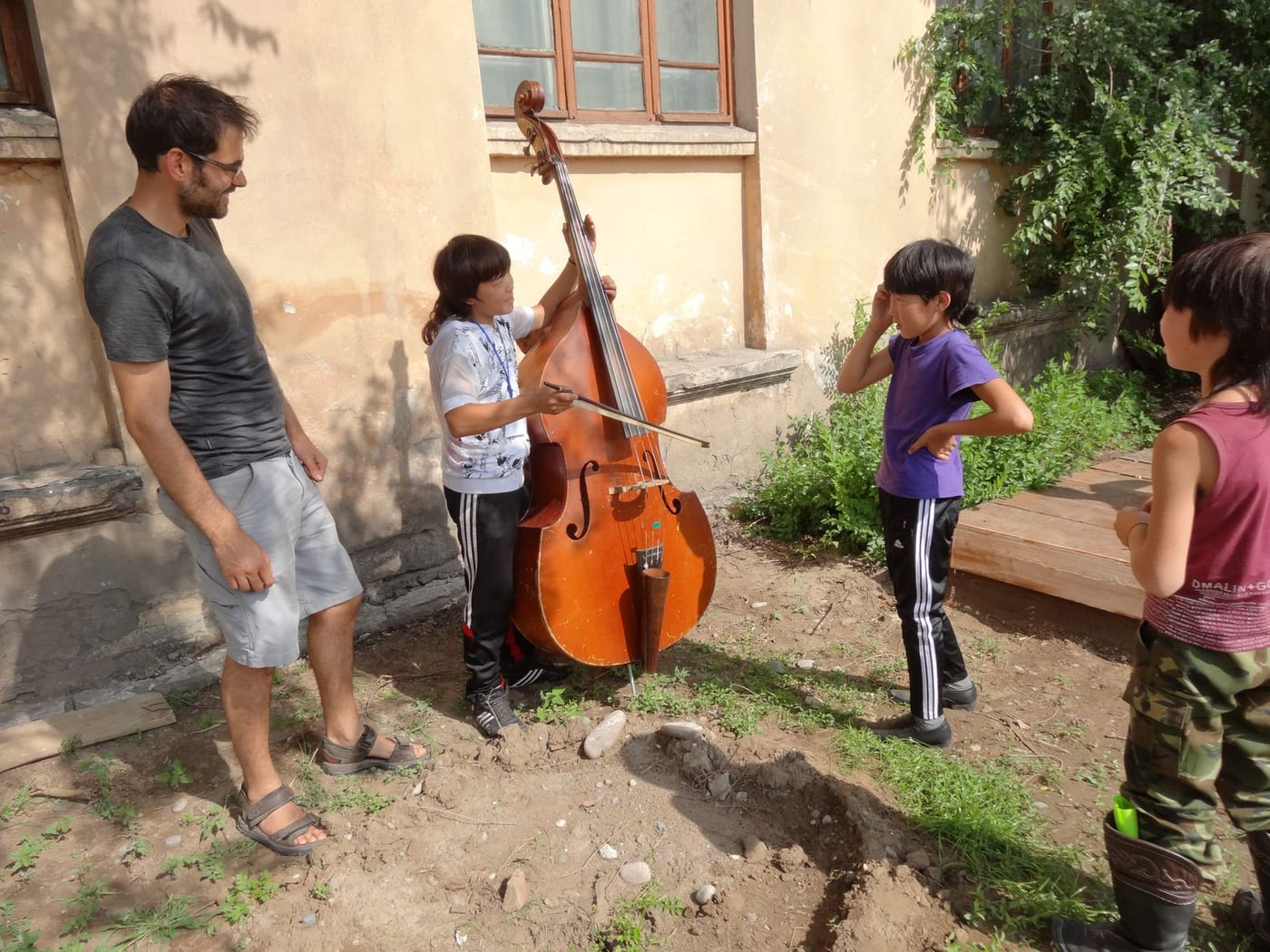
His live and teaching formats extend that approach. The Music Meditation Hikes fuse slow walking, silent observation and live bass, connecting concert-style recording with guided practice. The teaching is light on verbal doctrine and heavy on sound and walking. A concert is listed at the Kripalu Center for Yoga & Health in Stockbridge on 13 November 2026, a yoga and wellness setting that suits the work.
With roughly 11,400 Spotify followers, his audience is dedicated and niche rather than mass. Many listeners arrive through the meditation and mindfulness side and stay for the patience of the bass. For yoga holds, final relaxation or solitary listening, Voyage and Alpine are the likeliest starting points, though instructors should test levels first, since natural sound can compete with a teacher's voice.