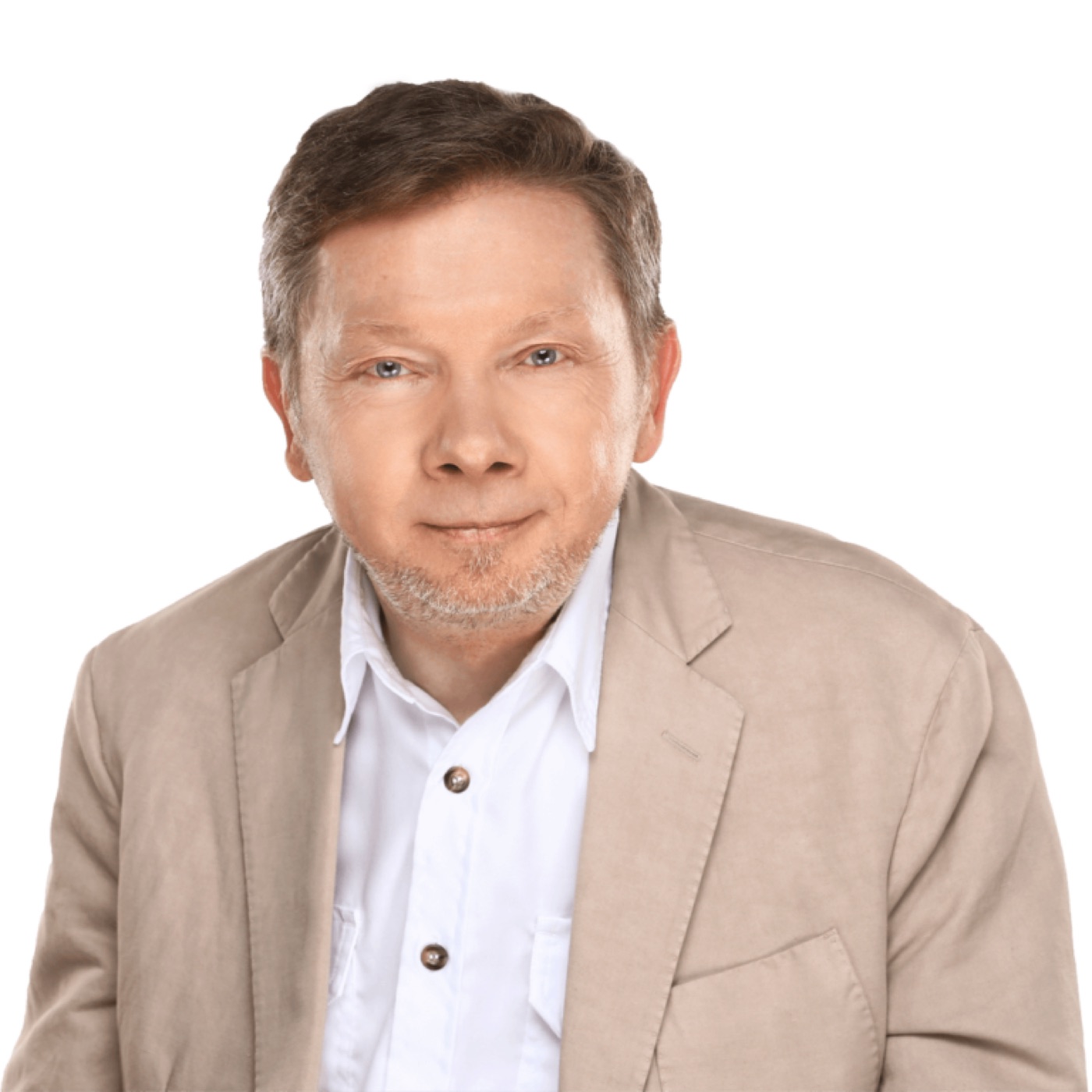

A session with Eckhart Tolle is spare by design. According to accounts of his talks and retreats, he typically opens with a period of silent meditation, then offers teaching interspersed with questions from participants. There is no elaborate staging, music, or production value. The pace is measured, with frequent pauses that newcomers sometimes mistake for hesitation but that function as a deliberate teaching tool. He tends to answer questions by returning the questioner to direct present-moment experience rather than supplying an abstract answer.
His retreats are often co-taught with Kim Eng, his partner since 1998 and the creator of Presence Through Movement, which places a bodily practice alongside his spoken teaching. Some retreats have been built around what he calls the "Deep I," his term for our essential identity. Participants often describe these gatherings as intimate yet impersonal: the recognition is of consciousness itself, not of a relationship with Tolle. He does not cultivate devotion or discipleship, and that sets him apart from teachers who do.
His books reflect the same range of forms. The Power of Now is a question-and-answer handbook. A New Earth is a conventional narrative exploring how moving beyond the ego-based state of consciousness leads to personal happiness and an end to conflict and suffering. Stillness Speaks gathers short teachings into ten chapters, including "Beyond the Thinking Mind," "The Egoic Self," and "Acceptance and Surrender."
The central claim is that psychological suffering comes less from circumstances than from identification with thought, especially rumination on past regrets and future anxieties. The remedy is disidentification from mental content and a return to what Tolle calls Presence, the awakened state of consciousness that transcends ego and discursive thinking. The ego, in his usage, is the psychological entity built from thought and a narrative identity, and he treats it as the root of individual and collective dysfunction, from personal anxiety to social violence.
Related themes recur throughout: non-resistance to what is; the inadequacy of belief and intellectual knowledge unless a shift in consciousness accompanies them; and the paradox of effort, in which striving against the present perpetuates suffering while acceptance allows change. In A New Earth he extends the argument from individual liberation to collective transformation, and he sees this awakening as the essential next step in human evolution. That is a large claim, and it rests on his assertion rather than on demonstration.
Tolle's teaching works through a small set of questions that he asks students to test against their own experience rather than accept on authority. What happens when you notice you are thinking? Who is aware of the thought? Where does your sense of self come from if you remove the story you tell about your past and future? Can you let this moment be as it is, without resisting it, even briefly? These are not puzzles to solve conceptually. He insists that understanding the concepts of presence is not presence, and the questions are meant to move the student from description to observation. The burden of verification rests with the listener, since there is no institution or ritual to lean on.
The delivery is quiet and unperformed. Silence carries real weight in his talks, as much as the spoken content. Recordings reveal an absence of ego-driven performance; he speaks as someone reporting on experience rather than seeking approval. Humor and story appear, but sparingly and in service of pointing, not entertainment. The Power of Now opens with his own account of crisis and awakening, which is the main narrative anchor of the teaching. His language is deliberately secular and plain, with little Sanskrit or doctrinal vocabulary, though he does draw on scriptural and mystical language around grace and surrender.
The teaching suits people who recognize the texture of anxious, ruminating thought and want a direct, non-denominational way of examining it. It assumes no religious background, and experienced meditators sometimes find it clarifies ideas they met in more elaborate forms.
It is less suited to those who want technique-heavy practice, step-by-step stages, or a structured path with initiation and community. Intellectually driven seekers hoping for a comprehensive philosophical system may find his insistence on the limits of thought frustrating, even dismissive. Readers looking for life optimization, success, or the promise of manifesting desire will find his focus on dissolving the separate self at odds with their goals. Those expecting warmth and affirmation may find the work austere. His diagnosis of suffering is severe, and the remedy asks for seeing through the illusion of the self, not feeling better about it.
The bio does not place Tolle in a named lineage or under a named teacher, and this profile does not assign one. It describes him as a spiritual teacher and author whose focus is Presence, and it lists his books and retreats. The verified material adds that his teaching draws syncretically on Zen Buddhism, Christian mysticism, Sufism, and Hinduism while maintaining no formal affiliation with any single tradition, and that his path began with a spontaneous awakening in 1977, not an apprenticeship. His standing is considerable: the bio cites The New York Times calling him "the most popular spiritual author in the United States," and Watkins Mind Body Spirit naming him in 2011 "the most spiritually influential person in the world." Those are statements of reach, not measures of depth, and the teaching asks to be judged by the direct experience of the person receiving it.