
The Best Entry Point
Start with a single evening workshop if you can find one in your area. Bortolato's work doesn't translate well to documentation—it's built for the body, not the screen. Her one-off immersive evenings offer the lowest-commitment way to understand what she actually does. You'll spend two to three hours in a space with live or recorded percussion, moving without choreography, guided only by rhythm and occasional verbal cues. These sessions typically cost less than intensive workshops and don't require prior movement experience, making them ideal for testing whether this resonates before committing to deeper work.
If no live sessions are accessible, look for any workshop intensive she's offering within reasonable travel distance. Weekend formats give you enough time to move past initial self-consciousness and actually encounter the work's core premise: that sustained rhythmic movement can bypass your thinking mind entirely.
Where to Go Next
After your first session, attend at least two more one-off evenings before jumping to intensives. The first experience is often dominated by novelty and disorientation. The second reveals whether the practice itself—not just the newness—speaks to you. The third is where patterns emerge in your own movement vocabulary.
From there, consider a weekend intensive. These longer formats introduce cyclical structures and allow you to experience what happens when your body moves through rhythm for hours rather than minutes. You'll encounter fatigue, resistance, breakthrough, and integration in compressed time.
If weekend work lands well, explore sessions where Bortolato collaborates with sound healers or vocalists. These show how her approach functions as a framework that other practitioners can inhabit, revealing the flexibility of rhythm-based curation beyond her solo facilitation.
What to Expect
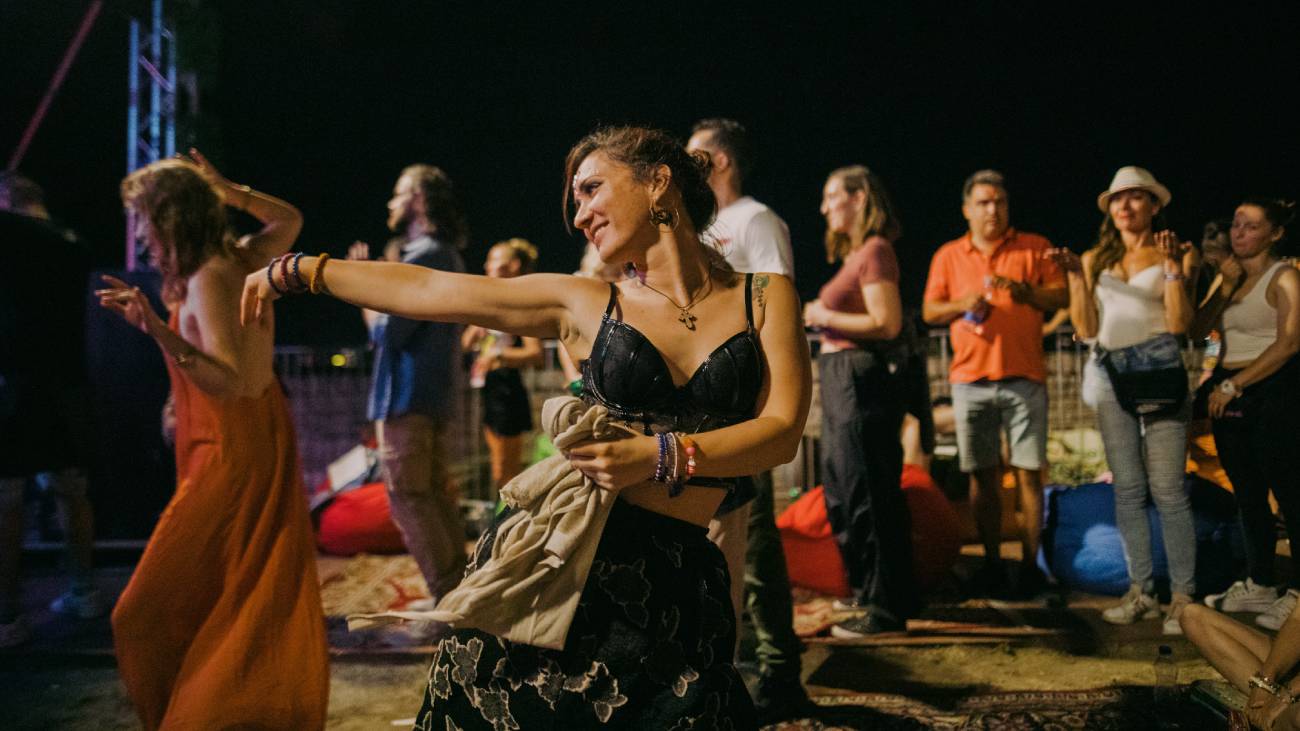
You'll enter a room with minimal instruction. Expect percussion—sometimes live drumming, sometimes recorded tracks—and space to move however your body responds. Bortolato doesn't demonstrate steps or lead synchronized movement. Instead, she creates containers: cueing rhythm shifts, occasionally naming themes ("weight," "spiral," "reaching"), then stepping back.
First-timers often feel awkward for the opening twenty minutes. That's structural, not personal. The work requires time to override your habitual relationship with music and movement. Expect to feel self-conscious, then distracted, then—if you stay with it—suddenly present in your body in a way that feels unfamiliar.
Common Misunderstandings
Beginners mistake this for dance class or ecstatic dance. It's neither. There's no technique to learn and no emphasis on catharsis or emotional release. Bortolato's work uses rhythm as architecture for presence, not expression. Participants who arrive expecting to "let go" or "dance out their feelings" often miss the more subtle invitation: to inhabit repetition until the mind quiets and embodied awareness sharpens.
Another misstep is treating these sessions as performance, even internal performance. The work isn't about moving beautifully or interestingly. It's about moving truthfully in relationship to rhythm, which often looks simpler and stranger than you'd expect.
When This Lands Hardest
This work tends to hit during transitions when your relationship to control is already unstable: after major loss, during career shifts, when leaving or entering relationships. It also resonates for people who've exhausted intellectual approaches to presence—longtime meditators, therapized professionals, anyone who's tired of thinking their way toward embodiment.
It lands less reliably if you're in acute crisis or early sobriety, when you need more structured support than open-ended movement can provide.
One-Week Starter Plan
Day 1-2: Research Bortolato's upcoming sessions. Commit to one within the next month.
Day 3-4: Spend 15 minutes daily moving to any repetitive percussion track. Don't choreograph. Just notice what simple movements want to repeat.
Day 5-6: Read about 5Rhythms and Authentic Movement—not to study them, but to contextualize her lineage.
Day 7: Attend a session by another somatic movement practitioner in your area. Notice the differences in facilitation style. Go into your first Bortolato session with comparison points already mapped.